Seiring perluasan pasar derivatif DeFi dari perdagangan leverage sederhana ke opsi, portofolio lintas aset, dan strategi hedging yang kompleks, model Isolated Margin tradisional semakin menunjukkan efisiensi modal yang rendah. Untuk mendukung kebutuhan perdagangan yang lebih canggih, semakin banyak protokol derivatif on-chain mengadopsi model portofolio margin yang meningkatkan efisiensi modal melalui penilaian risiko holistik.
Dalam lanskap derivatif on-chain, Derive menjadikan Portofolio Margin sebagai salah satu komponen infrastruktur intinya. Karena Derive mendukung opsi, Perpetual Futures, dan jaminan multi-aset, model margin posisi tunggal tidak lagi mampu menangkap risiko yang sebenarnya.
Apa Itu Portofolio Margin?
Portofolio Margin adalah kerangka kerja manajemen risiko yang menghitung Persyaratan Margin berdasarkan total eksposur risiko akun.
Dalam model Isolated Margin tradisional, setiap posisi menghitung margin secara independen. Bahkan ketika posisi saling melakukan hedging, sistem tidak dapat mengenali pengimbangan tersebut, sehingga memaksa pengguna mengunci modal tambahan.
Portofolio Margin mengevaluasi risiko di seluruh akun. Misalnya, jika pengguna memegang posisi long Perpetual Futures BTC dan opsi put BTC, opsi tersebut melakukan hedge pada sebagian risiko penurunan, sehingga sistem menurunkan Persyaratan Margin secara keseluruhan.
Mekanisme ini merupakan standar di pasar derivatif keuangan tradisional, dan Derive membawanya ke on-chain.
Mengapa Derive Mengadopsi Portofolio Margin
Produk inti Derive—opsi dan Perpetual Futures—memiliki profil risiko yang secara inheren kompleks.
Jika protokol tetap menggunakan Isolated Margin, pengguna yang menjalankan strategi hedging tetap harus menyetor margin untuk setiap posisi secara terpisah, yang secara signifikan mengurangi efisiensi modal.
Portofolio Margin bertujuan untuk mencerminkan risiko nyata secara lebih akurat. Alih-alih melihat P&L individu, sistem mensimulasikan potensi kerugian seluruh akun dalam berbagai skenario pasar.
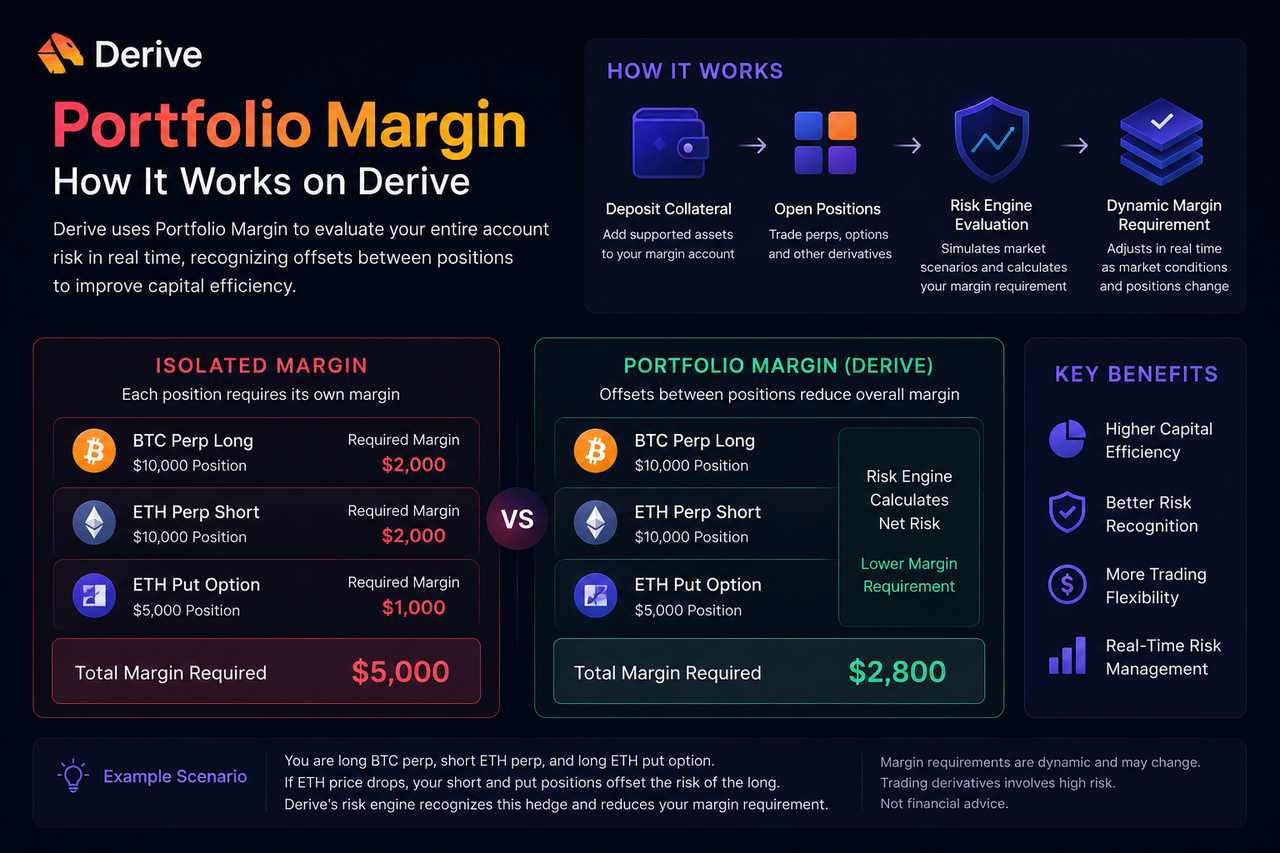
Desain ini sangat penting bagi para trader profesional, karena strategi opsi, arbitrase lintas pasar, dan permainan volatilitas sering kali melibatkan kepemilikan beberapa posisi dalam arah yang berbeda secara bersamaan.
Dibandingkan dengan Isolated Margin, Portofolio Margin memberikan:
| Mode |
Penilaian Risiko |
Efisiensi Modal |
| Isolated Margin |
Independen per posisi |
Rendah |
| Cross Margin |
Dibagi di seluruh akun |
Sedang |
| Portofolio Margin |
Analisis skenario holistik |
Tinggi |
Cara Mesin Risiko Derive Menghitung Margin
Mesin risiko Derive menganalisis semua posisi secara real-time dan mensimulasikan risiko dalam berbagai skenario volatilitas.
Faktor utama yang dipertimbangkan:
| Parameter Risiko |
Peran |
| Arah Posisi |
Mengidentifikasi eksposur long/short |
| Volatilitas |
Mengukur besarnya pergerakan harga |
| Eksposur Delta |
Mengukur sensitivitas harga |
| Risiko Gamma |
Menangkap laju perubahan harga |
| Kedalaman Likuiditas |
Menilai risiko dampak pasar |
| Korelasi Aset |
Mengevaluasi efektivitas hedging antar posisi |
Di pasar opsi, pergerakan harga tunggal tidak cukup untuk mengukur risiko. Mesin ini mengintegrasikan volatilitas tersirat dan Greeks untuk gambaran yang lengkap.
Misalnya, jika volatilitas tiba-tiba melonjak—bahkan jika harga spot tetap datar—beberapa posisi opsi mungkin mengalami lonjakan risiko, mendorong sistem untuk menaikkan Persyaratan Margin secara dinamis.
Cara Jaminan Multi-Aset Meningkatkan Efisiensi Modal
Derive mendukung jaminan multi-aset, memungkinkan pengguna menjaminkan berbagai aset sebagai margin dari satu pool.
Platform tradisional biasanya memerlukan satu stablecoin sebagai margin. Derive menerima aset arus utama tertentu, memberikan bobot risiko pada masing-masing untuk menentukan nilai jaminan yang dapat digunakan.
Contoh:
| Aset Jaminan |
Bobot Risiko (Ilustratif) |
Efisiensi Modal |
| USDC |
Nilai jaminan tinggi |
Lebih rendah |
| ETH |
Diskonto risiko sedang |
Sedang |
| BTC |
Diskonto risiko sedang |
Lebih tinggi |
| Aset dengan volatilitas tinggi |
Nilai jaminan rendah |
— |
| Kedalaman Likuiditas |
Menilai risiko dampak pasar |
|
| Korelasi Aset |
Mengevaluasi hedging antar posisi |
|
Ini mengurangi kebutuhan akan konversi aset yang sering dan meningkatkan penggunaan modal secara keseluruhan.
Namun, jaminan multi-aset juga berarti protokol harus menanggung tekanan manajemen risiko yang lebih kompleks.
Cara Persyaratan Margin Derive Berubah Secara Dinamis
Persyaratan Margin Derive tidak tetap—ia menyesuaikan dengan kondisi pasar.
Pada periode volatilitas rendah, sistem biasanya menurunkan margin untuk meningkatkan efisiensi perdagangan. Selama volatilitas tinggi, mesin risiko dapat menaikkan Persyaratan Margin.
Faktor yang mendorong perubahan meliputi:
-
Volatilitas pasar
-
Ukuran posisi
-
Kedalaman likuiditas
-
Korelasi aset
-
Risiko pasar ekstrem
Misalnya, selama peristiwa makroekonomi besar atau gejolak pasar kripto, tingkat margin untuk aset tertentu dapat ditingkatkan sementara.
Pendekatan dinamis ini mengurangi risiko sistemik tetapi mengharuskan pengguna untuk memantau kesehatan akun.
Cara Likuidasi Derive Bekerja dengan Portofolio Margin
Di bawah portofolio margin, logika likuidasi berbeda dari Isolated Margin.
Isolated Margin melikuidasi posisi individu. Derive pertama-tama mengevaluasi risiko tingkat akun. Jika posisi saling melakukan lindung nilai, sistem mungkin tidak memicu likuidasi segera.
Ketika ekuitas akun turun di bawah Persyaratan Margin Pemeliharaan, protokol secara bertahap mengurangi posisi paling berisiko untuk memulihkan keamanan.
Ini mengurangi likuidasi yang tidak perlu tetapi membutuhkan mesin risiko yang lebih canggih.
Dalam kondisi ekstrem dengan likuiditas rendah, hal berikut masih dapat terjadi:
-
Slippage likuidasi paksa melebar
-
Parameter risiko berubah dengan cepat
-
Aset jaminan menurun bersamaan
-
Penundaan likuidasi
Jadi, bahkan dengan portofolio margin, manajemen risiko tetap menjadi pusat perdagangan derivatif on-chain.
Portofolio Margin vs. Cross Margin
Keduanya adalah model margin tingkat akun, tetapi berbeda dalam logika risiko.
Cross Margin menggunakan saldo akun secara keseluruhan untuk cakupan risiko dasar. Portofolio Margin menganalisis hubungan risiko sebenarnya antar posisi.
Perbedaan utama:
| Dimensi |
Cross Margin |
Portofolio Margin |
| Penilaian Risiko |
Risiko akun dasar |
Risiko simulasi skenario |
| Pengakuan Hedging |
Terbatas |
Kuat |
| Terbaik Untuk |
Perpetual Futures |
Portofolio opsi + derivatif |
| Efisiensi Modal |
Sedang |
Tinggi |
| Kompleksitas Sistem |
Rendah |
Tinggi |
Mengingat struktur risiko opsi yang kompleks, Portofolio Margin lebih cocok untuk platform seperti Derive yang menawarkan opsi dan Perpetual Futures.
Risiko Potensial dari Portofolio Margin Derive
Meskipun Portofolio Margin meningkatkan efisiensi modal, kompleksitasnya membawa risiko tambahan.
Pertama, model risiko bergantung pada asumsi tentang volatilitas, likuiditas, dan korelasi. Di pasar ekstrem, model mungkin tidak sepenuhnya menangkap risiko nyata.
Kedua, jaminan multi-aset berarti aset yang dijaminkan itu sendiri dapat turun tajam. Jika beberapa aset jatuh bersamaan, risiko sistemik melonjak.
Ketiga, portofolio margin paling baik untuk trader profesional. Pemula tanpa keahlian manajemen risiko mungkin kesulitan memahami perubahan risiko tingkat akun.
Dengan demikian, efisiensi modal yang lebih tinggi seringkali datang dengan tuntutan manajemen risiko yang lebih besar.
Ringkasan
Portofolio Margin adalah landasan kerangka risiko Derive, memungkinkan penilaian risiko yang lebih akurat dan efisiensi modal yang lebih tinggi di on-chain. Dibandingkan dengan Isolated Margin, ia mengenali hedging antar posisi, mengurangi penguncian margin yang berlebihan.
Melalui jaminan multi-aset, mesin risiko real-time, dan penyesuaian margin dinamis, Derive sedang membangun platform derivatif on-chain kelas profesional. Namun, struktur risiko yang kompleks berarti pengguna harus tetap waspada terhadap manajemen posisi dan volatilitas pasar.
Tanya Jawab (FAQ)
Mengapa Derive menggunakan portofolio margin?
Karena Derive mendukung opsi dan Perpetual Futures, dan Isolated Margin tidak dapat secara akurat mencerminkan risiko sebenarnya.
Apa perbedaan antara Portofolio Margin dan Cross Margin?
Portofolio Margin menganalisis hubungan risiko antar posisi; Cross Margin hanya membagikan saldo akun.
Aset apa saja yang diterima Derive sebagai margin?
Derive mendukung jaminan multi-aset, dengan setiap aset diberi bobot risiko yang menentukan nilai jaminannya.
Apakah portofolio margin mengurangi risiko likuidasi?
Ya, jika posisi memiliki hubungan hedging yang efektif, portofolio margin umumnya menurunkan kemungkinan likuidasi.
Apakah Portofolio Margin cocok untuk Pemula?
Portofolio margin memiliki struktur risiko yang kompleks dan paling baik bagi trader yang memahami derivatif dan manajemen risiko.