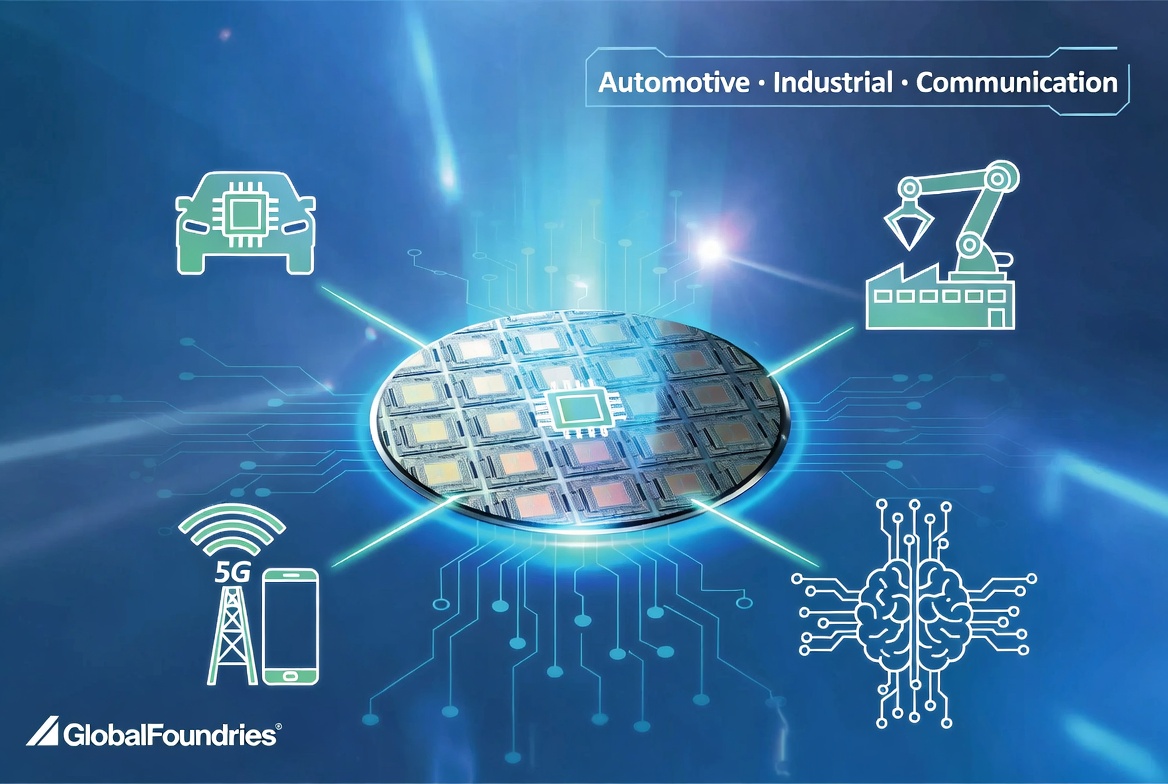
Seiring percepatan digitalisasi global, permintaan perangkat semikonduktor di berbagai industri terus meningkat. Tidak semua aplikasi membutuhkan chip proses tercanggih—banyak perangkat kritis lebih mengutamakan stabilitas, keandalan, dan jaminan pasokan jangka panjang. Di pasar inilah GlobalFoundries (GFS) membangun fokus jangka panjangnya.
Mengapa Chip Menjadi Tulang Punggung Industri Modern
Chip telah menjadi infrastruktur esensial bagi perekonomian modern. Mulai dari ponsel pintar hingga mobil, dari robot industri hingga server cloud, hampir setiap perangkat digital bergantung pada semikonduktor untuk komputasi, kontrol, komunikasi, dan pemrosesan data.
Selama beberapa dekade terakhir, industri di seluruh dunia beralih ke digitalisasi dan kecerdasan buatan. Peralatan pabrik mengandalkan sistem kontrol otomatis, kendaraan mengintegrasikan elektronik canggih, dan jaringan komunikasi ditingkatkan ke 5G dan seterusnya. Tren-tren ini terus mendorong permintaan chip semakin tinggi.
Bagi banyak sektor, chip bukan lagi sekadar komponen—melainkan fondasi kinerja, fungsionalitas, dan daya saing produk. Itulah sebabnya pasokan semikonduktor yang stabil menjadi perhatian kritis di seluruh rantai pasokan global.
Peran GlobalFoundries dalam Elektronik Otomotif
Elektronik otomotif merupakan salah satu pasar terpenting bagi GlobalFoundries.
Mobil modern sering kali memiliki ratusan bahkan ribuan chip untuk kontrol mesin, manajemen baterai, elektronik bodi, infotainment, bantuan pengemudi, dan komunikasi kendaraan. Seiring pesatnya perkembangan kendaraan listrik dan pintar, konten semikonduktor per kendaraan terus meningkat.
Dibandingkan elektronik konsumen, chip otomotif menuntut keandalan jauh lebih tinggi. Kendaraan harus beroperasi dalam suhu ekstrem, kelembapan, dan kondisi jalan yang keras selama bertahun-tahun. Oleh karena itu, produsen mobil mengutamakan jaminan pasokan jangka panjang dan sertifikasi kualitas yang ketat.
GlobalFoundries telah lama berinvestasi dalam platform manufaktur kelas otomotif dan mempertahankan hubungan erat dengan rantai pasokan otomotif global. Banyak chip kontrol otomotif, sensor, IC manajemen daya, dan chip komunikasi diproduksi menggunakan teknologi proses matang GlobalFoundries.
Mengapa Peralatan Industri Mengandalkan Chip Proses Matang
Otomasi industri merupakan salah satu aplikasi terbesar untuk chip proses matang.
Robot pabrik, mesin CNC, sistem kontrol daya, sensor industri, dan peralatan manufaktur pintar sering kali memiliki siklus hidup lebih dari sepuluh tahun. Untuk perangkat ini, operasi stabil jangka panjang jauh lebih penting daripada daya komputasi mentah.
Itulah sebabnya sebagian besar chip industri tidak menggunakan node proses terbaru. Sebaliknya, mereka mengandalkan platform yang matang dan terbukti dengan hasil produksi lebih tinggi dan siklus pasokan lebih panjang, membantu pelanggan industri mengurangi risiko operasional.
GlobalFoundries memiliki akar yang kuat di pasar industri, menyediakan manufaktur untuk pengontrol industri, chip analog, IC manajemen daya, dan solusi sensor. Seiring terus berkembangnya IoT Industri dan manufaktur pintar, permintaan ini terus meningkat.
Bagaimana Jaringan Komunikasi Menggunakan Chip GlobalFoundries
Jaringan komunikasi merupakan salah satu area teknologi terkuat bagi GlobalFoundries.
Stasiun pangkalan seluler, peralatan serat optik, dan modul nirkabel semuanya membutuhkan chip RF dan prosesor jaringan. Perangkat RF menangani transmisi dan penerimaan sinyal—penting bagi setiap sistem komunikasi modern.
GlobalFoundries telah lama berfokus pada platform proses khusus seperti RF SOI (Silicon-on-Insulator) dan kini menjadi pemain utama dalam manufaktur chip RF global. Banyak modul nirkabel di ponsel pintar dan komponen RF penting dalam infrastruktur 5G diproduksi menggunakan proses GlobalFoundries.
Seiring terus ditingkatkannya jaringan global, permintaan chip RF dan konektivitas tumbuh, semakin memperkuat peran GlobalFoundries di pasar komunikasi.
Perangkat IoT dan Edge: Permintaan Aplikasi Utama
Booming IoT mendorong permintaan chip berdaya rendah.
Perangkat rumah pintar, perangkat yang dapat dikenakan, sensor industri, pelacak logistik, dan infrastruktur kota pintar semuanya mengandalkan chip konektivitas dan kontrol untuk pengumpulan data dan komunikasi. Perangkat ini mengutamakan daya rendah, ukuran kecil, dan keandalan jangka panjang.
Untuk IoT, node proses canggih tidak selalu menjadi pilihan terbaik. Banyak kasus penggunaan lebih mengutamakan efisiensi biaya dan penghematan energi, sehingga platform proses matang menjadi sangat relevan.
Platform berdaya rendah GlobalFoundries mendukung penerapan skala besar titik akhir IoT dan memungkinkan perangkat edge memproses data secara lokal, mengurangi beban jaringan.
Mengapa Era AI Masih Membutuhkan Chip Proses Matang
AI mendorong permintaan chip proses canggih, tetapi chip proses matang tetap penting bagi ekosistem AI.
Sorotan sering jatuh pada GPU berkinerja tinggi dan akselerator AI untuk melatih model besar. Namun, infrastruktur AI yang lengkap juga membutuhkan banyak chip pendukung: sakelar jaringan, IC manajemen daya, perangkat RF, pengontrol penyimpanan, dan sensor—semuanya bagian dari sistem AI.
Pusat data tidak hanya mengandalkan chip komputasi canggih, tetapi juga perangkat proses matang untuk daya, pendinginan, jaringan, dan manajemen sistem. Sementara itu, banyak chip kontrol di terminal AI, robot industri, dan kendaraan pintar dibangun di atas proses matang.
Jadi, meskipun AI mempercepat pengembangan proses canggih, pasar proses matang tetap memiliki basis permintaan jangka panjang yang kuat. Itulah salah satu alasan utama GlobalFoundries tetap kompetitif.
Cara Membeli Saham GFS (GlobalFoundries)
GFS diperdagangkan di bursa saham Nasdaq di AS dan merupakan salah satu pengecoran wafer terkemuka di dunia.
Secara tradisional, investor dapat membeli saham GFS melalui akun pialang yang mendukung ekuitas AS, untuk mendapatkan eksposur terhadap industri manufaktur semikonduktor global. Karena GlobalFoundries melayani pasar otomotif, otomasi industri, dan komunikasi, kinerjanya sangat terkait dengan permintaan semikonduktor global dan tren manufaktur.
Seiring konvergensi aset digital dan keuangan tradisional, instrumen perdagangan baru yang terkait dengan pergerakan harga saham telah muncul. Beberapa platform menawarkan produk CFD yang terkait dengan harga saham, memungkinkan pengguna untuk berdagang berdasarkan perubahan harga tanpa memiliki saham yang mendasarinya.
Di Gate TradFi, misalnya, pengguna dapat mengakses saham, ETF, indeks, dan komoditas bersama dengan aset digital dalam ekosistem yang sama. Beberapa pasar juga menawarkan produk CFD Gate untuk alokasi aset lintas pasar.
Apa pun metodenya, investor harus memahami sepenuhnya struktur produk, aturan perdagangan, dan persyaratan regulasi lokal.
Ringkasan
GlobalFoundries (GFS) tidak merancang chipnya sendiri, tetapi kemampuan manufakturnya tertanam dalam perekonomian digital global. Mulai dari elektronik otomotif dan otomasi industri hingga jaringan komunikasi, IoT, dan infrastruktur AI, banyak chip utama bergantung pada proses matang dan platform khusus GlobalFoundries. Seiring terus digitalisasi industri, manufaktur semikonduktor yang andal tetap menjadi pilar penting dalam rantai pasokan modern.
FAQ
Jenis chip apa yang terutama diproduksi oleh GlobalFoundries?
GlobalFoundries terutama memproduksi chip otomotif, chip RF, chip kontrol industri, chip manajemen daya, chip komunikasi, dan semikonduktor terkait IoT.
Apakah GlobalFoundries memproduksi chip AI?
GlobalFoundries tidak fokus pada manufaktur GPU AI canggih, tetapi memproduksi chip jaringan, komunikasi, dan kontrol yang diperlukan untuk mendukung infrastruktur AI.
Mengapa industri otomotif membutuhkan GlobalFoundries?
Elektronik otomotif membutuhkan pasokan jangka panjang dan keandalan tinggi. Platform proses matang GlobalFoundries memenuhi tuntutan stabilitas dan keamanan ketat dari industri otomotif.
Bagaimana jaringan komunikasi menggunakan chip GlobalFoundries?
Chip RF, modul nirkabel, dan beberapa chip peralatan jaringan dalam jaringan komunikasi sering diproduksi menggunakan proses GlobalFoundries.
Mengapa perangkat IoT menggunakan begitu banyak chip proses matang?
Perangkat IoT mengutamakan daya rendah, pengendalian biaya, dan stabilitas jangka panjang, sehingga proses matang menjadi pilihan alami.
Apa pasar inti GlobalFoundries?
Pasar inti GlobalFoundries meliputi elektronik otomotif, otomasi industri, jaringan komunikasi, IoT, dan sebagian infrastruktur pusat data.