Кроссчейн-трейдинг стал ключевой потребностью в эпоху множества блокчейнов. Поскольку Ethereum, Solana, Base, Arbitrum и BNB Chain формируют собственные экосистемы, активы пользователей больше не сосредоточены в одной сети, а распределены по нескольким. Отсутствие нативной совместимости между цепочками значительно усложняет перевод средств, исполнение сделок и доступ к ликвидности.
В таких условиях Defi App предлагает модель суперприложения DeFi, ориентированную на удобство пользователя. В отличие от традиционных кроссчейн-рабочих процессов, где пользователь сам управляет кошельками, токенами Gas и мостами, Defi App использует абстракцию аккаунта и автоматизированную архитектуру, чтобы скрыть сложные внутренние операции.
Как работает механизм кроссчейн-трейдинга Defi App?
Механизм кроссчейн-трейдинга Defi App — это автоматическая система обмена активами, которая использует агрегацию ликвидности, интеллектуальную маршрутизацию и кроссчейн-инфраструктуру для конвертации активов между разными блокчейнами.
Традиционный кроссчейн-трейдинг требует от пользователя ряда ручных действий: переключение сети, подключение кроссчейн-моста, подтверждение транзакции моста, ожидание поступления активов и затем выполнение еще одного обмена. Весь процесс включает несколько протоколов и ончейн-подписей.
Defi App объединяет эти шаги в один запрос на транзакцию. Пользователь просто выбирает актив для продажи и актив для покупки — бэкенд-система автоматически делает всё остальное.
Как Defi App упрощает операции с помощью абстракции аккаунта?
Абстракция аккаунта — ключевая основа пользовательского опыта Defi App.
В традиционной модели кошелька каждая ончейн-операция требует, чтобы пользователь сам подписывал и оплачивал Gas. Абстракция аккаунта позволяет системе выполнять сложные операции от имени пользователя через структуры умных аккаунтов.
Пользователям больше не нужно разбираться в механизмах Gas для разных цепочек или постоянно управлять множеством адресов кошельков. Абстракция аккаунта скрывает техническую сложность, делая процесс торговли похожим на работу обычного интернет-приложения.
Для новичков такой подход значительно снижает порог входа в DeFi.
Как система интеллектуальной маршрутизации находит оптимальный путь сделки?
Система интеллектуальной маршрутизации определяет лучший путь исполнения для кроссчейн-сделок.
Когда пользователь отправляет запрос на сделку, система анализирует данные по нескольким параметрам, включая:
После этого система генерирует оптимальный маршрут.
Например, если пользователь хочет обменять ETH в Ethereum на USDC в Base, система может одновременно задействовать несколько пулов ликвидности и кроссчейн-протоколов для достижения лучшего результата.
Такой автоматический подход снижает необходимость вручную сравнивать различные протоколы.
Как достигается Gas-Free DeFi?
Gas-Free DeFi не означает, что блокчейн-транзакции полностью бесплатны — это значит, что пользователю не нужно активно управлять оплатой Gas.
В традиционном DeFi для каждой цепочки требуется собственный токен Gas. Например:
| Сеть |
Токен Gas |
| Ethereum |
ETH |
| Base |
ETH |
| Solana |
SOL |
| BNB Chain |
BNB |
| Avalanche |
AVAX |
Если у пользователя нет нужного актива для оплаты Gas, он часто не может выполнить транзакцию.
Defi App частично решает эту проблему через уровень исполнения сделок и механизм бэкенд-расчетов. Система автоматически вычисляет и списывает соответствующие комиссии в процессе транзакции, поэтому пользователю не нужно заранее запасаться токенами Gas для каждой сети.
Такое решение значительно улучшает взаимодействие с мультичейн-экосистемой.
Как выглядит полный процесс кроссчейн-сделки в Defi App?
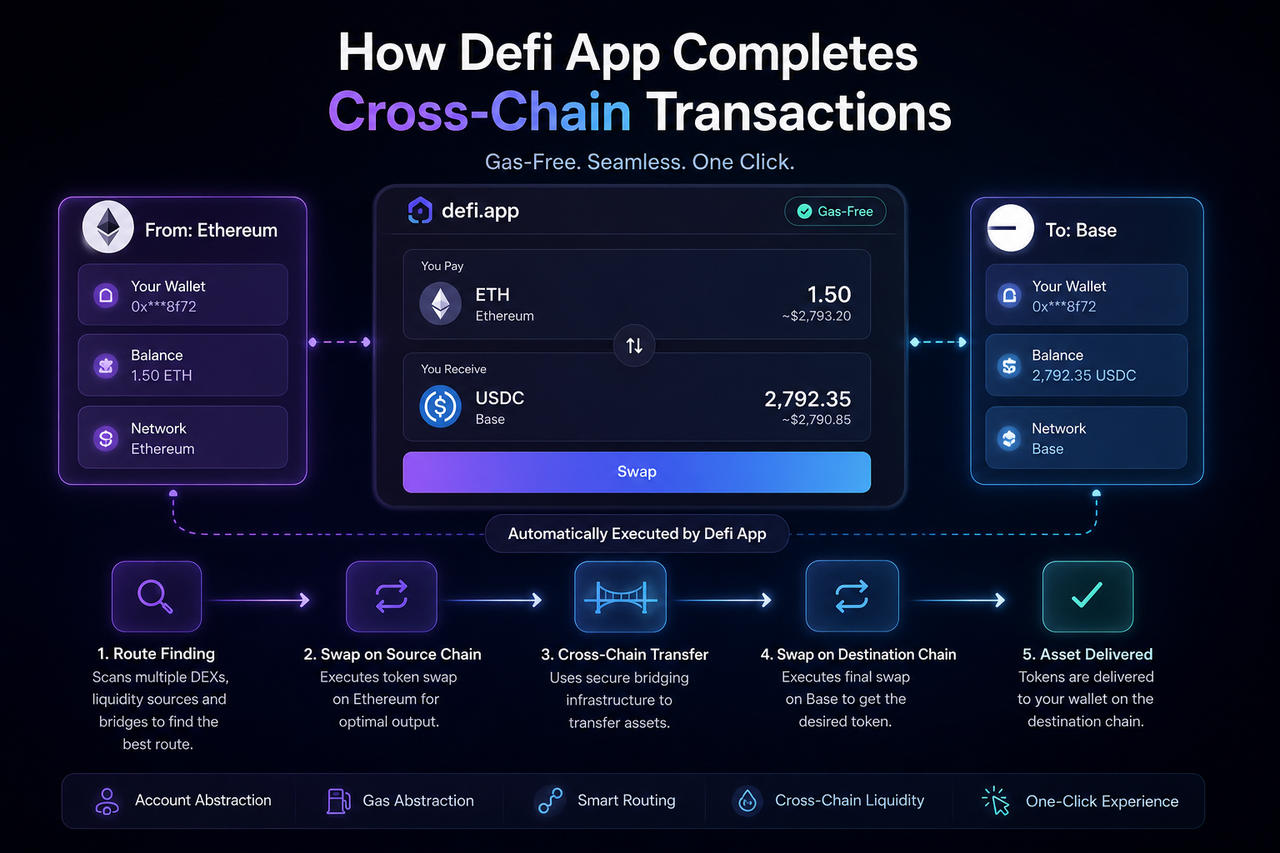
Когда пользователь инициирует кроссчейн-сделку, система обычно выполняет следующие шаги:
Шаг 1: Отправка запроса
Пользователь выбирает актив для продажи, целевой актив и целевую сеть.
Шаг 2: Анализ маршрута
Система интеллектуальной маршрутизации сканирует множество источников ликвидности и кроссчейн-протоколов.
Шаг 3: Симуляция сделки
Система оценивает ожидаемую цену, проскальзывание и затраты на исполнение.
Шаг 4: Подтверждение подписью
Пользователь авторизует исполнение сделки.
Шаг 5: Автоматическое кроссчейн-исполнение
Система выполняет конвертацию активов, перевод через мост и доставку в целевой сети.
Шаг 6: Поступление активов
Целевой актив отображается в аккаунте пользователя.
На протяжении всего процесса система автоматически координирует широкий спектр внутренних операций.
Чем Defi App отличается от традиционных кроссчейн-мостов?
И Defi App, и традиционные кроссчейн-мосты позволяют перемещать активы между цепочками, но выполняют разные функции.
Кроссчейн-мосты — это инфраструктура для передачи активов или сообщений между сетями.
Defi App — это приложение пользовательского уровня, которое объединяет множество инфраструктурных компонентов и оптимизирует общий опыт.
| Параметр сравнения |
Defi App |
Традиционный кроссчейн-мост |
| Позиционирование продукта |
Суперприложение DeFi |
Кроссчейн-инфраструктура |
| Пользовательский опыт |
Единый интерфейс |
Ручное выполнение |
| Управление Gas |
Автоматическая оптимизация |
Управляется пользователем |
| Выбор маршрута |
Автоматический поиск оптимального пути |
Обычно фиксированный мост |
| Функциональный охват |
Трейдинг, управление активами, доходность и др. |
Перевод активов |
По сути, Defi App выступает как ончейн-финансовый шлюз, а кроссчейн-мосты — лишь один из его внутренних компонентов.
Какие риски связаны с кроссчейн-трейдингом Defi App?
Автоматизация упрощает операции, но не устраняет все риски.
Кроссчейн-трейдинг по-прежнему включает несколько критических компонентов, в том числе:
Кроме того, время окончательного подтверждения различается в разных блокчейнах, и некоторые транзакции могут зависеть от изменений ончейн-состояния.
Заключение
Механизм кроссчейн-трейдинга Defi App объединяет абстракцию аккаунта, интеллектуальную маршрутизацию и автоматическое исполнение, превращая сложный мультичейн-процесс в одно действие пользователя. Основная ценность Gas-Free DeFi — не полное отсутствие комиссий, а скрытие сложностей управления Gas и кроссчейн-процедур, предоставляя пользователям беспрепятственный доступ к ликвидности и финансовым услугам в различных блокчейн-сетях.
Часто задаваемые вопросы
Означает ли Gas-Free DeFi, что всё полностью бесплатно?
Нет — Gas-Free DeFi не означает нулевую стоимость блокчейн-транзакций. Комиссии Gas существуют, но система обрабатывает их в фоновом режиме, поэтому пользователю не нужно самостоятельно управлять токенами Gas в разных сетях.
Как Defi App находит оптимальный путь сделки?
Defi App анализирует такие факторы, как ликвидность, проскальзывание, кроссчейн-затраты и состояние сети, а затем с помощью алгоритмов интеллектуальной маршрутизации определяет наиболее эффективный путь исполнения.
Что такое абстракция аккаунта в Defi App?
Абстракция аккаунта — это архитектура умного аккаунта, которая скрывает сложные ончейн-операции, позволяя пользователям торговать и управлять активами без понимания технических деталей.
В чем главное отличие Defi App от обычного кроссчейн-моста?
Обычный кроссчейн-мост в основном занимается переводом активов между сетями. Defi App же предоставляет полноценный пользовательский уровень, объединяющий трейдинг, мосты, управление активами и оптимизацию Gas.
Существует ли риск в кроссчейн-трейдинге Defi App?
Да — риски включают уязвимости смарт-контрактов, проблемы с кроссчейн-мостами, нехватку ликвидности, ошибки маршрутизации и перегрузку сети. Автоматизация упрощает процесс, но не устраняет внутренние риски блокчейн-систем.