A indústria blockchain está a evoluir de um ecossistema de cadeia única para um ecossistema multi-cadeia. Com um número crescente de protocolos DeFi, plataformas NFT e aplicações on-chain implementados em várias blockchains públicas e redes Layer2, os utilizadores precisam frequentemente de migrar ativos entre múltiplas blockchains. Transferir ativos entre cadeias de forma segura e eficiente tornou-se um requisito crítico na era multi-cadeia.
No espaço da infraestrutura entre cadeias, a cBridge destaca-se como um produto central da Celer Network. Ao contrário das pontes entre cadeias tradicionais que dependem de mecanismos de lock-and-mint, a cBridge utiliza uma rede de liquidez e a State Guardian Network (SGN) para construir um sistema de transferência entre cadeias que proporciona uma experiência de utilizador mais fluida. Como componente-chave do ecossistema entre cadeias da Celer, a cBridge fornece suporte fundamental para conexões de liquidez multi-cadeia e desenvolvimento de aplicações entre cadeias.
O que é a cBridge?
A cBridge é um protocolo de ponte entre cadeias da Celer Network, concebido principalmente para transferir ativos digitais entre diferentes blockchains.
À medida que o ecossistema multi-cadeia se expande, os ativos dos utilizadores estão frequentemente dispersos por várias redes. Depender de uma única blockchain já não é suficiente para satisfazer as procuras das aplicações, tornando a infraestrutura entre cadeias uma parte cada vez mais vital do panorama blockchain.
A cBridge foi concebida para reduzir a complexidade da migração de ativos entre diferentes blockchains, melhorando simultaneamente a eficiência e a experiência do utilizador. Através de uma estrutura entre cadeias unificada, os utilizadores podem mover ativos de forma fluida através de várias blockchains públicas e redes Layer2.
Quais são as diferenças entre a cBridge e as pontes entre cadeias tradicionais?
As pontes entre cadeias tradicionais operam tipicamente com um modelo de "bloquear ativos — cunhar ativos sintéticos".
Neste modelo, os ativos na cadeia de origem são bloqueados num contrato inteligente, enquanto a cadeia de destino gera uma quantidade correspondente de ativos sintéticos. Todo o processo depende de mecanismos de verificação entre cadeias para sincronização de estado.
A cBridge, em contraste, adota um modelo de rede de liquidez. Quando os utilizadores enviam ativos, o pool de liquidez na cadeia de destino liberta diretamente os ativos correspondentes para o utilizador, sem necessidade de cunhar tokens sintéticos de cada vez.
Esta arquitetura melhora a eficiência de capital e reduz a complexidade envolvida nas transferências entre cadeias.
Onde começa uma transferência entre cadeias?
O processo entre cadeias começa quando um utilizador submete um pedido de transferência.
Primeiro, o utilizador conecta uma carteira e seleciona a cadeia de origem, a cadeia de destino, o tipo de ativo e o montante da transferência. Por exemplo, um utilizador pode querer transferir USDC da Ethereum para a Arbitrum.
O sistema calcula então o montante estimado a receber e as taxas associadas, com base no estado do pool de liquidez, na rota entre cadeias e nas condições da rede.
Assim que o utilizador confirma a transação, o processo entre cadeias começa oficialmente.
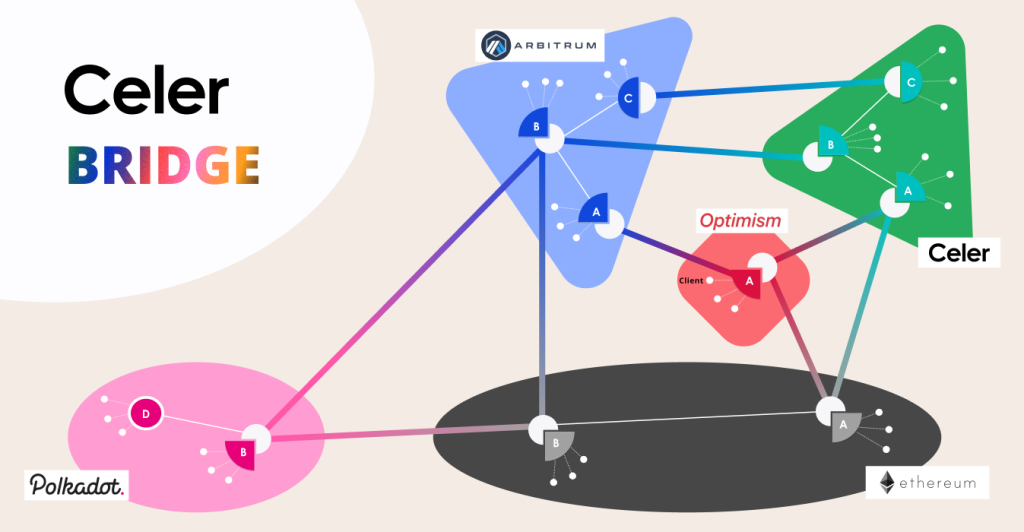
Passo 1: ativos da cadeia de origem entram no sistema entre cadeias
Após o utilizador iniciar uma transação, os ativos são enviados para um contrato inteligente ou pool de liquidez designado na cadeia de origem.
A blockchain regista a transação e gera eventos on-chain correspondentes.
Estes eventos contêm dados-chave como o montante da transferência, informações da cadeia de destino, endereço de receção e timestamp.
O sistema entre cadeias começa então a processar estas alterações de estado.
Passo 2: SGN monitoriza e confirma eventos entre cadeias
Assim que os ativos entram no sistema entre cadeias, a State Guardian Network (SGN) inicia a verificação.
Os nodos da SGN monitorizam continuamente eventos entre cadeias em várias redes blockchain. Quando um novo pedido de transferência é detetado, os nodos de verificação recolhem dados relevantes e verificam a autenticidade do evento.
A verificação inclui confirmar que a transação foi executada com sucesso, que o montante do ativo está correto e que as informações da cadeia de destino satisfazem os requisitos.
Após a verificação estar concluída, a SGN sincroniza o estado relevante em toda a rede de verificação.
Passo 3: a mensagem entre cadeias é enviada para a cadeia de destino
Após a confirmação do estado, a mensagem entre cadeias é transmitida para a cadeia de destino.
Este processo faz parte do mecanismo de comunicação entre cadeias. As alterações de estado geradas na cadeia de origem devem ser corretamente identificadas e executadas pela cadeia de destino.
A SGN coordena o processo de sincronização de mensagens para garantir que a cadeia de destino recebe uma prova de estado credível.
Apenas as mensagens verificadas são aceites pela cadeia de destino.
Passo 4: a cadeia de destino liberta os ativos correspondentes
Quando a cadeia de destino recebe o resultado da verificação, o processo de libertação de ativos começa.
Se for utilizado o modelo de rede de liquidez, o pool de liquidez da cadeia de destino envia a quantidade correspondente de ativos para o endereço especificado pelo utilizador.
Para o utilizador, isto significa que a operação entre cadeias está concluída, permitindo-lhe utilizar os ativos na cadeia de destino para negociação, DeFi ou outras aplicações.
Todo o processo normalmente não requer intervenção manual adicional.
Passo 5: o protocolo conclui a liquidação de liquidez no backend
Após o utilizador receber os ativos, o sistema entre cadeias continua com a liquidação interna.
Como os saldos dos pools de liquidez em diferentes cadeias mudam com a atividade dos utilizadores, o protocolo deve reequilibrar continuamente os fundos.
Estas operações são geralmente tratadas automaticamente pela rede de liquidez e pelos mecanismos relacionados.
A liquidação no backend ajuda a manter o fornecimento de fundos entre cadeias, garantindo que futuras transações entre cadeias possam prosseguir sem problemas.
Qual é o papel da SGN no processo entre cadeias?
A SGN é um componente crítico da estrutura de segurança da cBridge.
Um dos maiores desafios para as pontes entre cadeias é verificar a autenticidade dos estados em diferentes blockchains. Como uma blockchain não pode verificar diretamente dados de outra cadeia, é essencial uma camada de verificação confiável para coordenação.
A SGN utiliza uma rede de verificação descentralizada para confirmar a autenticidade dos eventos na cadeia de origem e sincroniza os resultados para a cadeia de destino.
Esta abordagem reduz os riscos associados aos modelos de verificação centralizados, ao mesmo tempo que aumenta a fiabilidade das operações entre cadeias.
Qual é o papel dos fornecedores de liquidez na cBridge?
Os fornecedores de liquidez são participantes essenciais no funcionamento da cBridge.
Eles fornecem fundos para pools de liquidez em diferentes blockchains, permitindo que o protocolo liberte ativos rapidamente na cadeia de destino.
Quando um utilizador inicia uma transação entre cadeias, os ativos na cadeia de destino provêm tipicamente do pool de liquidez, em vez de esperar por um processo complexo de re-cunhagem.
Assim, os fornecedores de liquidez formam a base da capacidade entre cadeias da cBridge.
Que taxas são incorridas numa transferência entre cadeias?
As transferências entre cadeias envolvem tipicamente múltiplos custos.
Primeiro, há a taxa de rede da cadeia de origem, que cobre o custo de execução da transação na blockchain.
Segundo, há uma taxa de serviço entre cadeias para suportar as operações do protocolo e a manutenção da rede de liquidez.
Algumas operações na cadeia de destino podem também incorrer em taxas de rede adicionais.
As taxas reais dependem da congestão da rede, do tipo de ativo e da rota entre cadeias.
Que fatores afetam a velocidade da transferência entre cadeias?
A velocidade da transferência entre cadeias é influenciada por vários fatores.
O tempo de confirmação da transação na cadeia de origem é frequentemente o fator mais significativo. A congestão da rede pode prolongar a confirmação.
O processo de verificação da SGN e a sincronização de mensagens entre cadeias também levam tempo.
Além disso, o estado da cadeia de destino e os fundos disponíveis no pool de liquidez afetam a velocidade final de chegada.
Como é que a cBridge garante a segurança entre cadeias?
A segurança é uma prioridade máxima no design das pontes entre cadeias.
A cBridge constrói um sistema de segurança em várias camadas utilizando contratos inteligentes, a rede de liquidez e a rede de verificação SGN.
Os contratos inteligentes gerem a lógica on-chain, a SGN verifica os estados entre cadeias e a rede de liquidez fornece suporte de fundos.
Esta arquitetura em camadas reduz o risco de pontos únicos de falha e aumenta a segurança geral do sistema entre cadeias.
Qual é a relação entre a cBridge e a Celer Inter-Chain Messaging?
A cBridge lida com transferências de ativos entre cadeias, enquanto a Inter-Chain Messaging (IM) gere a entrega de mensagens entre cadeias.
Juntos, o cross-chain de ativos e o cross-chain de mensagens formam o conjunto de interoperabilidade entre cadeias da Celer.
Ao construir aplicações entre cadeias, os programadores podem usar a cBridge para movimentação de ativos e a IM para comunicação entre cadeias entre contratos inteligentes.
Combinados, suportam cenários de aplicações multi-cadeia mais complexos.
Resumo
A cBridge é um protocolo de ponte entre cadeias da Celer Network que permite a movimentação de ativos entre diferentes blockchains através de uma rede de liquidez, da State Guardian Network (SGN) e de mecanismos de mensagens entre cadeias.
Uma transferência entre cadeias completa envolve tipicamente múltiplos passos: depósito de ativos na cadeia de origem, verificação de estado pela SGN, sincronização de mensagens entre cadeias, libertação de ativos na cadeia de destino e liquidação de liquidez no backend.
Perguntas Frequentes
Por que passos passa uma transferência entre cadeias da cBridge?
Uma transferência completa passa geralmente por cinco etapas principais: depósito de ativos na cadeia de origem, verificação de estado pela SGN, sincronização de mensagens entre cadeias, libertação de ativos na cadeia de destino e liquidação da rede de liquidez no backend.
Pelo que é responsável a SGN no processo entre cadeias?
A State Guardian Network (SGN) verifica a autenticidade dos eventos entre cadeias, sincroniza informações de estado e coordena a execução de mensagens entre cadeias. É um componente-chave da arquitetura de segurança da cBridge.
A cBridge utiliza um modelo de lock-and-mint?
A cBridge utiliza principalmente o modelo de rede de liquidez para transferências entre cadeias, embora a implementação específica possa variar dependendo dos ativos e redes suportados.
Por que é que as transferências entre cadeias precisam de um pool de liquidez?
O pool de liquidez liberta diretamente ativos para os utilizadores na cadeia de destino, melhorando a eficiência entre cadeias e eliminando o tempo de espera para a cunhagem de ativos nas pontes entre cadeias tradicionais.
Qual é a diferença entre a cBridge e as pontes entre cadeias comuns?
Além de suportar transferências de ativos entre cadeias, a cBridge trabalha em conjunto com a Celer Inter-Chain Messaging para formar uma infraestrutura de interoperabilidade entre cadeias, permitindo que os programadores construam aplicações multi-cadeia com capacidades de comunicação entre cadeias.