


SATOのガバナンスメカニズムを調べるユーザーは、オリジナルチームが離脱した後もCommunity Takeoverプロジェクトが継続運営される仕組みを理解しようとしています。コアチーム主導の従来型プロジェクトとは異なり、SATOはコミュニティコンセンサス、マルチ署名管理、透明性の高い協調プロセスによってガバナンスが行われています。
本テーマでは、Woof DAOによるコミュニティガバナンスの調整、マルチ署名トレジャリーによるエコシステムリソースの管理、そしてCommunity TakeoverによるSATOの分散型構造の再構築という3つの主要分野を取り上げます。
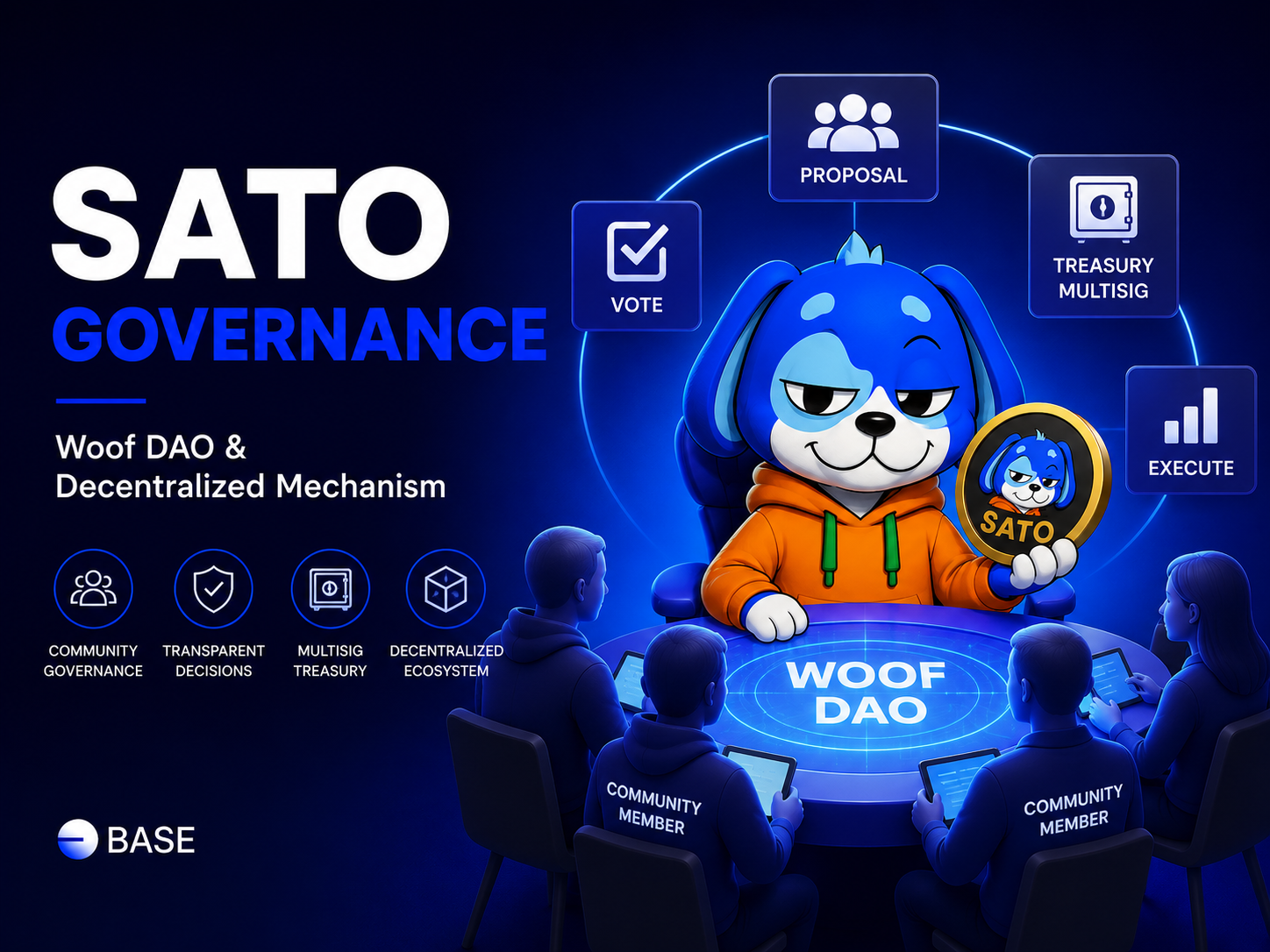
Woof DAOとは
Woof DAOは、SATOのコミュニティガバナンスにおける調整フレームワークとして設計され、コミュニティメンバーの組織化、エコシステムの方向性管理、プロジェクトリソースの透明な配分を担います。
従来の企業型管理組織とは異なり、Woof DAOはSATOコミュニティを基盤とした分散型・協調型組織です。主な役割は、コミュニティの議論、リソース配分、エコシステム活動、ガバナンス決定を結びつけ、中央集権的なチームがいなくてもプロジェクトが円滑に運営される体制を構築することです。
まず、コミュニティメンバーがSATOエコシステム発展のアイデアを提案します。Woof DAOがこれらの議論を整理し、重要なトピックを実行可能な課題に精緻化します。その後、マルチ署名トレジャリーやコミュニティコーディネーターが、合意形成に基づいてリソースを配分します。最終的に、こうしたガバナンスの成果がSATOの成長、パートナーシップ、Baseエコシステム内でのアプリケーション開発を推進します。
Woof DAOは、SATOガバナンスを非公式なグループディスカッションから構造化された協調フレームワークへと変革する要となります。Community Takeoverプロジェクトでは、DAOモデルによって単一管理者への依存が大幅に低減されます。
SATOコミュニティガバナンスの誕生
SATOのコミュニティガバナンスは、Community Takeover後にオリジナルチームが退いたことで、コミュニティメンバーがプロジェクトとエコシステム運営の責任を担う形で誕生しました。
SATOのガバナンス構造は、最初から完全なDAOで運営されていたのではなく、コミュニティテイクオーバーの過程で段階的に進化しました。まずオリジナルチームが離脱し、コミュニティメンバーがソーシャルチャネルやリソースの調整、エコシステムの維持を引き継ぎました。その後、プロジェクトの方向性やマーケティング、NFT、アプリケーション領域で協力が進み、最終的にSATOはコミュニティ主導のガバナンスモデルを採用しました。
このガバナンス構造は、多くのMeme Coinプロジェクトに見られる中央集権型モデルとは異なり、開発チームではなくコミュニティコンセンサスによってエコシステムの方向性が決定されます。
構造的に、SATOのコミュニティガバナンスは継続的な協力メカニズムとして機能します。コミュニティメンバーは提唱者であり参加者でもあり、コンテンツの提供や意思決定にも積極的に関与できます。このモデルにより、SATOのエコシステムの持続可能性とコミュニティのエンゲージメントが直結します。
マルチ署名トレジャリーによるSATOリソース管理
マルチ署名トレジャリーは、SATOのリソース管理を支える重要なツールであり、単一アドレスによる資金管理リスクを軽減し、コミュニティリソースの利用透明性を高めます。
マルチ署名メカニズムの要点は、資金移動やリソース配分に際し、単独の個人ではなく複数の承認が必要であることです。SATOのコミュニティ主導モデルでは、マルチ署名トレジャリーが運営リソース、イベント費用、エコシステムパートナーシップ、マーケティング予算の管理を担います。
まず、コミュニティまたはガバナンスメンバーがリソース利用を提案します。マルチ署名サイナーがコミュニティの議論やプロジェクト方針に基づき申請内容を確認します。必要な署名が揃うとリソースが配分され、最終的に支出結果がコミュニティに報告されることで、透明なガバナンス記録が残ります。
| ガバナンスモジュール | 主な機能 | SATOへの影響 |
|---|---|---|
| Woof DAO | コミュニティガバナンスの調整 | 協力効率の向上 |
| マルチ署名トレジャリー | エコシステムリソースの管理 | 単一支配リスクの低減 |
| コミュニティ提案 | メンバー意見の集約 | 参加度の向上 |
| オープンディスカッション | コミュニティコンセンサスの構築 | 透明性の向上 |
| Community Takeover | プロジェクト運営の再構築 | コミュニティリーダーシップの強化 |
この構造から、SATOのガバナンスは単一のプロセスではなく、DAO調整、マルチ署名管理、コミュニティフィードバックが組み合わさったシステムであることが分かります。マルチ署名トレジャリーは、コミュニティリソースのセキュリティと監督強化に大きく貢献します。
コミュニティメンバーのプロジェクト意思決定への参加方法
SATOコミュニティメンバーは、ディスカッションへの参加、提案の提出、投票、コンテンツ提供、エコシステムイニシアチブの推進を通じてプロジェクト意思決定に関与できます。
コミュニティメンバーは単なるトークンホルダーではなく、ガバナンス参加者、コンテンツクリエイター、イベントオーガナイザー、エコシステム構築者としても活動します。Community Takeoverモデルでは、プロジェクト運営の質は単一チームのロードマップリリースよりも、継続的なコミュニティ貢献に大きく依存します。
まず、メンバーがコミュニティ内で質問やアイデア、イベント提案を発信します。これらの議論が具体的なガバナンストピックに整理され、コミュニティは投票やコンセンサス、マルチ署名調整を通じて意思決定を実行します。最終的に、コミュニティからのフィードバックを反映しながらプロジェクトの方向性が継続的に最適化されます。
この参加型メカニズムにより、SATOのガバナンスは真に協調的となり、ユーザーは受動的な観察者ではなく、コンテンツ制作やディスカッション、ガバナンスへの参加を通じてエコシステムに積極的に影響を与えることができます。
SATOの分散型構造の主な特徴
SATOの分散型構造は、コントラクト権限、流動性管理、コミュニティガバナンス、リソース管理に明確に現れています。
SATOは、0%税、流動性バーン、Ownership Renounced(オーナー権放棄)、コミュニティテイクオーバーを重視した設計です。これらの特徴が、プロジェクトチームによるコントラクト権限や流動性管理を通じたエコシステムへの影響力を制限します。
0%税はトランザクション時に追加手数料が発生しないことを意味し、流動性バーンは単一主体による流動性引き出しリスクを低減します。Ownership Renouncedはコントラクトパラメータの中央集権的な変更リスクを最小化します。さらに、コミュニティガバナンスとマルチ署名トレジャリーが継続的なプロジェクト運営を調整します。
この構造により、SATOの分散化は単なる標語ではなく、コントラクト権限、リソース管理、コミュニティ参加に組み込まれています。Meme Coinにおいて分散化はユーザーの透明性を高めますが、プロジェクトの成功は持続的なコミュニティ協力にかかっています。
Community Takeoverがガバナンスモデルに与える影響
Community Takeoverは、SATOのガバナンスをチーム主導型からコミュニティ主導型へと根本的に転換しました。
Community Takeover(CTO)モデルの本質は、オリジナルチームが離脱・運営停止した際に、コミュニティがプロジェクトリソースとストーリーの主導権を握り、新たな協調メカニズムによってプロジェクトを維持することです。SATOにとってこの転換は、運営主体だけでなくガバナンスロジック自体の変化を意味します。
プロジェクト運営はオリジナルチームからコミュニティ調整へと移行し、コミュニティはマルチ署名トレジャリー、オープンディスカッション、協調ガバナンスといった信頼メカニズムを再構築する必要があります。アウトリーチやアプリ開発、コミュニティ文化もメンバー全体で推進されます。最終的に、SATOのガバナンスの安定性はコミュニティコンセンサスの継続的な形成にかかっています。
このアプローチにより、SATOの価値ストーリーはMeme的なアイデンティティだけでなく、コミュニティ主導による再編プロセスにも由来します。Community Takeoverはコミュニティをガバナンスの中心に据える一方で、組織調整の難易度も高めます。
SATOガバナンスメカニズムの課題
SATOのガバナンスは、コミュニティコンセンサスの形成、実行効率、リソース調整、継続的なエンゲージメントという課題に直面しています。
分散型ガバナンスは単一支配リスクを低減しますが、意思決定の遅延や意見の分散、責任の曖昧化を招くこともあります。Community Takeoverプロジェクトにおいて、コミュニティは強みであると同時にガバナンス課題の源でもあります。
コミュニティはプロジェクトの方向性に関して合意形成を図る必要があります。マルチ署名トレジャリーやガバナンスメンバーは議論を実行可能なステップに落とし込む必要があり、コンテンツやアウトリーチ、エコシステム開発への継続的な支援も不可欠です。参加が減少すれば、ガバナンス効率やエコシステムの進展が損なわれるリスクがあります。
これらの課題は、SATOのガバナンスが完全自動化されているわけではなく、継続的な参加、オープンなコミュニケーション、リソース協調に依存していることを示しています。中央集権型チームモデルと比較して、コミュニティガバナンスは開放性と透明性を提供しますが、長期的な実行安定性の維持はより困難です。
まとめ
SATOのコミュニティガバナンスは、Woof DAO、マルチ署名トレジャリー、コミュニティ提案、Community Takeoverメカニズムを中心に構築されています。Woof DAOはコミュニティの方向性を調整し、マルチ署名トレジャリーがエコシステムリソースを管理、コミュニティメンバーがディスカッション、提案、投票、コンテンツ提供を通じてプロジェクトの意思決定を推進します。
このガバナンス構造は、単一チームによるコントロールではなく、コミュニティ協力によってBaseエコシステム内でMeme文化とオンチェーンインタラクションを持続させることを重視しています。Community TakeoverはSATOにより強いコミュニティリーダーシップをもたらしますが、同時にガバナンス効率、リソース調整、長期的なエンゲージメントがプロジェクトの主要課題となります。
よくある質問
Woof DAOとは
Woof DAOはSATOのコミュニティガバナンスにおける調整組織であり、コミュニティディスカッション、リソース管理、エコシステムの方向性を推進します。Community Takeover後、SATOに明確なガバナンス構造をもたらします。
SATOコミュニティガバナンスはどのように形成されるのか
SATOのコミュニティガバナンスは、オリジナルチームが離脱した後に誕生しました。コミュニティメンバーがプロジェクトリソースを引き継ぎ、Woof DAO、マルチ署名トレジャリー、オープンディスカッション、コミュニティ提案を通じて運営を維持しています。
マルチ署名トレジャリーはSATOでどのような役割を果たすのか
マルチ署名トレジャリーはSATOのコミュニティリソースを管理します。資金利用には複数のサイナーによる承認が必要で、単一アドレスによる支配リスクを低減し、ガバナンスの透明性を高めます。
SATOホルダーはどのようにガバナンスに参加するのか
SATOホルダーは、コミュニティディスカッション、提案、投票、コンテンツ作成、エコシステム活動を通じてガバナンスに参加します。参加は協調的かつコミュニティ主導型で、従来の企業型管理構造とは異なります。
Community TakeoverはSATOにどのような影響を与えるのか
Community TakeoverによってSATOはチーム主導型からコミュニティ主導型ガバナンスへ転換します。コミュニティエンゲージメントが高まり、コミュニティコンセンサスと長期的な協力への依存度が増します。
SATOのガバナンスメカニズムのリスクは何か
SATOのガバナンスリスクには、コミュニティ意見の分散、実行効率の低下、リソース調整の複雑化、長期的な参加の不安定さが含まれます。分散型ガバナンスは透明性を高めますが、調整の難易度も上がります。
共有
マイクロソフトは決算の先にある長期のAI課題に直面していると、ジェーン・マンスタ―が警告
ウォール街は6月の高値後にAIチップ関連株を売却、Western Digitalは746ドルの過去最高値から40%下落
韓国のカバード・コールETFが7月に25兆ウォンを突破、市場の記録的なボラティリティの中で
TSMCはAI需要を背景に第2四半期の売上高40.2Bドルを発表し、設備投資(Capex)を60~64Bドルに引き上げた
イラン、米軍に対して中東で複数の弾道ミサイルを発射;7月28日にすべて迎撃される


関連記事
Sato The Dog(SATO)の活用シーンとは何か。NFT、ゲーム、コミュニティエコシステムについて分析いたします。

TRUMPコインの活用方法とは?TRUMPの市場での位置付けとトークノミクスを詳しく解説

他のミームコインと異なるTRUMP Coinの特徴とは?政治系ミームコインならではの独自性

Siren(SIREN)のAIエージェントの仕組みとは?コアメカニズムの徹底解析

Fabric Protocol(ROBO)とは?分散型ロボットネットワークプロトコルの詳細分析
