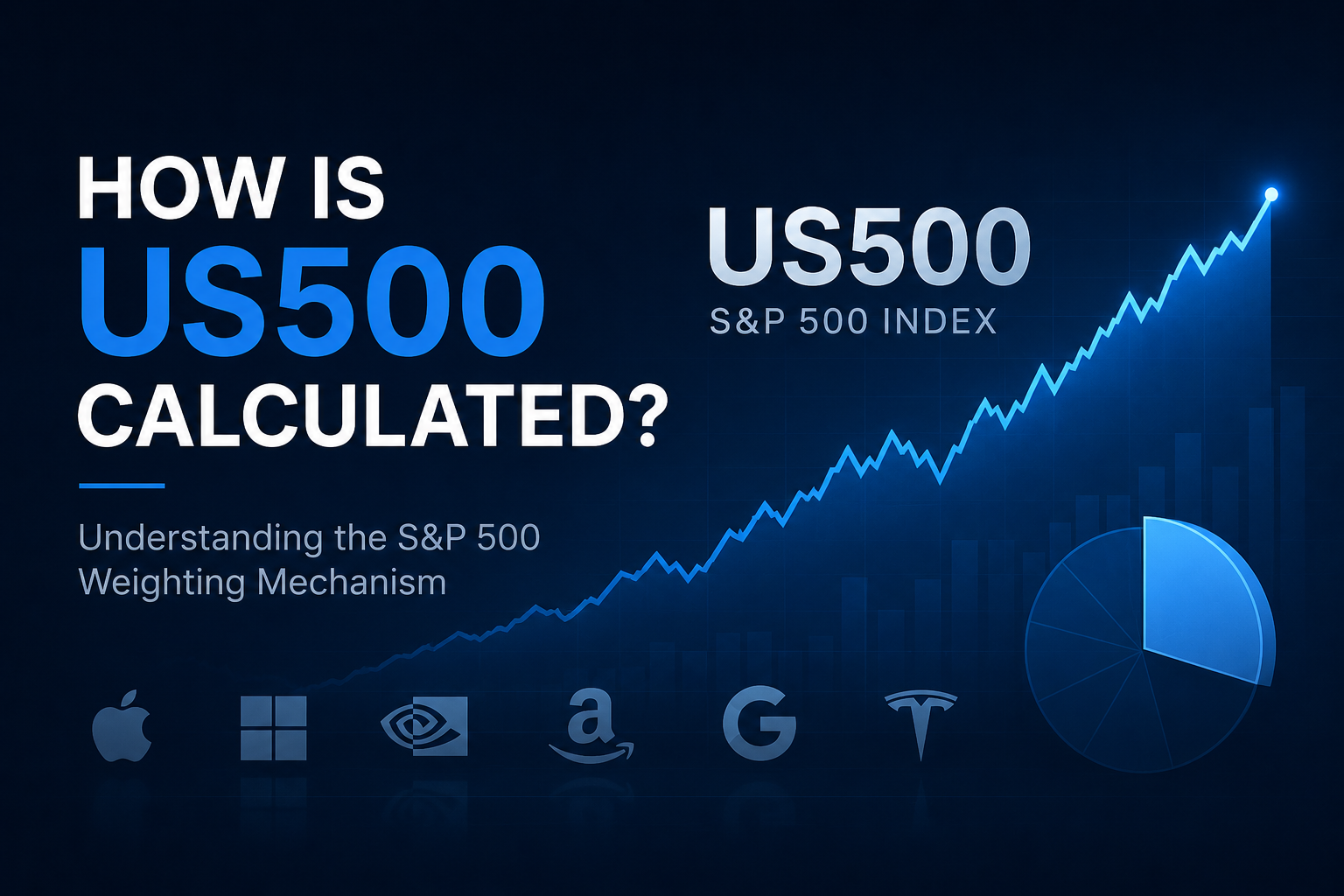
Tầm quan trọng của cơ chế trọng số chỉ số nằm ở chỗ chỉ số này không chỉ là một công cụ quan sát thị trường, mà nó còn tác động trực tiếp đến giá của ETF, quỹ chỉ số và CFD. Các phương pháp tính chỉ số khác nhau làm thay đổi cấu trúc biến động thị trường và dòng vốn.
Bài viết này phân tích logic tính toán của US500, cơ chế trọng số theo vốn hóa thị trường, cách các cổ phiếu thành phần tác động đến chỉ số, quy trình điều chỉnh chỉ số, sự hình thành thanh khoản và sự tương tác giữa thị trường ETF và CFD.
Logic tính toán của US500 là gì?
US500 được xây dựng trên mô hình trọng số theo vốn hóa thị trường thả nổi tự do. Hệ thống chỉ số xác định trọng số của mỗi công ty dựa trên giá trị thị trường của các cổ phiếu đang được giao dịch tự do.
Đầu tiên, ủy ban chỉ số xác nhận danh sách các cổ phiếu thành phần của US500. Sau đó, hệ thống tổng hợp số lượng cổ phiếu thả nổi tự do và giá cổ phiếu theo thời gian thực của từng công ty.
Tiếp đến, hệ thống tính tổng vốn hóa thị trường thả nổi tự do của mỗi công ty. Công ty nào có vốn hóa càng lớn thì trọng số trong chỉ số càng cao, khiến cho biến động giá của công ty đó có tác động mạnh hơn lên US500.
Cuối cùng, hệ thống tổng hợp tất cả vốn hóa thị trường của các cổ phiếu thành phần và áp dụng một bộ chia chỉ số để tạo ra mức chỉ số theo thời gian thực.
Bảng dưới đây phác thảo quy trình tính toán cốt lõi của US500:
| Bước tính toán |
Hành động của hệ thống |
Tác động đến chỉ số |
| Sàng lọc cổ phiếu thành phần |
Xác nhận các công ty trong chỉ số |
Thiết lập cấu trúc chỉ số |
| Tính vốn hóa thị trường |
Tính vốn hóa thị trường thả nổi tự do |
Xác định phân bổ trọng số |
| Cập nhật theo thời gian thực |
Đồng bộ thay đổi giá cổ phiếu |
Thúc đẩy biến động chỉ số |
| Điều chỉnh bộ chia chỉ số |
Hiệu chỉnh thay đổi cấu trúc |
Duy trì sự liên tục của chỉ số |
Cơ chế này có nghĩa là US500 nghiêng về phản ánh hiệu suất của các doanh nghiệp vốn hóa lớn hơn là biến động trung bình của tất cả các công ty niêm yết.
Cơ chế trọng số theo vốn hóa thị trường ảnh hưởng đến US500 như thế nào?
Cơ chế trọng số theo vốn hóa thị trường của US500 trao cho các công ty lớn một phần ảnh hưởng lớn hơn trong chỉ số. Vốn hóa thị trường của một công ty càng lớn, thì mức độ ảnh hưởng của nó lên US500 thường càng cao.
Các công ty công nghệ lớn thường có vốn hóa thị trường cao nhất, vì vậy các cổ phiếu thuộc lĩnh vực AI, điện toán đám mây và bán dẫn thường định hình xu hướng tổng thể của US500.
Khi giá cổ phiếu của một công ty lớn tăng, hệ thống chỉ số sẽ nâng mức chỉ số tổng thể theo. Các ETF và quỹ chỉ số sau đó điều chỉnh danh mục nắm giữ để phù hợp với sự phân bổ trọng số mới.
Khi dòng vốn chảy vào các công ty lớn này, trọng số của chúng có thể tiếp tục tăng lên, củng cố một cấu trúc dẫn dắt rõ ràng trong US500.
Không giống như các chỉ số trọng số bằng nhau, US500 không cho tất cả các công ty ảnh hưởng ngang nhau. Các cổ phiếu vốn hóa lớn chi phối các biến động mang tính định hướng.
Ưu điểm chính của cấu trúc này là nó phản ánh chính xác hơn quy mô của thị trường vốn hóa lớn Hoa Kỳ, mặc dù nó cũng làm tăng sự phụ thuộc của chỉ số vào một số ít cổ phiếu siêu vốn hóa.
Biến động của cổ phiếu thành phần ảnh hưởng đến chỉ số như thế nào?
Biến động của US500 chủ yếu đến từ sự thay đổi giá của các cổ phiếu thành phần. Do vốn hóa thị trường của các công ty rất khác nhau nên tác động của chúng lên chỉ số cũng chênh lệch đáng kể.
Giao dịch trên thị trường đẩy giá cổ phiếu thành phần lên hoặc xuống. Hệ thống chỉ số sau đó cập nhật tổng vốn hóa thị trường của từng công ty theo thời gian thực.
Khi cổ phiếu của một công ty lớn tăng giá mạnh, US500 thường tăng theo. Một sự sụt giảm ở một tên tuổi lớn cũng có thể kéo chỉ số xuống thấp hơn.
Tác động tổng hợp của tất cả các cổ phiếu thành phần cuối cùng tạo nên xu hướng thị trường tổng thể của US500.
Bảng sau đây minh họa cách các thay đổi của cổ phiếu thành phần lan tỏa qua US500:
| Thay đổi cổ phiếu thành phần |
Phản ứng của hệ thống chỉ số |
Tác động đến US500 |
| Cổ phiếu công nghệ lớn tăng |
Trọng số tăng tương ứng |
Chỉ số tăng rõ rệt |
| Cổ phiếu tài chính giảm |
Trọng số ngành suy giảm |
Chỉ số chịu áp lực |
| Nhiều ngành đồng loạt tăng |
Khẩu vị rủi ro mạnh lên |
Chỉ số mở rộng đà tăng |
| Công ty dẫn đầu lao dốc |
Tâm lý thị trường suy yếu |
Biên độ biến động của chỉ số mở rộng |
Cấu trúc này khẳng định US500 không phải là một mức trung bình đơn giản—mà là một chuẩn mực thị trường do các cổ phiếu vốn hóa lớn dẫn dắt.
Chỉ số S&P 500 điều chỉnh bao lâu một lần?
S&P 500 không tuân theo chu kỳ tái cân bằng cố định hàng quý. Thay vào đó, Ủy ban S&P điều chỉnh linh hoạt danh sách cổ phiếu thành phần dựa trên điều kiện thị trường, quy mô công ty và tỷ trọng ngành.
Nếu vốn hóa thị trường của một công ty thay đổi đáng kể, ủy ban có thể xem xét lại tư cách thành viên của công ty đó. Thanh khoản suy giảm hoặc các yếu tố cơ bản xấu đi cũng có thể dẫn đến việc loại bỏ.
Ủy ban liên tục theo dõi dữ liệu của các công ty niêm yết. Sau đó, họ đánh giá xem mỗi công ty có còn đáp ứng các ngưỡng vốn hóa thị trường và thanh khoản của US500 hay không.
Một số công ty có thể bị loại khỏi chỉ số, trong khi các công ty mới được thêm vào dựa trên tính đại diện thị trường.
Quy trình linh hoạt này giúp US500 luôn phản ánh trung thực bức tranh thị trường vốn hóa lớn của Hoa Kỳ.
Không giống như các chỉ số tĩnh, US500 liên tục cập nhật hỗn hợp ngành của mình, cho phép các cổ phiếu AI, công nghệ và nền kinh tế mới dần dần chiếm lĩnh nhiều trọng số hơn.
Thanh khoản của US500 được hình thành như thế nào?
Tính thanh khoản của US500 bắt nguồn từ quy mô của các cổ phiếu thành phần, hệ sinh thái ETF và dòng vốn tổ chức toàn cầu. Các nhà đầu tư lớn liên tục phân bổ nguồn lực xoay quanh chỉ số này.
ETF là một động cơ thanh khoản chính. Nhiều ETF sao chép danh mục nắm giữ của US500, vì vậy chúng liên tục mua và bán các cổ phiếu thành phần.
Các quỹ chỉ số nắm giữ cổ phiếu theo đúng trọng số của US500. Các hoạt động tạo và mua lại ETF sau đó thúc đẩy hoạt động thị trường.
Các nhà tạo lập thị trường tham gia để cung cấp thanh khoản, và dòng vốn tổ chức toàn cầu làm sâu thêm khối lượng giao dịch tổng thể.
Cấu trúc thanh khoản của US500 thường bao gồm:
- Vốn ETF
- Quỹ chỉ số
- Giao dịch của nhà tạo lập thị trường
- Phân bổ của tổ chức
Khung này giúp US500 trở thành một trong những chỉ số cổ phiếu được giao dịch sôi động nhất thế giới.
Tại sao cơ chế chỉ số lại ảnh hưởng đến thị trường ETF và CFD?
Cơ chế chỉ số của US500 tác động trực tiếp đến việc định giá các ETF và CFD. Cả hai loại sản phẩm này đều dựa vào các biến động theo thời gian thực của US500.
ETF phản ánh trọng số cổ phiếu thành phần của US500, do đó các thay đổi trong chỉ số sẽ tác động trực tiếp đến giá trị tài sản ròng (NAV) của ETF. Một đợt tăng giá của các cổ phiếu vốn hóa lớn sẽ kéo theo sự tăng giá của các ETF.
CFD cung cấp khả năng tiếp xúc với chỉ số dựa trên giá trực tiếp của US500. Các nền tảng điều chỉnh báo giá CFD theo các biến động của chỉ số.
Đầu tiên, hệ thống chỉ số tạo ra dữ liệu thị trường theo thời gian thực. Các nền tảng ETF và CFD sau đó đồng bộ hóa giá của chúng với dữ liệu đó.
Dòng vốn sau đó ảnh hưởng đến khối lượng giao dịch của các sản phẩm liên kết với chỉ số, và sự biến động của US500 lan tỏa sang thị trường ETF và CFD.
Nói tóm lại, US500 không chỉ đơn thuần là một công cụ chỉ số, mà nó là một mỏ neo định giá nền tảng cho thị trường TradFi toàn cầu.
Tổng kết
US500 sử dụng mô hình trọng số theo vốn hóa thị trường thả nổi tự do để theo dõi giá trị thị trường của các công ty niêm yết lớn của Hoa Kỳ, qua đó phản ánh hiệu suất tổng thể của các doanh nghiệp cốt lõi của Mỹ.
Các công ty lớn có trọng số cao hơn, vì vậy các cổ phiếu dẫn đầu trong các lĩnh vực công nghệ, tài chính và tiêu dùng thường là những yếu tố quyết định hướng đi của chỉ số.
ETF, quỹ chỉ số và CFD đều xây dựng cấu trúc của mình dựa trên US500. Do đó, logic tính toán của chỉ số này không chỉ ảnh hưởng đến bản thân chỉ số mà còn tác động đến động thái thanh khoản và định giá tài sản trên toàn bộ thị trường TradFi toàn cầu.
Câu hỏi thường gặp
US500 được tính như thế nào?
US500 được tính toán dựa trên mô hình trọng số theo vốn hóa thị trường thả nổi tự do. Hệ thống chỉ số điều chỉnh linh hoạt trọng số của mỗi công ty dựa trên giá trị thị trường của các cổ phiếu đang được giao dịch tự do.
Tại sao các công ty lớn lại ảnh hưởng đến US500?
Các công ty lớn có vốn hóa thị trường cao hơn và do đó có trọng số lớn hơn trong US500. Khi các cổ phiếu công nghệ lớn tăng hoặc giảm, chúng thường tạo ra tác động đáng kể đến chỉ số.
US500 có tái cân bằng theo lịch cố định không?
Ủy ban S&P điều chỉnh linh hoạt các cổ phiếu thành phần của US500 dựa trên vốn hóa thị trường, thanh khoản và tỷ trọng ngành. Không có chu kỳ tái cân bằng tổng thể cố định.
Tại sao ETF lại bị ảnh hưởng bởi US500?
Nhiều ETF sao chép cấu trúc cổ phiếu thành phần của US500, do đó các thay đổi trong chỉ số sẽ ảnh hưởng trực tiếp đến giá trị tài sản ròng và giá thị trường của các ETF.
CFD theo dõi US500 như thế nào?
Các nền tảng CFD thường cập nhật giá sản phẩm dựa trên dữ liệu US500 theo thời gian thực, có nghĩa là các biến động của US500 ảnh hưởng trực tiếp đến hiệu suất của thị trường CFD.