El rápido crecimiento del mercado de futuros perpetuos on-chain está atrayendo a un número cada vez mayor de activos financieros tradicionales al ecosistema de trading on-chain. Más allá de los índices bursátiles, las materias primas y el mercado de forex, algunas plataformas ya exploran futuros perpetuos on-chain para empresas en etapa Pre-IPO.
En el sistema financiero tradicional, los inversores minoristas se topan con barreras de entrada elevadas, liquidez limitada y restricciones geográficas al querer operar con acciones de empresas no listadas a través de los mercados de acciones Pre-IPO. El mercado de futuros perpetuos Pre-IPO de TradeXYZ propone un nuevo paradigma de "descubrimiento de precios en torno a las valoraciones empresariales" basado en el mecanismo de futuros perpetuos on-chain.
¿Qué es un contrato de futuros perpetuos Pre-IPO?
Un contrato de futuros perpetuos Pre-IPO es un mercado de futuros perpetuos on-chain creado en torno a la valoración de una empresa no listada. Te permite ir largo o corto sobre la valoración futura de la compañía sin poseer nunca sus acciones reales.
A diferencia de las acciones tradicionales, este mercado no implica la entrega física de títulos. En su lugar, se especula sobre movimientos de precio o se cubren riesgos vinculados a las fluctuaciones de la valoración de mercado de la empresa.
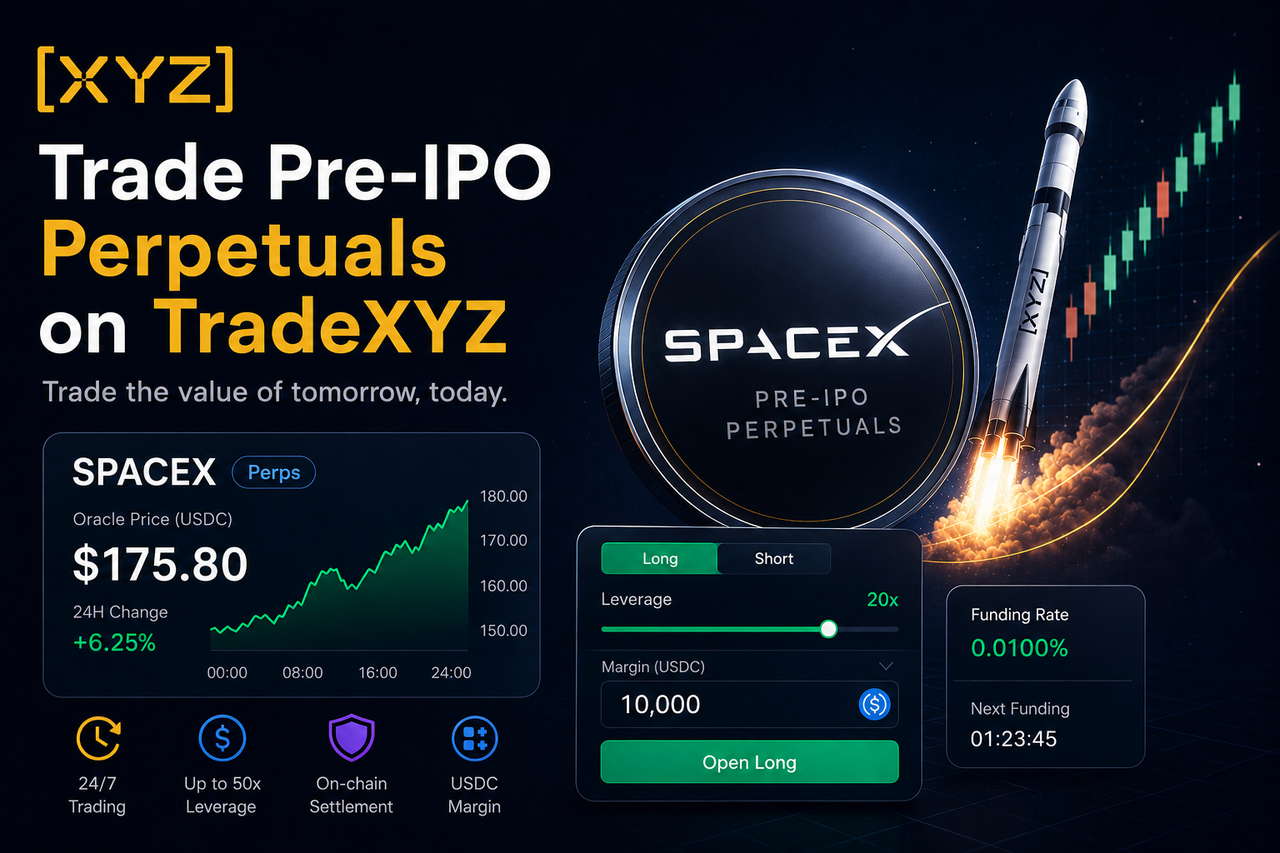
Tomemos el mercado de futuros perpetuos de SpaceX: no se negocian acciones de SpaceX, sino un mercado de futuros perpetuos construido a partir de su valoración de mercado, los precios de negociación OTC y datos de referencia externos.
La estructura es similar a la de los futuros perpetuos tradicionales:
- Sin fecha de vencimiento fija
- Admite trading con apalancamiento
- Mecanismo de tasa de financiación para mantener el precio alineado
- Stablecoins como USDC como margen
El objetivo principal de los futuros perpetuos Pre-IPO no es sustituir los mercados de renta variable, sino ofrecer un mecanismo on-chain para expresar expectativas de mercado.
¿Por qué los Perps de SpaceX captan la atención del mercado?
SpaceX es una de las empresas tecnológicas no listadas más seguidas del mundo, y su valoración lleva tiempo siendo un foco de atención en los mercados primario y privado.
Como los inversores minoristas no pueden obtener acciones directas de SpaceX con facilidad, siempre ha existido una demanda de trading en torno a los cambios en su valoración. El mercado de futuros perpetuos de SpaceX lanzado por TradeXYZ ha cubierto en parte ese vacío al ofrecer un lugar de negociación de precios accesible al público.
La atención sobre los Perps de SpaceX se explica por estos factores:
| Factor de mercado |
Impacto en los Perps de SpaceX |
| Escasez de acciones no listadas |
Impulsa el interés del mercado |
| Excitación en torno a la IA y el sector aeroespacial |
Amplifica la volatilidad de la valoración |
| Expectativa de salida a bolsa (OPI) |
Refuerza la demanda de trading |
| Mercado on-chain 24/7 |
Aumenta la participación global |
| Trading con apalancamiento |
Magnifica las oscilaciones del mercado |
Frente a los mercados privados tradicionales, el entorno de futuros perpetuos on-chain ofrece una negociación de precios de mayor frecuencia y menor barrera de entrada, lo que genera fluctuaciones de precio más acusadas.
¿Cómo fija TradeXYZ los precios en su mercado Pre-IPO?
Uno de los mayores retos de cualquier mercado de futuros perpetuos Pre-IPO es la fuente de precios.
Como las empresas no listadas carecen de un mercado bursátil público, las plataformas deben combinar múltiples fuentes de datos para construir un sistema de precios de referencia. Estas fuentes suelen incluir:
- Valoraciones del mercado privado
- Precios del mercado OTC secundario
- Valoraciones de rondas de financiación
- Sentimiento del mercado y expectativas
- Datos de Oracle externos
TradeXYZ suele utilizar Precios Oracle junto con Precios de Referencia Externos como base para la fijación de precios.
Al no existir un mercado público continuo, la volatilidad de los precios en los futuros perpetuos Pre-IPO suele ser mayor que en los mercados bursátiles maduros. Esto significa que los precios pueden desviarse significativamente en muy poco tiempo.
Para mitigar los riesgos de una volatilidad extrema, las plataformas suelen incorporar salvaguardas como:
- Precio de marca
- Límites de posición basados en riesgo
- Restricciones de apalancamiento
- Lógica de protección frente a liquidaciones
Estos mecanismos ayudan a reducir el riesgo sistémico derivado de movimientos anómalos de los precios.
¿Cómo se operan los Perps de SpaceX en TradeXYZ?
Normalmente, los usuarios interactúan con el mercado de futuros perpetuos de TradeXYZ directamente a través de una billetera on-chain.
El proceso completo sigue estos pasos:
Conecta tu billetera y deposita el margen
Conecta tu billetera on-chain a la plataforma y deposita USDC como margen uniforme.
Selecciona el mercado de futuros perpetuos de SpaceX
Accede a la página del mercado correspondiente para consultar el precio, la tasa de financiación y la profundidad de mercado.
Abre una posición
Puedes elegir entre:
A continuación, fija el ratio de apalancamiento y el tamaño de la posición deseados.
Supervisa el riesgo de la posición
El sistema calcula dinámicamente tu estado de riesgo en función de:
- Ratio de margen
- Precio de marca
- Nivel de apalancamiento
- Volatilidad del mercado
Cierra la posición y liquida
Puedes cerrar tu posición voluntariamente o ser liquidado forzosamente si el margen cae por debajo del umbral requerido.
La ganancia o pérdida final se liquida normalmente en USDC.
¿En qué se diferencia un contrato de futuros perpetuos Pre-IPO de las acciones reales?
Aunque el mercado de futuros perpetuos de SpaceX está vinculado a la valoración de las acciones reales, ambos son fundamentalmente distintos.
| Dimensión |
Perps de SpaceX |
Acciones reales de SpaceX |
| Propiedad de las acciones |
No |
Sí |
| Derechos de voto |
No |
Sí |
| Derecho a dividendos |
No |
En algunos casos |
| Apalancamiento admitido |
Sí |
Generalmente limitado |
| Trading 24/7 |
Sí |
No |
| Trading on-chain |
Sí |
No |
Un contrato de futuros perpetuos Pre-IPO se entiende mejor como un derivado financiero basado en la valoración de una empresa, no como un valor real.
¿Por qué los futuros perpetuos Pre-IPO son más arriesgados?
Frente a los mercados bursátiles maduros, los futuros perpetuos Pre-IPO conllevan riesgos considerablemente mayores.
En primer lugar, las empresas no listadas carecen de datos financieros auditados públicamente, por lo que sus valoraciones dependen en gran medida de expectativas y del sentimiento del mercado.
En segundo lugar, la liquidez suele ser menor que en los mercados convencionales. Durante periodos de alta volatilidad, puedes encontrarte con deslizamientos y huecos de precio significativos.
En tercer lugar, el apalancamiento amplifica el riesgo de volatilidad: con un apalancamiento alto, incluso un pequeño movimiento adverso del precio puede desencadenar una liquidación forzosa.
Además, al tratarse de una estructura financiera on-chain emergente, su marco regulatorio a largo plazo y su madurez de mercado aún están en desarrollo.
¿Por qué es relevante el mercado Pre-IPO on-chain para la industria?
El mercado de futuros perpetuos Pre-IPO de TradeXYZ es considerado por muchos participantes como un experimento clave en la expansión de los mercados de activos financieros tradicionales on-chain.
En el pasado, los mercados financieros on-chain se centraban casi exclusivamente en criptoactivos. Los futuros perpetuos Pre-IPO amplían ese límite al permitir:
- Descubrimiento global de precios
- Trading de mercado 24/7
- Liquidez de valoración para empresas no listadas
- Crecimiento de los derivados de activos tradicionales on-chain
Si esta estructura se convertirá en un mercado convencional a largo plazo está por verse, pero ya marca una tendencia clara: la infraestructura financiera on-chain se está extendiendo a los mercados de capitales tradicionales.
Resumen
El mercado de futuros perpetuos Pre-IPO de TradeXYZ crea una nueva estructura financiera on-chain para negociar valoraciones de empresas no listadas. Mercados como los Perps de SpaceX te permiten ir largo o corto sobre la valoración de una empresa sin tener que poseer sus acciones.
Dicho esto, los futuros perpetuos Pre-IPO siguen siendo un mercado emergente de alta volatilidad y alto riesgo. Al carecer de un mercado spot maduro y de una base de valoración estable, sus fluctuaciones de precio, oscilaciones en la tasa de financiación y riesgos de liquidez son significativamente mayores que los de los mercados de activos tradicionales. Antes de participar en este tipo de trading, debes comprender a fondo la estructura del mercado y sus mecanismos de riesgo.
Preguntas frecuentes
¿Representan los Perps de SpaceX acciones reales de SpaceX?
No. El mercado de futuros perpetuos de SpaceX no otorga ninguna propiedad accionaria. Estás operando contratos de futuros perpetuos construidos en torno a la valoración de mercado de SpaceX.
¿Por qué el mercado de futuros perpetuos Pre-IPO puede operar 24/7?
Porque funciona sobre una infraestructura de futuros perpetuos on-chain que opera de forma independiente al horario de los mercados de valores tradicionales.
¿Cómo determina TradeXYZ el precio de los Perps de SpaceX?
La plataforma construye un sistema de precios de referencia combinando precios del mercado OTC, valoraciones de rondas de financiación, datos de Oracle y la dinámica de oferta y demanda del mercado.
¿Por qué fluctúa tanto la tasa de financiación?
Como el mercado de futuros perpetuos Pre-IPO carece de un mercado spot maduro, el sentimiento del mercado puede alejar los precios de la valoración de referencia con facilidad, lo que provoca que la tasa de financiación cambie rápidamente.
¿Se pueden mantener los Perps de SpaceX a largo plazo?
En teoría, sí, ya que los futuros perpetuos no tienen fecha de vencimiento. Sin embargo, mantenerlos durante periodos prolongados requiere pagar costes de financiación de forma continua y soportar la volatilidad del mercado.
¿Cuáles son los principales riesgos del mercado de futuros perpetuos Pre-IPO?
Los riesgos clave incluyen el riesgo de apalancamiento, el riesgo de liquidez, el riesgo de Oracle, el riesgo de volatilidad de la tasa de financiación y el riesgo de valoraciones opacas del mercado.