Ковзні середні — одні з найпопулярніших технічних індикаторів, оскільки вони допомагають трейдерам зменшувати ринковий шум і визначати напрямок руху. На крипторинках, де ціна може різко змінюватися за короткий час, запізнілі сигнали знижують ефективність стандартних середніх. Ковзне середнє Галла (Hull MA) стало важливим інструментом, оскільки воно намагається поєднати дві конкуруючі вимоги: плавність і швидкість. Воно не усуває невизначеність у торгівлі, але допомагає трейдерам чіткіше бачити короткострокову ринкову структуру, якщо використовувати його разом із підтверджувальними інструментами.
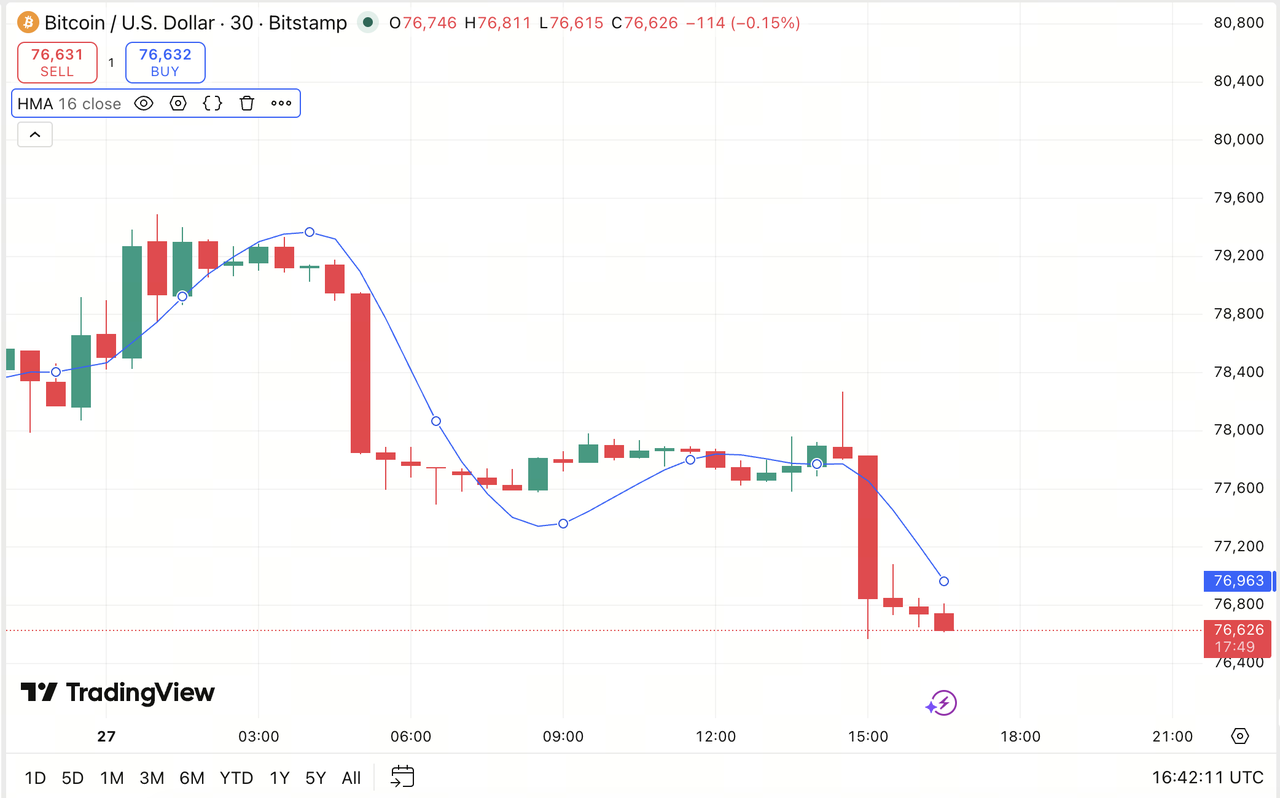
Джерело: TradingView
Що таке Hull MA
Hull MA не є самостійним інструментом прогнозування ціни. Це технічний індикатор, який слідує за трендом і використовує зважені ковзні середні для створення більш плавної та чутливої лінії.
Замість однакового врахування всіх цінових даних, Hull MA надає більшої ваги останнім цінам через зважені розрахунки. Це відрізняє його від простого ковзного середнього (SMA), яке присвоює однакову вагу кожній ціні в обраному періоді.
Основна проблема, яку вирішує Hull MA, — запізнювання. Традиційні ковзні середні часто реагують після того, як ціна вже змінилася. На повільних ринках така затримка може бути прийнятною, але в криптоторгівлі, де тренди змінюються швидко, запізнення призводить до пізніх входів, запізнілих виходів або нечіткої інтерпретації тренду.
Hull MA зазвичай використовують для визначення:
- напрямку короткострокового тренду
- можливих розворотів тренду
- змін ринкового імпульсу
- динамічних рівнів підтримки або опору
Зростаюче Hull MA часто свідчить про висхідний імпульс, а спадне — про низхідний. Коли лінія стає пласкою, це може вказувати на невизначеність, консолідацію або ослаблення тренду.
Як розраховується Hull MA
Hull MA розраховується через послідовність зважених ковзних середніх. Формула може здатися технічною, але принцип простий: порівнюється короткостроковий зважений рух із довгостроковим, а потім результат згладжується.
Загальна структура розрахунку:
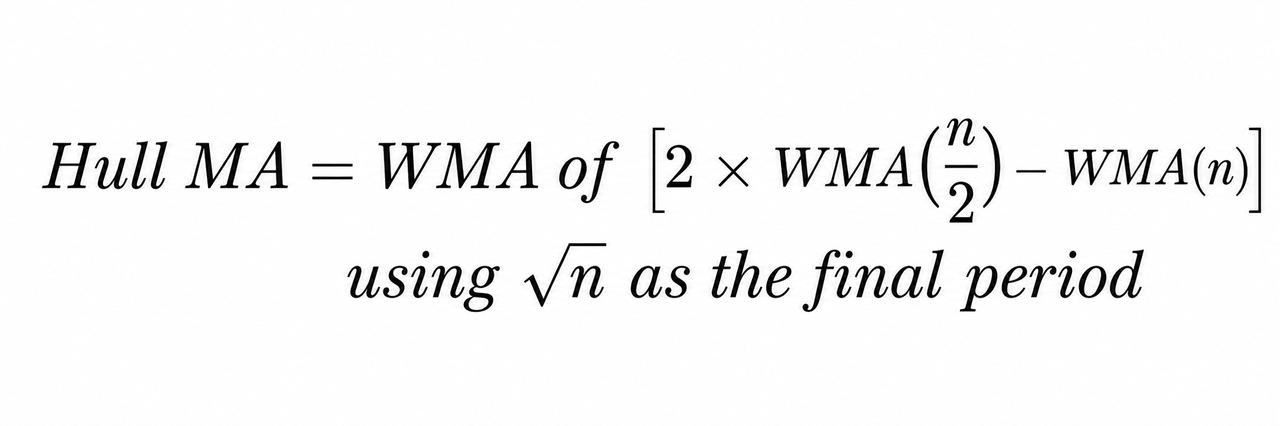
Де:
- WMA — зважене ковзне середнє (Weighted Moving Average);
- n — обраний період;
- n/2 — половина обраного періоду;
- √n — квадратний корінь з обраного періоду.
Наприклад, якщо трейдер використовує Hull MA з періодом 16, розрахунок використовує:
- WMA з періодом 8;
- WMA з періодом 16;
- остаточний період згладжування 4 (квадратний корінь з 16).
Перша частина формули надає більшої ваги останнім ціновим рухам. Друга частина віднімає повільніше середнє, щоб зменшити запізнення. Остаточне згладжування квадратним коренем запобігає надмірній хаотичності лінії.
Така структура пояснює, чому Hull MA часто виглядає плавнішим за дуже швидкі ковзні середні, але більш чутливим за більшість стандартних.
Як Hull MA зменшує запізнення порівняно з EMA та SMA
Hull MA зменшує запізнення, поєднуючи зважені розрахунки з методом згладжування, який наголошує на останніх цінових рухах, не відмовляючись від стабільності тренду.
Просте ковзне середнє (SMA) розраховує середню ціну за фіксований період і надає однакову вагу кожній точці даних. Це робить SMA простим для розуміння, але старіші ціни сповільнюють реакцію індикатора.
Експоненціальне ковзне середнє (EMA) реагує швидше, ніж SMA, оскільки надає більшої ваги останнім цінам. Однак EMA все ще може запізнюватися під час різких розворотів, особливо якщо період відносно довгий.
Hull MA йде далі, використовуючи зважені ковзні середні та різницевий розрахунок, який коригує запізнення. Остаточне згладжування квадратним коренем потім зменшує надлишковий шум.
| Індикатор |
Стиль розрахунку |
Швидкість реакції |
Плавність |
Звичайне застосування |
| SMA |
Середнє з однаковою вагою |
Повільна |
Висока |
Читання довгострокового тренду |
| EMA |
Середнє, зважене за останніми цінами |
Від середньої до швидкої |
Середня |
Відстеження тренду та імпульсу |
| Hull MA |
Зважене середнє зі структурою зменшення запізнення |
Швидка |
Від середньої до високої |
Аналіз короткострокового тренду |
На практиці Hull MA може повертати вгору або вниз раніше, ніж SMA чи EMA. Це допомагає трейдерам раніше виявити можливу зміну тренду.
Однак швидша реакція не означає вищої впевненості. На нестабільних ринках ранні сигнали можуть виявитися хибними. Тому Hull MA зазвичай корисніший у поєднанні з обсягом, рівнями підтримки та опору, ринковою структурою або іншими технічними індикаторами.
Hull MA для аналізу короткострокового тренду в криптовалютах
Hull MA часто використовують у криптоторгівлі, оскільки ринки цифрових активів рухаються швидко та торгуються безперервно. Інструмент, який реагує швидше за стандартні середні, допомагає трейдерам ефективніше інтерпретувати короткострокові зміни.
Одне з поширених застосувань — визначення напрямку тренду. Коли ціна залишається вище зростаючого Hull MA, це свідчить про короткостроковий бичачий імпульс. Коли ціна нижче спадного Hull MA — про короткостроковий ведмежий імпульс.
Інше застосування — перехід тренду. Hull MA, яке змінює нахил зі спадного на зростаючий, може вказувати на посилення імпульсу. Зміна зі зростаючого на спадний — на ослаблення попиту або посилення тиску продажів.
Деякі трейдери також спостерігають за взаємодією ціни з Hull MA. Під час висхідного тренду ціна може відкочуватися до Hull MA, перш ніж продовжити зростання. Під час низхідного тренду — відскакувати до Hull MA перед продовженням падіння. Ці взаємодії не є гарантіями, але вони допомагають впорядкувати читання графіка.
На крипторинках Hull MA можна застосовувати до:
- внутрішньоденних графіків: 5-хвилинних, 15-хвилинних або 1-годинних таймфреймів;
- графіків для свінг-трейдингу: 4-годинних або денних таймфреймів;
- трендових систем, які потребують швидшого підтвердження;
- аналізу імпульсу під час періодів високої волатильності.
Наприклад, трейдер, який спостерігає за біткоїном або Ethereum на короткостроковому графіку, може використовувати Hull MA, щоб визначити, чи посилюється чи слабшає ціновий імпульс. Якщо Hull MA зростає, а ціна залишається вище, графік показує короткострокову підтримку тренду. Якщо лінія стає пласкою, а ціна рухається вбік, тренд може втрачати силу.
Hull MA також можна поєднувати з іншими індикаторами. Трейдер може використовувати RSI для оцінки імпульсу, обсяг для підтвердження участі або рівні підтримки та опору для визначення важливих зон реакції.
Обмеження Hull MA
Hull MA корисний, але не є завершеною торговельною системою. Його головна перевага — чутливість — може стати недоліком у нестабільних ринкових умовах.
Перше обмеження — хибні сигнали. На бічних ринках Hull MA може часто змінювати напрямок, оскільки ціна рухається у вузькому діапазоні. Ці невеликі повороти можуть виглядати значущими, але не обов'язково призводять до стійких трендів.
Друге обмеження — чутливість до налаштувань. Коротший період Hull MA реагує швидко, але створює більше шуму. Довший період — плавніший, але може втратити частину швидкості, яка робить Hull MA привабливим. Трейдерам потрібно вибирати налаштування залежно від таймфрейму, ринкових умов і стилю торгівлі.
Третє обмеження — Hull MA базується на минулих цінових даних. Як і всі ковзні середні, він не прогнозує майбутнє. Він упорядковує історичний рух цін у чіткішу візуальну структуру, але не може самостійно підтвердити майбутній напрямок.
Ще одне обмеження — надмірна довіра. Трейдери можуть сприймати кожну зміну нахилу або перетин ціни як сигнал. Це призводить до поганих рішень, якщо ігнорувати ринковий контекст. Сигнал Hull MA поблизу значного опору, під час низького обсягу або в пласкому діапазоні вимагає більшої обережності, ніж той самий сигнал у чіткому тренді.
Hull MA слід розуміти як інструмент інтерпретації тренду, а не як самостійний приймач рішень. Він працює найкраще, коли підкріплений ширшим аналізом ринку.
Висновок
Ковзне середнє Галла (Hull MA) — це індикатор, призначений для зменшення запізнення при збереженні відносної плавності цінових трендів. Він використовує зважені ковзні середні та згладжування квадратним коренем, щоб реагувати швидше за більшість традиційних ковзних середніх.
Для криптотрейдерів Hull MA корисний, оскільки ринки цифрових активів часто рухаються швидко. Чутливий трендовий індикатор спрощує визначення короткострокового напрямку, виявлення можливих змін імпульсу та впорядкування аналізу графіка.
Його цінність — у ясності, а не впевненості. Hull MA показує, коли поведінка ціни змінюється, але не доводить, що тренд продовжиться чи розвернеться. На практиці він найсильніший у поєднанні з ринковою структурою, аналізом обсягу, рівнями підтримки та опору або іншими технічними індикаторами.
Найкращий спосіб зрозуміти Hull MA — бачити його як швидшу лінзу для тренду. Він згладжує графік, залишаючись достатньо близьким до цінової дії, щоб уловлювати короткострокові зміни.
Поширені запитання
Що таке ковзне середнє Галла (Hull Moving Average)?
Ковзне середнє Галла — це технічний індикатор, який використовує зважені ковзні середні для створення більш плавної та швидшої лінії тренду. Він призначений для зменшення запізнення порівняно зі стандартними ковзними середніми.
Чим Hull MA відрізняється від SMA та EMA?
Hull MA реагує швидше, ніж SMA та EMA, завдяки більшій вазі останніх цін і зменшенню запізнення. Це допомагає раніше виявити зміни тренду, але також створює хибні сигнали на бічних ринках.
Який період зазвичай використовують для Hull MA?
Універсального найкращого періоду не існує. Коротші налаштування підходять для внутрішньоденного аналізу, довші — для свінг-трейдингу або ширшого читання тренду. Трейдери часто тестують різні періоди залежно від активу та таймфрейму.
Чи можна використовувати Hull MA для криптоторгівлі, чи прогнозує він рух ціни?
Так. Hull MA допомагає криптотрейдерам читати короткостроковий напрямок тренду, але не прогнозує майбутню ціну. Він базується на історичних цінових даних і не повинен використовуватися самостійно.
Які основні ризики використання Hull MA?
Основні ризики: хибні сигнали на бічних ринках, надмірна довіра до змін нахилу та неправильний вибір налаштувань. Перед прийняттям торговельних рішень Hull MA слід поєднувати з ширшим аналізом.