مع تطور نظام التوسع لـ Ethereum، يتزايد عدد شبكات الطبقة 2 بسرعة. وبينما عززت تقنية رول أب كفاءة المعاملات، برزت تحديات جديدة: الأصول موزعة عبر سلاسل مختلفة، ويحتاج المستخدمون باستمرار إلى استخدام الجسور بين السلاسل، وتتجزأ السيولة في التطبيقات عبر أسواق مستقلة متعددة. لقد أصبح تحقيق التعاون بين السلاسل مع الحفاظ على قابلية التوسع محورًا رئيسيًا في الصناعة.
Superchain و Polygon AggLayer هما حلان متعددو السلاسل انبثقا من هذا السياق. وباعتبارهما توجّهين استراتيجيين رئيسيين لأنظمة Optimism و Polygon البيئية، يهدف كلاهما إلى حل التوافقية في عصر تعدد السلاسل. ومع ذلك، يختلفان بشكل كبير في البنية التقنية وفلسفة التصميم وأهداف النظام البيئي، مما يجعلهما المسارين الأكثر تتبعًا في البنية التحتية للبلوكشين اليوم.
ما هي Superchain؟
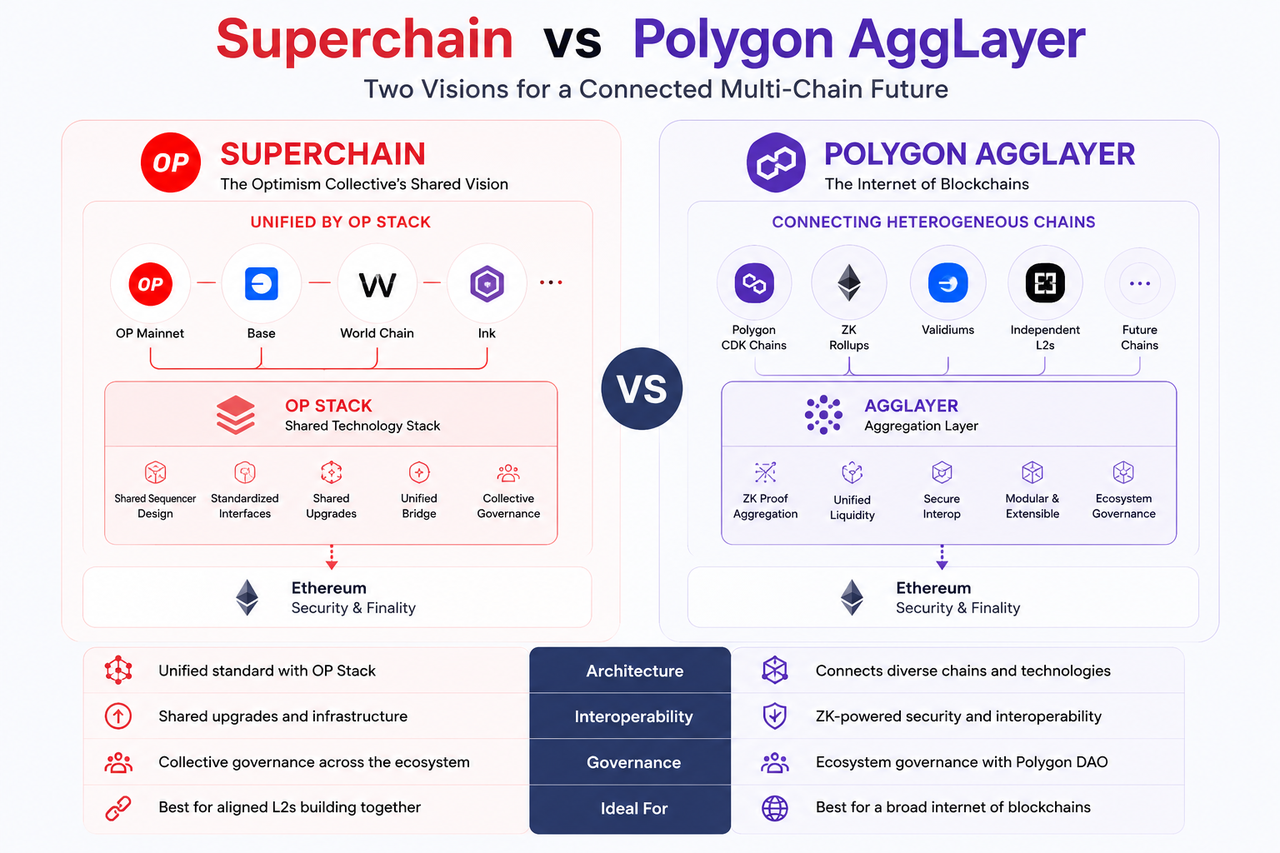
Superchain هي بنية تعاونية متعددة السلاسل اقترحتها Optimism، تهدف إلى ربط شبكات الطبقة 2 المتعددة عبر معايير تقنية موحدة.
الأساس الجوهري لـ Superchain هو OP Stack. أي شبكة تُبنى باستخدام OP Stack يمكنها أن تصبح جزءًا من Superchain، وتتقاسم آليات الترقية وأدوات التطوير ومعايير البنية التحتية.
مفهوميًا، Superchain ليست بلوكشينًا واحدًا، بل هي نظام بيئي لشبكات الطبقة 2 المتعددة التي تستخدم إطارًا أساسيًا موحدًا.
Base و World Chain و Ink و OP Mainnet كلها أعضاء رئيسيون في النظام البيئي لـ Superchain.
ما هي Polygon AggLayer؟
Polygon AggLayer هي طبقة تجميع عبر السلاسل أطلقتها Polygon، مصممة لربط شبكات بلوكشين مختلفة وتوفير تجربة سيولة موحدة.
على عكس الحلول التي تخدم إطارًا تقنيًا محددًا فقط، تهدف AggLayer إلى ربط أنواع متنوعة من البلوكشينات، بما في ذلك:
- سلاسل Polygon CDK
- رول أبس ZK
- Validiums
- شبكات الطبقة 2 المستقلة
- سلاسل طرف ثالث متوافقة مستقبلاً
من خلال تجميع أدلة المعرفة الصفرية وتوحيد آليات التحقق من الحالة، تمكن AggLayer الشبكات المختلفة من مشاركة الأمان وإجراء تفاعلات عبر السلاسل.
هدفها هو أن يشعر المستخدمون وكأنهم يتفاعلون مع شبكة موحدة واحدة بدلاً من بلوكشينات منفصلة متعددة.
ما الفروق في فلسفة التصميم بين Superchain و AggLayer؟
الفرق الأساسي ينبع من وجهات النظر المتباينة حول مستقبل تعدد السلاسل.
تعتقد Superchain أن أفضل طريقة لتحقيق التعاون متعدد السلاسل هي وضع معايير موحدة.
إذا اعتمدت جميع الشبكات OP Stack، فإن التواصل عبر السلاسل والترقيات وأدوات التطوير يمكن أن تحقق درجة عالية من الاتساق، مما يقلل التعقيد.
في المقابل، ترى AggLayer أن النظام البيئي متعدد السلاسل قد تشكل بالفعل، ومن المستحيل أن تتبنى جميع الشبكات البنية ذاتها.
لذلك، هدف AggLayer هو ربط أنواع مختلفة من السلاسل، مما يسمح للشبكات غير المتجانسة بالعمل بشكل تعاوني دون الحاجة إلى تقنية أساسية موحدة.
باختصار:
- تسعى Superchain إلى توحيد المعايير؛
- تسعى AggLayer إلى التوافق غير المتجانس.
هذا هو الفرق الاستراتيجي الأساسي بينهما.
ما الفروق في البنية التقنية بين Superchain و AggLayer؟
على مستوى التنفيذ التقني، يتبع الاثنان مسارات معمارية مختلفة تمامًا.
بنية Superchain
Superchain مبنية على OP Stack. جميع السلاسل الأعضاء تستخدم إطارًا موحدًا، يشمل:
- معايير طبقة التنفيذ
- بنية Rollup
- بروتوكولات التواصل عبر السلسلة
- آليات الترقية
يساعد هذا النموذج على تحسين التوافق وكفاءة التطوير.
بنية AggLayer
AggLayer مبنية على الأدلة المجمعة وآلية تسوية موحدة.
الشبكات المختلفة لا تحتاج إلى اعتماد بيئة تنفيذ موحدة؛ فهي تحتاج فقط إلى توليد أدلة قابلة للتحقق للاتصال بـ AggLayer.
يسمح هذا النموذج لمزيد من أنواع السلاسل بالمشاركة في التعاون البيئي.
لذلك، نطاق توافق AggLayer أكبر عمومًا من نطاق Superchain.
ما الفروق في التوافقية بين السلاسل المتعددة بين Superchain و AggLayer؟
قابلية التشغيل بين السلاسل المتعددة هي أحد أهم سيناريوهات التطبيق لكلا الحلين.
تحقق Superchain التعاون بين السلاسل من خلال معايير موحدة.
نظرًا لأن جميع الشبكات تشترك في نفس الإطار التقني، فإن التفاعل عبر السلاسل بسيط نسبيًا.
يمكن للمطورين استخدام واجهات موحدة لنقل الأصول ونشر التطبيقات.
أما AggLayer فتعالج التوافقية بين السلاسل غير المتجانسة.
حتى إذا كانت التقنيات الأساسية مختلفة تمامًا، تهدف AggLayer إلى تمكين التفاعل السلس من خلال تجميع الأدلة ومزامنة الحالة.
نظريًا:
- Superchain أكثر ملاءمة لأنظمة السلاسل المتجانسة؛
- AggLayer أكثر ملاءمة لأنظمة السلاسل غير المتجانسة.
ما الفروق في نماذج الأمان بين Superchain و AggLayer؟
الأمان هو أساس حاسم للبنى متعددة السلاسل.
مصدر أمان Superchain
تعتمد سلاسل Superchain الأعضاء عادةً على Ethereum للتسوية النهائية وضمانات الأمان.
كل سلسلة تشارك معيار OP Stack، لذا يمكن الحفاظ على الأمان العام من خلال آليات الترقية الموحدة.
مصدر أمان AggLayer
تعتمد AggLayer بشكل أكبر على أنظمة أدلة المعرفة الصفرية.
يتم التحقق من تغييرات حالة الشبكة من خلال الأدلة التشفيرية، مما يقلل الاعتماد على آليات الجسور الوسيطة.
يهدف هذا التصميم إلى تقليل مخاطر هجمات الجسور عبر السلاسل وتحسين كفاءة التحقق.
كلا النموذجين يستخدمان Ethereum كأساس أمان رئيسي، لكن مسارات تنفيذهما مختلفة.
ما الفروق في أنظمة المطورين بين Superchain و AggLayer؟
تجذب Superchain و AggLayer المطورين بطرق مختلفة.
مزايا Superchain
للفرق المألوفة بالفعل مع OP Stack، تكون تكاليف التطوير والنشر أقل.
المعايير الموحدة تجعل مجموعة الأدوات أكثر شمولاً.
يمكن لمشاريع النظام البيئي أيضًا مشاركة البنية التحتية بسهولة أكبر.
مزايا AggLayer
تقدم AggLayer حرية أكبر.
لا تحتاج فرق التطوير إلى التخلي عن بنيتها التقنية الحالية للانضمام إلى النظام البيئي.
للمشاريع التي لديها سلاسل مستقلة أو ZK Rollups، تكون تكاليف الانتقال أقل.
لذلك، تختلف مجموعات المطورين التي يجذبها كل حل إلى حد ما.
الفروق الأساسية بين Superchain و AggLayer
| بُعد المقارنة |
Superchain |
Polygon AggLayer |
| المبادر |
Optimism |
Polygon |
| الهدف الأساسي |
توحيد المعايير |
ربط السلاسل غير المتجانسة |
| الأساس التقني |
OP Stack |
الأدلة المجمعة |
| نوع الشبكة |
نظام سلاسل متجانسة |
نظام سلاسل غير متجانسة |
| طريقة قابلية التشغيل |
تعاون موحد |
تجميع الأدلة |
| نموذج الأمان |
تسوية Rollup |
التحقق ZK |
| حاجز التطوير |
منخفض نسبيًا |
مرن نسبيًا |
| الشبكات الممثلة |
Base، World Chain |
نظام Polygon CDK البيئي |
أي مسار يتوافق بشكل أفضل مع الاتجاهات المستقبلية؟
حاليًا، لم تتوصل الصناعة إلى إجماع.
قوة Superchain تكمن في توحيد المعايير وكفاءة التطوير.
إذا اعتمد عدد كبير من الشبكات OP Stack، فسيتمتع النظام البيئي بأكمله بقدرات اتساق وتعاون أقوى.
قوة AggLayer تكمن في الانفتاح والتوافق.
مع استمرار توسع نظام البلوكشين البيئي، من المرجح جدًا أن تتعايش الأساليب التقنية المختلفة، لذا سينمو الطلب على ربط السلاسل غير المتجانسة باستمرار.
قد يحتوي النظام البيئي متعدد السلاسل في المستقبل على تحالفات موحدة وطبقات اتصال عبر الأنظمة البيئية—هذان النموذجان ليسا بالضرورة حصريين.
الخلاصة
تهدف كل من Superchain و Polygon AggLayer إلى معالجة تجزئة السيولة وقابلية التشغيل في عصر تعدد السلاسل، لكنهما تسلكان مسارات مختلفة. تؤسس Superchain معايير تقنية موحدة من خلال OP Stack، ساعيةً لتشكيل تحالف تطويري متعاون للطبقة 2؛ بينما تربط AggLayer أنواعًا مختلفة من شبكات البلوكشين من خلال الأدلة المجمعة، مما يتيح تعاونًا سلسًا بين السلاسل غير المتجانسة.
في جوهرها، تركز Superchain بشكل أكبر على التوسع الموحد، بينما تركز AggLayer بشكل أكبر على الاتصال المفتوح. يمثل الاثنان اتجاهين مهمين لاستكشاف صناعة البلوكشين في عصر تعدد السلاسل.
الأسئلة الشائعة
هل Polygon AggLayer عبارة عن جسر عبر السلاسل؟
لا. Polygon AggLayer ليست جسرًا تقليديًا عبر السلاسل؛ بل هي بنية طبقة تجميع تمكن التعاون بين السلاسل المختلفة من خلال آليات التحقق والأدلة الموحدة.
هل تعتمد كل من Superchain و AggLayer على Ethereum؟
نعم. كلاهما مرتبطان بشكل وثيق بالنظام البيئي لإيثريوم ويستفيدان من قدرات أمان وتسوية إيثريوم كأساس حاسم.
ما العلاقة بين Superchain و OP Stack؟
OP Stack هو الإطار التقني الأساسي المستخدم لبناء Superchain. جميع سلاسل Superchain الأعضاء تم تطويرها وتشغيلها على OP Stack.
هل يمكن لـ AggLayer ربط شبكات Polygon فقط؟
لا. الهدف طويل الأجل لـ AggLayer هو ربط أنواع مختلفة من شبكات البلوكشين، وليس فقط تلك الموجودة ضمن نظام Polygon البيئي.