Цифрова ідентичність стає невід’ємним компонентом інфраструктури Web3. Оскільки блокчейн-застосунки виходять за межі торгівлі активами в напрямку управління, соціальної взаємодії, співпраці та екосистеми AI Agent, мережі потребують визначення реальних учасників і формування сталої довіри. У цьому процесі перевірка особи перетворюється з простого інструменту керування обліковими записами на ключову опору цифрової економіки.
Trusta.AI та World — два провідні проєкти у сфері ідентичності. Обидва спрямовані на боротьбу з акаунтами ботів, атаками Sybil і питаннями довіри до особи, однак використовують принципово різні технічні підходи. World зосереджується на підтвердженні унікальної особи через біометрію, а Trusta.AI — на ончейн-репутації та побудові мережі ідентичностей. Ця різниця ілюструє два окремі шляхи розвитку систем ідентичності у Web3.
Що таке Trusta.AI?
Trusta.AI — це інфраструктурна мережа ідентичності та репутації, орієнтована на користувачів Web3 і AI Agent. Її головна мета — створювати перевірені цифрові ідентичності у відкритих мережах і на основі довгострокових записів поведінки будувати ончейн-систему репутації, яка постійно накопичується.
Trusta.AI не обмежується простою перевіркою особи — вона акцентує на формуванні репутації після встановлення ідентичності. Завдяки таким продуктам, як Proof of Humanity, TrustScan, TrustGo та AgentGo, Trusta.AI прагне створити довірчий рівень (Trust Layer), що охоплює реальних користувачів, організації та AI Agent.
Що таке World?
World — це цифрова мережа ідентичності, побудована на основі біометричної технології, з World ID як флагманським продуктом.
World має на меті вирішити проблему унікальності ідентичності у відкритому інтернеті. Користувачі сканують райдужну оболонку ока за допомогою спеціалізованого пристрою, щоб отримати цифровий ідентифікаційний документ, який підтверджує, що вони є реальною, окремою людиною.
Оскільки райдужка має природну унікальність, архітектура World спрямована на запобігання повторній реєстрації, підробці ідентичності та використанню ботів. Її мета — створити глобально верифіковану мережу людських ідентичностей.
Яка основна відмінність між Trusta.AI та World?
Найважливіша різниця полягає в логіці перевірки особи.
World ставить питання: «Чи є ця людина реальною та унікальною?»
Trusta.AI запитує: «Чи заслуговує ця особа на довіру, і якою є її довгострокова поведінка?»
Тож основним активом World є унікальна ідентичність, а ключовим активом Trusta.AI — поєднання ідентичності та репутації.
З погляду цифрової економіки, унікальна ідентичність визначає право на участь, тоді як система репутації забезпечує довіру та співпрацю.
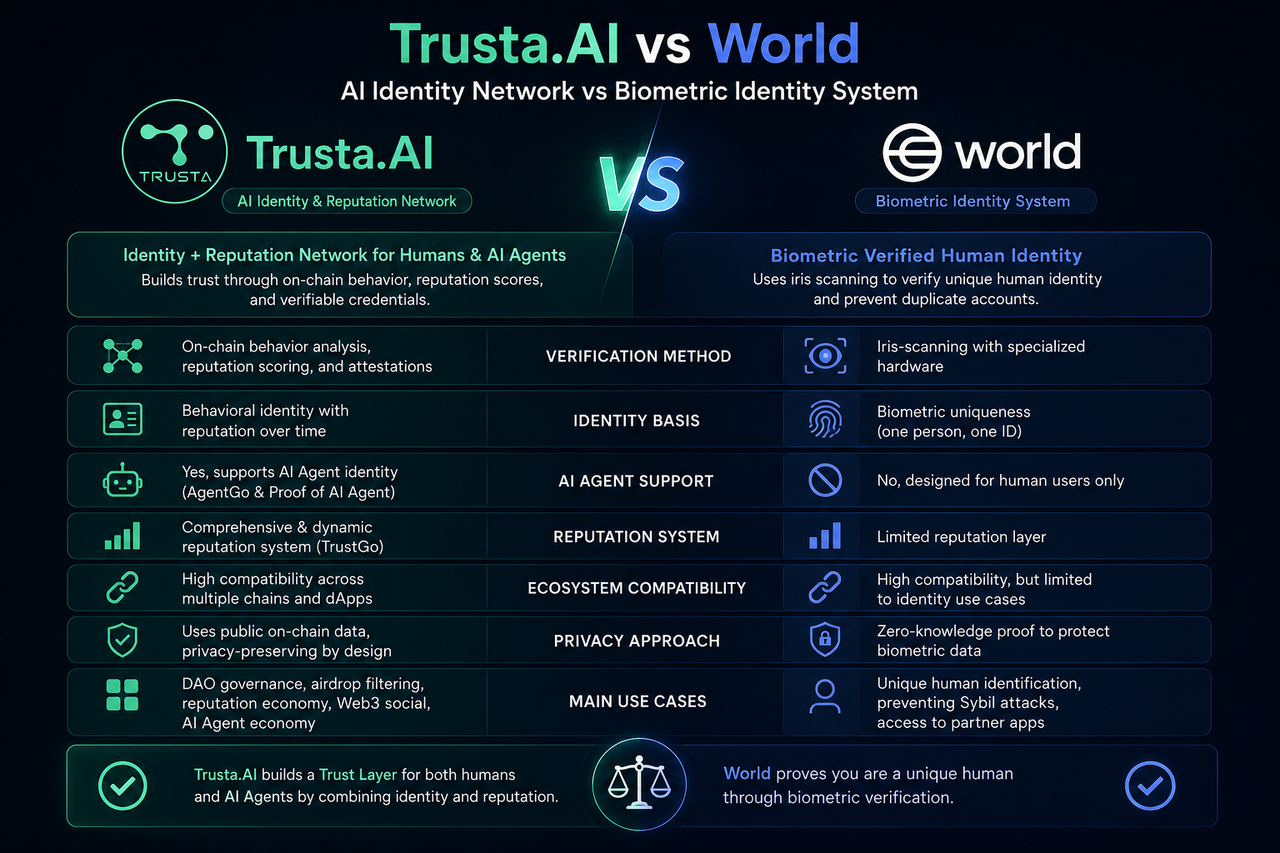
Чим відрізняються механізми верифікації особи в Trusta.AI та World?
Як World перевіряє особу?
World використовує біометричну модель верифікації.
Користувачі сканують райдужну оболонку за допомогою спеціального пристрою. Система на основі унікальності райдужки генерує ідентифікаційний документ. Увесь процес наголошує на неповторності, не допускаючи створення одним користувачем декількох ідентичностей.
Такий підхід ефективно запобігає дублюванню ідентичностей, але потребує спеціалізованого обладнання.
Як Trusta.AI верифікує особу?
Trusta.AI спирається головним чином на ончейн-аналіз поведінки.
Він формує профілі ідентичності, аналізуючи історію гаманця, патерни взаємодій, рух коштів, участь у протоколах та соціальну активність. Потім модель репутації оцінює автентичність і довіреність кожного облікового запису.
Цей метод уникає використання біометрії з реального світу, натомість будує довіру через цифрову поведінку.
Чим відрізняються системи репутації в Trusta.AI та World?
Верифікація особи — лише перший крок до побудови довіри.
Роль World — підтверджувати автентичність на етапі входу в ідентичність; його цінність зосереджена на автентифікації.
Trusta.AI іде далі — у сферу репутації. Система постійно відстежує активність облікового запису: рівень залученості, внесок, безперервність участі та історичну ончейн-поведінку, динамічно оновлюючи бали репутації.
Таким чином, вони виконують різні функції в екосистемі довіри: World виступає переважно платформою автентифікації особи, а Trusta.AI — мережею ідентичності та репутації.
Чим відрізняються моделі захисту приватності в Trusta.AI та World?
Модель приватності World
World застосовує криптографічні методи, зокрема докази з нульовим розголошенням, для захисту даних користувачів.
Система прагне підтвердити унікальність без розкриття біометричної інформації, що знижує ризики витоку приватних даних.
Втім, оскільки процес передбачає роботу з біометричними даними, приватність залишається важливою галузевою проблемою.
Модель приватності Trusta.AI
Trusta.AI переважно аналізує публічні ончейн-дані.
Оскільки він працює з поведінкою гаманця та ончейн-активністю, потреби в масштабному зборі інформації з реального світу немає. Цей підхід зберігає відкритість і мінімізує необхідність обробки чутливих даних.
Його пріоритет у сфері приватності — прозорість процесу аналізу даних і моделі репутації.
Чим відрізняються сценарії використання Trusta.AI та World?
World краще підходить для ситуацій, які потребують суворої перевірки унікальності особи — наприклад, глобальні мережі цифрової ідентичності, автентифікація для інклюзивних фінансів і програми стимулювання, що запобігають повторній участі.
Trusta.AI підходить для сценаріїв, що спираються на довгострокову репутацію — наприклад, управління DAO, ончейн-кредитні системи, соціальні мережі Web3, фільтрація аірдропів і мережі співпраці AI Agent.
Оскільки вони вирішують різні завдання, на практиці вони не є прямими замінниками одне одного.
Ключові відмінності між Trusta.AI та World
| Вимір |
Trusta.AI |
World |
| Основне позиціонування |
Мережа ідентичності та репутації |
Мережа цифрової автентифікації |
| Основна мета |
Створити довірену ідентичність і репутацію |
Створити унікальну ідентичність |
| Метод верифікації |
Ончейн-аналіз поведінки |
Сканування райдужної оболонки |
| Основа ідентичності |
Поведінка та репутація |
Біометричні характеристики |
| Підтримка AI Agent |
Підтримується |
Не підтримується |
| Система репутації |
Повна підтримка |
Обмежена підтримка |
| Апаратні вимоги |
Спеціального пристрою не потрібно |
Потрібен спеціальний пристрій |
| Основні сценарії застосування |
DAO, репутаційна економіка, AI Agent |
Автентифікація особи, запобігання повторній реєстрації |
Підсумок
І Trusta.AI, і World вирішують проблеми ідентичності у відкритих мережах, але їхні цілі та методи суттєво різняться. World створює унікальні цифрові ідентичності за допомогою біометрії, вирішуючи проблему верифікації людини. Trusta.AI будує довгострокову довірену мережу ідентичності через аналіз поведінки, оцінку репутації та механізми доказу людяності, поширюючись на екосистему AI Agent. У міру того як Web3 еволюціонує з мережі активів у мережу ідентичності та репутації, ці дві моделі можуть разом стати фундаментом майбутньої системи цифрової довіри.
Поширені запитання
Яка найбільша різниця між Trusta.AI та World?
Trusta.AI формує мережу ідентичності та репутації, використовуючи ончейн-аналіз поведінки для встановлення довірених ідентичностей. World верифікує унікальність особи через сканування райдужної оболонки, орієнтуючись на модель «одна людина — одна ідентичність».
Чому World використовує сканування райдужної оболонки?
Райдужка має природну унікальність, що робить її ефективною для запобігання повторній реєстрації та шахрайству з боку ботів; тому її застосовують для створення унікальної цифрової ідентичності.
Чи потребує Trusta.AI біометричної верифікації?
Основний механізм Trusta.AI ґрунтується на ончейн-аналізі поведінки та моделях репутації, а не на біометрії.
Чи можуть AI Agent використовувати World ID?
Система ідентичності World розроблена для людей-користувачів, тому її не можна безпосередньо застосовувати для автентифікації AI Agent. Trusta.AI натомість пропонує спеціалізований фреймворк ідентичності та репутації для AI Agent.
Чи є Trusta.AI та World конкурентами?
Вони частково перетинаються у просторі цифрової ідентичності, але вирішують різні проблеми. World зосереджується на унікальності особи, а Trusta.AI — на довіреності особи та репутації.