A diferencia de los índices bursátiles, que simplemente reflejan variaciones de precios, el VIX recoge las expectativas del mercado sobre el riesgo futuro. Cuando los inversores se preocupan ante el aumento de la incertidumbre, la demanda de activos refugio suele aumentar, lo que eleva las primas de las opciones y empuja al alza el VIX. De este modo, el VIX se ha convertido en una herramienta esencial para supervisar el sentimiento del mercado y el apetito por el riesgo.
A medida que el mercado de derivados ha evolucionado, el VIX ha trascendido su papel de simple indicador. Hoy en día, los futuros, opciones y ETF y las herramientas de gestión de riesgos construidos en torno al VIX conforman un ecosistema integral de volatilidad del mercado, con CBOE como su principal arquitecto.
Por qué el VIX es importante para el mercado
El VIX capta la atención de inversores de todo el mundo porque proporciona una lectura en tiempo real de cómo el mercado percibe el riesgo futuro.
Los índices bursátiles tradicionales muestran únicamente movimientos de precios; no miden de forma directa la volatilidad que los inversores esperan a futuro. Al analizar los precios de las opciones del S&P 500, el VIX cuantifica el consenso del mercado sobre la volatilidad esperada en los próximos 30 días.
Cuando la incertidumbre golpea los mercados financieros, los inversores suelen adquirir más opciones de protección para cubrir su riesgo. Esa demanda adicional empuja al alza las primas de las opciones, lo que a su vez eleva el VIX. Esto hace del VIX una referencia clave en momentos de cambio en el sentimiento del mercado.
Para muchos inversores institucionales, el VIX se ha convertido en un barómetro indispensable del riesgo de mercado, a la altura de la atención que reciben algunos índices bursátiles.
Cómo mide el VIX la volatilidad del mercado
El VIX no se calcula a partir de los precios de las acciones, sino que se deriva de los datos de precios del mercado de opciones del S&P 500.
Dado que los precios de las opciones incorporan de forma inherente las expectativas del mercado sobre la volatilidad futura, CBOE utiliza una metodología específica para extraer esa información y construir el VIX. En pocas palabras, el VIX refleja lo que los inversores están dispuestos a pagar en "primas de seguro" para protegerse contra el riesgo futuro.
En términos generales:
| Nivel del VIX |
Condición del mercado |
| Por debajo de 15 |
El sentimiento del mercado es bastante estable |
| 15-25 |
Rango de volatilidad normal |
| 25-40 |
El sentimiento de riesgo está claramente elevado |
| Por encima de 40 |
Fuerte temor en el mercado |
Un punto clave: el VIX mide la volatilidad esperada, no la dirección del mercado. Incluso si las acciones suben, el VIX puede mantenerse elevado si los inversores perciben riesgos crecientes en el horizonte.
Por eso el VIX se utiliza mejor como indicador de riesgo y no como herramienta para predecir la dirección del mercado.
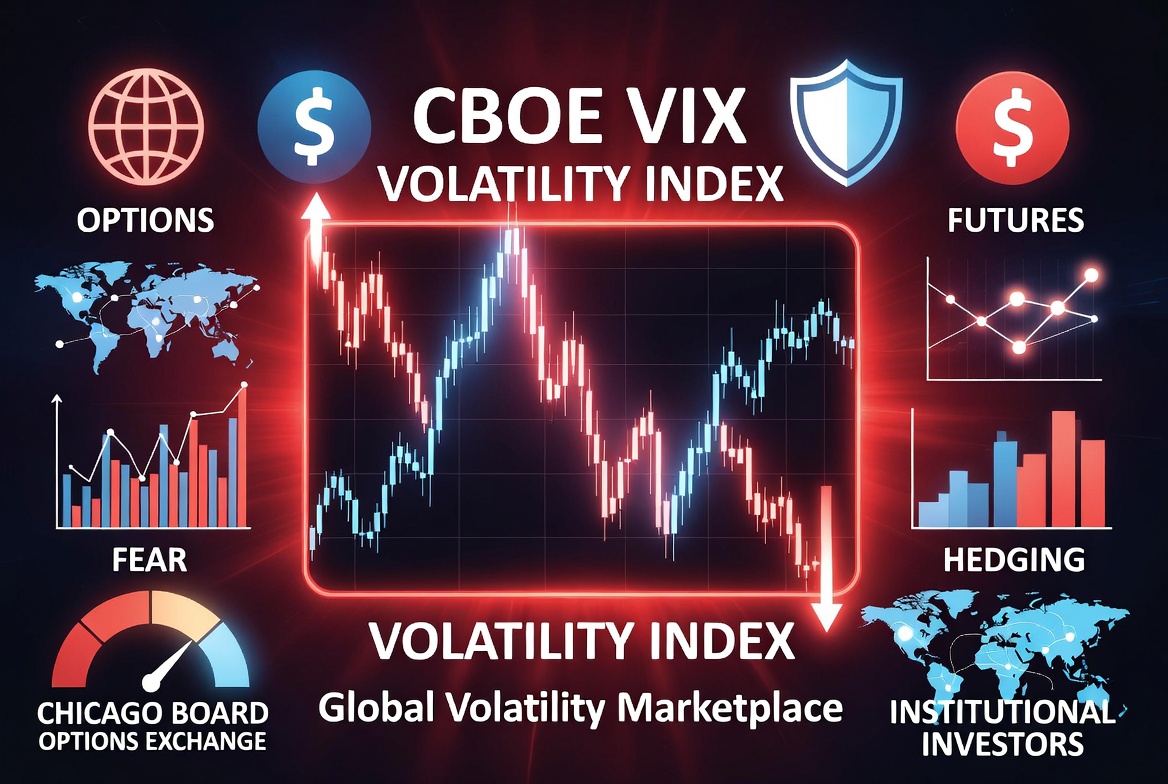
Cómo usan los inversores el VIX para medir el sentimiento del mercado
Una de las aplicaciones más habituales del VIX es ayudar a los inversores a interpretar el estado de ánimo del mercado.
Cuando el VIX asciende de forma constante, suele indicar que el mercado está descontando un mayor riesgo y que los inversores se vuelven más cautelosos. Esto ocurre a menudo en épocas de incertidumbre económica creciente, tensiones geopolíticas altas o una volatilidad financiera elevada.
Por otro lado, cuando el VIX se mantiene bajo, el mercado suele estar más tranquilo. Los inversores presentan un mayor apetito por el riesgo y el capital tiende a dirigirse a activos de riesgo como las acciones.
Muchos gestores de fondos y asignadores de activos integran el VIX en sus frameworks de supervisión de riesgos. Si bien el VIX no puede predecir el futuro, su evolución puede ayudar a los inversores a comprender cómo está cambiando el sentimiento del mercado.
Por eso el VIX se ha convertido en una de las herramientas de monitoreo de riesgos más importantes de los mercados de capitales globales.
¿Cuáles son los casos de uso de los productos relacionados con el VIX?
A medida que la demanda ha crecido, los productos financieros construidos en torno al VIX se han expandido, convirtiendo la volatilidad en una clase de activo negociable.
Entre los productos vinculados al VIX más comunes disponibles en el mercado se incluyen:
- Futuros sobre el VIX
- Opciones sobre el VIX
- ETF de volatilidad
- ETN de volatilidad
- Productos de estrategias de gestión de riesgos
Estos productos se utilizan principalmente para cobertura, posicionamiento como refugio seguro y gestión de carteras.
Por ejemplo, si los inversores están preocupados por una volatilidad aguda del mercado, pueden utilizar productos de volatilidad para cubrir su riesgo. Debido a que el VIX normalmente se mueve de manera inversa al sentimiento de riesgo del mercado, los productos de volatilidad suelen servir como una forma de seguro de cartera.
Para algunas firmas de trading profesionales, la volatilidad se ha convertido en un activo de inversión independiente por derecho propio, no solo un indicador de apoyo.
Por qué los inversores institucionales se centran en la gestión de la volatilidad
Para las grandes instituciones, gestionar el riesgo suele ser más importante que buscar rentabilidad.
Los fondos de pensiones, las aseguradoras, los fondos soberanos y los grandes gestores de activos controlan enormes cantidades de capital, por lo que deben controlar el posible impacto de las oscilaciones extremas del mercado.
Los indicadores de volatilidad ayudan a los inversores institucionales a evaluar los niveles de riesgo actuales y ajustar sus carteras en consecuencia. Cuando el VIX sube, algunas instituciones reducen su exposición a activos de riesgo. Cuando la volatilidad disminuye, aumentan las asignaciones en renta variable.
Además, muchos modelos cuantitativos consideran la volatilidad como un insumo fundamental. Los cambios en la volatilidad afectan no solo los niveles de riesgo, sino también la valoración de los activos y la construcción de carteras.
Por estas razones, la gestión de la volatilidad se ha convertido en un pilar fundamental de la gestión moderna de activos.
Por qué el ecosistema de volatilidad es un activo estratégico para CBOE
El VIX es mucho más que un simple índice: es una importante ventaja competitiva que CBOE ha forjado durante décadas.
Dado que CBOE ha desarrollado y opera el VIX, los futuros, opciones y otros derivados basados en él se alojan en gran medida dentro del ecosistema de CBOE. Esto permite a la empresa beneficiarse del crecimiento del volumen de negociación, los ingresos por datos del mercado y las comisiones por licencia del índice.
Lo más importante es que el mercado de volatilidad disfruta de sólidos efectos de red. A medida que participan más inversores e instituciones, la liquidez mejora, lo que a su vez atrae a más participantes al ecosistema.
Tras décadas de crecimiento, el VIX se ha convertido en una de las marcas de volatilidad más reconocidas del mundo. El ecosistema completo construido a su alrededor otorga a CBOE una clara ventaja frente a otros mercados.
Para CBOE, el mercado de volatilidad no es solo una línea de negocio: es una fuente central de fortaleza competitiva a largo plazo.
Cómo comprar acciones de CBOE (Cboe Global Markets)
CBOE es el ticker de Cboe Global Markets, que cotiza en las bolsas de valores estadounidenses. Tradicionalmente, los inversores pueden comprar acciones de CBOE a través de cualquier cuenta de corretaje que admita acciones estadounidenses, obteniendo así exposición a la industria bursátil global.
Dado el papel líder de CBOE en opciones y en el ecosistema del VIX, muchos participantes del mercado lo consideran un actor clave en el ámbito de los derivados y la infraestructura financiera.
A medida que los activos digitales y las finanzas tradicionales convergen, han surgido nuevas herramientas para operar en función de los movimientos de precio de las acciones estadounidenses. Algunas plataformas ofrecen productos CFD vinculados a los precios de las acciones, lo que permite a los usuarios participar mediante cambios de precio sin poseer directamente la acción subyacente.
Gate TradFi está ampliando de forma constante su cobertura de activos financieros tradicionales. Los usuarios pueden supervisar activos digitales, acciones estadounidenses, ETF, índices y materias primas, todo dentro de una cuenta unificada. En mercados seleccionados, Gate también ofrece productos CFD, lo que brinda a los usuarios más opciones para la asignación de activos entre mercados y el seguimiento de precios.
Independientemente de cómo elijan participar, los inversores deben comprender a fondo la estructura del producto, las normas de negociación y los requisitos regulatorios en su jurisdicción.
Resumen
El VIX es uno de los indicadores de volatilidad más importantes de las finanzas globales. Su función principal es reflejar las expectativas del mercado sobre el riesgo y la volatilidad futuros. Tanto los inversores minoristas como las grandes instituciones utilizan el VIX para medir el sentimiento, evaluar el riesgo y definir sus estrategias. El ecosistema de futuros, opciones y productos de volatilidad construido en torno al VIX ha convertido la volatilidad en una clase de activo por derecho propio. Para CBOE, el VIX no es solo un índice, sino la base de un ecosistema global del mercado de volatilidad.
Preguntas frecuentes
¿Qué es el VIX?
El VIX es un índice de volatilidad desarrollado por CBOE que se calcula a partir de los precios de las opciones del S&P 500 para medir la volatilidad esperada del mercado en los próximos 30 días.
¿Por qué se llama al VIX el índice del miedo?
Cuando el riesgo de mercado aumenta, los inversores suelen incrementar la demanda de activos refugio, lo que eleva las primas de las opciones y el VIX. Por eso el VIX suele considerarse un indicador del miedo del mercado.
¿Un VIX en aumento siempre significa que las acciones están cayendo?
No necesariamente. El VIX mide la volatilidad esperada, no la dirección del mercado. Sin embargo, tiende a moverse de forma inversa al mercado de valores en la mayoría de los casos.
¿Pueden los inversores minoristas operar con el VIX?
Los inversores no pueden comprar el VIX directamente, pero pueden participar a través de futuros sobre el VIX, opciones sobre el VIX, y ETF y productos relacionados.
¿Por qué las instituciones se preocupan por la gestión de la volatilidad?
La volatilidad ayuda a las instituciones a evaluar los niveles de riesgo y ajustar la asignación de activos, lo que la convierte en un componente fundamental de la gestión moderna de carteras.
¿Por qué es el VIX tan importante para CBOE?
El VIX es una de las marcas más potentes de CBOE. Los productos de negociación, los servicios de datos y los ingresos por licencias construidos a su alrededor constituyen una importante ventaja competitiva para la empresa.