As Ofertas Públicas Iniciais (IPO) tradicionais constituem há muito uma via essencial para as empresas acederem aos mercados de capitais públicos e um canal fundamental para os investidores participarem no crescimento empresarial. Contudo, as subscrições tradicionais de IPO dependem habitualmente de contas de valores mobiliários, elegibilidade regional e redes de intermediários complexas, tornando a participação direta em projetos globais de IPO um desafio para a maioria dos investidores comuns.
Com a evolução do setor dos ativos digitais, cada vez mais plataformas exploram soluções digitais para ligar os mercados de capitais tradicionais aos utilizadores globais. O Gate IPOs, o serviço IPO Access lançado neste contexto, integra a apresentação de projetos, os pedidos de subscrição e os processos de atribuição num único ponto de entrada digital para participação em IPO e Pré-IPO. Isto representa um passo fundamental para as plataformas de ativos digitais se expandirem para Ativos do Mundo Real (RWA) e serviços financeiros tradicionais.
O que é o Gate IPOs?
O Gate IPOs, o serviço IPO Access da Gate, oferece aos utilizadores um canal digital para participarem em projetos de IPO e em projetos selecionados de Pré-IPO. Através desta plataforma unificada, os utilizadores podem consultar os detalhes do projeto, submeter pedidos de subscrição e participar no processo de atribuição subsequente.
Ao contrário das subscrições tradicionais de IPO, que exigem uma conta de corretagem, o Gate IPOs utiliza serviços digitais para integrar o acesso ao projeto, as verificações de elegibilidade e os fluxos de trabalho de subscrição, aumentando a eficiência e reduzindo as barreiras operacionais.
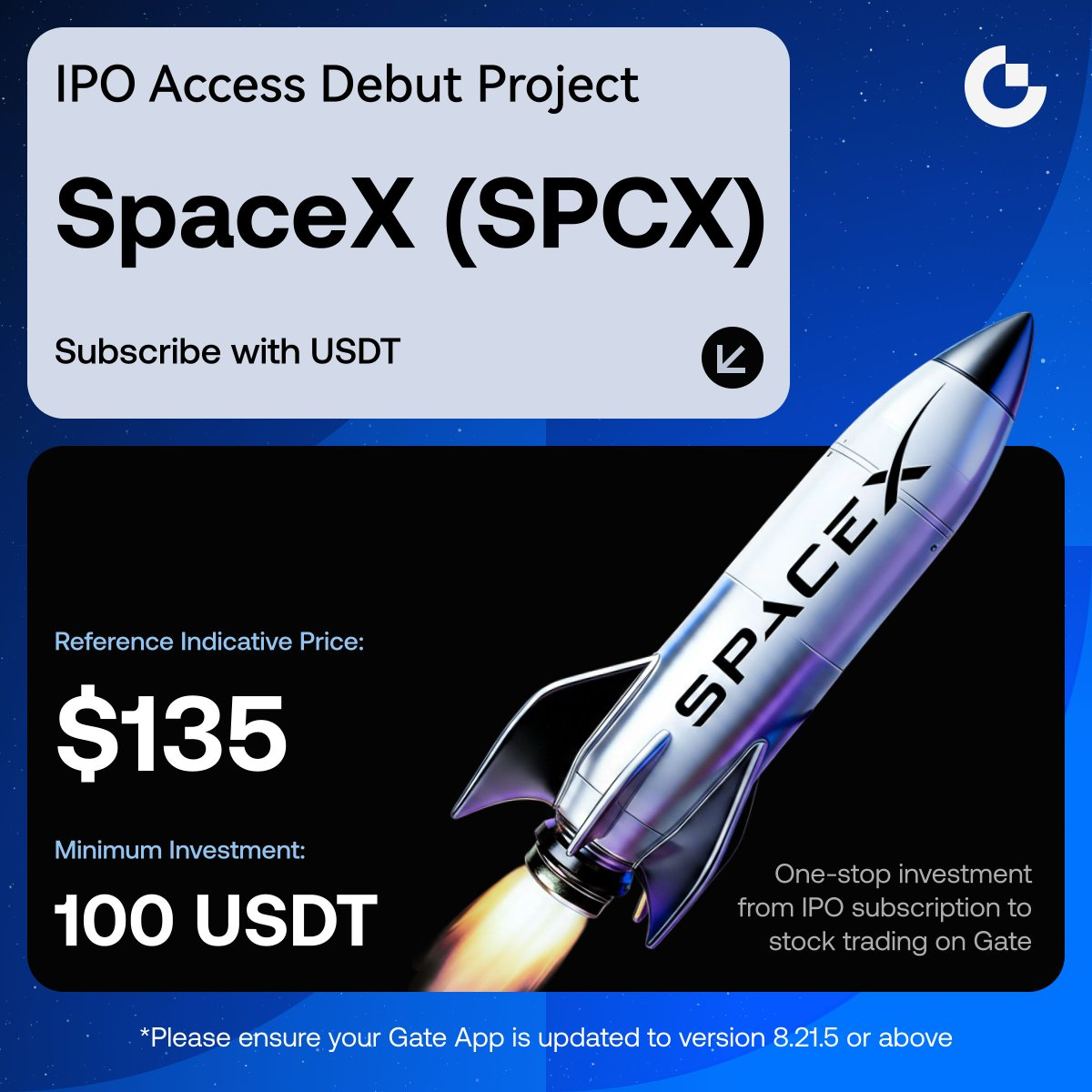
Com a SpaceX como projeto inaugural do Gate Direct IPO, os utilizadores da plataforma que receberam uma atribuição puderam aceder diretamente aos produtos de ações dos EUA da Gate para negociar ações reais.
Como funciona o Gate IPO Access?
O Gate IPO Access funciona com base num mecanismo de três fases: acesso ao projeto, subscrição pelo utilizador e liquidação da atribuição.
A plataforma lista primeiro os projetos elegíveis de IPO ou Pré-IPO, divulgando o contexto, os detalhes da oferta e as regras de subscrição. Os utilizadores avaliam os projetos com base nestas informações públicas.
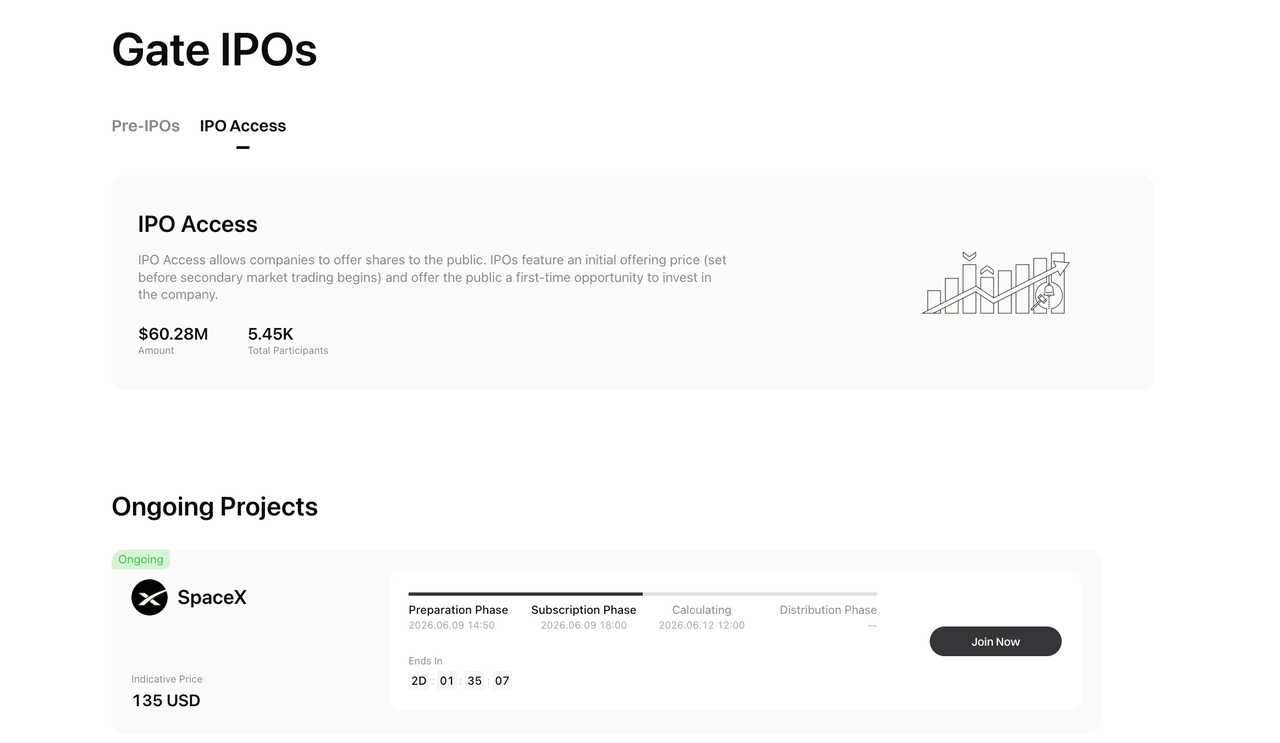
Os utilizadores qualificados submetem então os pedidos de subscrição dentro do período designado, o que pode envolver verificação de elegibilidade, bloqueio de fundos ou gestão de quotas.
Após o encerramento das subscrições, tem início a fase de atribuição. Se a procura exceder a oferta, são aplicadas regras de atribuição proporcional ou outras. Após a atribuição, os utilizadores recebem os direitos sobre os ativos correspondentes ou acordos de liquidação subsequentes.
A plataforma trata principalmente da apresentação de informações, coordenação de processos e gestão de subscrições, enquanto a emissão do projeto em si permanece sujeita às regras do mercado e aos requisitos de conformidade.
Processo de Participação Completo do Gate IPOs
Primeiro, os utilizadores navegam na página IPO Access para consultar os materiais do projeto — contexto da empresa, dimensão da oferta, cronograma e condições de subscrição.
De seguida, concluem a confirmação de elegibilidade necessária e submetem os pedidos de subscrição durante o período aberto.
Após o período de subscrição, segue-se a fase de atribuição. Se a procura exceder a oferta, o sistema distribui de acordo com as regras predefinidas.
Após a atribuição, os utilizadores podem consultar os resultados e passar à liquidação ou gestão de ativos conforme os acordos do projeto.
Este processo consolida vários passos dispersos das IPO tradicionais numa única plataforma unificada, melhorando significativamente a eficiência da participação.
Qual é a diferença entre o Gate IPOs e o Launchpad?
O Gate IPOs e o Launchpad são ambos pontos de entrada para novos projetos, mas diferem fundamentalmente no tipo de ativo e na lógica de mercado.
O Launchpad foca-se em ofertas de tokens blockchain. Os participantes recebem tokens digitais cujo valor depende do ecossistema, da tokenomics e da dinâmica de mercado do projeto.
O Gate IPOs tem como alvo projetos de IPO e Pré-IPO, onde os ativos principais são capital empresarial, financiamento público ou ativos do mundo real.
Quanto à natureza dos ativos, o Launchpad pertence à emissão de criptoativos, enquanto o IPO Access é uma extensão digital da participação no mercado de capitais tradicional.
Ambos envolvem subscrição e atribuição, mas diferem significativamente nos ativos subjacentes, ambiente regulatório, estrutura de mercado e fontes de risco.
| Dimensão de Comparação |
Gate IPOs |
Launchpad |
| Ativos Principais |
Projetos de IPO/Pré-IPO |
Tokens Cripto |
| Tipo de Mercado |
Mercado de Capitais Tradicional |
Mercado de Ativos Digitais |
| Objetivo de Participação |
Participação em Financiamento Empresarial |
Participação em Emissão de Tokens |
| Fonte de Risco |
Operações da Empresa e Desempenho do Mercado |
Desenvolvimento do Projeto e Tokenomics |
| Lógica de Atribuição |
Regras de IPO |
Regras de Emissão de Tokens |
Para que cenários é adequado o Gate IPOs?
O Gate IPOs é mais adequado para a interseção entre os mercados de capitais tradicionais e as finanças digitais.
Para utilizadores que exploram os mercados globais de IPO, o IPO Access fornece uma fonte centralizada de informações sobre projetos.
Para investidores que acompanham empresas em fase de crescimento, os projetos de Pré-IPO oferecem uma visão do desenvolvimento de uma empresa antes da sua listagem pública.
Para aqueles que investigam Ativos do Mundo Real (RWA) e a digitalização financeira, o Gate IPOs demonstra como as plataformas digitais fazem a ponte entre as finanças tradicionais e o ecossistema blockchain.
Vantagens e Potenciais Limitações do Gate IPOs
O Gate IPOs melhora principalmente o acesso à informação sobre IPO e simplifica a participação através de uma plataforma unificada.
Ao contrário da abordagem tradicional, os utilizadores já não precisam de visitar várias instituições ou canais de mercado para conhecer projetos e concluir pedidos.
Os serviços digitais também melhoram a transparência dos projetos, permitindo uma comparação e investigação mais fáceis.
No entanto, o Gate IPOs não garante atribuição a todos os utilizadores. Os projetos de IPO registam frequentemente uma procura superior à oferta, tornando a atribuição final incerta.
Além disso, as leis regionais, as regras de mercado e as condições específicas do projeto podem afetar a elegibilidade e os resultados da participação.
Conclusão
Enquanto serviço IPO Access da Gate, o Gate IPOs liga digitalmente os mercados de capitais tradicionais ao ecossistema de ativos digitais, oferecendo aos utilizadores um canal para participarem em projetos de IPO e Pré-IPO. O seu valor central reside na integração de informações sobre projetos, pedidos de subscrição, gestão de atribuições e liquidação num único fluxo de trabalho, aumentando a eficiência e reduzindo a complexidade.
Com o crescimento dos ativos do mundo real, dos valores mobiliários digitais e da digitalização financeira, o Gate IPOs está a tornar-se uma infraestrutura fundamental que liga as finanças tradicionais ao ecossistema de ativos digitais.
Perguntas Frequentes
Qual é a diferença entre o Gate IPO Access e as subscrições tradicionais de IPO?
As IPO tradicionais exigem subscrições através de sociedades de valores mobiliários, enquanto o Gate IPO Access centraliza informações, pedidos e atribuições numa só plataforma. Ambos se focam em projetos de IPO, mas diferem nos caminhos de participação e na execução.
O Gate IPOs é o mesmo que negociar ações?
O Gate IPOs envolve a subscrição e participação em projetos de IPO ou Pré-IPO, centrando-se na fase de emissão. A negociação de ações no mercado secundário ocorre após a listagem de uma empresa — são fases de mercado distintas.
Qual é a diferença entre o Gate IPOs e o Launchpad?
O Launchpad tem como alvo ofertas de tokens blockchain; o Gate IPOs tem como alvo projetos de IPO e Pré-IPO. Diferem nos ativos subjacentes, na estrutura de mercado, na lógica de participação e nas fontes de risco.
O que é o Pré-IPO?
Pré-IPO refere-se à fase de angariação de fundos antes de uma empresa abrir oficialmente o capital. É uma operação de capital fundamental que antecede a IPO.
Existem riscos associados ao Gate IPOs?
Todos os projetos de IPO e Pré-IPO envolvem riscos de mercado, de atribuição e de conformidade. O desempenho do projeto, as condições de mercado e os resultados da atribuição podem afetar a experiência, pelo que é essencial compreender as regras e os fatores de risco.