A importância do modelo de negócio da Microsoft reside na sua transição gradual de uma empresa tradicional de software para PC para uma empresa de plataforma de computação em nuvem e IA. Os centros de dados Azure, a parceria com a OpenAI e os produtos Copilot estão a transformar o mix de receitas e o modelo de serviços empresariais da Microsoft.
O âmbito de negócio atual da MSFT abrange sistemas operativos, software empresarial, serviços cloud de IA, ferramentas de desenvolvimento, publicidade em motores de busca e infraestrutura de centros de dados. A formação de modelos de IA, as ferramentas de produtividade de IA de nível empresarial e os serviços de computação em nuvem estão a afirmar-se cada vez mais como motores de crescimento fundamentais para a Microsoft.
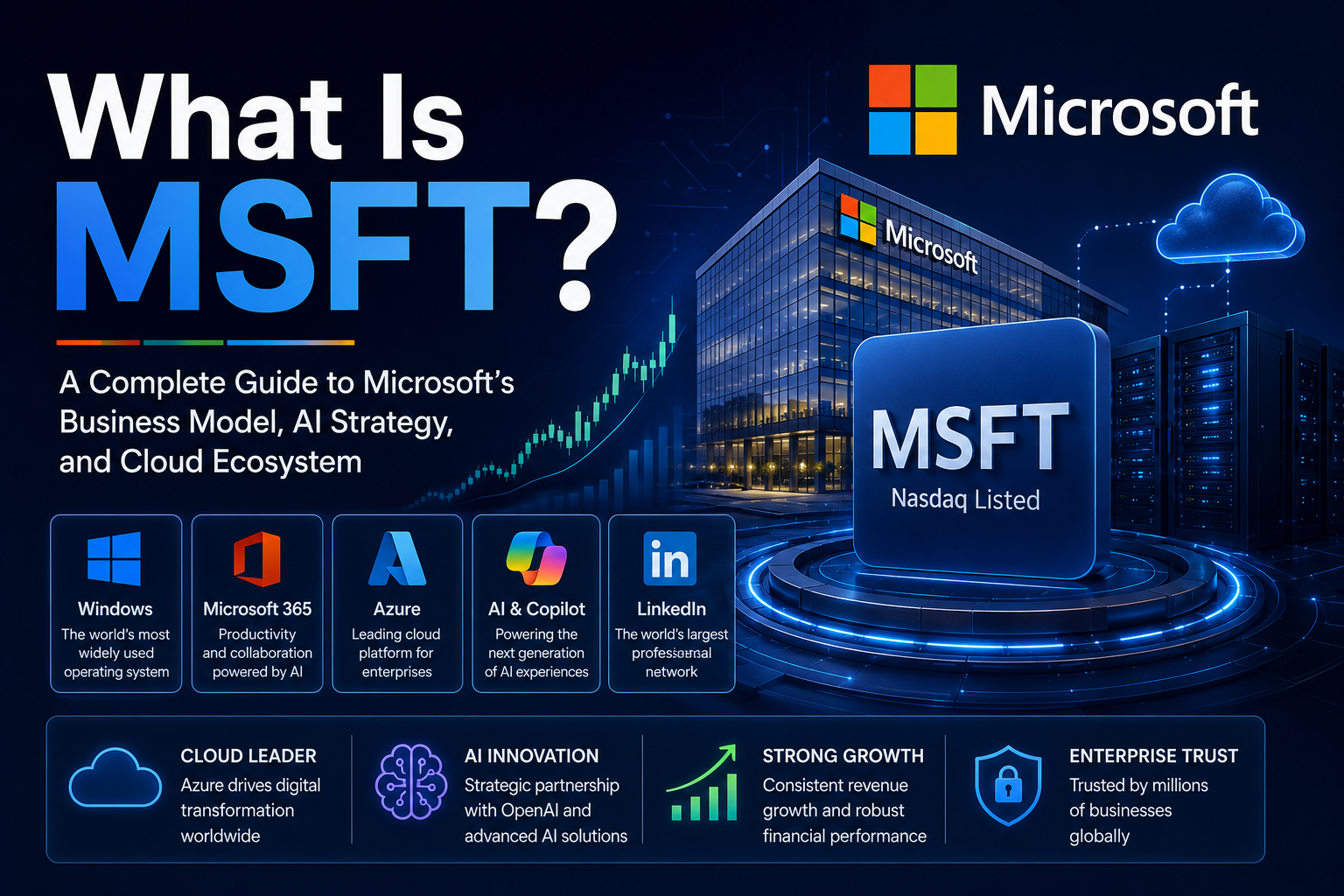
O que é a MSFT
O foco central da Microsoft é construir um ecossistema empresarial de longo prazo através de software, computação em nuvem e serviços de IA. O Windows e o Office têm sido a base do negócio da Microsoft, enquanto a Azure e a plataforma de IA estão a impulsionar a empresa para uma nova fase de crescimento.
Estruturalmente, a Microsoft é mais bem descrita como uma «plataforma de infraestrutura digital empresarial». Os utilizadores empresariais adotam tipicamente o Windows, o Microsoft 365, o Teams e a Azure em conjunto, criando um ecossistema de colaboração abrangente.
O negócio da Microsoft cobre atualmente:
A vantagem competitiva de longo prazo da Microsoft provém principalmente das suas capacidades de integração de ecossistemas. A sinergia entre software empresarial, computação em nuvem e serviços de IA permite ainda que a Microsoft mantenha uma elevada fidelização de clientes.
Como funciona o modelo de negócio da Microsoft
O modelo de negócio da Microsoft assenta numa estrutura de «subscrição + serviços cloud + ecossistema empresarial». Em vez de depender de vendas únicas de software, a Microsoft tem transitado progressivamente para um modelo de receitas de subscrição recorrente.
Primeiro, os utilizadores empresariais adquirem serviços Windows e Microsoft 365. Depois, os dados corporativos, as ferramentas de colaboração e os fluxos de trabalho de escritório migram gradualmente para o ecossistema da Microsoft.
Em seguida, a Azure fornece serviços de computação em nuvem, bases de dados e formação de modelos de IA. As empresas podem gerir centros de dados, aplicações de IA e infraestrutura cloud através da Azure.
Por fim, a Microsoft gera receitas contínuas através de subscrições de longo prazo e serviços cloud. O Microsoft 365, a Azure e as ofertas de segurança empresarial tornaram-se os principais impulsionadores do fluxo de caixa da Microsoft.
| Segmento de negócio |
Produto principal |
Modelo de receitas principal |
| Sistema operativo |
Windows |
Receitas de licenciamento |
| Software de escritório |
Microsoft 365 |
Receitas de subscrição |
| Computação em nuvem |
Azure |
Receitas de serviços cloud |
| Serviços de IA |
Copilot |
Receitas de subscrição de IA |
| Colaboração empresarial |
Teams |
Receitas SaaS |
A chave do modelo de negócio da Microsoft reside na criação de uma plataforma empresarial unificada através de múltiplos produtos. Quanto mais profundamente as empresas dependem do ecossistema da Microsoft, maiores se tornam geralmente os custos de mudança.
O papel da Microsoft Azure no mercado de computação em nuvem
A Azure é a plataforma de computação em nuvem da Microsoft e uma das maiores redes de serviços cloud do mundo. A Azure fornece principalmente serviços de computação, armazenamento, bases de dados, IA e centros de dados a empresas.
Primeiro, as empresas migram aplicações e dados para o ambiente cloud da Azure. Depois, a Azure fornece suporte de recursos de servidores, bases de dados e rede.
Em seguida, os serviços Azure AI suportam a formação e inferência de modelos de IA. Os grandes modelos de linguagem requerem enormes recursos de GPU e centros de dados, tornando a Azure uma plataforma crítica para a infraestrutura de IA.
Ao contrário das configurações tradicionais de servidores on-premises, a Azure permite que as empresas escalem rapidamente os recursos de computação sem construir grandes centros de dados por si mesmas.
A força do ecossistema de computação em nuvem da Microsoft reside na integração profunda da Azure com Windows, Office e segurança empresarial. Uma plataforma unificada reduz a complexidade da gestão de TI empresarial.
Como a Microsoft se posiciona na IA e no ecossistema OpenAI
O núcleo da estratégia de IA da Microsoft gira em torno da infraestrutura Azure AI e da parceria com a OpenAI. A Microsoft tem vindo a integrar consistentemente as capacidades dos modelos de IA no Office, Windows e serviços empresariais.
Primeiro, a Microsoft fornece à OpenAI o centro de dados Azure e potência de computação GPU. Como a formação de modelos de IA em grande escala exige enormes recursos de computação, a Azure tornou-se uma plataforma de infraestrutura fundamental para a OpenAI.
Subsequentemente, a Microsoft incorpora as capacidades do modelo GPT nos produtos Copilot. O Microsoft 365 Copilot, o GitHub Copilot e as funcionalidades de IA do Windows funcionam na plataforma de IA da Microsoft.
Depois, o Azure OpenAI Services fornece aos clientes empresariais acesso às API dos modelos de IA. As empresas podem construir sistemas de IA para atendimento ao cliente, pesquisa e automação através da Azure.
A estratégia de IA da Microsoft enfatiza a integração de «IA + software empresarial». Em vez de competir apenas em modelos de IA, a Microsoft prioriza a implementação de IA de nível empresarial e a aplicação prática.
Que negócios principais tem a MSFT em software empresarial
O negócio de software empresarial da Microsoft abrange colaboração de escritório, segurança empresarial, ferramentas de desenvolvimento e gestão de dados. Este ecossistema tem sido, há muito, a vantagem competitiva central da Microsoft.
Primeiro, o Microsoft 365 fornece ferramentas de produtividade de escritório, e-mail e colaboração. As empresas podem estabelecer um ambiente de trabalho unificado através do Teams, Excel e Outlook.
Depois, a Microsoft reforça as capacidades de gestão empresarial com o Active Directory, o Defender e serviços de segurança. As grandes empresas necessitam tipicamente de sistemas unificados de gestão de identidades e segurança de rede.
Em seguida, o GitHub e as plataformas de desenvolvimento suportam a colaboração no desenvolvimento de software. A Microsoft construiu um ecossistema empresarial integrado de «escritório + desenvolvimento + computação em nuvem».
A importância do modelo de software empresarial da Microsoft reside na estabilidade das receitas de subscrição de longo prazo. Os clientes empresariais tendem a manter-se leais às plataformas de escritório e segurança da Microsoft.
Como a Microsoft constrói o seu ecossistema através do Office e do Windows
O núcleo do ecossistema da Microsoft é a sinergia de longa data entre o Windows e o Office. Juntos, o sistema operativo e o software de escritório criaram uma das maiores infraestruturas de software empresarial do mundo.
Primeiro, o Windows fornece o ambiente de execução para PCs e endpoints empresariais. Depois, o Microsoft Office trata das tarefas de produtividade, documentação e colaboração.
Em seguida, o Teams e o OneDrive integram capacidades de colaboração baseadas na nuvem. Os colaboradores podem partilhar ficheiros, realizar reuniões remotas e sincronizar dados através da plataforma Microsoft.
O ecossistema da Microsoft difere dos modelos de software tradicionais. Em vez de vender produtos de software individuais, a Microsoft enfatiza uma experiência unificada de «dispositivo + nuvem + IA».
As funcionalidades de IA estão também a chegar gradualmente ao Office e ao Windows. O Copilot pode agora ajudar os utilizadores na criação de documentos, geração de código e análise de dados.
Como negociar MSFT no Gate TradFi
O Gate TradFi permite que os utilizadores acedam a ativos financeiros tradicionais como MSFT através de produtos TradFi relacionados. Os utilizadores podem acompanhar o desempenho do preço das ações da Microsoft no Gate TradFi e negociar com base nos tipos de produto disponíveis na plataforma.
Os produtos TradFi relacionados com a MSFT acompanham geralmente os movimentos do preço das ações da Microsoft. Ao contrário da detenção direta de ações, alguns produtos TradFi focam-se na negociação de diferenças de preço, pelo que os utilizadores precisam de compreender as regras do produto, os mecanismos de alavancagem e os métodos de controlo de risco.
Ao negociar MSFT no Gate TradFi, os utilizadores precisam tipicamente de entrar nas Zonas TradFi e depois pesquisar por produtos relacionados com a MSFT ou Microsoft. Podem depois visualizar os detalhes do produto, as tendências de preço, as regras de negociação e os avisos de risco.
Os preços da MSFT são tipicamente influenciados pelo crescimento da Azure, pela comercialização da IA, pelas receitas de software empresarial, pelas despesas de capital em centros de dados e pelo sentimento no setor das ações tecnológicas dos EUA. Antes de negociar produtos relacionados com a MSFT, os utilizadores devem compreender os fundamentos da Microsoft e a mecânica dos produtos TradFi.
Como a MSFT difere da Apple e da Google
A Microsoft, a Apple e a Google são gigantes tecnológicos globais, mas os seus modelos de negócio diferem significativamente. A Microsoft coloca maior ênfase no software empresarial e nos ecossistemas de computação em nuvem.
| Empresa |
Direção principal |
Principal vantagem |
| Microsoft |
Software empresarial e computação em nuvem |
Azure e Office |
| Apple |
Ecossistema de hardware |
iPhone e Chips |
| Google |
Pesquisa e publicidade |
Pesquisa e modelos de IA |
A Apple foca-se em eletrónica de consumo e integração de hardware. A Google depende principalmente de publicidade em pesquisa e serviços de internet.
Em contraste, a Microsoft tem-se concentrado há muito no mercado empresarial. A Azure, o Microsoft 365 e os serviços empresariais de IA tornaram-se os motores de crescimento mais importantes da Microsoft.
A competição de IA entre a Microsoft e a Google centra-se também principalmente no mercado de computação em nuvem e plataformas de IA empresariais.
Que desafios competitivos enfrenta a Microsoft na IA e na computação em nuvem
Os principais desafios que a Microsoft enfrenta nos seus negócios de IA e computação em nuvem giram em torno do fornecimento de GPU, da concorrência de modelos de IA e das pressões do mercado global de computação em nuvem.
Primeiro, a formação de modelos de IA requer enormes recursos de GPU e centros de dados. A capacidade de fornecimento de GPU da NVIDIA afeta diretamente a rapidez com que os serviços Azure AI podem escalar.
Depois, a Google, a Amazon e a Meta estão todas a intensificar a sua concorrência em plataformas de IA. As grandes empresas tecnológicas disputam o mercado de serviços de IA empresariais.
Em seguida, a expansão global de centros de dados aumenta a pressão sobre as despesas de capital. Os centros de dados de IA exigem energia significativa, sistemas de refrigeração e recursos de rede de alto desempenho.
A Microsoft também precisa de equilibrar cuidadosamente os custos de IA com a eficiência da comercialização. Embora a IA generativa melhore as capacidades de serviço empresarial, os custos de inferência de IA permanecem elevados.
A concorrência global em IA e computação em nuvem passou de uma competição puramente de software para um concurso abrangente que envolve centros de dados, GPU e plataformas de IA.
Resumo
MSFT é o código de ação da Microsoft Corporation, que evoluiu de uma empresa de software tradicional para uma potência global de infraestrutura de IA e computação em nuvem. O Windows, o Office, a Azure e o ecossistema OpenAI formam juntos a base do modelo de negócio de longo prazo da Microsoft.
A plataforma cloud Azure, os serviços de IA Copilot e o ecossistema de software empresarial estão a impulsionar a Microsoft para a sua próxima fase de crescimento. A Microsoft é agora um player importante nos mercados globais de serviços de IA empresarial e computação em nuvem.
Ao mesmo tempo, a Microsoft enfrenta desafios decorrentes da concorrência de modelos de IA, dos custos dos centros de dados e das pressões do mercado de computação em nuvem. A corrida global pela infraestrutura de IA está a emergir como um tema central no desenvolvimento futuro da Microsoft.
Perguntas Frequentes
O que é a MSFT?
MSFT é o código de ação da Microsoft Corporation. A Microsoft opera principalmente os negócios de Windows, Office, Azure, serviços de IA e software empresarial.
O que é a Microsoft Azure?
A Azure é a plataforma de computação em nuvem da Microsoft, que oferece servidores, bases de dados, formação de modelos de IA e serviços cloud empresariais. É uma das principais plataformas cloud do mundo.
Porque é que a Microsoft prioriza a IA?
A estratégia de IA da Microsoft foca-se nos centros de dados Azure e na sua parceria com a OpenAI. Os serviços de IA fortalecem o ecossistema de software empresarial e impulsionam o crescimento das receitas de computação em nuvem.
Qual é a relação entre a Microsoft e a OpenAI?
A Microsoft fornece à OpenAI computação em nuvem Azure e potência GPU, e integra os modelos GPT nos serviços Copilot e Azure AI.
Como negociar MSFT no Gate TradFi?
Os utilizadores podem pesquisar por produtos relacionados com a MSFT ou Microsoft nas Zonas TradFi do Gate e negociar de acordo com as regras de produto da plataforma. Os produtos relacionados com a MSFT são tipicamente influenciados pelos resultados financeiros da Microsoft, crescimento da Azure, negócio de IA e tendências do setor das ações tecnológicas dos EUA.
Quais são as diferenças entre a MSFT, a Apple e a Google?
A Microsoft foca-se em software empresarial e computação em nuvem, a Apple enfatiza ecossistemas de hardware e a Google depende mais de publicidade em pesquisa e serviços de internet.