What is OpenAI Tokenized Stock? How does PreStocks map OpenAI's value onto the chain?

Intermediate
Web3FinanceTradFi
Last Updated 2026-06-04 02:57:16
Reading Time: 2m
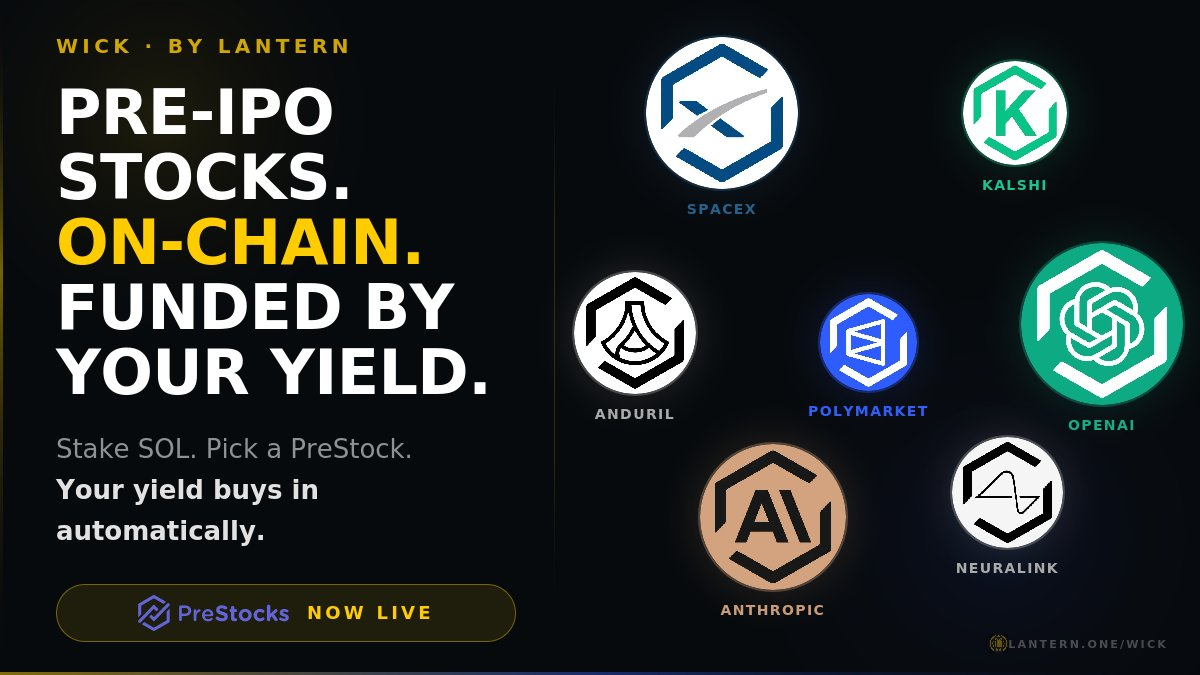
OpenAI Tokenized Stock is a blockchain-based tokenized asset designed to bring the economic value of unlisted AI companies like OpenAI onto on-chain markets. By holding underlying equity through an SPV (Special Purpose Vehicle) structure and issuing corresponding tokens, PreStocks enables users to gain economic exposure to changes in OpenAI's enterprise value without the need to participate directly in traditional private equity markets.

OpenAI has become one of the world's most closely watched AI companies. From large language models to AI infrastructure, its technological progress continues to drive the industry forward. However, since OpenAI has not yet gone public, most investors cannot gain direct exposure to its value the way they can with publicly traded stocks.

As real-world asset (RWA) tokenization advances, more platforms are exploring how to map the value of private companies onto the blockchain. The PreStocks OpenAI Tokenized Stock is a key example of this trend. By combining an SPV structure with on-chain trading, it converts OpenAI-related economic rights into tradable digital assets, introducing a new asset class to the on-chain capital market.

What Is OpenAI Tokenized Stock?

As a tokenized asset tied to OpenAI's enterprise value, the OpenAI Tokenized Stock is neither a security officially issued by OpenAI nor a record of equity ownership. Instead, it maps OpenAI-related economic rights onto on-chain tokens through a legal structure, enabling holders to gain economic exposure tied to changes in OpenAI's value.

In essence, it is a tokenized pre-IPO asset designed to bring the value of a traditionally closed private market into the blockchain ecosystem.

What Is OpenAI Tokenized Stock?

How Does PreStocks Create OpenAI Value Exposure?

PreStocks does not directly issue official OpenAI stock.

Its core mechanism involves holding related interests through an SPV (Special Purpose Vehicle) and then mapping that economic value onto on-chain tokens.

The process typically works as follows:

  1. Acquire underlying rights or economic interests related to OpenAI.
  2. Manage these assets centrally through the SPV.
  3. Issue on-chain tokens based on the scale of the underlying assets.
  4. Establish a trading market on the blockchain.
  5. Form a pricing system through market supply and demand.

This structure allows a portion of OpenAI's value to be reflected in the on-chain market.

How Does PreStocks Create OpenAI Value Exposure?

What Role Does the SPV Play in OpenAI Tokenized Stock?

The SPV is the core infrastructure of the OpenAI Tokenized Stock system.

Assets in traditional private equity are often subject to transfer restrictions, investor qualification requirements, and complex legal arrangements. Directly mapping these rights onto the blockchain is highly challenging.

The SPV's role is to hold and manage the underlying interests centrally, acting as a bridge between on-chain tokens and real-world assets.

Thus, the SPV not only serves an asset custody function but also provides the critical legal foundation for the entire value mapping system.

How Is OpenAI Tokenized Stock Different From OpenAI Stock?

This is one of the most common misconceptions in the market.

OpenAI Tokenized Stock and actual stock are not the same thing.

Real stock typically represents partial ownership of a company and may include voting, dividend, and governance rights. In contrast, the OpenAI Tokenized Stock primarily offers economic exposure tied to changes in OpenAI's value.

Therefore, holding the tokenized stock does not make you a legal shareholder of OpenAI.

How Is the Price of OpenAI Tokenized Stock Determined?

Since OpenAI is not publicly listed, there is no official market price.

The price of the OpenAI Tokenized Stock is shaped by multiple factors, including:

  • OpenAI's latest funding round valuation
  • Private market equity transaction prices
  • Expectations for AI industry growth
  • Market supply and demand
  • On-chain trading activity

These factors together create a price discovery mechanism that enables the on-chain market to generate a dynamic valuation reference.

What Are the Risks of OpenAI Tokenized Stock?

While tokenized private equity improves market accessibility, several risks remain.

First is valuation risk. Without a public listing, OpenAI's value lacks continuous, transparent pricing.

Second is liquidity risk. The on-chain market remains small, and prices can be swayed by sentiment.

Additionally, the SPV structure, legal framework, and varying regulatory requirements across jurisdictions may affect how the asset operates.

These factors collectively form the risk profile of the OpenAI Tokenized Stock.

Summary

OpenAI Tokenized Stock is a tokenized asset that maps OpenAI-related economic rights onto the blockchain. Through PreStocks' SPV ownership structure, token issuance mechanism, and on-chain trading market, value exposure that previously existed only in private markets can enter the digital asset ecosystem.

While the OpenAI Tokenized Stock is not equivalent to official OpenAI stock and does not grant shareholder status, it demonstrates a new direction for the convergence of RWA, pre-IPO investment, and on-chain capital markets. As asset tokenization infrastructure matures, products like this are poised to become an important component of the future digital financial system.

FAQs

Does holding OpenAI Tokenized Stock grant shareholder status?

Generally, no. Holders typically do not automatically receive voting rights, board rights, or other corporate governance rights.

How does PreStocks gain exposure to OpenAI's value?

PreStocks typically holds related interests or economic benefits through an SPV structure and then maps that value onto on-chain tokens, creating a digital representation of OpenAI's value.

How is the price of OpenAI Tokenized Stock determined?

The price is generally formed by referencing OpenAI's funding valuation, private market trading activity, industry development expectations, and on-chain supply and demand dynamics.

Is OpenAI Tokenized Stock considered an RWA?

Yes. It is essentially a form of real-world asset (RWA) tokenization, as its underlying value comes from real-world corporate interests or related economic benefits.

What's the difference between OpenAI Tokenized Stock and traditional Pre-IPO investing?

Traditional pre-IPO investing typically involves directly holding equity in a company, while OpenAI Tokenized Stock uses blockchain to map related economic rights, emphasizing digital circulation, on-chain trading, and asset composability.

Author: Jayne
Disclaimer
* The information is not intended to be and does not constitute financial advice or any other recommendation of any sort offered or endorsed by Gate.
* This article may not be reproduced, transmitted or copied without referencing Gate. Contravention is an infringement of Copyright Act and may be subject to legal action.

Related Articles

How Does PAXG Work? In-Depth Overview of the Physical Gold Tokenization Mechanism
Beginner

How Does PAXG Work? In-Depth Overview of the Physical Gold Tokenization Mechanism

PAXG (Pax Gold) is a tokenized asset backed by physical gold, issued by the fintech company Paxos and traded on the Ethereum blockchain as an ERC-20 token. The core concept is to tokenize physical gold on-chain, with each PAXG token representing ownership of a certain amount of gold. This structure enables investors to hold and trade gold in the form of a digital asset.
2026-03-24 19:12:51
How is the price of PAXG determined? Pegging mechanism, trading depth, and influencing factors
Beginner

How is the price of PAXG determined? Pegging mechanism, trading depth, and influencing factors

PAXG (Pax Gold) is a tokenized asset backed by physical gold reserves, launched by fintech firm Paxos and issued as an ERC-20 token on the Ethereum blockchain. The core concept is to digitally represent real-world gold assets, allowing investors to hold and trade gold via the blockchain network. Because each PAXG token corresponds to a specific quantity of physical gold, its price is theoretically expected to closely track the global gold market.
2026-03-24 19:11:40
Gate Research: 2024 Cryptocurrency Market  Review and 2025 Trend Forecast
Advanced

Gate Research: 2024 Cryptocurrency Market Review and 2025 Trend Forecast

This report provides a comprehensive analysis of the past year's market performance and future development trends from four key perspectives: market overview, popular ecosystems, trending sectors, and future trend predictions. In 2024, the total cryptocurrency market capitalization reached an all-time high, with Bitcoin surpassing $100,000 for the first time. On-chain Real World Assets (RWA) and the artificial intelligence sector experienced rapid growth, becoming major drivers of market expansion. Additionally, the global regulatory landscape has gradually become clearer, laying a solid foundation for market development in 2025.
2026-03-24 11:56:16
What Are the Risks of TSLA? Understanding Tesla’s Competitive Landscape and Investment Challenges
Intermediate

What Are the Risks of TSLA? Understanding Tesla’s Competitive Landscape and Investment Challenges

The main investment risks of TSLA come from intensifying industry competition, pricing pressure, swings in profitability, and changes in market valuation. As one of the global leaders in the new energy vehicle industry, Tesla has strong brand and technology advantages, but it still faces mounting competition from both traditional automakers and emerging EV brands. When evaluating TSLA, investors should pay close attention to Tesla’s market share, margin trends, technological progress, and the broader market environment in order to form a more complete view of its long-term investment value and risk.
2026-04-21 06:59:56
GoldFinger Use Cases in DeFi: How Gold Assets Enter the On-chain Financial System
Beginner

GoldFinger Use Cases in DeFi: How Gold Assets Enter the On-chain Financial System

Through asset tokenization and a Proof of Reserve mechanism, GoldFinger brings gold into the DeFi ecosystem, allowing it to take part in on-chain financial activity as collateral, a liquidity tool, and a component of yield strategies. Once tokenized, gold assets such as ART can function as collateral, liquidity instruments, and building blocks in yield strategies across lending markets, decentralized exchanges, and structured returns, turning a traditional store of value into composable on-chain financial infrastructure.
2026-04-15 03:47:31
How Does GoldFinger Work? Gold Asset Tokenization, Proof of Reserve, and on-chain Circulation Explained
Beginner

How Does GoldFinger Work? Gold Asset Tokenization, Proof of Reserve, and on-chain Circulation Explained

GoldFinger operates through a process that includes asset custody, Proof of Reserve, token minting, and on-chain circulation. By placing physical gold within a compliant custody framework and mapping it on-chain through ART tokens, GoldFinger turns gold into a digital, programmable asset. At the same time, its Proof of Reserve mechanism ensures that on-chain tokens correspond to the underlying assets, supporting trading, collateralization, and redemption in DeFi scenarios.
2026-04-15 03:01:54