Los mercados de valores tradicionales siempre han dependido de bolsas, brókeres, custodios y sistemas centralizados de compensación para completar las transferencias de activos. Con la evolución de la infraestructura blockchain, cada vez más activos del mundo real se trasladan a la cadena, y las acciones se perfilan como una de las clases de activos más seguidas. El auge de las acciones tokenizadas tiende un puente entre las finanzas tradicionales y el ecosistema de los activos digitales.
Dentro del ámbito de los activos digitales, las acciones tokenizadas se consideran un componente clave del sector de Activos del Mundo Real (RWA). Su importancia no se limita a mejorar la eficiencia en la circulación de activos, también ofrecen una nueva infraestructura de soporte para las finanzas descentralizadas (DeFi), las estrategias de inversión automatizada y la asignación global de activos.
¿Qué son las acciones tokenizadas?
Los mercados bursátiles tradicionales son inherentemente regionales. Para operar, los inversores suelen necesitar cuentas de valores en países o regiones concretos, y se enfrentan a barreras como los requisitos de apertura de cuenta, la diferencia horaria en las sesiones de negociación y las restricciones a los flujos de capital transfronterizos.
La tecnología blockchain ha acelerado la digitalización de activos. Desde las stablecoins hasta la tokenización de bonos, y desde el sector inmobiliario hasta las participaciones de fondos en cadena, cada vez más activos del mundo real adoptan modelos de emisión en cadena.
Como activo digital emitido y gestionado a través de blockchain, las acciones tokenizadas suelen reflejar el valor de empresas cotizadas concretas. Al mapear acciones tradicionales en redes blockchain, estos activos pueden negociarse, transferirse y combinarse en cadena.
¿Cómo funcionan las acciones tokenizadas?
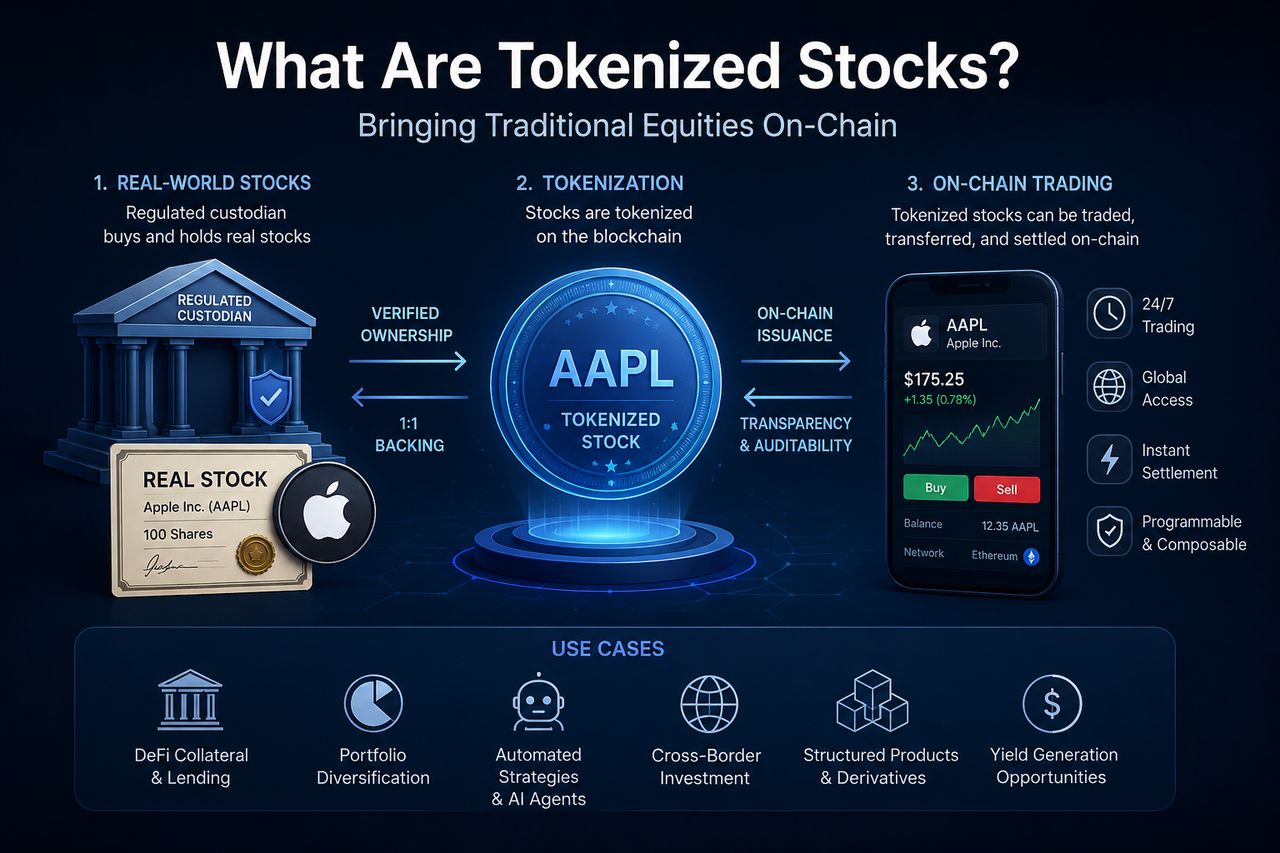
Las acciones tokenizadas suelen seguir un modelo de «custodia de acciones reales + emisión de tokens en cadena». Un custodio compra y mantiene primero las acciones reales, y luego emite los tokens correspondientes en la blockchain en función de la cantidad que posee.
En la mayoría de los casos, cada token representa una proporción específica de la acción subyacente. Por ejemplo, un token puede equivaler a una acción completa o a una fracción de esta. Los contratos inteligentes se encargan de registrar la emisión, la circulación y la tenencia de tokens.
Cuando los usuarios operan con acciones tokenizadas, el sistema en cadena actualiza los registros de propiedad al instante, sin necesidad de recurrir a los sistemas tradicionales de liquidación de valores. Algunas plataformas también permiten que los participantes elegibles canjeen los activos, lo que garantiza que el vínculo de valor entre los tokens en cadena y las acciones reales se mantenga intacto.
Las stablecoins suelen actuar como medio de liquidación en estas operaciones. Al emparejar stablecoins con acciones tokenizadas, los usuarios pueden comprar y vender directamente en la blockchain, eludiendo los procesos de compensación multicapa de la banca tradicional.
Acciones tokenizadas frente a acciones tradicionales: diferencias clave
Tanto las acciones tokenizadas como las tradicionales reflejan el valor de mercado de las empresas cotizadas, pero la infraestructura subyacente es muy distinta.
Las acciones tradicionales se negocian y liquidan a través de bolsas, brókeres y depositarios centrales de valores, y los registros de propiedad se almacenan en bases de datos centralizadas.
En cambio, las acciones tokenizadas utilizan redes blockchain para registrar las tenencias y las transacciones. La liquidación es casi instantánea, lo que elimina los ciclos de T+1 o T+2 habituales en los mercados tradicionales.
Los horarios de negociación también varían. Los mercados tradicionales operan con horarios fijos, mientras que algunas plataformas de acciones tokenizadas permiten la negociación en cadena 24/7, lo que facilita la participación de los usuarios de todo el mundo.
Dicho esto, las acciones tradicionales cuentan con marcos regulatorios sólidos y protecciones para el inversor, mientras que las acciones tokenizadas aún están en desarrollo y su estatus legal y regulatorio difiere según la jurisdicción.
Arquitectura técnica principal de las acciones tokenizadas
Los contratos inteligentes son el núcleo de los sistemas de acciones tokenizadas: gestionan la emisión de activos, los registros de transferencias, los controles de acceso y ciertas reglas de cumplimiento normativo.
La red blockchain proporciona el libro mayor subyacente de las acciones tokenizadas. Ya sea en una cadena pública o en una solución de capa 2, su función principal es garantizar la transparencia y la inmutabilidad de los datos de las transacciones.
Los oráculos de precio sincronizan los datos de los mercados de valores tradicionales con la blockchain. Como los precios de las acciones se generan en las bolsas tradicionales, los oráculos resultan esenciales para llevar la información de mercado más reciente a la cadena.
Para cumplir con los estándares regulatorios, muchas plataformas de acciones tokenizadas incorporan verificación de identidad, gestión de listas blancas y restricciones de negociación. Estas funciones ayudan a los emisores a cumplir con la normativa local en las distintas regiones.
Casos de uso de las acciones tokenizadas
La aplicación más directa es la negociación de acciones en cadena. Los usuarios pueden acceder al mercado bursátil sin necesidad de una cuenta de bróker tradicional, simplemente utilizando plataformas que admitan estos activos.
Dentro de DeFi, las acciones tokenizadas también pueden utilizarse como colateral. Algunos protocolos permiten a los usuarios emplear acciones tokenizadas para participar en préstamos, gestión de liquidez o construcción de carteras.
Los gestores de activos también están explorando el potencial de automatización de las acciones tokenizadas. Los contratos inteligentes pueden reequilibrar carteras, distribuir rendimientos y gestionar activos de forma más eficiente.
Riesgos y limitaciones de las acciones tokenizadas
El riesgo regulatorio es un desafío central. Las acciones están sujetas a una regulación estricta, y las normas aplicables a los valores en cadena varían considerablemente de un país a otro.
El riesgo de custodia es otra preocupación. La mayoría de las acciones tokenizadas dependen de custodios centralizados que mantienen las acciones subyacentes. Si el custodio encuentra problemas, los activos en cadena podrían verse afectados.
La liquidez también puede ser limitada en algunos proyectos. En comparación con las bolsas de valores consolidadas, ciertos mercados en cadena presentan una menor profundidad de negociación.
Los riesgos técnicos incluyen errores en los contratos inteligentes, vulnerabilidades en los puentes cross-chain y fallos en los oráculos, todo lo cual puede repercutir en la fijación de precios y la estabilidad de las operaciones.
Además, cuando las acciones se suspenden, se retiran de la cotización o experimentan eventos corporativos importantes, se necesitan mecanismos sólidos para gestionar los activos en cadena de forma adecuada.
Acciones tokenizadas frente a otros activos en cadena
Tanto las acciones tokenizadas como las stablecoins son representaciones de activos del mundo real, pero siguen referencias distintas. Las stablecoins están vinculadas a monedas fiat, mientras que las acciones tokenizadas reflejan el capital corporativo.
En comparación con los tokens de ETF de acciones, que representan una cesta de activos, las acciones tokenizadas suelen seguir a una única empresa.
A diferencia de los activos sintéticos, que utilizan colateral y mecanismos derivados para el seguimiento del precio, las acciones tokenizadas suelen estar respaldadas por acciones reales.
Y en comparación con los Contratos por Diferencia (CFD), que son esencialmente contratos sobre la fluctuación del precio y no implican la tenencia real del activo, las acciones tokenizadas se centran en la representación del activo y la propiedad en cadena.
Resumen
Las acciones tokenizadas están tendiendo un puente entre los mercados de valores tradicionales y la tecnología blockchain. Al mapear acciones reales en redes en cadena, ofrecen una mayor velocidad de liquidación, una mayor eficiencia en la circulación y una programabilidad mejorada.
Como desarrollo clave dentro del ámbito de los Activos del Mundo Real (RWA), las acciones tokenizadas no solo amplían el ecosistema de activos digitales, sino que también proporcionan un nuevo modelo para la digitalización de los mercados de capital globales.
Preguntas frecuentes
¿Representan las acciones tokenizadas una propiedad real de las acciones?
Depende del proyecto. Algunas están respaldadas por acciones reales y otorgan a los holders los derechos correspondientes; otras solo ofrecen exposición al precio. Comprueba siempre los términos concretos.
¿Se pueden negociar acciones tokenizadas 24/7?
Sí. Muchas plataformas admiten la negociación en cadena ininterrumpida, lo que ofrece una flexibilidad mucho mayor que los mercados tradicionales con horarios fijos.
¿Cuál es la diferencia entre las acciones tokenizadas y los ETF de acciones?
Las acciones tokenizadas siguen a una sola empresa, mientras que los tokens de ETF representan una cartera diversificada. La diferencia radica en la estructura del activo, el perfil de riesgo y los objetivos de seguimiento.
¿Se consideran valores las acciones tokenizadas?
En muchas jurisdicciones, sí: pueden clasificarse como valores o productos relacionados con valores, lo que exige el cumplimiento de la normativa financiera local.
¿Cómo mantienen las acciones tokenizadas la alineación de su precio con el de las acciones reales?
Los oráculos de precio introducen datos en tiempo real de las bolsas tradicionales en la blockchain, lo que garantiza que los precios en cadena se mantengan sincronizados con el mercado real.