In exchange ecosystems, native tokens typically serve a dual role of "platform discounts + ecosystem expansion." Against this backdrop, WBT is designed to bind centralized trading services with its own L1 blockchain: on the platform side, a tiered holding system incentivizes long-term token retention; on the chain side, the Whitechain PoA network supports WBT Gas and SoulDrop reward distribution, forming a complementary structure of "exchange utility layer + on-chain native coin layer."
From a blockchain and digital asset perspective, WBT represents the evolution of exchange-native tokens from pure platform points to chain-level native assets. A fixed total supply, weekly buyback and burn, and cross-chain burn/mint mechanisms collectively constrain supply; the WB Soul identity on Whitechain and the SoulDrop contract return a portion of on-chain transaction fees to eligible WBT Holding users, expanding the token's utility boundary.
What Is WhiteBIT Coin (WBT)? What Are Its Core Functions?
WhiteBIT Coin (WBT) is the native cryptocurrency of the WhiteBIT platform. Initially launched as the WhiteBIT Token, it later evolved into a unified native coin covering both the exchange and Whitechain. WBT is classified as a utility token with two core functions: within the WhiteBIT exchange, it serves as an equity medium to unlock fee discounts, referral rebates, Launchpad participation, and other benefits; on Whitechain, it acts as the native Gas coin, paying for on-chain transaction fees.
WBT has a total supply cap of 400,000,000 coins, with protocol-level prohibition on future issuance. The token is distributed across Whitechain, Ethereum, and Tron. Users can transfer between different network forms through the official cross-chain mechanism, but the total supply distribution remains unchanged. A comparison of core functions is as follows:
| Function Level |
Scenario |
WBT Role |
Typical User Action |
| Exchange Utility Layer |
Spot Trading, Launchpad, Lending |
Owning/Holding unlocks platform benefits |
Buy WBT, Transfer to Holding |
| On-chain Gas Layer |
Whitechain transfer, contract interaction |
Native Gas payment |
Pay fees on Whitechain |
| Reward Distribution Layer |
SoulDrop marketing campaigns |
Distributes on-chain WBT based on Holding tier |
Create WB Soul, Claim rewards |
| Deflation Mechanism Layer |
Platform revenue buyback |
Weekly burn reduces circulating supply |
View burn records and circulating statistics |
The above division of labor enables WBT to serve both the WhiteBIT product matrix and the Whitechain ecosystem, rather than merely serving as a trading pair.
WhiteBIT is a cryptocurrency trading platform serving European and global users, offering spot trading, Launchpad, Crypto Lending, WB Card, margin, and futures product lines. Whitechain is WhiteBIT's own Layer 1 blockchain, using Proof-of-Authority (PoA) consensus, implemented via a Go-Ethereum (Geth) fork for EVM compatibility, supporting deployment and execution of Ethereum-style smart contracts.
WBT serves as the hub connecting the two tracks: users hold WBT on WhiteBIT to obtain platform benefits; developers and users use WBT on Whitechain to pay Gas, deploy dApps, and interact with the WB Soul identity system. During cross-chain transfers, WBT is burned on Ethereum or Tron, and then minted in equivalent amounts on Whitechain using the burn transaction hash, ensuring the total supply does not increase due to inter-chain migration.
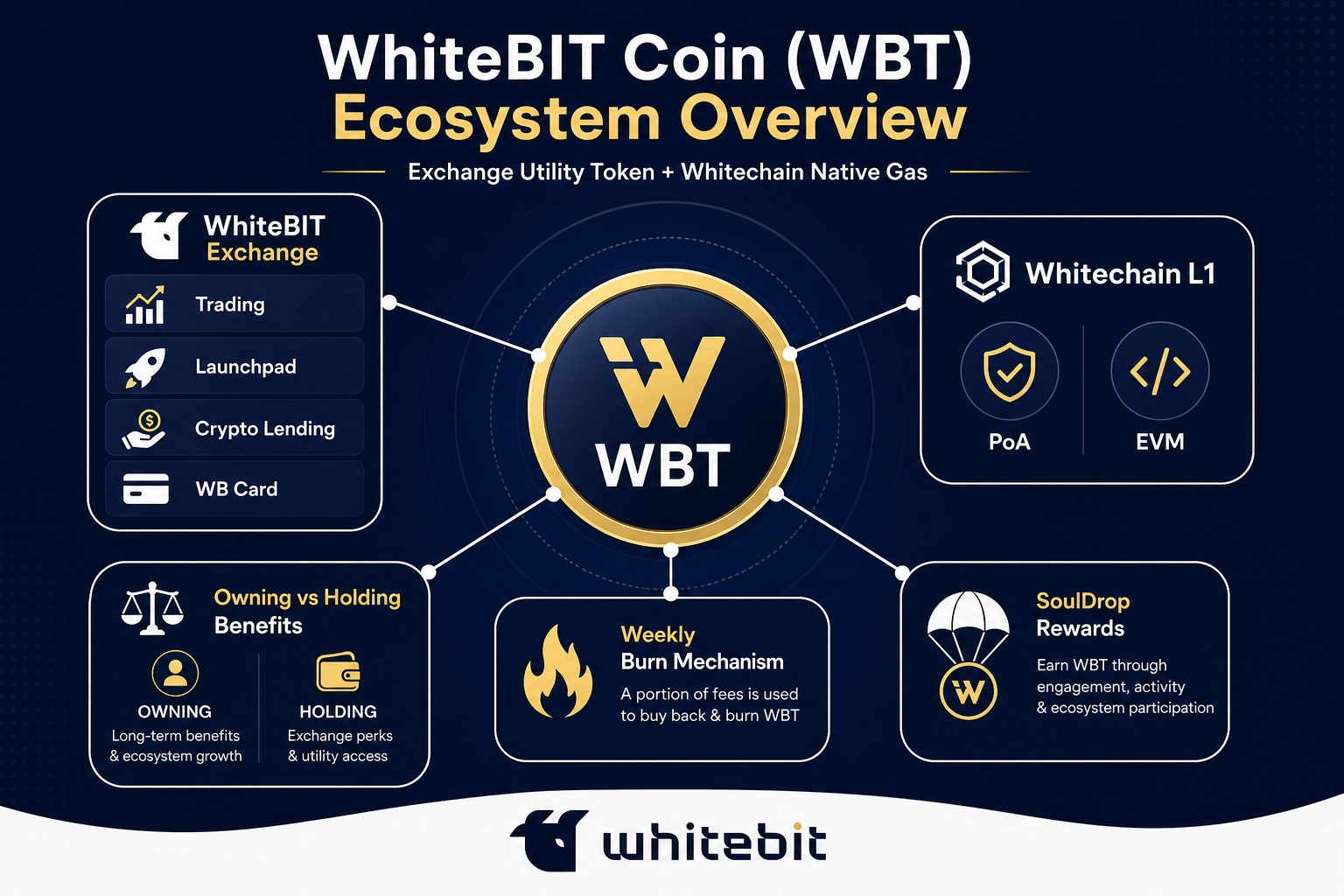 Figure 1. WBT ecosystem: WhiteBIT exchange utilities, Whitechain L1 gas, burn mechanism, and SoulDrop rewards.
Ecosystem initiatives such as the WB Network Foundation provide grants for projects on Whitechain, expanding WBT's application scenarios within the on-chain ecosystem. Understanding that "WBT in the platform account" and "WBT in the Whitechain wallet" are different forms of the same token is fundamental to reading WBT documentation.
Owning vs. Holding: How Do the Two Token-Holding Mechanisms Divide Labor?
WhiteBIT designs two parallel reward mechanisms for WBT holders. Owning refers to the basic benefits that take effect simply by keeping WBT in the Main Balance. Holding refers to transferring WBT into a locked account (Holding) to unlock advanced benefits, including higher-tier fee discounts, free ETH/ERC-20 withdrawals, free AML checks, multiple deposit addresses, WB Card cashback, Launchpad access, and increased interest on Crypto Lending.
WBT transferred into Holding simultaneously counts toward Owning, and the two types of benefits can be stacked. Holding has 12 tiers, with thresholds ranging from 10 WBT to 6,000,000 WBT; the higher the tier, the maximum Maker fee discount can reach 100%, referral rebate up to 50%, and daily free ETH/ERC-20 withdrawal counts and AML check counts increase accordingly. Launchpad participation typically requires at least 200 WBT in Holding.
Unholding (releasing from Holding) has a default waiting period of 14 days, with a minimum operation amount of 0.1 WBT; WBT in the unlock queue does not count toward Holding rewards. Users can pay a 10% fee to unhold immediately. If both Owning and Holding fee discounts are available, the system applies the more favorable one.
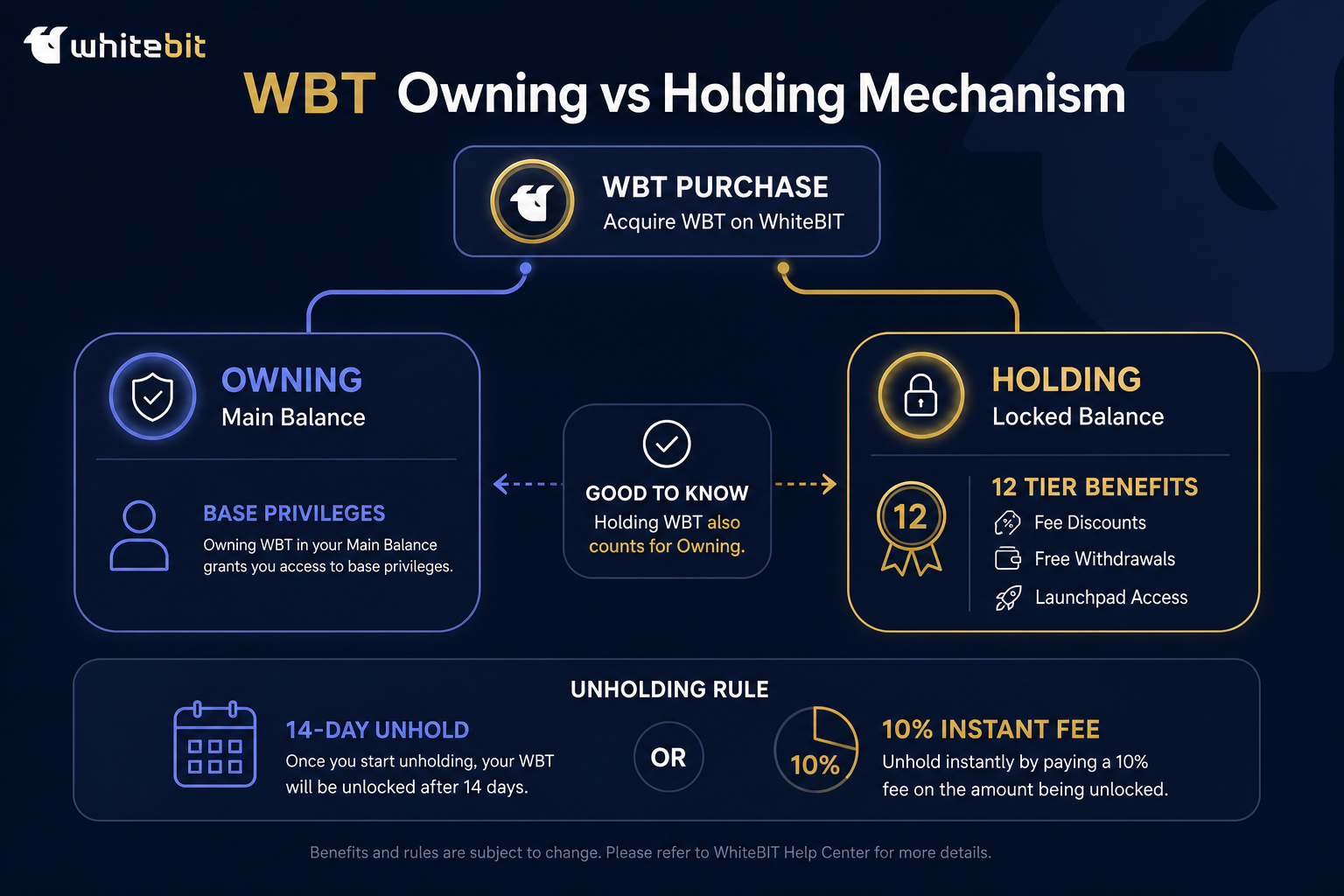 Figure 2. WBT Owning and Holding: Main Balance base privileges vs locked Holding tier benefits.
How to Complete WBT Holding on WhiteBIT and Obtain Benefits: Step-by-step operational path from registration, KYC, purchase, to transferring into Holding; Whitechain and WBT Gas, SoulDrop mechanism: explains on-chain Gas and reward distribution logic.
How Does the Buyback and Burn Mechanism Constrain WBT Supply?
WBT adopts a deflationary design with a fixed total supply and periodic burn. WhiteBIT weekly buys back and burns WBT from the WBT/USDT market, funded by 33% of trading fee revenue plus 5% of other revenue (withdrawal fees, margin trading revenue, etc.); the long-term goal is to burn at least 50% of the total supply. Burn records and circulating statistics can be queried on the official WBT page, with a historical burn address including 0x0000000000000000000000000000000000000001.
In addition to weekly burns, 25,000,000 WBT were sent to a burn address during the genesis phase for circulation accounting adjustments. Regarding token distribution, approximately 120 million of the total 400 million were used by various funds at launch, 200 million are gradually unlocked over three years as planned, and private sale (54 million) and Launchpad (1 million) are released according to set rules. The unlocking schedule aims to balance ecosystem development and circulating supply and does not constitute additional issuance.
| Deflation Tool |
Mechanism |
Supply Impact |
| Fixed Cap |
400 million hard cap, no issuance allowed |
Long-term supply ceiling |
| Weekly Buyback & Burn |
33% trading fees + 5% other revenue |
Continuous reduction of circulating supply |
| Genesis Burn |
25 million sent to burn address |
One-time accounting adjustment |
| Phased Unlock |
Fund shares released per whitepaper schedule |
Periodic increase in circulating supply |
Buyback and burn together with Holding incentives form the demand-side structure of WBT, but the burn pace and unlock plans may be adjusted based on platform revenue and governance decisions. Official disclosures must be relied upon.
What Are the Advantages and Risks of Adopting the WBT Ecosystem?
WBT has structural characteristics in three dimensions: fixed total supply, tiered benefits, and on-chain expansion. The 400 million hard cap and weekly burn provide a verifiable deflation path. The 12-tier Holding links benefits to token holdings, incentivizing long-term participation. Whitechain and SoulDrop extend WBT utility to on-chain Gas and reward distribution.
Structural limitations include: platform benefits heavily depend on WhiteBIT products and rules; the Holding lock-up period restricts liquidity; phased unlocks of fund and team shares may have periodic impacts on circulating supply; cross-chain burn/mint relies on bridge and contract correctness. SoulDrop rewards are tied to Holding tier, WB Soul identity, and KYC status, making the rules more complex than platform discounts.
Related risks include: central platform operation and rule change risks; technical risks from smart contracts and cross-chain mechanisms; suspension of benefits during Holding unlock queue; confusion with counterfeit WBT contracts; and benefits discounts not equating to yield guarantees. The above description is a mechanism-level analysis and does not constitute investment advice.
What Are the Most Easily Confused Concepts About WBT?
WBT is not equivalent to the WhiteBIT platform: WBT is a token issued by the platform, with benefits and on-chain functions triggered by holding and Holding, not automatically granted to all registered users. Owning and Holding are not interchangeable—holding in the Main Balance grants Owning, while advanced benefits require transfer to Holding; WBT in Holding simultaneously counts toward Owning.
WBT minting on Whitechain must be based on Ethereum/Tron burn as proof and is not issuance; weekly buyback and burn are also different from user-level Holding lockup. SoulDrop reward distribution is based on WB Soul identity and Holding data synchronization, which is a different mechanism layer from exchange fee discounts. WBT balances on the three networks must be managed separately, and cross-chain operations are different from Holding transfers within the platform.
Summary
WhiteBIT Coin (WBT) is the native utility token of the WhiteBIT exchange and Whitechain blockchain, with a total supply of 400 million non-issuable coins, operating on Whitechain, Ethereum, and Tron. On the platform side, Owning and Holding provide tiered benefits; on the chain side, it serves as Gas and distributes rewards to eligible holders through SoulDrop. Weekly buyback and burn constrain long-term supply. Understanding the dual-track ecosystem, token holding mechanisms, and cross-chain logic is fundamental to participating in WBT benefits and Whitechain applications.
FAQ
What is WhiteBIT Coin (WBT)?
WBT is the native utility token issued by the WhiteBIT exchange, with a total supply cap of 400,000,000 coins, non-issuable. WBT unlocks fee discounts, Launchpad, and other benefits within the exchange, and serves as the native Gas coin on Whitechain for transaction fees.
Which networks is WBT deployed on?
WBT can be held and transferred on Whitechain, Ethereum (ERC-20), and Tron (TRC-20). When cross-chaining to Whitechain, an equivalent amount of WBT must be burned on the source chain, and then minted on Whitechain using the burn transaction proof; total supply remains unchanged.
What is the difference between Owning and Holding?
Owning means WBT in the Main Balance provides basic benefits. Holding means transferring WBT into a locked account to unlock higher-tier benefits such as fee discounts, free withdrawals, and Launchpad access. WBT in Holding simultaneously counts toward Owning.
How does the WBT buyback and burn work?
WhiteBIT uses 33% of trading fee revenue plus 5% of other revenue to buy back and burn WBT from the market weekly, with a long-term goal of burning at least 50% of the total supply. Burn records can be viewed on the official WBT page.
What is the relationship between Whitechain and WBT?
Whitechain is WhiteBIT's own PoA consensus, EVM-compatible L1 blockchain. WBT is the native Gas coin on Whitechain; on-chain transaction fees are paid in WBT. The SoulDrop mechanism returns a portion of on-chain fees to eligible WBT Holding users.
How do I start obtaining WBT Holding benefits?
You must complete WhiteBIT registration and KYC, deposit funds, buy or swap for WBT, transfer WBT to your Main Balance, and then transfer into Holding. For specific steps and unlock rules, see the WBT Holding operation guide.