

Trade
Basic
Futures
Futures
Hundreds of contracts settled in USDT or BTC
Options
HOT
Trade European-style vanilla options
Unified Account
Maximize your capital efficiency
Demo Trading
Futures Kickoff
Get prepared for your futures trading
Futures Events
Participate in events to win generous rewards
Demo Trading
Use virtual funds to experience risk-free trading
Earn
Launch
CandyDrop
Collect candies to earn airdrops
Launchpool
Quick staking, earn potential new tokens
HODLer Airdrop
Hold GT and get massive airdrops for free
Launchpad
Be early to the next big token project
Alpha Points
NEW
Trade on-chain assets and enjoy airdrop rewards!
Futures Points
NEW
Earn futures points and claim airdrop rewards
Investment
Simple Earn
Earn interests with idle tokens
Auto-Invest
Auto-invest on a regular basis
Dual Investment
Buy low and sell high to take profits from price fluctuations
Soft Staking
Earn rewards with flexible staking
Crypto Loan
0 Fees
Pledge one crypto to borrow another
Lending Center
One-stop lending hub
VIP Wealth Hub
Customized wealth management empowers your assets growth
Private Wealth Management
Customized asset management to grow your digital assets
Quant Fund
Top asset management team helps you profit without hassle
Staking
Stake cryptos to earn in PoS products
Smart Leverage
NEW
No forced liquidation before maturity, worry-free leveraged gains
GUSD Minting
Use USDT/USDC to mint GUSD for treasury-level yields

More


Trending Topics
View More37.09K Popularity
20.31K Popularity
7.73K Popularity
54.62K Popularity
343.5K Popularity




Pin
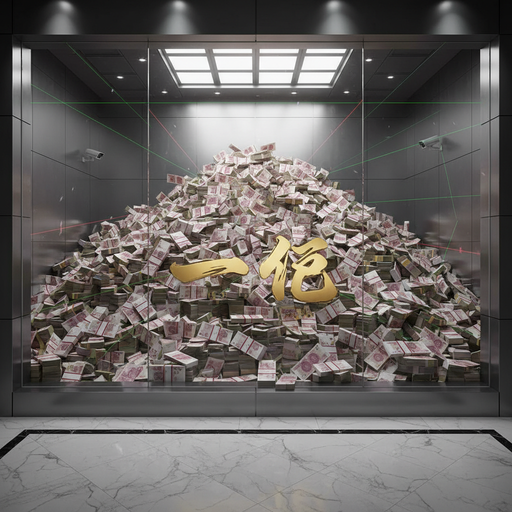
Strike Gold by Sharing Your TradFi Orders and Pictures!
Post on Gate Square and split $10,000 in rewards!
The TradFi Gold Lucky Bag is now live—1g of real gold every 10 minutes. Trade nonstop, win nonstop!
👉 https://www.gate.com/announcements/article/49357
🎁 50 lucky winners × $200 Position Vouchers ($10 × 20 leverage)
How to Join:
1️⃣ Post your order on Square with #GateTradFi1gGoldGiveaway, including:
A trade or draw screenshot
A brief experience sharing
2️⃣ Or create a related image (AI creation allowed) with a short promo line, such as:
Get gold on Gate App — 1g every 10 minutes!
⏰ Jan 2Gate Square New & Returning Creator Rewards are ongoing!
Your ideas may be more valuable than you think!
Make your first post or come back post to share a $20,000 monthly prize pool!
Post with #MyFirstPostOnSquare to receive a $50 Position Voucher each
Monthly Top Posters and Top Engagers will each earn an extra $50 reward
Your crypto insights could inspire many—start creating today!
👉 https://www.gate.com/postGate Square “Creator Certification Incentive Program” — Recruiting Outstanding Creators!
Join now, share quality content, and compete for over $10,000 in monthly rewards.
How to Apply:
1️⃣ Open the App → Tap [Square] at the bottom → Click your [avatar] in the top right.
2️⃣ Tap [Get Certified], submit your application, and wait for approval.
Apply Now: https://www.gate.com/questionnaire/7159
Token rewards, exclusive Gate merch, and traffic exposure await you!
Details: https://www.gate.com/announcements/article/47889
What year is ADA in 2029? Is it possible for it to go from $0.39 to $3+?
Cardano (ADA) -The ADA coin is currently trading at $0.39, down 85% from its all-time high of $3.09 in 2021. This gap raises a big question for investors: is this a good buying opportunity, or just a trap set by a project in water?
To answer this, we need to analyze what could push Cardano forward, what risks might hold it back, and whether 2029 – a year many experts mention – is truly a significant milestone or not.
Current Cardano: In the middle, unclear direction
Price chart stuck sideways, technical indicators show no clear signal
In recent months, ADA has been floating without a clear trend. It approached nearly $0.80 early fall, then dropped to $0.40, and is now fluctuating around $0.39 to $0.48.
This sideways market reflects a unstable equilibrium between buyers and sellers. No one side dominates, so prices stay within a narrow range. For ADA holders, this feels like being stuck in traffic – you’re not crashing but also not making progress.
Technical analysis shows: RSI 14-day around 50, meaning the market is neither overbought nor oversold. Momentum indicators give conflicting signals rather than a unified trend. SMA (Simple Moving Average) indicates ADA is below key moving averages, which is a warning sign.
Bitcoin leads, ADA follows
Any prediction about ADA must start with Bitcoin. When Bitcoin rises, the crypto market heats up, fresh capital flows in, and some of it moves into major altcoins. When Bitcoin crashes, altcoins often fall twice or thrice as much during panic.
Bitcoin’s halving cycle is still ahead. History shows: initially altcoins lag behind, but if a bull run lasts long enough, they recover strongly. The question is – is Cardano attractive enough to attract a share of that capital?
On-chain activity still lagging but showing positive signs
Currently, activity on Cardano remains lower compared to Ethereum or Solana. TVL (Total Value Locked) in DeFi on Cardano is small, daily transactions are low, and most “hot” applications appear first on other chains.
However, there are positive signals:
The recent x402 upgrade enables automatic on-chain payments more easily, opening doors for subscription services, bots, and machine-to-machine trading.
Cardano AI agent: Charles Hoskinson mentioned AI bots that can buy data, APIs, or services and pay with ADA on-chain. Still early, but shows vision.
DeFi, NFT, gaming are developing slowly but steadily on the network.
Real-world applications in Africa: Cardano is testing digital ID, educational records, supply chains. If these projects prove feasible and scale, they could become strong drivers for ADA demand.
Price forecast: From 2026 to 2030
2026: Will Bitcoin bull run push ADA to $1?
By 2026, forecasts generally fall into ranges:
For example, CoinCodex predicts ADA could reach $0.67 by July 2026. To hit the $1 to $1.50 zone, it requires:
Risks: If the market remains weak or ADA’s growth stays slow, it could hover around $0.40 or lower.
2027 – 2028: Quiet accumulation phase
For 2027:
For 2028:
These years might be gradual growth, not explosive. Like a slow flowing stream rather than a powerful jet.
Conditions for ADA to stay in the $1 to $2+ range:
When ADA is used practically, not just for trading, its price could stabilize at higher levels.
Risks: If on-chain activity remains low and developers prefer other chains, ADA could “drift” around $1 or less for years.
2029 – 2030: The pivotal years?
2029 – what does it mean for ADA? It could be a setup year, when prices start approaching previous highs again.
Forecasts for 2029:
For 2030:
Compared to the old peak $3.09, 2030 could be when ADA balances or slightly surpasses that if conditions are favorable.
Achieving these higher targets requires many factors aligning:
If Cardano remains a niche chain with low usage, $3+ targets will be very hard to reach.
Factors that could change the forecast
Fierce competition from other chains
Ethereum continues to upgrade, Solana pushes high-speed use cases, and new chains emerge constantly. Cardano must innovate faster than competitors or at least avoid falling behind.
Regulatory risks
Stricter rules on staking, or tokens being classified as securities, could limit who can buy ADA or where it can be traded. Even with good tech, tight regulations can cap the price.
Real demand
On-chain usage is the key. Without strong demand, prices may not reflect good technology. Conversely, if Cardano becomes a major platform for real-world apps, it could overcome psychological barriers.
Optimistic vs. unrealistic moonshots
You may have seen wild predictions placing ADA at $100, $200, even $300+. These are extreme moonshots. Mathematically not impossible, but very unlikely, requiring a global miracle and market cap in the trillions.
A more rational mindset:
Should you accumulate ADA now?
No one can tell you exactly, but you can use a clear framework:
If you buy ADA
Some reasons:
Most buyers with this mindset think long-term (years) and accept potential 50% or more drops along the way.
If you are cautious
Risks are real:
Many adopt safer strategies:
It’s also perfectly valid to say “ADA is too risky” and skip it. Holding cash is an option too.
Conclusion
By late 2025, Cardano is a high-risk, high-reward asset. The current price at $0.39 and the old peak at $3.09 serve as both a call and a warning.
What about 2029? It could be a year of reset, when ADA prepares to revisit old highs if conditions align. Or it might just be a normal year in a slow phase.
Any decision – buy, hold, or avoid – should be based on a clear plan and your risk capacity, not emotions or FOMO.