

Trade
Basic
Futures
Futures
Hundreds of contracts settled in USDT or BTC
Options
HOT
Trade European-style vanilla options
Unified Account
Maximize your capital efficiency
Demo Trading
Futures Kickoff
Get prepared for your futures trading
Futures Events
Participate in events to win generous rewards
Demo Trading
Use virtual funds to experience risk-free trading
Earn
Launch
CandyDrop
Collect candies to earn airdrops
Launchpool
Quick staking, earn potential new tokens
HODLer Airdrop
Hold GT and get massive airdrops for free
Launchpad
Be early to the next big token project
Alpha Points
NEW
Trade on-chain assets and enjoy airdrop rewards!
Futures Points
NEW
Earn futures points and claim airdrop rewards
Investment
Simple Earn
Earn interests with idle tokens
Auto-Invest
Auto-invest on a regular basis
Dual Investment
Buy low and sell high to take profits from price fluctuations
Soft Staking
Earn rewards with flexible staking
Crypto Loan
0 Fees
Pledge one crypto to borrow another
Lending Center
One-stop lending hub
VIP Wealth Hub
Customized wealth management empowers your assets growth
Private Wealth Management
Customized asset management to grow your digital assets
Quant Fund
Top asset management team helps you profit without hassle
Staking
Stake cryptos to earn in PoS products
Smart Leverage
NEW
No forced liquidation before maturity, worry-free leveraged gains
GUSD Minting
Use USDT/USDC to mint GUSD for treasury-level yields

More


Trending Topics
View More36.51K Popularity
20.02K Popularity
7.14K Popularity
53.9K Popularity
343.48K Popularity
Hot Gate Fun
View More- MC:$3.37KHolders:10.00%
- MC:$3.37KHolders:10.00%
- MC:$3.39KHolders:10.15%
- MC:$3.5KHolders:20.23%
- MC:$3.36KHolders:10.00%




Pin
Strike Gold by Sharing Your TradFi Orders and Pictures!
Post on Gate Square and split $10,000 in rewards!
The TradFi Gold Lucky Bag is now live—1g of real gold every 10 minutes. Trade nonstop, win nonstop!
👉 https://www.gate.com/announcements/article/49357
🎁 50 lucky winners × $200 Position Vouchers ($10 × 20 leverage)
How to Join:
1️⃣ Post your order on Square with #GateTradFi1gGoldGiveaway, including:
A trade or draw screenshot
A brief experience sharing
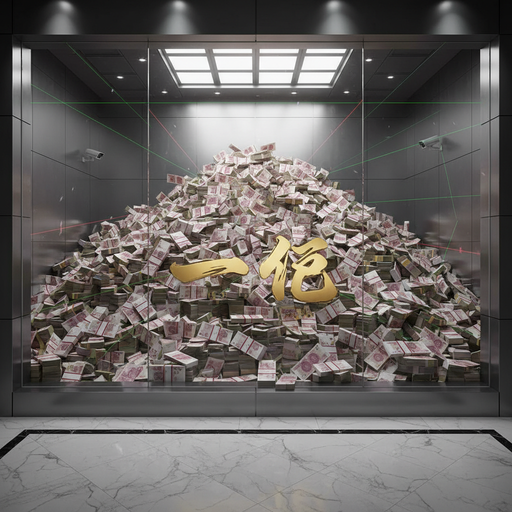
2️⃣ Or create a related image (AI creation allowed) with a short promo line, such as:
Get gold on Gate App — 1g every 10 minutes!
⏰ Jan 2Gate Square New & Returning Creator Rewards are ongoing!
Your ideas may be more valuable than you think!
Make your first post or come back post to share a $20,000 monthly prize pool!
Post with #MyFirstPostOnSquare to receive a $50 Position Voucher each
Monthly Top Posters and Top Engagers will each earn an extra $50 reward
Your crypto insights could inspire many—start creating today!
👉 https://www.gate.com/postGate Square “Creator Certification Incentive Program” — Recruiting Outstanding Creators!
Join now, share quality content, and compete for over $10,000 in monthly rewards.
How to Apply:
1️⃣ Open the App → Tap [Square] at the bottom → Click your [avatar] in the top right.
2️⃣ Tap [Get Certified], submit your application, and wait for approval.
Apply Now: https://www.gate.com/questionnaire/7159
Token rewards, exclusive Gate merch, and traffic exposure await you!
Details: https://www.gate.com/announcements/article/47889
Young People in the Casino Economy: Why No One Feels Happy About the Future
Young Americans are experiencing an unprecedented crisis of confidence. This isn’t because economic indicators look terrible—many traditional data actually show growth persists—but because there’s a huge gap between lived reality and official narratives. From Michigan to Kentucky to Washington, D.C., the most consistent sentiment expressed by the public is: the once-clear life trajectory has become blurred, and the future is filled with unpredictable risks.
Harvard Youth Poll data is shocking. Only 30% of respondents aged 18 to 29 believe their economic situation will be better than their parents’. When asked whether dissenters hope for a better development of the country, only 35% answered affirmatively. This is not just an economic issue but a systemic collapse of trust and confidence.
The Great Divide Between Economy and Psychology
Is the data lying? Not at all. Actual disposable income is indeed recovering, and GDP is still growing. But these cold numbers fail to capture the three most critical dimensions of life: whether you can afford to participate in society, whether you feel economically secure, and whether you are being systematically deceived.
Housing, healthcare, and education are experiencing what economists call “Baumol’s cost disease.” This concept refers to services that rely heavily on human labor and are difficult to automate efficiently, with costs rising much faster than typical goods. The result? Medical insurance costs for a family of four have reached an average of $27,000 per year and are rising at 10%-20% annually. Housing prices surged during the pandemic and have not fallen back; the dream of homeownership “locked in” by Federal Reserve rate hikes has shattered for many.
The foundation of middle-class life is crumbling. Even if you “do everything right”—work hard, get educated, follow the rules—you may still find yourself unable to make ends meet. This structural despair is spreading. In the past, governments alleviated these pressures through subsidies for public schools, establishing low-tuition state universities, and public hospitals. Today, these sectors are being privatized, and costs are shifted onto families. How can a family that once shared the burden of social costs not feel increased pressure?
The Cognitive Crisis in the Age of Information Overload
But economic pressure alone isn’t enough to explain the deep despair today. The key is that these economic stresses are affecting a population already bombarded with information and severely distracted.
Over the past twenty years, Americans have reduced leisure reading time by 40%, and up to 40% of fourth graders lack basic reading comprehension skills. Meanwhile, false information and “anger bait” have become profitable business models. The difficulty of exposing lies is ten times that of creating them, leading to rampant proliferation of falsehoods in the information ecosystem.
About 50% of young people see mainstream media as a threat. They no longer trust any information source. And when you distrust all sources, you also distrust economic data, official statements, and the system itself. Social media algorithms and the constant temptations of smartphones push people’s cognitive bandwidth to the limit. People begin to exhibit “micro-egoism”—focusing only on their own screen worlds, with a collapse of shared responsibility in the public sphere.
This cognitive overload and economic stress form a vicious cycle: economic pressures weaken clear thinking, making people more susceptible to fraud and exploitation; false information and loss of trust further exacerbate economic anxiety; and this anxiety makes deep thinking and collective action even more difficult.
The Energy Crisis and Employment Anxiety in the AI Era
When all this is compounded by the impact of artificial intelligence, young people’s anxiety reaches new heights. According to MIT’s iceberg index, about 12% of American wages come from jobs that AI can do more cheaply today, but only 2% of jobs are actually automated. In other words, the capacity exists—it just hasn’t been activated yet.
Another problem brought by AI development is the energy crisis. Data center expansion drives up electricity costs and risks power outages. The U.S. is falling behind China in energy competition—China is investing heavily in the energy infrastructure needed for AI. Barclays estimates that over half of the U.S. GDP growth by 2025 will come from AI-related investments, but the benefits mostly flow to a small elite, while ordinary people only experience rising electricity bills and fears of unemployment.
Young people see clearly: some become wealthy through AI, some lose their jobs, and their future is full of uncertainty. How can they trust a system that seems indifferent to what happens to them?
The Rise of the Casino Economy
Against this backdrop of systemic despair, a strange phenomenon has emerged: gambling and financial speculation have become among the few activities that can deliver immediate returns or even change lives. This is the business logic of prediction markets like Kalshi—financializing everything, turning every disagreement and uncertainty into tradable assets.
This is an extreme evolution of Marx’s commodity fetishism. When every interaction becomes a trade, and every opinion can be bet on, forming unity and consensus becomes nearly impossible. But more ironically: according to surveys, almost no one truly desires this kind of economy. People are forced into gambling not out of love for it, but because traditional upward mobility has been blocked. Tight labor markets and wealth concentration at the top make normal paths to prosperity nearly unreachable. Gambling becomes a rational choice—in a system full of exploitation, taking risks seems more profitable than following rules.
As scholar Whitney Wimbish notes in “The American Outlook,” middlemen extract value at every level, with little real regulation or protection. This isn’t the result of free market choice but a forced structural trap.
How the Collapse of Trust Undermines Collective Action
All these factors—economic pressures, cognitive overload, exploitative business models—culminate in a fundamental problem: systemic collapse of trust.
When people lose confidence in democracy, institutions, and each other, collective problem-solving becomes structurally impossible. Even if there is broad consensus (indeed, almost no one truly wants a “casino economy”), we cannot coordinate to change it. Because we cannot agree on “how to change” and do not trust any institution to implement reforms.
This is the deep meaning of what is called “atmospheric decay.” It’s not that economic data are flawed, but that the psychological reality is shockingly disconnected from official narratives. Before the pandemic, despite problems, there was still a glimmer of hope. People believed the internet would improve, and that institutions would do the right thing. Now, that hope has vanished. The emotional curve and economic recovery are diverging, even as the fundamentals stabilize.
Feasible Paths to Break the Cycle
It sounds hopeless, but breaking this cycle isn’t entirely impossible. The key is to identify the most actionable points:
First, directly reduce costs in key life domains. Make Baumol sectors—healthcare, education, housing—affordable again. This requires policy reinvestment, public subsidies, and regulatory reforms. When people have more economic breathing room, their cognitive bandwidth increases, making them less susceptible to fraud and exploitation.
Second, strictly regulate exploitative business models. Ban or severely restrict those that profit from confusion, addictive design, and cognitive overload. Kalshi’s plan to financialize everything? We can say “no.” For example, banning prediction markets on political events. This involves redesigning incentive mechanisms.
Third, ensure AI growth benefits ordinary people. The current experience is “your electricity bills rise, and eventually your job is taken.” If AI is to drive growth, that growth must meaningfully lower healthcare costs, provide cheaper goods, and give people more leisure time.
Finally, eliminate crony capitalism and rebuild a shared sense of reality. This requires strong governance, some friction, and an understanding of “humanity” in a tech-saturated world.
These are not easy. But the key is: you don’t need to solve all problems at once. Improving one aspect weakens the entire trap in others. Young people’s loss of confidence isn’t due to a single reason, but restoring confidence may only require targeted interventions at a few critical points. The problem is, time is running out, and the pace of institutional reform is far behind young people’s mounting disappointment.