


Futures
Access hundreds of perpetual contracts
TradFi
Gold
One platform for global traditional assets
Options
Hot
Trade European-style vanilla options
Unified Account
Maximize your capital efficiency
Demo Trading
Introduction to Futures Trading
Learn the basics of futures trading
Futures Events
Join events to earn rewards
Demo Trading
Use virtual funds to practice risk-free trading
Launch
CandyDrop
Collect candies to earn airdrops
Launchpool
Quick staking, earn potential new tokens
HODLer Airdrop
Hold GT and get massive airdrops for free
Launchpad
Be early to the next big token project
Alpha Points
Trade on-chain assets and earn airdrops
Futures Points
Earn futures points and claim airdrop rewards


More






Breaking the Cycle Dilemma: Huafa Group's Transformation Breakthrough and Long-term Strategy
The image may have been generated by AI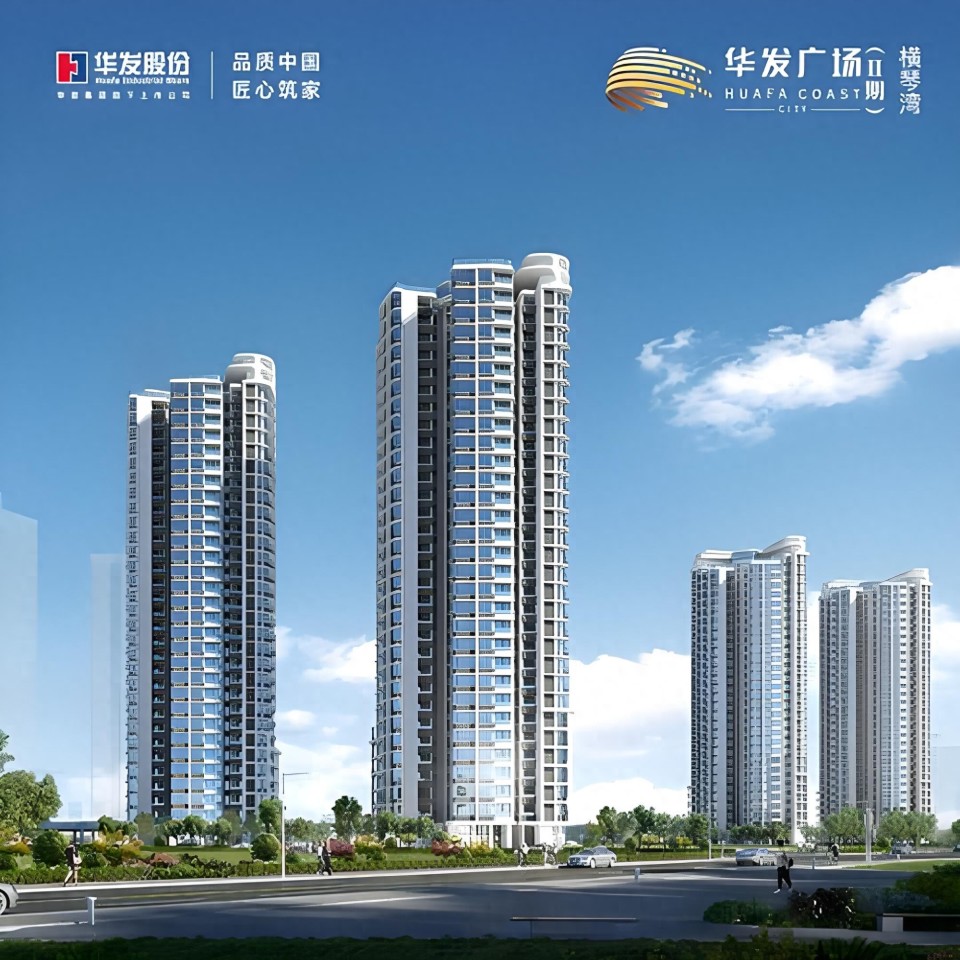
At a critical stage of deep adjustment in the real estate industry, where real estate companies are accelerating their exit and restructuring, Huafa Group is facing cyclical challenges with a systematic transformation aimed at restoring operational fundamentals and anchoring high-quality development direction. Although the performance in 2025 is under pressure and personnel and organizational changes are undergoing phased adjustments, relying on the solid backing of Zhuhai state-owned assets, proactive innovation from management, continuous optimization of financial structure, and steady cultivation of operational business, the company is emerging from a period of turbulence with a lighter, more efficient, and more focused approach, embarking on a new cycle of sustainable development, providing a replicable practical example for the transformation of state-owned real estate companies.
Since 2025, Huafa Group has welcomed a round of concentrated updates to its management and organizational structure. This is not a passive response to industry pressures but an inevitable choice for the modernization of state-owned enterprise governance and flattened operations during the industry’s adjustment period, and it is also a core grasp for the company’s transition from scale expansion to quality and efficiency transformation. Over the past two years, the company has completed a smooth handover of its core management team, with the new executive team led by Guo Lingyong officially unveiled. The team members possess profound industry experience and market-oriented vision, streamlined to 6 members, significantly compressed compared to previous larger teams, with a markedly shortened decision-making chain and a qualitative improvement in execution efficiency.
This round of personnel adjustments presents a complementary pattern of “state-owned background + market-oriented capability,” with a personnel structure becoming more professional and efficient: including senior managers who have long accompanied the company’s growth and deeply understand the corporate development gene, solidifying the foundation for development; as well as market-oriented talents from leading real estate companies like Longfor, Jindi, and Huaxia Happiness, injecting advanced operational concepts and management experience. At the same time, externally recruited professionals in design, marketing, and other fields are flowing in an orderly manner, aligning with industry talent cycle patterns and the company’s strategic focus on business, overall presenting a clear trajectory of “reducing redundancy, strengthening professionalism, and enhancing efficiency,” injecting new vitality into organizational change.
Simultaneously with personnel adjustments, Huafa Group’s organizational transformation is advancing in depth, closely following the industry trend of structural optimization among leading real estate companies. From November 2025 to January 2026, the company optimized its regional layout twice, completing a thorough transformation from a three-tier control model of “headquarters - regions - cities” to a two-tier direct management model of “headquarters - districts,” officially abolishing the regional platform, integrating to establish seven major districts: West, Central China, Northern, Suzhou-Shanghai, Zhejiang-Fujian, Guangzhou-Shenzhen, and Zhuhai, with districts directly interfacing with the headquarters, completely cutting out intermediate management levels to achieve concentrated resource allocation and rapid frontline response. This transformation directly addresses the pain points of traditional real estate company management redundancies and slow responses, highly consistent with the structural adjustments of leading state-owned enterprises like Poly, China Overseas, and China Resources. It is a key measure for the company to reduce costs and increase efficiency and focus on core markets, also demonstrating its strategic foresight in actively adapting to industry changes. Reportedly, this adjustment was not accomplished overnight; in November 2025, the company already integrated the original “three major regions + one minor region” into “East China + South China,” laying the foundation for the subsequent implementation of the two-tier management model.
Affected by multiple factors such as weaker-than-expected industry sales recovery, impairment provisions on existing assets, and concentrated release of costs from previous expansions, Huafa Group expects a stage loss in net profit attributable to the parent company for 2025. This fluctuation is not an isolated case but a common pressure under the deep adjustment of the industry, and it reflects the company’s rational choice to actively clear historical burdens and lighten its load. Looking back at the development process, from 2020 to 2023, Huafa Group adapted to urbanization promotion and regional development needs, moderately expanding land reserves and improving scale rankings, achieving sales exceeding 100 billion for three consecutive years, firmly ranking among the top ten in the industry, successfully laying the foundation for national layout. However, as the industry’s development logic shifted towards “low leverage, stable turnover, and focusing on efficiency,” the company swiftly adjusted its development strategy, reducing investment pace, with land investment dropping significantly to the 7 billion yuan level in 2024 to 2025, actively lowering scale demands and focusing its core efforts on inventory reduction and efficiency improvement.
On the financial side, Huafa Group fully demonstrates the unique stability and risk resilience of state-owned enterprises, establishing a strong safety net for the company to traverse through cycles. As of the end of September 2025, the company’s debt-to-asset ratio has dropped to 69.72%, achieving steady declines for several consecutive years and continuously optimizing leverage levels; net cash flow from operating activities reached 17.416 billion yuan, a substantial year-on-year increase, with operating cash flow maintaining a positive trend and significantly improving capital recovery capability; cash balance is ample, with unused bank credit exceeding 250 billion yuan, providing a solid liquidity safety cushion to effectively guard against industry liquidity risks. In February 2026, the company announced plans to raise 3 billion yuan through a private placement to its controlling shareholder Huafa Group for core project construction and financial structure optimization. The move, with full subscription by state-owned assets, not only demonstrates the shareholders’ firm confidence in the company’s long-term development, but will also further lower the company’s leverage level and enhance capital strength, providing solid financial support for operational repair and strategic transformation.
In response to the market’s high concerns regarding cooperative development and equity structure issues, Huafa Group actively addresses market concerns through transparent information disclosure, continuously optimizing cooperation models and steadily increasing equity stakes, pushing shareholder returns back to reasonable ranges. In recent periods, the company has leveraged the credit advantage of Zhuhai state-owned assets through diversified financing tools such as bonds and private placements, effectively ensuring the safety of the capital chain and gaining valuable time for steady operation during the industry adjustment period. For example, in the Nanjing Jianye District Green Expo Park 2023G55 plot project, the company achieved complementary advantages and shared risks through a reasonable equity cooperation model, showcasing mature cooperation and development management capabilities.
Facing the pressure of inventory reduction of existing land reserves, Huafa Group has implemented precise measures, focusing on “activating existing stock, optimizing structure, and recovering funds.” On one hand, it actively engages with local governments on land repurchase matters, successfully completing repurchases of commercial land in cities like Shenzhen, effectively recovering funds while optimizing asset structure and alleviating financial pressure; on the other hand, it focuses on high-quality projects in core cities, accelerating construction, launching, and sales rhythm to enhance turnover efficiency and promote orderly inventory reduction. Data shows that from the end of 2024 to the third quarter of 2025, the company’s inventory decreased from 248 billion yuan to 225.9 billion yuan, with the effects of de-stocking gradually emerging, but overall de-stocking pressure still needs to be addressed continuously. Meanwhile, the company maintains an appropriate pace of investment and expansion, adding six residential projects in 2024, covering core cities such as Shanghai, Guangzhou, Chengdu, and Xi’an, adding land reserves with a planned construction area of approximately 337,000 square meters, with an average equity ratio of 42%. By the end of 2024, total land reserves reached 12.125 million square meters, which can meet development needs for the next 3-4 years, with continuous optimization of land reserve structure.
In terms of regional layout, Huafa Group adheres to the strategy of “core focus, regional deep cultivation,” proactively retracting non-core fronts and concentrating resources in high-value districts. The company focuses on core urban agglomerations such as the Guangdong-Hong Kong-Macao Greater Bay Area, Yangtze River Delta, and Beijing-Tianjin-Hebei, with districts like Shanghai-Suzhou, Zhejiang-Fujian, and Guangzhou-Shenzhen relying on strong market demand, becoming the main contributors to sales recovery and profit contribution; while the western and northern districts focus on deep cultivation for stable operations. This layout strategy not only aligns with the industry’s trend of increasing concentration but also maximizes the reduction of operational risks brought by cyclical fluctuations, while maintaining market leadership in its Zhuhai base and further consolidating core competitiveness.
While stabilizing its development business fundamentals, Huafa Group steadily advances the “development + operation” dual-drive strategy, actively nurturing long-term growth engines and gradually reducing reliance on residential development alone. The company proactively laid out commercial operations as early as 2014, and after years of cultivation, its commercial operations have formed a certain scale: currently managing over 160 commercial projects with a managed area of 3.65 million square meters, rental income has seen rapid growth, increasing from 344 million yuan in 2022 to 785 million yuan in 2024, demonstrating good development potential. This strategy is highly consistent with the development direction of leading real estate companies like China Resources, China Overseas, and Longfor towards operational assets, as the company gradually increases the proportion of commercial operations, property services, and industrial support businesses, constructing a diversified development pattern.
As a core listed platform of Zhuhai state-owned assets, Huafa Group not only bears the mission of its own development but also undertakes the social responsibility of urban construction and industrial coordination. The company deeply participates in urban renewal, industrial carrier construction, and livelihood projects in Zhuhai, establishing a distinctive development model of “real estate + urban services + industrial operations,” successfully opening a second growth curve beyond the main real estate business. This model not only aligns with the functional positioning of state-owned enterprises but also provides solid support for the company to traverse the industry cycle and achieve sustainable operation, showcasing the responsibility and commitment of state-owned real estate enterprises.
In the short term, personnel turbulence, performance fluctuations, and inventory pressure are the inevitable tests during Huafa Group’s transformation period, rather than insurmountable developmental dilemmas. In the face of industry changes, Huafa Group actively responds to cyclical challenges through proactive transformation, activates governance efficiency through organizational streamlining, establishes a solid safety bottom line with financial stability, and lays out the future through strategic transformation, fully demonstrating the responsibility and adaptability of a state-owned enterprise. Currently, as the management team strikes an effective balance, organizational efficiency continues to be released, existing assets are gradually activated, private placements empower the company, and operational businesses accelerate development, Huafa Group is gradually emerging from the adjustment period and steadily returning to a path of robust growth.
Against the backdrop of accelerating construction of new models and new orders in the real estate industry, this state-owned real estate company, deeply rooted in Zhuhai and expanding nationwide, is continuously delivering long-term value with a clearer strategic positioning, a more efficient operational system, and a more robust financial structure. In the future, Huafa Group is expected to leverage its advantages to seize opportunities in the industry transformation, achieving not only its high-quality development but also contributing state-owned capital strength and experiential samples to the high-quality development of the real estate industry.