Trade
Basic
Futures
Futures
Hundreds of contracts settled in USDT or BTC
Options
HOT
Trade European-style vanilla options
Unified Account
Maximize your capital efficiency
Demo Trading
Futures Kickoff
Get prepared for your futures trading
Futures Events
Futures Mall
Participate in events to win generous rewards
Demo Trading
Use virtual funds to experience risk-free trading
Earn
Launch
CandyDrop
Collect candies to earn airdrops
Launchpool
Quick staking, earn potential new tokens
HODLer Airdrop
Hold GT and get massive airdrops for free
Launchpad
Be early to the next big token project
Alpha Points
NEW
Trade on-chain assets and enjoy airdrop rewards!
Futures Points
NEW
Earn futures points and claim airdrop rewards
Investment
Simple Earn
Earn interests with idle tokens
Auto-Invest
Auto-invest on a regular basis
Dual Investment
Buy low and sell high to take profits from price fluctuations
Soft Staking
Earn rewards with flexible staking
Crypto Loan
0 Fees
Pledge one crypto to borrow another
Lending Center
One-stop lending hub
VIP Wealth Hub
Customized wealth management empowers your assets growth
Private Wealth Management
Customized asset management to grow your digital assets
Quant Fund
Top asset management team helps you profit without hassle
Staking
Stake cryptos to earn in PoS products
Smart Leverage
NEW
No forced liquidation before maturity, worry-free leveraged gains
GUSD Minting
Use USDT/USDC to mint GUSD for treasury-level yields

More


Featured Courses
More
Advanced
Tools That Help You Trade Better: Moving Averages, Trend Lines, and Indicators
There are no trading rules that are applicable to any scenario. These courses will help you establish your own trading strategy, then test it and improve on it in practice

Intermediate
L1 Deep Dives: Hyperliquid (HYPE)
This course provides a detailed exploration of Hyperliquid, a high-performance decentralized exchange (DEX) built on its proprietary Layer 1 blockchain. Designed for advanced users, developers, and blockchain enthusiasts, the course delves into Hyperliquid's technical architecture, tokenomics, strategic partnerships, governance mechanisms, and its role in the evolving DeFi landscape.

Intermediate
Technical Analysis: A Useful Tool to Understand Trends in Futures Trading
Learn to interpret candlestick patterns and identify market trends. Build a technical analysis system to make informed trading decisions.
Learn by Topic
Topics
TradFi
The Latest News
Product Tutorial Videos
Brand Videos
Platform Highlights
Gate Private Wealth Management
BNB Chain
Crypto Card
DApp
Protocols
Base
Tron
Web3 For Beginners
Perpetual DEX
Investment News
Weekly Report
Gate Ventures
In-Depth Research
VIP Daily Industry Report
Pi Network
XRP
Top Stories
ETF Leveraged Tokens
VIP Weekly Industry Report
Trading Bots
Market Forecast
Daily Report
Video
Quick Reads
Options
Chain Abstraction
Sui Ecosystem
P2P
Hot Topics
Mining
Payments
Solana
Layer 2
TON Ecosystem
Research
CryptoPulse
Project Analysis
Security
Gate Products
Airdrop
Crypto Tools
Restaking
Zero-Knowledge Proof
Modular Blockchains
RWA
Finance
Liquid Staking
StableCoin
DePin
SocialFi
AI
Meme
Technology
Inscription
Wallets
Macro Trends
DAO
GameFi
BRC-20
Quant Trading
Futures
Altcoins
Tutorial
Trading
NFT
Metaverse
Ethereum
DeFi
Blockchain
Bitcoin
Difficulty
Beginner
Intermediate
Advanced
Latest Courses
More
Beginner
Crypto Inflow : Coin , Data and News
This course covers everything you need to know about using practical crypto tools. It provides important guidelines for using crypto data aggregators, DeFi data analytics tools, and crypto information platforms. Through this course, you will have a comprehensive understanding of these practical analytics tools.

Intermediate
Modular Blockchain: The Division of Labor Across Execution, Settlement, and Data Availability
As blockchain technology evolves from an experimental concept to a platform supporting real-world applications, the conflicts among performance, cost, and scalability have gradually surfaced. Traditional monolithic blockchains catalyzed the industry's early growth, yet they have also exposed structural bottlenecks when facing complex applications and large-scale adoption. The emergence of modular blockchains represents not merely a technical optimization but a fundamental shift in architectural thinking—by decoupling core functions such as execution, settlement, and data availability, modular blockchains redefine how blockchain systems scale, collaborate, and evolve. This course begins precisely at this turning point, guiding you to understand the profound changes underway in blockchain infrastructure.

Intermediate
Crypto ETFs Explained: Mechanisms, Products, and Market Impact
With Bitcoin and Ethereum ETFs officially entering the mainstream financial system, the crypto market is transitioning from being “trading-driven” to “allocation-driven.” ETFs are not just new investment instruments—they represent critical infrastructure that transforms the way capital enters the market, influences pricing mechanisms, and reshapes market segmentation.
Latest Articles
More
Beginner
Gate Research Institute: Downside Market Risks Have Yet to Be Fully Priced In, Capital Flows into Ethereum Options Long-Volatility Strategies
Gate Options Daily Market Update.
2026-01-29 10:51:23

Intermediate
Crypto IPOs to Watch in 2026
The crypto industry is expected to see a wave of IPOs in 2026. This article examines the listing strategies and projected valuations of top crypto firms including Kraken, Consensys, Ledger, Bithumb, and security audit provider CertiK. It discusses how these companies capitalize on regulatory tailwinds, institutional investment, and a maturing market to move from private fundraising to public capital markets, and analyzes the associated risks and investment logic.
2026-01-29 10:24:55

Intermediate
The New Narrative of the $5,000 Gold Era: How to Understand the Logic of Tokenized Gold
After gold broke through the $5,000 mark, the liquidity constraints of traditional physical gold and paper gold have become more pronounced. This article offers an in-depth analysis of the asset mapping mechanisms behind tokenized gold (such as XAUt), detailing how these instruments facilitate cross-system transfers, asset portfolio integration, and on-chain payments while preserving full physical gold backing. It further examines the fundamental logic and long-term impact of gold’s transition from a safe-haven asset to “digital physical gold” and its potential role as a future currency.
2026-01-29 10:03:31
Latest Research
MoreBeginner
Gate Research Institute: Downside Market Risks Have Yet to Be Fully Priced In, Capital Flows into Ethereum Options Long-Volatility Strategies
Gate Options Daily Market Update.
2026-01-29 10:51:23
Advanced
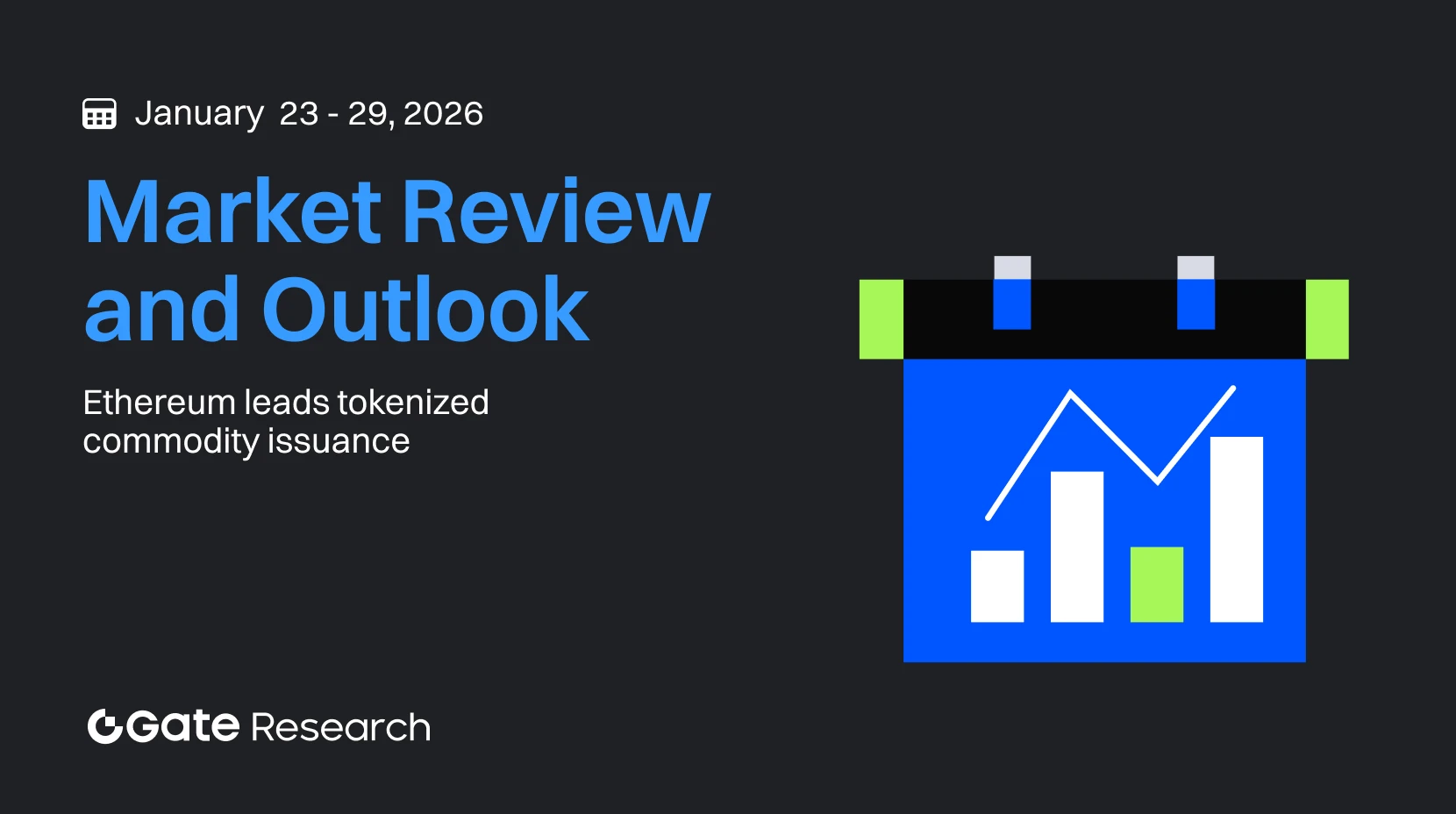
Gate Research: Ethereum Leads Tokenized Commodities Issuance | Prediction Market Volume Hits New High
Gate Research Weekly Report: BTC and ETH are consolidating after a pullback from recent highs; positioning has turned defensive, with flows rotating into steadier altcoin themes such as tokenized commodities/gold, payments, privacy, and DID. Ethereum continues to dominate tokenized commodity issuance with an 85% share. Long-term holders have accelerated distribution, marking Bitcoin’s strongest sell pressure since August. Prediction market volume hit a new all-time high, increasingly acting as an on-chain “expectations pricing layer.” Polymarket is driving a surge in USDC usage, and Mizuho upgraded Circle’s rating while highlighting its growth optionality. SUI is set to unlock roughly $60.94 million worth of tokens over the next 7 days, representing 11% of circulating supply.
2026-01-29 06:23:22
Advanced
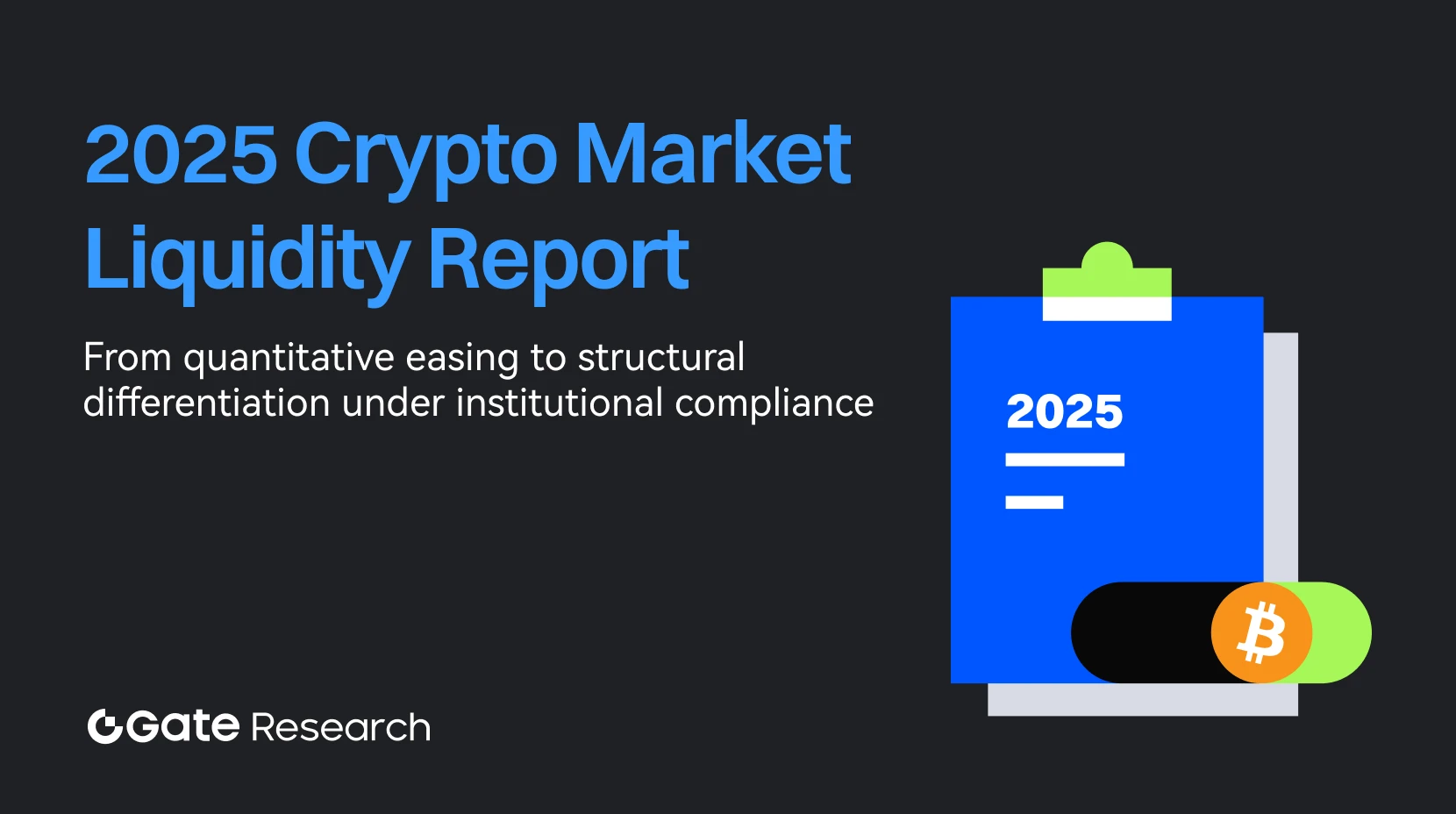
2025 Crypto Market Liquidity Report – From Quantitative Easing to Structural Differentiation Under Institutional Compliance
2025 marks a paradigm shift in the crypto market from "macro-sentiment" to "compliance and microstructure" drivers. Despite global rate cuts, the linear logic of "Rate Cuts = Bull Market" failed, giving way to profound structural differentiation. BTC exhibited high correlation with tech stocks, while RWAs and Stablecoins surged as new liquidity reservoirs. As pricing power shifts from VCs to the secondary market and on-chain derivatives reshape trading, this report analyzes the 2025 liquidity landscape and forecasts a 2026 "Structure-Driven" cycle dominated by institutional pricing.
2026-01-28 04:04:12
Glossary
Moreapr
Annual Percentage Rate (APR) represents the yearly yield or cost as a simple interest rate, excluding the effects of compounding interest. You will commonly see the APR label on exchange savings products, DeFi lending platforms, and staking pages. Understanding APR helps you estimate returns based on the number of days held, compare different products, and determine whether compound interest or lock-up rules apply.
fomo
Fear of Missing Out (FOMO) refers to the psychological phenomenon where individuals, upon witnessing others profit or seeing a sudden surge in market trends, become anxious about being left behind and rush to participate. This behavior is common in crypto trading, Initial Exchange Offerings (IEOs), NFT minting, and airdrop claims. FOMO can drive up trading volume and market volatility, while also amplifying the risk of losses. Understanding and managing FOMO is essential for beginners to avoid impulsive buying during price surges and panic selling during downturns.
nft
NFTs (Non-Fungible Tokens) are unique digital certificates recorded on the blockchain, designed to establish authenticity and ownership of digital items, in-game assets, membership privileges, or representations of real-world assets. NFTs can be bought, sold, and transferred, with all rules and transactions governed by smart contracts that execute automatically on-chain. They are commonly found on public blockchains such as Ethereum and across NFT marketplaces, serving use cases like collectibles, trading, and identity verification.
leverage
Leverage refers to the practice of using a small amount of personal capital as margin to amplify your available trading or investment funds. This allows you to take larger positions with limited initial capital. In the crypto market, leverage is commonly seen in perpetual contracts, leveraged tokens, and DeFi collateralized lending. It can enhance capital efficiency and improve hedging strategies, but also introduces risks such as forced liquidation, funding rates, and increased price volatility. Proper risk management and stop-loss mechanisms are essential when using leverage.



Your Gateway to Crypto World, Subscribe to Gate for a New Perspective