PSTAKE vs NEAR: Comparative Analysis of Two Leading Blockchain Protocols for Decentralized Applications

2025-10-08 00:34:48
Altcoins
Blockchain
Crypto Insights
DeFi
Liquid Staking
Article Rating : 3
0 ratings
This article provides a comparative analysis of PSTAKE and NEAR, two leading blockchain protocols in decentralized applications. It offers insights into their price history, investment value, supply mechanisms, institutional adoption, and technological ecosystems. Readers will learn how to navigate investment strategies, risk assessments, and long-term predictions for both assets. Ideal for novice and experienced investors, the article answers questions about their differences and highlights investment advantages. Check live prices and predictions on Gate for real-time updates.
PSTAKE vs NEAR: Comparative Analysis of Two Leading Blockchain Protocols for Decentralized Applications

Introduction: Investment Comparison between PSTAKE and NEAR

In the cryptocurrency market, the comparison between PSTAKE vs NEAR has always been an unavoidable topic for investors. The two not only have significant differences in market cap ranking, application scenarios, and price performance, but also represent different positioning of crypto assets.

PSTAKE (PSTAKE): Since its launch, it has gained market recognition for its liquid staking protocol for proof-of-stake (PoS) assets.

NEAR (NEAR): Since its inception, it has been hailed as a highly scalable base-layer protocol, and is one of the cryptocurrencies with high global trading volume and market capitalization.

This article will comprehensively analyze the investment value comparison between PSTAKE vs NEAR, focusing on historical price trends, supply mechanisms, institutional adoption, technological ecosystems, and future predictions, and attempt to answer the question that investors care about most:

"Which is the better buy right now?"

I. Price History Comparison and Current Market Status

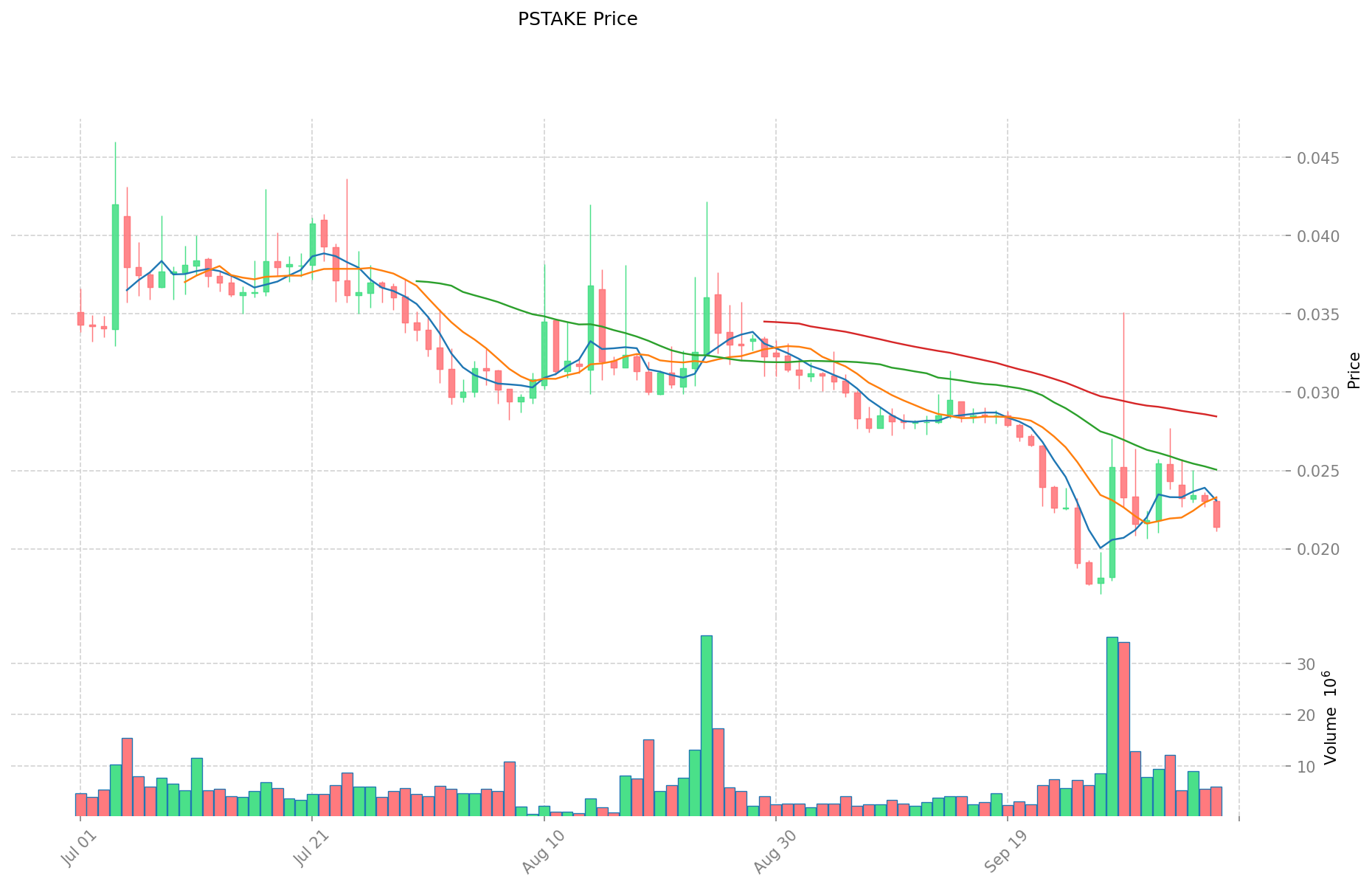
  • 2022: PSTAKE reached its all-time high of $1.21 on March 7, 2022.
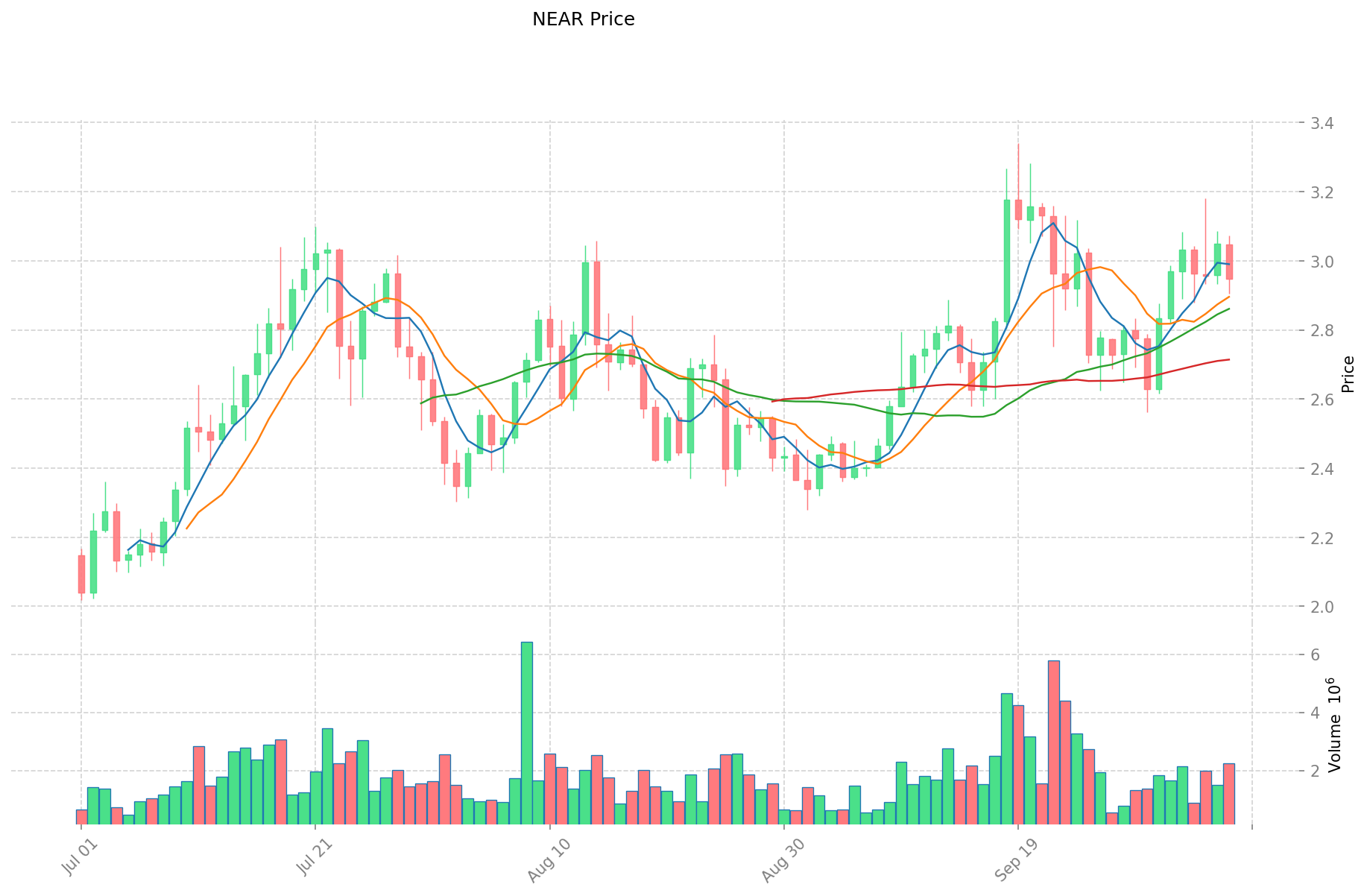
  • 2022: NEAR hit its all-time high of $20.44 on January 17, 2022.
  • Comparative analysis: In the recent market cycle, PSTAKE dropped from its high of $1.21 to a low of $0.00867604, while NEAR declined from $20.44 to its current price level.

Current Market Situation (2025-10-08)

  • PSTAKE current price: $0.02163
  • NEAR current price: $2.966
  • 24-hour trading volume: PSTAKE $132,664.43 vs NEAR $6,725,649.45
  • Market Sentiment Index (Fear & Greed Index): 60 (Greed)

Click to view real-time prices:

price_image1 price_image2

II. Core Factors Affecting PSTAKE vs NEAR Investment Value

Supply Mechanism Comparison (Tokenomics)

  • PSTAKE: High inflation rate in short to medium term, with potential improvement through Ve model to reduce inflation pressure and enhance governance efficiency
  • pSTAKE: Governance token allowing large investors to influence fees, chain deployment strategy, and ecosystem incentive mechanisms

Institutional Adoption and Market Applications

  • Market Focus: pSTAKE positions itself as a BTCFi protocol targeting both retail users and institutions with tailored solutions for Bitcoin staking
  • Use Cases: pSTAKE focuses on enhancing PoS assets' functionality and utility through liquid staking protocols

Technical Development and Ecosystem Building

  • pSTAKE Technology: Liquid staking protocol that allows users to stake PoS assets (like $ATOM) while receiving representative tokens (like $stkATOM) for use in additional DeFi opportunities
  • Value Proposition: Solves the challenge for PoS asset holders who typically face asset lockup during staking, enabling reliable Bitcoin yields through Babylon staking
  • Ecosystem Development: Designed to unlock Bitcoin staking yields while allowing users to utilize their assets in other financial applications

Macroeconomic and Market Cycles

  • Long-term Value: Strategic decisions on chain deployment, fee structures, and ecosystem incentives influence pSTAKE's medium to long-term value growth
  • Governance Impact: Similar to UNI, governance rights allow token holders to participate in platform decisions that affect token valuation

III. 2025-2030 Price Prediction: PSTAKE vs NEAR

Short-term Prediction (2025)

  • PSTAKE: Conservative $0.0122778 - $0.02154 | Optimistic $0.02154 - $0.023694
  • NEAR: Conservative $2.7683 - $2.945 | Optimistic $2.945 - $3.15115

Mid-term Prediction (2027-2028)

  • PSTAKE may enter a growth phase, with prices estimated between $0.0220380048 - $0.033434801568
  • NEAR may enter a steady growth phase, with prices estimated between $2.986503885 - $3.628602220275
  • Key drivers: Institutional capital inflow, ETF, ecosystem development

Long-term Prediction (2030)

  • PSTAKE: Base scenario $0.0330013874736 - $0.040591706592528 | Optimistic scenario $0.040591706592528+
  • NEAR: Base scenario $3.5990358318135 - $4.67874658135755 | Optimistic scenario $4.67874658135755+

View detailed price predictions for PSTAKE and NEAR

Disclaimer: The above predictions are based on historical data and market analysis. Cryptocurrency markets are highly volatile and subject to change. This information should not be considered as financial advice.

PSTAKE:

年份 预测最高价 预测平均价格 预测最低价 涨跌幅
2025 0.023694 0.02154 0.0122778 0
2026 0.02985444 0.022617 0.01899828 4
2027 0.0356805792 0.02623572 0.0220380048 21
2028 0.033434801568 0.0309581496 0.015788656296 42
2029 0.0338062993632 0.032196475584 0.01738609681536 48
2030 0.040591706592528 0.0330013874736 0.030691290350448 52

NEAR:

年份 预测最高价 预测平均价格 预测最低价 涨跌幅
2025 3.15115 2.945 2.7683 0
2026 3.44432475 3.048075 2.316537 2
2027 3.47343386625 3.246199875 2.986503885 9
2028 3.628602220275 3.359816870625 3.05743335226875 13
2029 3.703862118177 3.49420954545 3.2496148772685 17
2030 4.67874658135755 3.5990358318135 1.87149863254302 21

IV. Investment Strategy Comparison: PSTAKE vs NEAR

Long-term vs Short-term Investment Strategies

  • PSTAKE: Suitable for investors focused on liquid staking and DeFi opportunities
  • NEAR: Suitable for investors seeking a scalable base-layer protocol with high trading volume

Risk Management and Asset Allocation

  • Conservative investors: PSTAKE: 20% vs NEAR: 80%
  • Aggressive investors: PSTAKE: 40% vs NEAR: 60%
  • Hedging tools: Stablecoin allocation, options, cross-currency portfolios

V. Potential Risk Comparison

Market Risks

  • PSTAKE: High inflation rate in short to medium term
  • NEAR: Potential volatility due to high trading volume

Technical Risks

  • PSTAKE: Scalability, network stability
  • NEAR: Centralization of computing power, security vulnerabilities

Regulatory Risks

  • Different impacts of global regulatory policies on both assets

VI. Conclusion: Which Is the Better Buy?

📌 Investment Value Summary:

  • PSTAKE advantages: Liquid staking protocol, BTCFi focus, governance rights
  • NEAR advantages: Highly scalable base-layer protocol, high trading volume, established market presence

✅ Investment Advice:

  • Novice investors: Consider a higher allocation to NEAR due to its established market presence
  • Experienced investors: Balanced portfolio with both PSTAKE and NEAR, leveraging DeFi opportunities
  • Institutional investors: Evaluate PSTAKE's potential in the BTCFi space while maintaining NEAR exposure

⚠️ Risk Warning: The cryptocurrency market is highly volatile, and this article does not constitute investment advice. None

VII. FAQ

Q1: What are the key differences between PSTAKE and NEAR? A: PSTAKE is a liquid staking protocol for PoS assets, focusing on BTCFi and DeFi opportunities. NEAR is a highly scalable base-layer protocol with high trading volume and market capitalization.

Q2: Which asset has shown better price performance historically? A: NEAR has shown better historical price performance, reaching an all-time high of $20.44 in January 2022, compared to PSTAKE's all-time high of $1.21 in March 2022.

Q3: What are the main factors affecting PSTAKE's investment value? A: Key factors include its high inflation rate in the short to medium term, potential improvements through the Ve model, governance rights, and its focus on BTCFi and liquid staking protocols.

Q4: How does NEAR's market presence compare to PSTAKE's? A: NEAR has a more established market presence with higher trading volume and market capitalization, while PSTAKE is positioning itself in the niche market of liquid staking and BTCFi.

Q5: What are the long-term price predictions for both assets? A: By 2030, PSTAKE's base scenario price range is predicted to be $0.0330013874736 - $0.040591706592528, while NEAR's base scenario range is $3.5990358318135 - $4.67874658135755.

Q6: How should investors allocate their portfolio between PSTAKE and NEAR? A: Conservative investors might consider 20% PSTAKE and 80% NEAR, while aggressive investors might opt for 40% PSTAKE and 60% NEAR. However, this should be adjusted based on individual risk tolerance and market conditions.

Q7: What are the main risks associated with investing in PSTAKE and NEAR? A: For PSTAKE, risks include high inflation rates and potential scalability issues. For NEAR, risks include market volatility due to high trading volume and potential centralization of computing power. Both face regulatory risks depending on global policies.

* The information is not intended to be and does not constitute financial advice or any other recommendation of any sort offered or endorsed by Gate.
Related Articles
MILK vs XLM: Comparing Two Powerful Multilingual Language Models for Cross-Lingual Transfer Learning

MILK vs XLM: Comparing Two Powerful Multilingual Language Models for Cross-Lingual Transfer Learning

This article offers a comprehensive comparison of two powerful multilingual language models, MILK vs XLM, focusing on their investment value in the cryptocurrency market. It analyzes historical price trends, supply mechanisms, and institutional adoption, helping investors determine which is the better buy. Key factors affecting MILK and XLM, such as technology breakthroughs and macroeconomic trends, are discussed alongside short-term and long-term investment strategies. The article addresses concerns regarding market, technical, and regulatory risks. Suitable for new and experienced investors, it provides valuable insights for portfolio allocation between MILK and XLM. For real-time prices, visit Gate.
2025-10-08 00:44:41
Is Milkyway (MILK) a Good Investment?: Analyzing the Potential Returns and Risks in the Crypto Dairy Space

Is Milkyway (MILK) a Good Investment?: Analyzing the Potential Returns and Risks in the Crypto Dairy Space

The article "Is Milkyway (MILK) a Good Investment?" provides a comprehensive analysis of MILK's investment value, focusing on its current market status, historical price trends, and potential returns within the crypto dairy space. Through examining factors such as supply mechanism, institutional adoption, and macroeconomic impact, it addresses investment strategies and risks associated with MILK. The piece serves as a guideline for beginners, experienced, and institutional investors, offering insights into MILK’s short-term and long-term price predictions for 2025 to 2030 and strategic asset management recommendations for navigating market volatility.
2025-10-08 04:29:32
What is the Haedal Protocol (HAEDAL) Price Prediction for 2025?

What is the Haedal Protocol (HAEDAL) Price Prediction for 2025?

The article delves into Haedal Protocol (HAEDAL)'s recent price movements and future projections, noting a 1.76% drop but a strong 166.96% recovery from its ATL. It evaluates market dynamics influencing HAEDAL, including Sui blockchain developments and liquid staking benefits. With anticipated volatility and a wide price range forecast for 2025, investors are advised to consider factors such as ecosystem expansion and technological advances. The analysis targets cryptocurrency enthusiasts, highlighting HAEDAL's potential growth within the Sui ecosystem, its innovative features, and strategic outlook.
2025-10-23 10:20:01
2025 MILKPrice Prediction: Global Dairy Market Trends and Economic Factors Shaping Future Values

2025 MILKPrice Prediction: Global Dairy Market Trends and Economic Factors Shaping Future Values

This article offers a detailed analysis of MILK, a pioneering liquid staking protocol, evaluating its market position, historical price trends, and future predictions for 2025-2030. It addresses the factors affecting MILK's price, including supply mechanisms, macroeconomic conditions, and technological advancements. Designed for investors and traders, the article provides professional investment strategies, risk management frameworks, and insights into market, regulatory, and technical risks. Additionally, it evaluates MILK's potential as a high-risk investment with significant growth prospects due to ecosystem developments and market sentiment.
2025-10-08 02:24:22
2025 HAEDALPrice Prediction: Analyzing Growth Potential and Market Factors Influencing Cryptocurrency Value

2025 HAEDALPrice Prediction: Analyzing Growth Potential and Market Factors Influencing Cryptocurrency Value

The article, "2025 HAEDAL Price Prediction: Analyzing Growth Potential and Market Factors Influencing Cryptocurrency Value," reviews HAEDAL's market position, price history, supply mechanism, technological developments, and risk management strategies, culminating with a forecast from 2025 to 2030. It addresses questions regarding token value, regulatory implications, and investment strategies relevant to crypto investors, institutional stakeholders, and DeFi enthusiasts. Detailed analysis of HAEDAL's price trends, market sentiment, and holdings distribution is presented to provide clear investment recommendations and insights into potential risks in the liquid staking domain.
2025-10-04 02:07:41
2025 LAIR Price Prediction: Analyzing Market Trends and Potential Growth Factors

2025 LAIR Price Prediction: Analyzing Market Trends and Potential Growth Factors

This article analyzes the LAIR price prediction from 2025 to 2030, exploring market trends, investment strategies, and potential growth factors. As a cross-chain yield optimizer, LAIR plays a crucial role in enhancing liquidity across blockchain networks. The article also addresses risks, including market volatility, regulatory challenges, and technical vulnerabilities. Target readers include investors and traders interested in cross-chain liquid staking solutions. The structure offers insights into historical price trends, market sentiment, investment strategies, and risk management, optimizing readability and keyword density for quick scanning.
2025-10-31 16:33:04
Recommended for You
Global Cryptocurrency Regulations: Compliance Guide for Web3 Investors

Global Cryptocurrency Regulations: Compliance Guide for Web3 Investors

This comprehensive compliance guide navigates the rapidly evolving global cryptocurrency regulatory landscape essential for Web3 investors, blockchain developers, and compliance professionals. The article examines how regulatory frameworks differ across major jurisdictions—Europe's unified MiCA Regulation, Asia-Pacific's streamlined licensing requirements, and the US fragmented federal-state approach—while addressing critical compliance elements including tax obligations, AML/KYC standards, and licensing requirements. The guide demonstrates how regulatory clarity attracts institutional capital and creates competitive advantages for compliant platforms on Gate and other regulated exchanges. It explores blockchain adoption barriers within DeFi ecosystems and identifies substantial market opportunities for organizations embracing regulatory requirements. By understanding jurisdiction-specific regulatory frameworks and operational standards, Web3 participants can achieve sustainable market participation while avo
2026-01-08 02:44:38
Token Custody Security: Comprehensive Risk Analysis and Best Practices
Token Custody Security: Comprehensive Risk Analysis and Best Practices

This comprehensive guide addresses critical cryptocurrency custody risk management strategies essential for protecting digital assets. It outlines three primary risk categories affecting token custody: operational risks from superuser privileges including blacklisting and fund confiscation; implementation risks involving smart contract vulnerabilities such as arithmetic errors and non-standard logic; and design risks including self-destruct functionality and missing decimal implementation. The article provides actionable security guidelines for token users covering due diligence, continuous monitoring, and accounting awareness. Major mitigation strategies include implementing decentralized governance, requiring external security audits, and developing specialized backend integrations for unique token mechanisms. With practical examples and FAQ sections, this resource empowers both individual traders and institutional custodians on Gate and other platforms to make informed custody decisions through rigorous ri
2026-01-08 02:43:31
How Federal Reserve Interest Rate Cuts Impact Crypto Markets in 2026
How Federal Reserve Interest Rate Cuts Impact Crypto Markets in 2026

This article examines how Federal Reserve interest rate cuts drive cryptocurrency market movements in 2026, revealing mechanisms that extend beyond traditional monetary policy. The core relationship involves opportunity cost: declining Fed rates reduce bond yields, making digital assets more attractive alternatives for yield-seeking investors. However, 2026 presents complexity where fiscal policy complications offset monetary stimulus—Treasury borrowing can push long-term yields higher despite rate cuts, limiting crypto gains. The article demonstrates why recent rate cuts produced muted responses, analyzing the asymmetrical relationship where rate hikes clearly harm crypto but rate cuts don't automatically generate rallies without accompanying economic stability. Strategic recommendations for retail investors trading on Gate emphasize monitoring real yields, maintaining disciplined position sizing during policy uncertainty, and synthesizing Fed policy with fiscal developments and market sentiment rather than
2026-01-08 02:40:26
How US Inflation Impacts Bitcoin: Understanding the Connection Between Macroeconomics and Crypto

How US Inflation Impacts Bitcoin: Understanding the Connection Between Macroeconomics and Crypto

This article explores how US inflation dynamics fundamentally shape Bitcoin valuations and investment demand through multiple macroeconomic transmission channels. It examines Bitcoin's deflationary design with its 21 million coin cap as a counterpoint to government money printing, analyzing how credibility erosion in fiat systems drives cryptocurrency adoption. The piece presents empirical evidence showing that inflation expectations correlate strongly with Bitcoin purchases, establishing cryptocurrency as a demonstrable inflation hedge. The analysis decodes the Fed policy-Bitcoin relationship, explaining how monetary easing creates bullish pressure while rate tightening generates temporary headwinds. Finally, it provides practical portfolio strategies for 2026, recommending 1-5% Bitcoin allocations through Gate's institutional infrastructure as macro uncertainty persists. Designed for investors seeking understanding of crypto-macroeconomics linkages and portfolio protection mechanisms.
2026-01-08 02:37:37
Paxos Highlights Tokenized USD as Key to Digital Asset Adoption
Paxos Highlights Tokenized USD as Key to Digital Asset Adoption

This article explores how Paxos tokenized stablecoins are reshaping digital asset adoption in Web3. Led by insights from Paxos's product leadership, the piece examines the strategic importance of tokenized U.S. dollars as critical infrastructure bridging traditional finance and blockchain ecosystems. It showcases Paxos's innovation track record, including USDP and PAXG, while analyzing accelerating institutional adoption of tokenized financial instruments like money market funds and securities. The article emphasizes pragmatic tokenization principles—prioritizing genuine value creation through improved settlement speed, enhanced liquidity, and cost reduction rather than pursuing tokenization for its own sake. Readers will discover how tokenized assets enable 24/7 trading, instant settlement, and institutional-grade security, along with practical applications across DeFi, cross-border payments, and financial infrastructure modernization.
2026-01-08 02:36:43
What Is the BRC App (BRCT)?

What Is the BRC App (BRCT)?

Discover BRC App (BRCT), the all-in-one blockchain ecosystem on Bitcoin. See how .btc domains function, access Launchpad capabilities, trade BRC-20 tokens, and earn BRCT staking rewards on a reputable platform.
2026-01-08 02:35:20