In Decentralized Finance (DeFi) protocols, governance tokens are essential for coordinating protocol governance, maintaining network operations, and incentivizing ecosystem participants. Unlike traditional financial platforms that rely on centralized institutions, DeFi protocols require on-chain mechanisms that enable community members to collectively participate in parameter adjustments, rule upgrades, and resource allocation, ensuring the protocol operates sustainably in a decentralized environment.
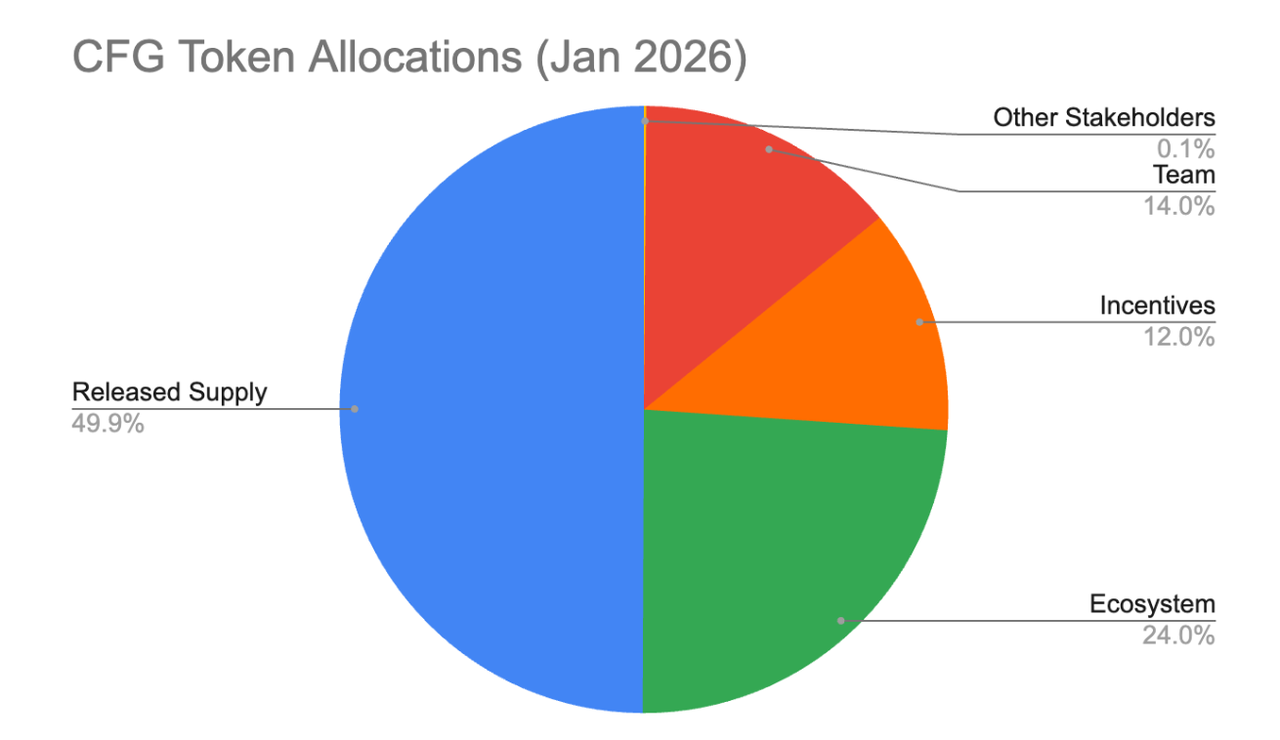
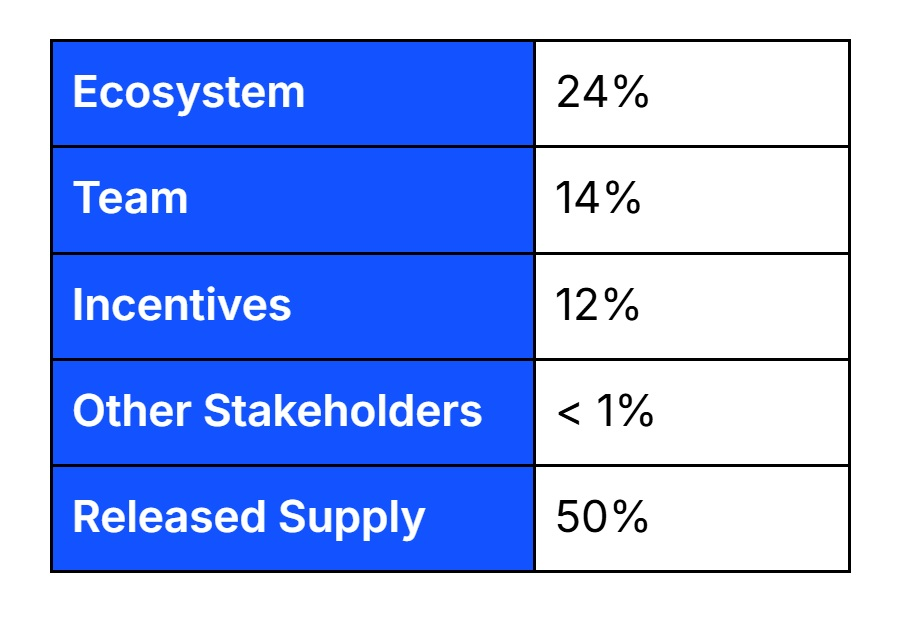
CFG is the native utility token of the Centrifuge protocol, with a total supply of 691,800,000 tokens (as of January 2026). These tokens are allocated in specific proportions to the ecosystem, team, incentive programs, circulating supply, and other stakeholders.
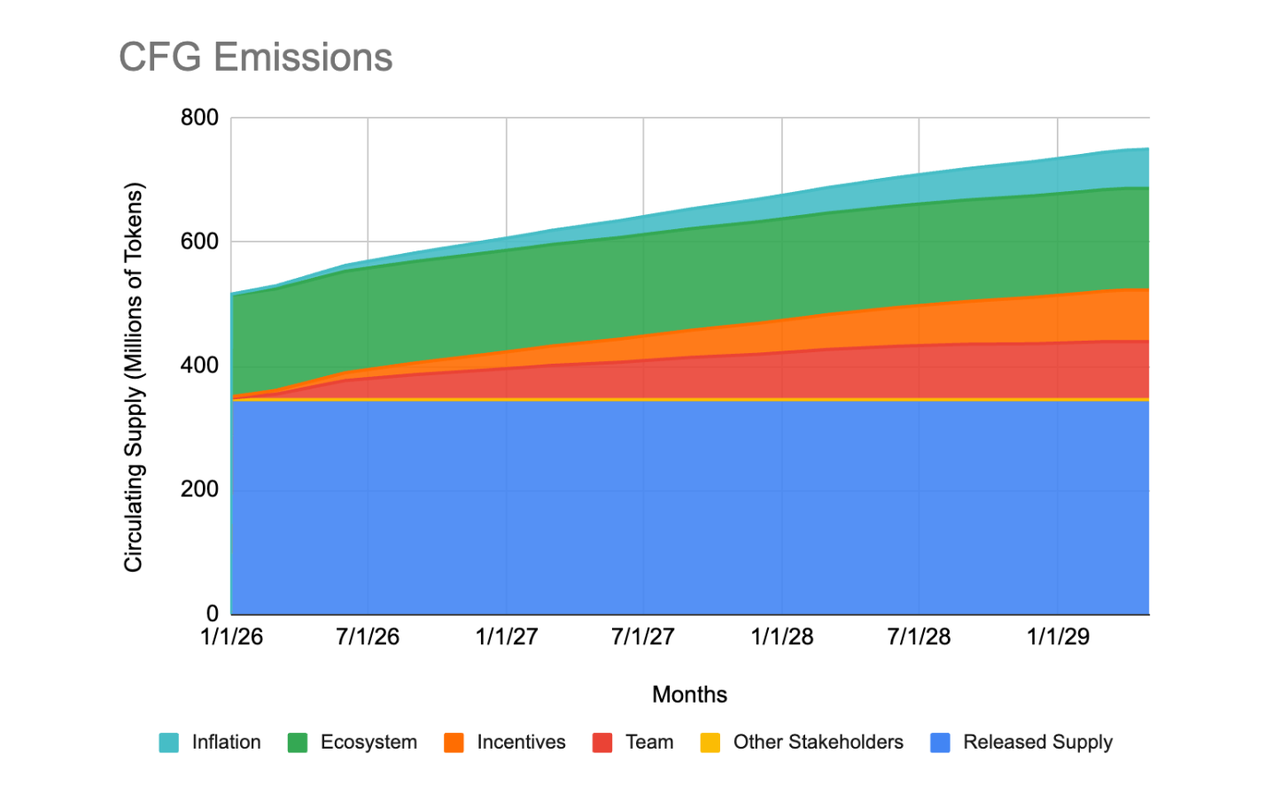
Official sources state that CFG has an annual inflation rate of 3%. This means the total token supply will gradually increase over time, with all inflationary tokens allocated to the protocol treasury.
What Is the Core Function of CFG?
CFG’s core functions center on governance, staking, and incentives.
First, CFG powers protocol governance. Token holders can participate in governance voting, submit proposals, and vote on protocol upgrades, parameter changes, and key rule modifications. This mechanism empowers the Centrifuge community to collaboratively determine the protocol’s direction.
Second, CFG is used for network staking. Node operators must stake CFG to participate in network validation and maintenance. This staking process enhances network security and reduces the risk of malicious activity.
Additionally, CFG serves as an ecosystem incentive, rewarding network participants and supporting protocol ecosystem growth. Through these roles, CFG is integral to the protocol’s economic system.
How Does CFG Enable Centrifuge Governance?
Within Centrifuge’s governance model, CFG holders have on-chain governance rights and can vote on protocol-related proposals.
Governance proposals often include protocol upgrades, parameter adjustments, asset pool rules, and resource allocation. Through on-chain voting, critical decisions are made by token holders, not centralized entities. This approach increases transparency and ensures that the governance process is open and verifiable.
This governance structure allows the protocol to adapt its rules in response to market demands and ecosystem evolution, while maintaining decentralized governance principles.
How Does the CFG Staking Mechanism Secure the Network?
The CFG staking mechanism underpins network validation and secure protocol operations.
Node operators are required to lock a specific amount of CFG to participate in network validation and maintenance. Staked CFG acts as an economic guarantee: operators who fulfill their responsibilities are rewarded, while those engaging in malicious actions may be penalized.
This system incentivizes honest node operation and reduces network attack risks through economic alignment. For RWA protocols like Centrifuge, a stable and reliable network is essential to ensure smooth asset financing, making CFG staking a key pillar of protocol security.
How Does CFG’s Incentive Mechanism Drive Ecosystem Growth?
Beyond governance and staking, CFG also functions as an ecosystem incentive, supporting protocol participants and driving ecosystem expansion.
The protocol uses CFG to reward node operators, governance participants, and other contributors, encouraging broader participation in network operations. This incentive model boosts network activity and helps attract long-term stakeholders.
In decentralized protocols, incentive mechanisms are vital for ecosystem growth. CFG’s incentive structure aligns protocol needs with participant interests, fostering a robust and sustainable ecosystem.
What Are the Strengths and Potential Limitations of the CFG Mechanism?
CFG’s integrated mechanism combines governance, staking, and incentives into a unified token system, enabling economic coordination of protocol governance and network security. This design enhances transparency and fosters greater community involvement.
However, there are limitations. Concentrated governance power can lead to low participation, and the effectiveness of staking depends on node engagement. Poorly designed incentive structures may also undermine long-term protocol stability.
As a result, while CFG advances protocol decentralization, it requires well-balanced governance and incentive mechanisms to maintain stability.
Summary
As Centrifuge’s core utility token, CFG supports protocol operations through governance, staking, and incentive mechanisms.
CFG grants holders governance rights, secures the protocol through staking, and drives ecosystem growth via incentives. Together, these functions form Centrifuge’s economic model and provide a stable foundation for Real World Asset (RWA) financing.
As RWA protocols evolve, CFG will remain a critical tool for protocol governance and network security.
FAQs
What Is the Purpose of CFG?
CFG is primarily used for protocol governance, node staking, and ecosystem incentives, serving as the core utility token of the Centrifuge protocol.
How Can CFG Participate in Protocol Governance?
CFG holders can participate in on-chain voting for protocol upgrades, parameter changes, and governance proposals.
Why Must Nodes Stake CFG?
Nodes must stake CFG to qualify for network validation and to help maintain protocol security through the staking mechanism.
What Is the Role of CFG’s Incentive Mechanism?
CFG rewards node operators and ecosystem participants, supporting protocol operation and ecosystem development.
What Is CFG’s Core Value?
CFG’s core value lies in connecting governance rights, security mechanisms, and incentive systems to support the stable operation of the Centrifuge protocol.







