Japanese Bond Yields Surge as Bitcoin Falls Below $86,000
Market Background and Key Drivers
Recently, Bank of Japan officials indicated a potential interest rate hike this year, fueling expectations of a shift in Japan’s monetary policy. This announcement quickly sent Japanese government bond yields soaring. Short-term yields broke above 1% for the first time in nearly seventeen years, while long-term yields also surged.
Global capital markets responded rapidly, with risk appetite dropping sharply. The cryptocurrency market, which relies heavily on investor sentiment and liquidity, is particularly susceptible to macroeconomic changes. As volatility in Japan’s bond market rippled across global markets, Bitcoin and other crypto assets faced intense selling pressure.
How Surging Bond Yields Impact Crypto Assets
Rising Japanese government bond yields have far-reaching effects on global financial markets. Higher yields make yen-denominated assets more attractive, prompting investors to return to Japan and pull capital from riskier overseas assets. This shift directly triggers forced selling of risk assets, including cryptocurrencies. The increase in yields reflects expectations for higher future interest rates, which typically sparks risk aversion. Globally, investors reduce exposure to volatile, high-risk assets, with cryptocurrencies—given their high volatility—taking the biggest hit.
Additionally, synchronized adjustments across global bond markets have tightened liquidity, causing crypto market liquidity to dry up quickly. In a low-liquidity environment, any significant sell-off can accelerate price declines, creating a self-reinforcing downward spiral.
Bitcoin Drops Below $86,000: Data and Implications
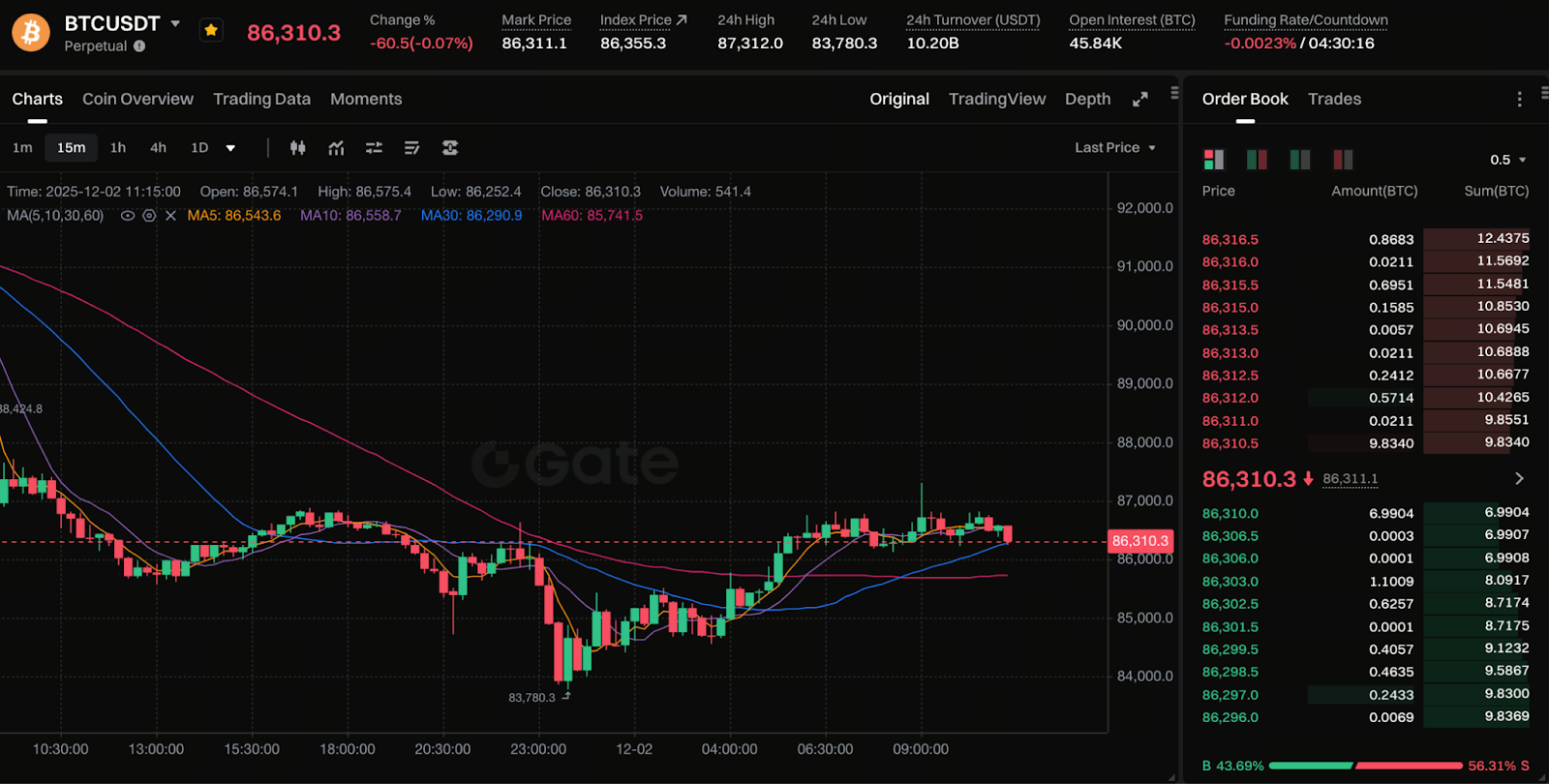
Chart: https://www.gate.com/futures/USDT/BTC_USDT
Amid these macroeconomic shocks, Bitcoin plunged during Asian trading hours, briefly dipping below $86,000. This correction wiped out more than $150 billion from global crypto market capitalization. Beyond Bitcoin, leading tokens such as Ethereum and Solana also posted notable declines, with long positions liquidated and panic spreading quickly throughout the market.
Technically, Bitcoin found short-term support near $86,000. However, with sentiment subdued, this support may face renewed pressure. In the near term, investors should closely monitor trading volume and the resilience of key support levels.
Weak Market Liquidity and Systemic Risk
Crypto market liquidity is currently thin, with limited trading volume and shallow buy-side depth. Large sell-offs can cause prices to drop swiftly. Unlike previous cycles, this downturn has been accompanied by widespread liquidations in leveraged trading, with some exchanges experiencing a wave of forced liquidations, further amplifying market turbulence.
Moreover, rising global interest rates and surging bond yields may trigger cross-market capital flows, transmitting volatility from traditional financial markets to crypto, and increasing systemic risk. Investors must exercise heightened caution in this highly volatile environment to avoid excessive losses driven by market sentiment swings.
What Should Investors Do?
- Stay calm and avoid chasing highs or bottom-fishing: Extreme volatility makes impulsive trades especially risky.
- Monitor macro trends and liquidity shifts: Movements in bond markets, interest rates, and exchange rates can all impact the crypto sector.
- Reduce leverage and manage risk exposure: Steer clear of high-leverage positions that can trigger forced liquidations.
- Take a long-term view: The crypto market is heavily influenced by macro cycles, so patience is key while waiting for sentiment and liquidity to stabilize.
- Diversify your portfolio: In times of heightened uncertainty, spreading assets across markets helps mitigate risks from single-market shocks.
In summary, Bitcoin’s latest decline was primarily driven by surging Japanese bond yields that eroded global risk appetite. Insufficient market liquidity and widespread leveraged liquidations intensified the sell-off. In the short term, investors should remain cautious and closely track macroeconomic trends and liquidity conditions to position themselves effectively for the future.
Share
Content


Related Articles

2025 BTC Price Prediction: BTC Trend Forecast Based on Technical and Macroeconomic Data

Pi Coin Transaction Guide: How to Transfer to Gate.com

Flare Crypto Explained: What Is Flare Network and Why It Matters in 2025

How to Use a Crypto Whale Tracker: Top Tool Recommendation for 2025 to Follow Whale Moves

What is N2: An AI-Driven Layer 2 Solution