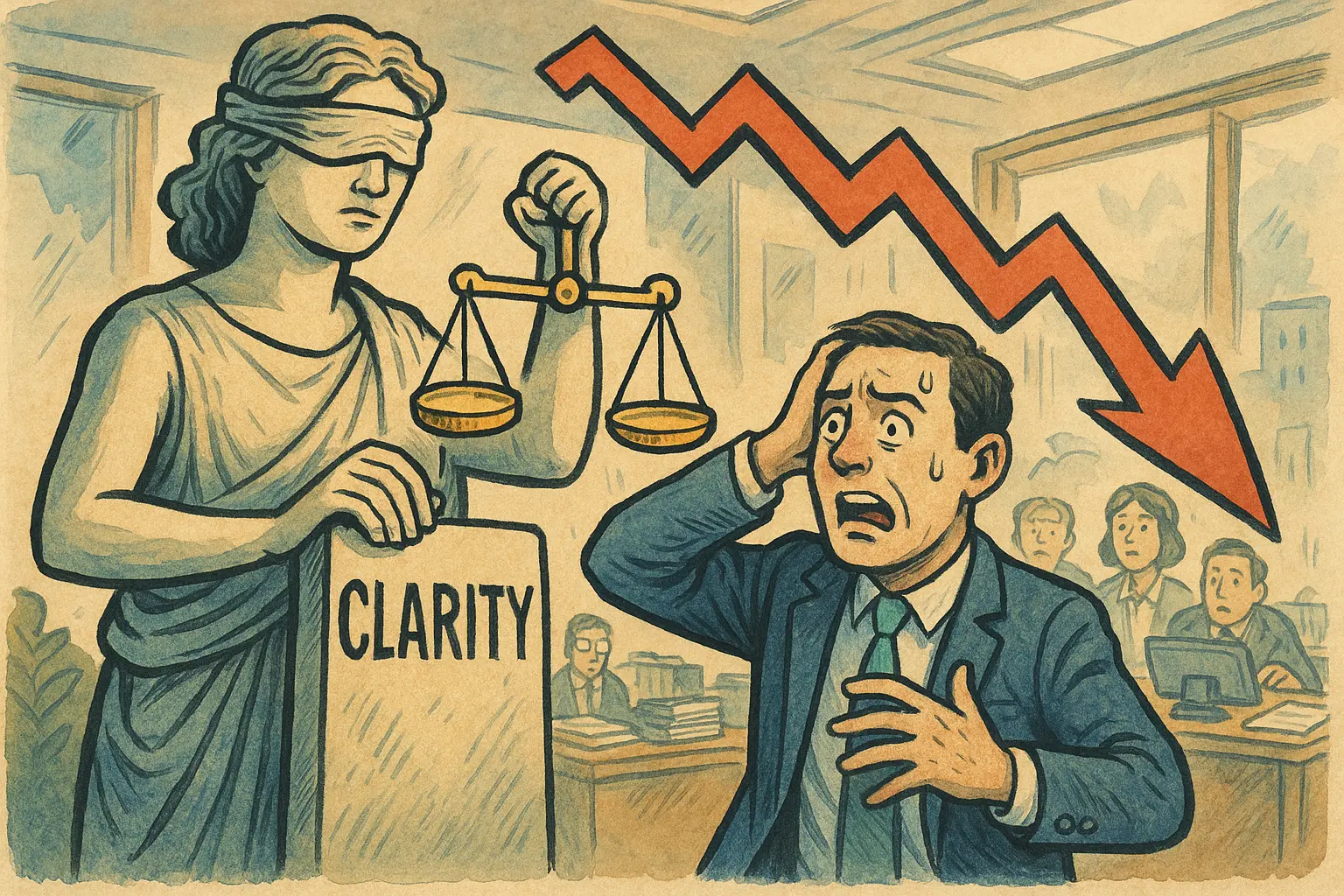
Stablecoin issuer Circle (NYSE: CRCL) stock price dropped nearly 20% in a single day, drawing significant market attention. The latest draft of the U.S. Congress’s “CLARITY Act” is a major trigger. According to former Fox Business Channel reporter Eleanor Terrett, the draft proposes banning stablecoin issuers from offering any form of passive income to users and restricting all designs that are economically or functionally equivalent to bank deposit interest.
Core Regulatory Logic of the CLARITY Act Draft
The draft targets the mechanism by which stablecoin issuers redistribute reserve asset earnings to users. The regulatory direction reflects long-standing banking industry demands: if stablecoins can offer returns similar to deposit interest, they would directly compete with traditional deposit services, potentially impacting the overall flow of funds within the financial system.
The bill is still in the draft and congressional negotiation stage, and the provisions have not been finalized. The current draft indicates that passive income directly linked to “coin balances” may be restricted, but rewards related to trading activity or liquidity provision might have exemptions. The bill currently applies only to domestic U.S. operators; foreign markets and decentralized finance (DeFi) are not within its scope.
Structural Pressures Facing Circle’s Business Model
While USDC does not pay interest directly to holders, Circle’s core profit model and revenue mechanisms are highly interconnected:
- Reserve Asset Allocation: Circle invests USDC reserves in short-term U.S. Treasury bonds to earn interest income.
- Profit Sharing Mechanism: Part of the interest is shared with Coinbase per agreement, which is then used to incentivize platform users.
- Potential Blocking Risks: If the “pass-through” of earnings is cut off by the bill, USDC’s ability to attract funds will be directly impacted.
Notably, before this decline, CRCL’s stock price had risen from about $50 in February to over $130, a gain of more than 170%. In a high-valuation environment, policy negative news often significantly amplifies market corrections, leading to over-adjustments.
Market Reaction and Future Impact on Competition
Analysts generally believe that the sharp drop in CRCL’s stock price includes an overreaction. USDC’s circulation growth remains in double digits annually, and the fundamental demand has not disappeared. The market is mainly re-pricing the risk associated with policy uncertainty.
In terms of competition, Tether (USDT) recently announced that it has commissioned four major accounting firms to conduct comprehensive audits. If increased transparency successfully builds institutional trust, some funds may shift from USDC, adding pressure on Circle’s market share. If the restrictions only apply within the U.S., offshore stablecoin issuers or those with mechanisms designed to circumvent such restrictions may enjoy a relative competitive advantage.
Frequently Asked Questions
What specific impact does the CLARITY Act draft have on Circle’s business model?
The draft proposes restricting stablecoin issuers from offering any passive income linked to coin balances. The interest income earned from reserves and profit-sharing arrangements with Coinbase could be included in these restrictions, directly squeezing Circle’s core profit structure.
Does the recent crash in CRCL’s stock price reflect a deterioration in business fundamentals?
Most analysts believe the decline includes an overreaction component. USDC’s circulation continues to grow, and Circle’s business has not fundamentally deteriorated. The main factors are the repricing of policy uncertainty and a technical correction after a gain of over 170% in CRCL’s stock price earlier.
What is the current legislative progress of the CLARITY Act?
The CLARITY Act is still in the draft negotiation stage, and the provisions have not been finalized. The clauses related to earnings are still negotiable. The bill is not legally binding until officially passed, and the final wording remains to be seen.
Disclaimer: The information on this page may come from third parties and does not represent the views or opinions of Gate. The content displayed on this page is for reference only and does not constitute any financial, investment, or legal advice. Gate does not guarantee the accuracy or completeness of the information and shall not be liable for any losses arising from the use of this information. Virtual asset investments carry high risks and are subject to significant price volatility. You may lose all of your invested principal. Please fully understand the relevant risks and make prudent decisions based on your own financial situation and risk tolerance. For details, please refer to
Disclaimer.


