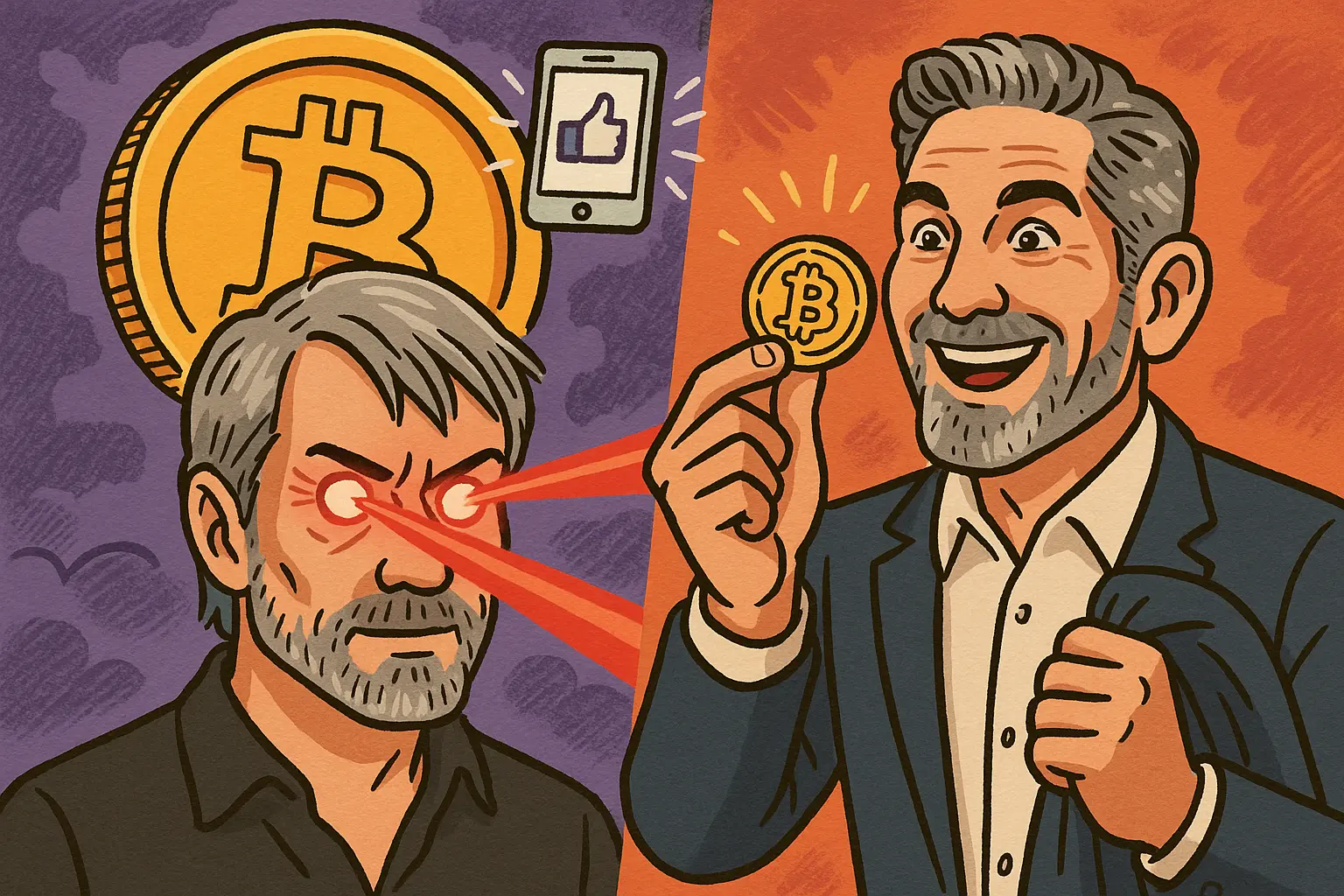
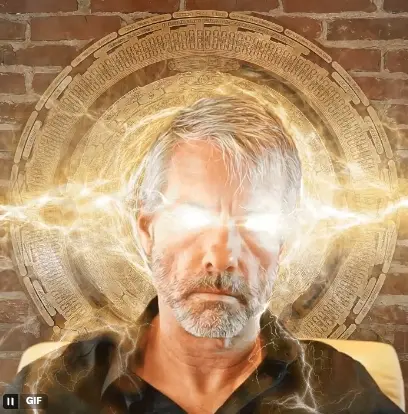
MicroStrategy executive chairman Michael Saylor updated his X profile on March 28, adding a laser eyes icon and writing: “It’s time to re-enable the laser eyes.” Within hours, the post’s views surpassed one million, reigniting bullish sentiment in the crypto community. Real estate billionaire Grant Cardone announced an additional purchase of 100 bitcoins the following day for that week.
The Symbolic Logic of Laser Eyes: Why Saylor Chose to Reboot It Now
 (Source: X)
The laser eyes trend originated in 2021, when Bitcoin believers such as Saylor and Anthony Pompliano added glowing red eyes to their profile photos to signal that Bitcoin would break through $100,000. This symbol later became a consensus marker of the crypto community’s “坚定看多” mindset, and also one of the most recognizable collective rituals in Bitcoin culture.
Saylor’s usage habits give the symbol greater market weight—he doesn’t use it frequently, but selectively reactivates it only at moments when he holds strong convictions about Bitcoin, making each appearance clearly declarative in nature. This reboot coincided with the market’s Crypto Fear and Greed Index falling into an extreme fear range, aligning closely with MicroStrategy’s ongoing large-scale accumulation efforts, forming a signal combination interpreted by the market as a deliberately chosen adversarial stance.
MicroStrategy’s Current Holdings and the One Million BTC Accumulation Plan
MicroStrategy is currently the world’s largest corporate Bitcoin holder. Relevant data are as follows:
Current Holdings: 761,068 BTC, roughly 3.6% of Bitcoin’s total global supply
Average Cost Basis: about $75,696 per BTC
Current Market Quote: about $67,000, with a significant unrealized paper loss on the holdings
Strategic Target for End of 2026: accumulate holdings to 1,000,000 BTC
Gap to the Target: about 238,932 BTC
Saylor’s laser eyes reboot closely matches, in both timing and messaging, this ongoing large-scale accumulation strategy. In a market environment where there is a pronounced unrealized loss, management chose to publicly reaffirm its bullish position, sending a clear signal that the strategy direction is not swayed by short-term price fluctuations.
Grant Cardone Following Up: The Chain-Reaction Effect of Leading-Capital Signals
 (Source: X)
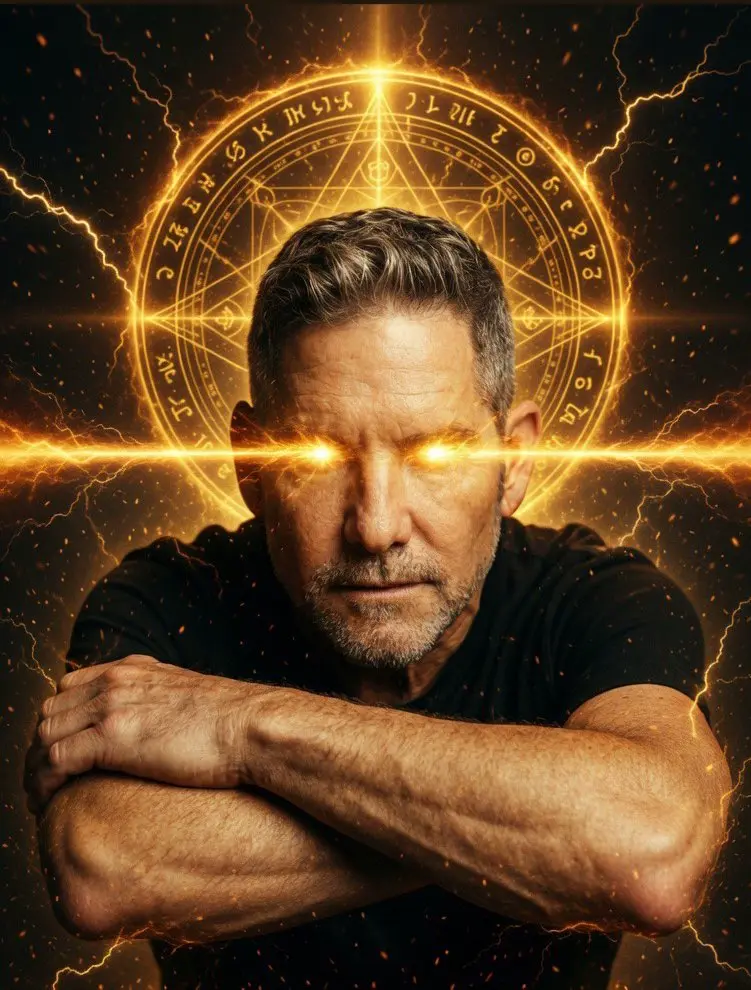
The day after Saylor posted, real estate billionaire Grant Cardone, who has 1.5 million X followers, asked his audience: “Do you still believe?” He then announced that he would add 100 bitcoins that week, creating a notable topic resonance across mainstream social media.
With two of the most well-known Bitcoin supporters taking actions in the same direction within the same time window, they formed a collective counter-reaction to market panic sentiment. This sends a key signal to follow-on investors: top-tier capital is treating the current drop as an opportunity window for long-term accumulation, not as a precursor to structural collapse.
Frequently Asked Questions
What does laser eyes represent in Bitcoin culture?
Laser eyes is a Bitcoin community symbol that emerged in 2021. It is added by believers to their profile photos—using glowing red eyes—to declare a firm conviction that Bitcoin will reach a specific target. In the crypto community, it represents a strong long-term bullish stance, especially when used by highly recognizable supporters to communicate a directional declaration to the market rather than a prediction of short-term price action.
Why is MicroStrategy continuing to accumulate Bitcoin despite having unrealized losses on the books?
MicroStrategy’s Bitcoin strategy is centered on long-term holding, using the company’s balance sheet rather than short-term market moves as the basis for decisions. Saylor has repeatedly said the company has no liquidation plan, and that unrealized paper losses do not constitute a real loss until the assets are sold. The publicly stated goal of accumulating to 1,000,000 BTC before the end of 2026 shows that the strategic direction is not affected by periodic price cycles, and the scale of holdings continues to expand.
What market impact does Grant Cardone’s purchase of 100 bitcoins have?
In terms of scale, 100 bitcoins is not significant compared with MicroStrategy’s 760,000 BTC holdings. But its impact is mainly in the emotional dimension—during the same week as Saylor’s laser eyes reboot, another billionaire publicly declared adding to his position, reinforcing the collective narrative that “top capital views the dip as an opportunity.” This can have a certain psychological catalytic effect on market confidence.
Disclaimer: The information on this page may come from third parties and does not represent the views or opinions of Gate. The content displayed on this page is for reference only and does not constitute any financial, investment, or legal advice. Gate does not guarantee the accuracy or completeness of the information and shall not be liable for any losses arising from the use of this information. Virtual asset investments carry high risks and are subject to significant price volatility. You may lose all of your invested principal. Please fully understand the relevant risks and make prudent decisions based on your own financial situation and risk tolerance. For details, please refer to
Disclaimer.


