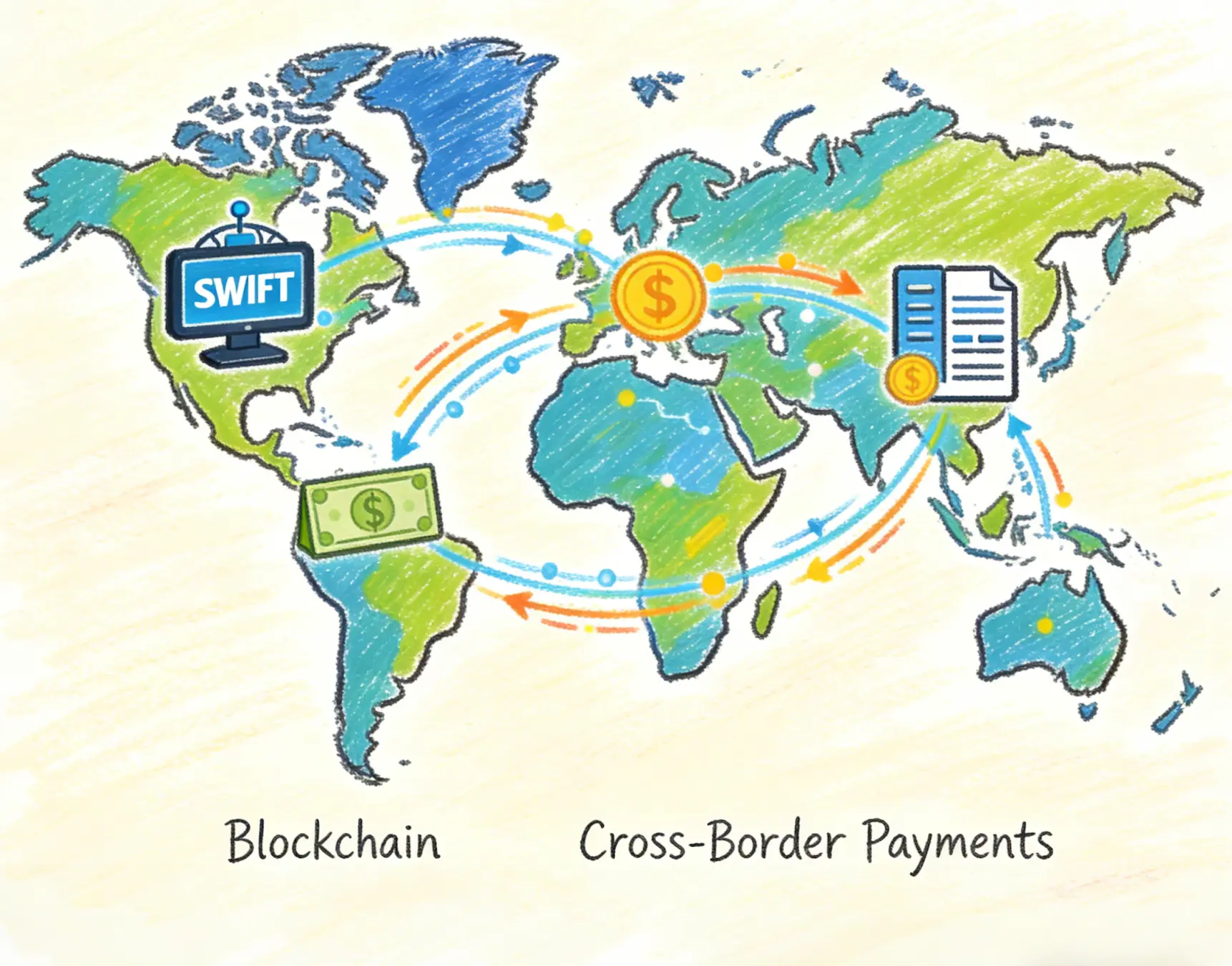
 SWIFT, the global messaging network connecting over 11,000 financial institutions across more than 200 countries, has confirmed that its blockchain-based shared ledger is progressing into a minimum viable product (MVP) phase, with real-world transactions planned for later in 2026.
The permissioned ledger, built on an Ethereum layer-2 architecture, is designed to enable 24/7 tokenized cross-border payments using tokenized deposits, regulated stablecoins, and central bank digital currencies, with more than 30 major global banks including JPMorgan, HSBC, BNP Paribas, Deutsche Bank, and Bank of America contributing to its design and governance.
SWIFT Shared Ledger Uses Ethereum Layer-2 Technology for 24/7 Settlement
The SWIFT shared ledger is not a public blockchain and does not use a native cryptocurrency. It is a permissioned infrastructure layer built on Linea, an Ethereum layer-2 network developed by ConsenSys, with an Ethereum Virtual Machine-compatible architecture based on Hyperledger Besu. The ledger records, sequences, and validates transactions between financial institutions using smart contracts, enabling tokenized value to move across institutions in real time, 24 hours per day, seven days per week.
SWIFT will operate the ledger, providing orchestration of transaction workflows, validation of funding commitments, and coordination of interbank processes. Banks will operate their own environments and retain full authority over keys, assets, funding, and settlement through real-time gross settlement systems, correspondent banking relationships, or other agreed mechanisms between participants.
Blockchain Settlement Addresses Traditional Cross-Border Payment Inefficiencies
Traditional cross-border payments depend on correspondent banking networks that operate within business hours, involve multiple intermediaries, and generate significant reconciliation overhead. The SWIFT shared ledger collapses that process by combining messaging and settlement into a single layer, offering banks faster payment execution, better liquidity visibility, and reduced reconciliation effort.
The MVP builds on existing bank payment applications and SWIFT standards, introducing a shared digital orchestration layer that records and validates interbank payment commitments. The ledger enables payments to be executed using tokenized deposits as the underlying representation of value, leverages existing compliance processes, and supports multiple settlement options.
Design Phase Completed with Global Bank Input; Live Transactions Planned for 2026
The design phase brought together more than 30 global financial institutions, whose input shaped the ledger’s functionality, governance model, and future development roadmap. Having completed this design phase, SWIFT is now building the first iteration of the ledger with a planned MVP launch involving real-world transactions later in 2026.
Jonathan Ehrenfeld, who leads the SWIFT ledger strategy, stated that adding a blockchain-based ledger to the infrastructure will bring the benefits of digital finance into the ecosystem seamlessly and safely, at scale, and without compromising the trust and resilience essential to global finance.
SWIFT is positioning the ledger not as a replacement for its existing messaging infrastructure but as a parallel track that enables institutions to access blockchain-based settlement without redesigning internal workflows or compliance processes. For the $183 trillion annual cross-border payments market, the implications are significant, as the new infrastructure enables 24/7 settlement capabilities that were previously unavailable through traditional correspondent banking networks.
FAQ
What is the SWIFT blockchain shared ledger and when will it go live?
SWIFT’s blockchain shared ledger is a permissioned infrastructure layer built on Ethereum layer-2 technology that enables 24/7 cross-border payments using tokenized deposits and regulated stablecoins. The MVP is planned to go live with real-world transactions later in 2026 following a completed design phase involving more than 30 global banks.
Which banks participated in designing the SWIFT blockchain ledger?
More than 30 global financial institutions including JPMorgan, HSBC, BNP Paribas, Deutsche Bank, and Bank of America contributed to the ledger’s design, governance model, and development roadmap.
How does SWIFT’s blockchain ledger differ from public blockchains?
The SWIFT shared ledger is a permissioned infrastructure layer that does not use a native cryptocurrency. It is built on open-source foundations with an Ethereum-compatible architecture but is operated by SWIFT, with banks retaining full authority over their own keys, assets, and settlement mechanisms through existing systems.
Disclaimer: The information on this page may come from third parties and does not represent the views or opinions of Gate. The content displayed on this page is for reference only and does not constitute any financial, investment, or legal advice. Gate does not guarantee the accuracy or completeness of the information and shall not be liable for any losses arising from the use of this information. Virtual asset investments carry high risks and are subject to significant price volatility. You may lose all of your invested principal. Please fully understand the relevant risks and make prudent decisions based on your own financial situation and risk tolerance. For details, please refer to
Disclaimer.


