

Trade
Basic
Futures
Futures
Hundreds of contracts settled in USDT or BTC
Options
HOT
Trade European-style vanilla options
Unified Account
Maximize your capital efficiency
Demo Trading
Futures Kickoff
Get prepared for your futures trading
Futures Events
Participate in events to win generous rewards
Demo Trading
Use virtual funds to experience risk-free trading
Earn
Launch
CandyDrop
Collect candies to earn airdrops
Launchpool
Quick staking, earn potential new tokens
HODLer Airdrop
Hold GT and get massive airdrops for free
Launchpad
Be early to the next big token project
Alpha Points
NEW
Trade on-chain assets and enjoy airdrop rewards!
Futures Points
NEW
Earn futures points and claim airdrop rewards
Investment
Simple Earn
Earn interests with idle tokens
Auto-Invest
Auto-invest on a regular basis
Dual Investment
Buy low and sell high to take profits from price fluctuations
Soft Staking
Earn rewards with flexible staking
Crypto Loan
0 Fees
Pledge one crypto to borrow another
Lending Center
One-stop lending hub
VIP Wealth Hub
Customized wealth management empowers your assets growth
Private Wealth Management
Customized asset management to grow your digital assets
Quant Fund
Top asset management team helps you profit without hassle
Staking
Stake cryptos to earn in PoS products
Smart Leverage
NEW
No forced liquidation before maturity, worry-free leveraged gains
GUSD Minting
Use USDT/USDC to mint GUSD for treasury-level yields

More






Major Investors Prepare to Negotiate Venezuela's Defaulted Debt
Source: Coindoo Original Title: Major Investors Prepare to Negotiate Venezuela’s Defaulted Debt Original Link: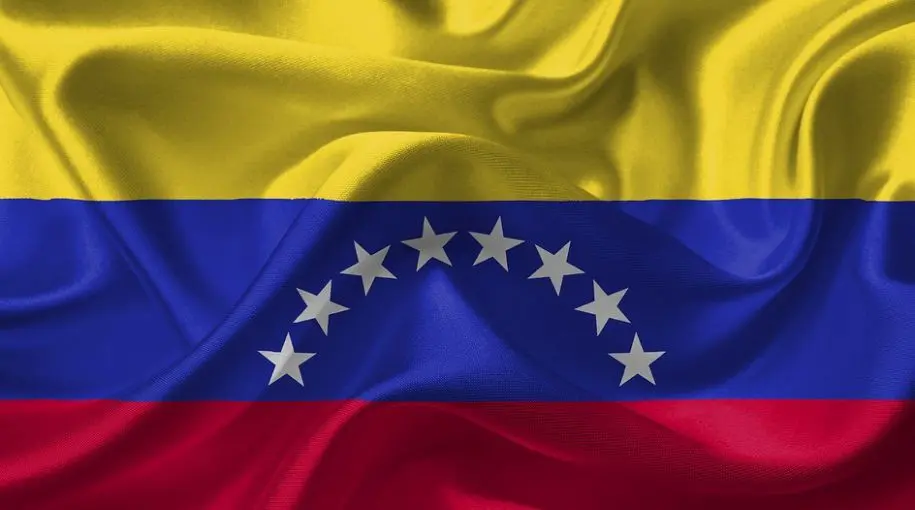
For the first time in years, Venezuela’s debt is being treated less like a write-off and more like a live opportunity.
What was once a frozen corner of global finance is starting to stir, as political change and investor positioning reopen a conversation that has been dormant since the country’s historic default.
Key Takeaways
A debt story wakes up after years on ice
Venezuela has been locked out of capital markets since 2017, when it stopped servicing its sovereign obligations. Since then, its bonds have largely traded as distressed instruments, shaped more by geopolitics than balance sheets. That dynamic is now shifting.
A coalition of large institutional investors has signaled it is ready to engage on restructuring once legal and political barriers allow. The group, known as the Venezuela Creditor Committee, represents holders of roughly $60 billion in defaulted government bonds and includes major asset managers and investment firms.
Their message is straightforward: if talks are authorized, creditors are prepared to negotiate. In their view, a deal would not only resolve old claims, but also reopen financing channels across the Venezuelan economy.
Politics, not spreadsheets, move the market
What changed is not Venezuela’s balance sheet, but its political reality. Following recent political transitions and improved relations between Caracas and Washington, acting leadership has publicly indicated openness to working with the Trump administration, particularly around reviving oil output and stabilizing the economy.
Markets reacted immediately. Venezuelan government bonds due in 2027 posted their strongest weekly gains in more than a year, while debt linked to state oil company PDVSA also rallied. The move has pulled ETF managers and distressed-debt funds back into a trade many had abandoned.
The real size of the problem
The numbers involved are enormous. While the headline figure for defaulted bonds sits near $60 billion, total liabilities swell dramatically once unpaid interest, loans, and other obligations are included. Estimates place Venezuela’s overall debt burden as high as $170 billion, a scale that would rank among the largest sovereign restructurings in decades.
Because of that size, creditors are exploring ways to simplify what would otherwise be a highly fragmented process. One idea under discussion is merging sovereign bonds and PDVSA obligations into a single restructuring framework, creating a clearer benchmark for pricing and recovery values.
Sanctions still block the door
Despite the renewed optimism, nothing moves without sanctions relief. US restrictions continue to prevent Venezuela from accessing global capital markets, making any near-term restructuring impossible without political sign-off.
Oil remains the linchpin. Venezuela’s ability to service restructured debt depends almost entirely on restoring production and exports. Without oil revenues flowing freely, even the most generous restructuring terms would struggle to hold.
Financial institutions quietly circle the opportunity
The potential reopening of Venezuela has also caught the attention of major financial institutions with long memories in the region. Major global banks are frequently cited as well-positioned players, given their historical presence in the country and experience financing trade and energy projects worldwide.
While these institutions scaled back Venezuelan operations decades ago, they maintained dormant footprints in Caracas that could be revived. Industry sources suggest banks are evaluating roles in trade finance, oil infrastructure funding, and restructuring advisory work if conditions allow.
US officials have indicated that future oil revenues would be routed through US-controlled accounts at global banks, a structure that could reduce risk for lenders while keeping oversight tight.
Washington keeps its guard up
For now, the White House is projecting caution. Officials say all options are under review and that any policy decisions will be guided by US interests. No formal announcement on sanctions or restructuring support has been made.
Still, economists note that Venezuela’s importance extends far beyond its small share of global GDP. With some of the world’s largest oil reserves and strategic relevance in the region, the country carries outsized geopolitical and economic weight.
A rare second chance
If negotiations do move forward, Venezuela’s debt workout would become a landmark case – blending geopolitics, energy markets, and global finance into a single, high-stakes restructuring. For investors, it represents a rare second chance. For Venezuela, it may be the first real opening in nearly a decade to re-enter the financial system.