

Trade
Basic
Futures
Futures
Hundreds of contracts settled in USDT or BTC
Options
HOT
Trade European-style vanilla options
Unified Account
Maximize your capital efficiency
Demo Trading
Futures Kickoff
Get prepared for your futures trading
Futures Events
Futures Mall
Participate in events to win generous rewards
Demo Trading
Use virtual funds to experience risk-free trading
Earn
Launch
CandyDrop
Collect candies to earn airdrops
Launchpool
Quick staking, earn potential new tokens
HODLer Airdrop
Hold GT and get massive airdrops for free
Launchpad
Be early to the next big token project
Alpha Points
NEW
Trade on-chain assets and enjoy airdrop rewards!
Futures Points
NEW
Earn futures points and claim airdrop rewards
Investment
Simple Earn
Earn interests with idle tokens
Auto-Invest
Auto-invest on a regular basis
Dual Investment
Buy low and sell high to take profits from price fluctuations
Soft Staking
Earn rewards with flexible staking
Crypto Loan
0 Fees
Pledge one crypto to borrow another
Lending Center
One-stop lending hub
VIP Wealth Hub
Customized wealth management empowers your assets growth
Private Wealth Management
Customized asset management to grow your digital assets
Quant Fund
Top asset management team helps you profit without hassle
Staking
Stake cryptos to earn in PoS products
Smart Leverage
NEW
No forced liquidation before maturity, worry-free leveraged gains
GUSD Minting
Use USDT/USDC to mint GUSD for treasury-level yields

More




Beyond Price: Five On-Chain Metrics to Assess the True Health of a Protocol in 2026
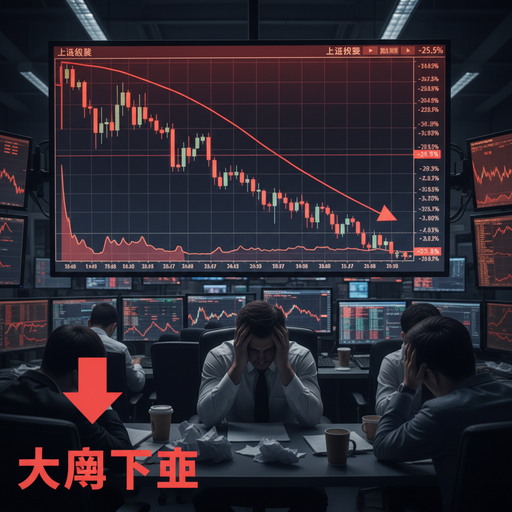
Source: CritpoTendencia Original Title: Beyond Price: Five On-Chain Metrics to Assess the True Health of a Protocol in 2026 Original Link: In the dynamic ecosystem of digital assets, price is often the absolute protagonist of headlines and social media. However, by January 2026, market maturity has shown that price action is often an illusion: a lagging indicator that reacts to events already processed by the network’s deep infrastructure.
For the sophisticated investor, the true pulse of a project is not found in exchange chart candles but in the immutable transparency of the blockchain.
Below, we explore a fundamental analysis methodology based on five on-chain metrics that provide a high-fidelity view of the real health of any protocol, allowing differentiation between speculative noise and intrinsic value.
1. Spent Output Profit Ratio (SOPR): The Compass of Collective Psychology
Price tells us how much an asset is worth, but the SOPR (Spent Output Profit Ratio) tells us how its holders feel. This metric calculates the ratio between the value of an asset at the time of sale and its value at the time of purchase.
In the current 2026 landscape, where volatility has been moderated by institutional capital inflows, SOPR has become a precision tool. A value above 1 indicates that, on average, participants are selling at a profit. Conversely, a value below 1 signals selling at a loss, often preceding market capitulation.
The key lies in observing the 1 level as a psychological support. If the price drops but SOPR remains bouncing at the equilibrium level, we are looking at a market with strong hands refusing to realize losses, a much more powerful health indicator than any technical price rebound.
2. Developer Retention Rate: Capital Follows Talent
One of the harsh realities of the blockchain industry is that financial capital is volatile, but intellectual capital is loyal. In 2026, open-source repository analysis has solidified as a pillar of fundamental analysis.
A project may have a multimillion-dollar market cap, but if its developer retention rate decreases, the protocol is, technically, a financial zombie.
Counting commits is not enough, as they can be artificially inflated. Deep analysis must focus on full-time active developers and the complexity of integrated innovations.
A network that continues attracting technical talent despite a bearish price trend is building the infrastructure that will support the next bullish cycle. Code is the foundation of value; without technical evolution, price is just an empty shell.
3. Net Flows of Exchanges vs. Autonomous Custody: The Signal of Real Scarcity
The flow of assets to and from centralized exchanges is perhaps the most direct indicator of intent. In 2026, under a stricter global regulatory framework, the movement of assets toward autonomous custody (cold wallets) has ceased to be a niche practice and has become the standard for institutional treasuries.
When we observe consistent negative net flows in exchanges—more withdrawals than deposits—the market is sending a clear signal: investors are withdrawing their supply from the available-for-sale market. This supply shock is the silent fuel for sustained price increases.
While a price rise with positive flows toward exchanges is often a liquidity trap, a price drop accompanied by massive withdrawals to self-custody suggests strategic accumulation that the market has not yet reflected in its valuation.
4. Adjusted Total Value Locked (TVL): Measuring Utility, Not Hype
The TVL (Total Value Locked) has long been the reigning metric of decentralized finance (DeFi). However, its vulnerability to the volatility of the underlying asset’s price makes it misleading. In 2026, analysts have shifted to using the adjusted TVL.
This metric does not measure value in dollars but in units of deposited assets. A protocol holding 1 million units of its main asset locked, even if the price of that asset drops 20%, demonstrates exceptional stickiness or user loyalty.
If nominal TVL falls but TVL in units increases, the ecosystem is gaining market share and real utility, setting the stage for aggressive revaluation when market sentiment shifts. Utility is the only antidote to empty speculation.
5. Active Addresses Ratio and Money Velocity: Metcalfe’s Law in Action
Finally, the health of a network is measured by its usage. Metcalfe’s Law states that the value of a network is proportional to the square of its users. However, in an environment where accounts can be automated, focus should be on unique active addresses conducting significant transactions.
Adding to this is the chain’s money velocity: how frequently units of an asset change hands. An extremely high velocity may indicate short-term speculative rotation, while very low velocity could suggest stagnation.
The sweet spot is steady growth in active addresses accompanied by moderate velocity, indicating that the asset is being used as a medium of exchange or store of value, not just as a casino chip.
Toward a More Sophisticated Investor
The digital asset market in 2026 does not forgive improvisation. The era of investing solely based on social media sentiment or candlestick charts is behind us, surpassed by the radical transparency offered by the blockchain itself.
Understanding that price is simply a reflection of a complex machinery of on-chain data allows investors to act with conviction amid uncertainty. SOPR, talent retention, custody flows, adjusted TVL, and organic address activity form a quintet of metrics that, when cross-referenced correctly, clear the market fog.
In the new digital economy, information is abundant, but the ability to filter signal from noise is the only asset that truly guarantees long-term financial survival.