مع تطور صناعة البلوكشين من هيكل سلسلة واحدة إلى نظام بيئي متعدد السلاسل، أصبحت السيولة والتطبيقات عبر شبكات البلوكشين المختلفة مجزأة بشكل متزايد. تشكل كل من إيثريوم، والطبقة 2، وكوزموس، وسولانا، وسلاسل التطبيقات أنظمة بيئية مستقلة، لكن التواصل المباشر بين هذه السلاسل غالبًا ما يكون مستحيلاً.
في البداية، كان الجسر يُستخدم أساسًا لنقل الأصول، مثل تحويل الرموز من إيثريوم إلى سلسلة أخرى. ولكن مع تزايد تعقيد تطبيقات Web3، لم يعد دعم التمويل المرحلي للأصول وحده كافيًا لتلبية احتياجات المطورين. أصبحت التطبيقات الآن تتطلب استدعاءات عقود ذكية عبر السلاسل، ومزامنة الحالة بين السلاسل، وإدارة سيولة موحدة.
في ظل هذه الخلفية، برزت بروتوكولات التوافقية عبر السلاسل كمكون أساسي في البنية التحتية لـ Web3. يسعى السوق إلى إنشاء طبقة اتصال تشبه "إنترنت البلوكشينات"، بحيث تتفاعل الشبكات المختلفة مع بعضها مثل خوادم الإنترنت.
تحليل موجز ومقارنة الفروق الرئيسية بين Axelar وLayerZero
باعتبارها شبكة توافقية لا مركزية عبر السلاسل، تتيح Axelar التواصل بين الرسائل والأصول عبر شبكات بلوكشين مختلفة من خلال شبكة مدققي PoS مستقلة. وتعتمد آلية تمرير الرسائل العام (GMP) كآلية أساسية، مما يسمح للمطورين باستدعاء العقود الذكية مباشرة عبر السلاسل. على عكس بروتوكولات الجسور التقليدية، تركز Axelar على "التنسيق بين تطبيقات السلاسل" وليس فقط على تحويل الرموز.
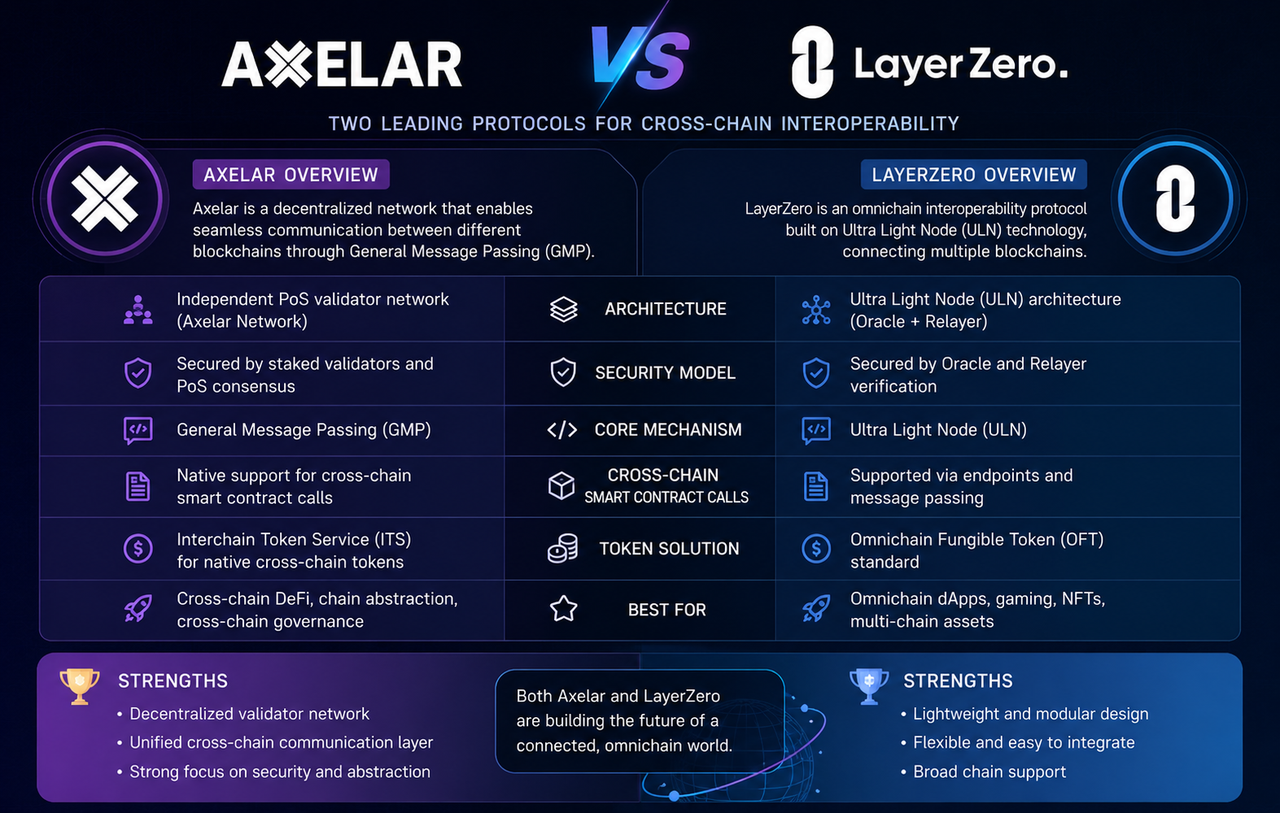
أما LayerZero، فهو بروتوكول إرسال رسائل متعدد الشبكات، صُمم لتمكين التواصل خفيف الوزن بين سلاسل بلوكشين مختلفة. على عكس العقد الخفيفة الكاملة، تعتمد العقدة فائقة الخفة (ULN) كبنية أساسية ولا تخزن بيانات رأس الكتلة الكاملة على السلسلة، بل تستخدم أوراكل ومرحّل لتوفير إثباتات الكتلة وإثباتات المعاملات على التوالي.
| بُعد المقارنة |
Axelar |
LayerZero |
| التموضع الأساسي |
شبكة تواصل لا مركزية عبر السلاسل |
بروتوكول إرسال رسائل متعدد الشبكات |
| الآلية الأساسية |
تمرير الرسائل العام (GMP) |
العقدة فائقة الخفة (ULN) |
| طريقة التحقق |
شبكة مدققي PoS مستقلة |
تحقق مزدوج من أوراكل ومرحّل |
| نموذج الأمان |
يعتمد على تخزين المدققين وإجماع PoS |
يعتمد على التحقق المعياري للرسائل |
| نهج اللامركزية |
أمان مشترك على مستوى الشبكة |
هيكل أمان قابل للتكوين |
| هل يمتلك سلسلته الخاصة؟ |
نعم، شبكة Axelar |
لا، لا توجد سلسلة رئيسية مستقلة |
| حل الرموز عبر السلاسل |
خدمة الرموز بين السلاسل (ITS) |
رمز قابل للاستبدال متعدد الشبكات (OFT) |
| تجربة المطور |
طبقة اتصال وAPI موحدان |
أكثر معيارية وقابلية للتخصيص |
| السيناريوهات المناسبة |
تجريد السلسلة، DeFi عبر السلاسل، حوكمة عبر السلاسل |
ألعاب متعددة الشبكات، NFTs، أصول متعددة السلاسل |
ما الفروق في آليات التحقق بين Axelar وLayerZero؟
تُعد آلية التحقق من أبرز الفروق بين البروتوكولين.
تستخدم Axelar شبكة تحقق PoS مستقلة لضمان أمان التبادل عبر السلاسل، حيث يُطلب من المدققين تخزين رموز AXL والتأكيد الجماعي على صحة الأحداث عبر السلاسل. وبالتالي، يعتمد أمان Axelar على شبكة التحقق الخاصة بها.
أما LayerZero فيعتمد نموذج تحقق مزدوج من أوراكل ومرحّل. تتولى الأوراكل توفير بيانات رأس الكتلة، بينما يوفر المرحّل إثباتات المعاملات. وعند تطابق البيانات من الطرفين، تجتاز الرسالة عملية التحقق.
من منظور التصميم، تميل Axelar نحو "شبكة تحقق مشتركة"، بينما يميل LayerZero نحو "بنية تحقق معيارية".
ما الفروق في بنية الرسائل عبر السلاسل بين Axelar وLayerZero؟
تدور اتصالات Axelar عبر السلاسل بشكل رئيسي حول GMP، بهدف تمكين استدعاءات العقود الذكية عبر السلاسل ومزامنة الحالة بينها.
يمكن للمطورين استخدام Axelar لإرسال رسائل معقدة عبر شبكات بلوكشين مختلفة، وتفعيل تنفيذ المنطق في العقود الذكية على السلسلة الهدف. لذلك، تناسب Axelar تطبيقات DeFi عبر السلاسل، والحوكمة بين السلاسل، وتطبيقات تجريد السلسلة.
في المقابل، يركز LayerZero على إرسال الرسائل نفسه. يمكن للمطورين بناء تطبيقات متعددة الشبكات استنادًا إلى نقاط النهاية الخاصة به، وتحديد منطق التحقق من الرسائل بحرية.
ببساطة، تشبه Axelar "شبكة اتصال عبر السلاسل"، بينما يشبه LayerZero "إطار عمل بروتوكول رسائل عبر السلاسل".
ما الفروق في نماذج الأمان بين Axelar وLayerZero؟
يُعد نموذج الأمان من أكثر الجوانب التي تثير اهتمام متابعي بروتوكولات التبادل عبر السلاسل.
يعتمد أمان Axelar على شبكة مدققي PoS الخاصة بها. فإذا تصرف المدققون بشكل ضار، فقد يتم فرض عقوبة جزاء على رموز AXL المخزنة لديهم، مما يجعل منطق التصميم مشابهًا لشبكات البلوكشين العامة.
أما أمان LayerZero فيعتمد على استقلالية عمل الأوراكل والمرحّل. وإذا كان كلاهما تحت سيطرة كيان واحد، فقد تنشأ مخاطر. لذلك، يؤكد LayerZero على أن المطورين يمكنهم اختيار مجموعات مختلفة من الأوراكل والمرحّلات بحرية.
نظريًا، تؤكد Axelar على نموذج أمان موحد، بينما يؤكد LayerZero على بنية أمان قابلة للتكوين.
ما الفروق في تجربة المطور بين Axelar وLayerZero؟
تركز Axelar على توفير API موحد وتجريد للاتصالات عبر السلاسل، مما يسمح للمطورين ببناء تطبيقات عبر السلاسل بسرعة باستخدام GMP وITS (خدمة الرموز بين السلاسل).
يناسب إطار التطوير الخاص بها السيناريوهات التي تتطلب منطقًا معقدًا بين السلاسل، مثل المبادلات عبر السلاسل، والحوكمة عبر السلاسل، ومحافظ تجريد السلسلة.
أما LayerZero فيميل نحو نهج تطوير معياري، حيث يمكن للمطورين تخصيص المنطق عبر السلاسل بناءً على الرموز القابلة للاستبدال متعددة الشبكات (OFT) ونقاط النهاية.
لذلك، يوفر LayerZero مرونة أكبر، بينما تتفوق Axelar في تجربة اتصال موحدة.
ما الفروق في اتجاه النظام البيئي بين Axelar وLayerZero؟
ترتبط Axelar ارتباطًا وثيقًا بكوزموس، وDeFi متعدد السلاسل، والنظام البيئي لتجريد السلسلة، مع تركيز رئيسي على الاتصالات عبر السلاسل، والسيولة عبر السلاسل، وطبقة الأصول الموحدة.
تشكل نظام بيئي حول Axelar يشمل Squid وITS والبنية التحتية متعددة السلاسل.
أما LayerZero، فقد توسع بسرعة في اتجاه التطبيقات متعددة الشبكات والأصول متعددة السلاسل. تعتمد العديد من مشاريع GameFi وNFT والرموز عبر السلاسل على LayerZero لبناء تطبيقات متعددة الشبكات.
على الرغم من أن كلا البروتوكولين يهدفان إلى التوافقية عبر السلاسل، إلا أن تركيز تطوير النظام البيئي لديهما ليس متماثلًا.
أيهما أكثر لامركزية: Axelar أم LayerZero؟
لا توجد إجابة قاطعة على هذا السؤال، لأن البروتوكولين يعرفان "اللامركزية" بشكل مختلف.
تتجلى لامركزية Axelar بشكل رئيسي في شبكة المدققين المستقلة وآلية إجماع PoS، مع بنية أقرب إلى شبكات البلوكشين التقليدية.
أما LayerZero فيؤكد على نموذج تحقق قابل للتكوين، مما يسمح للمطورين باختيار الأوراكل والمرحّل بحرية. لذلك، تعتمد درجة لامركزيته جزئيًا على كيفية تكوين المطورين لهيكل التحقق.
يمثل البروتوكولان فلسفات أمان وهندسة مختلفة في مجال بروتوكولات التبادل عبر السلاسل.
ما السيناريوهات المناسبة لـ Axelar وLayerZero على التوالي؟
Axelar أكثر ملاءمة للسيناريوهات التي تتطلب منطقًا معقدًا عبر السلاسل وطبقة اتصال موحدة، مثل تجريد السلسلة، وDeFi عبر السلاسل، وتطبيقات العقود الذكية عبر السلاسل.
LayerZero أكثر ملاءمة للمشاريع التي تحتاج إلى إرسال رسائل مرن وإدارة رموز متعددة الشبكات، مثل الألعاب متعددة الشبكات، NFTs، وبروتوكولات الأصول عبر السلاسل.
ملخص
يمثل كل من Axelar وLayerZero بروتوكولات مهمة في مجال التوافقية عبر السلاسل في Web3، لكنهما يتبعان نهجًا تقنيًا مختلفًا.
تبني Axelar طبقة اتصال موحدة عبر السلاسل من خلال شبكة تحقق PoS وGMP، مع التركيز على استدعاءات العقود الذكية عبر السلاسل والتنسيق بين تطبيقات السلاسل. في المقابل، يحقق LayerZero آلية إرسال رسائل أكثر خفة من خلال العقدة فائقة الخفة (ULN) والبنية التحقق المعيارية.
الأسئلة الشائعة
ما الفرق بين GMP وإرسال رسائل LayerZero؟
يركز GMP أكثر على استدعاءات العقود الذكية عبر السلاسل، بينما يركز LayerZero أكثر على إرسال الرسائل خفيف الوزن.
هل LayerZero أخف من Axelar؟
من منظور التصميم المعماري، يؤكد نموذج ULN في LayerZero على التحقق خفيف الوزن.
هل Axelar أشبه بشبكة بلوكشين؟
نعم. لدى Axelar شبكة مدققين مستقلة وآلية إجماع PoS خاصة بها، مما يجعلها أقرب إلى طبقة عبر السلاسل.
هل يدعم LayerZero الرموز متعددة الشبكات؟
نعم. يوفر LayerZero نموذج الرمز القابل للاستبدال متعدد الشبكات (OFT).
أي بروتوكول أكثر ملاءمة لتطبيقات تجريد السلسلة؟
لدى Axelar تركيز أكبر على الاتصالات الموحدة عبر السلاسل وتجريد السلسلة، على الرغم من أن المتطلبات قد تختلف بين المشاريع المختلفة.