#DollarIndexBreaksBelow99
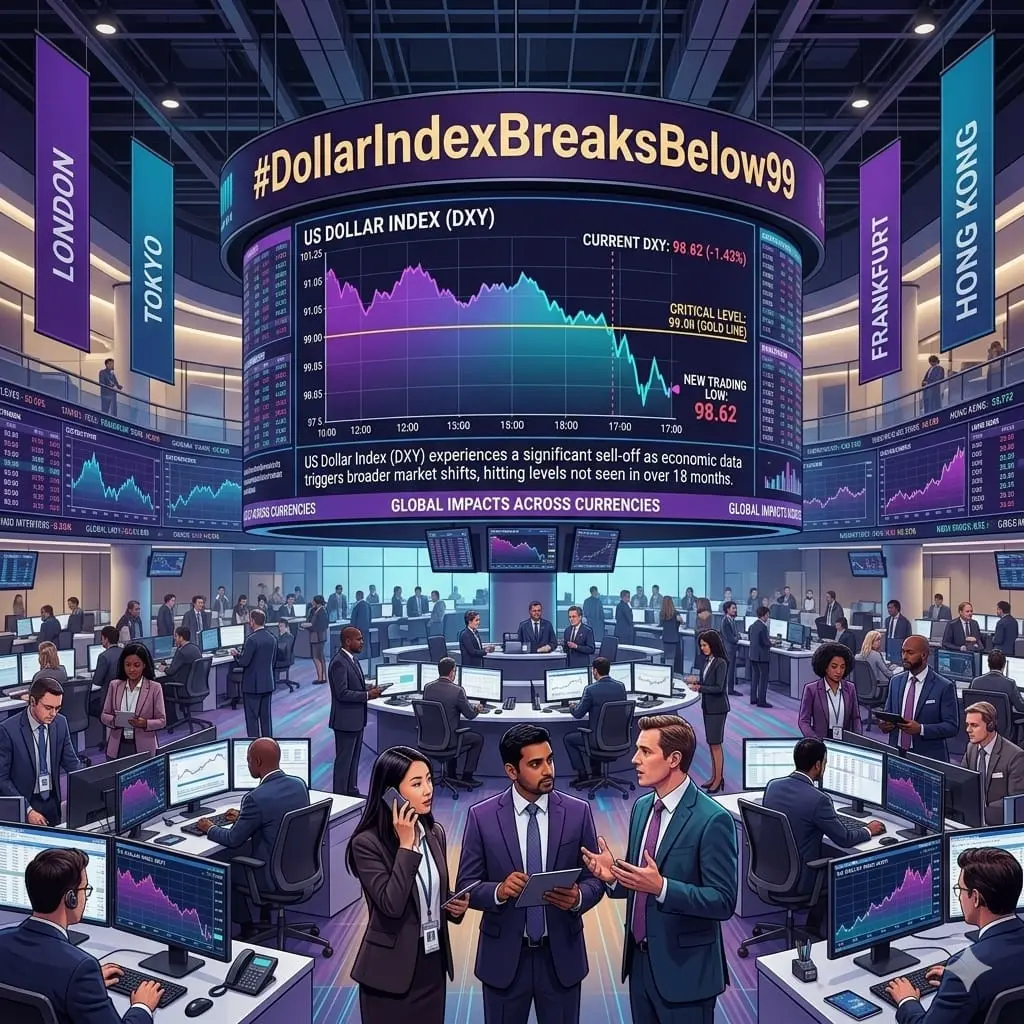
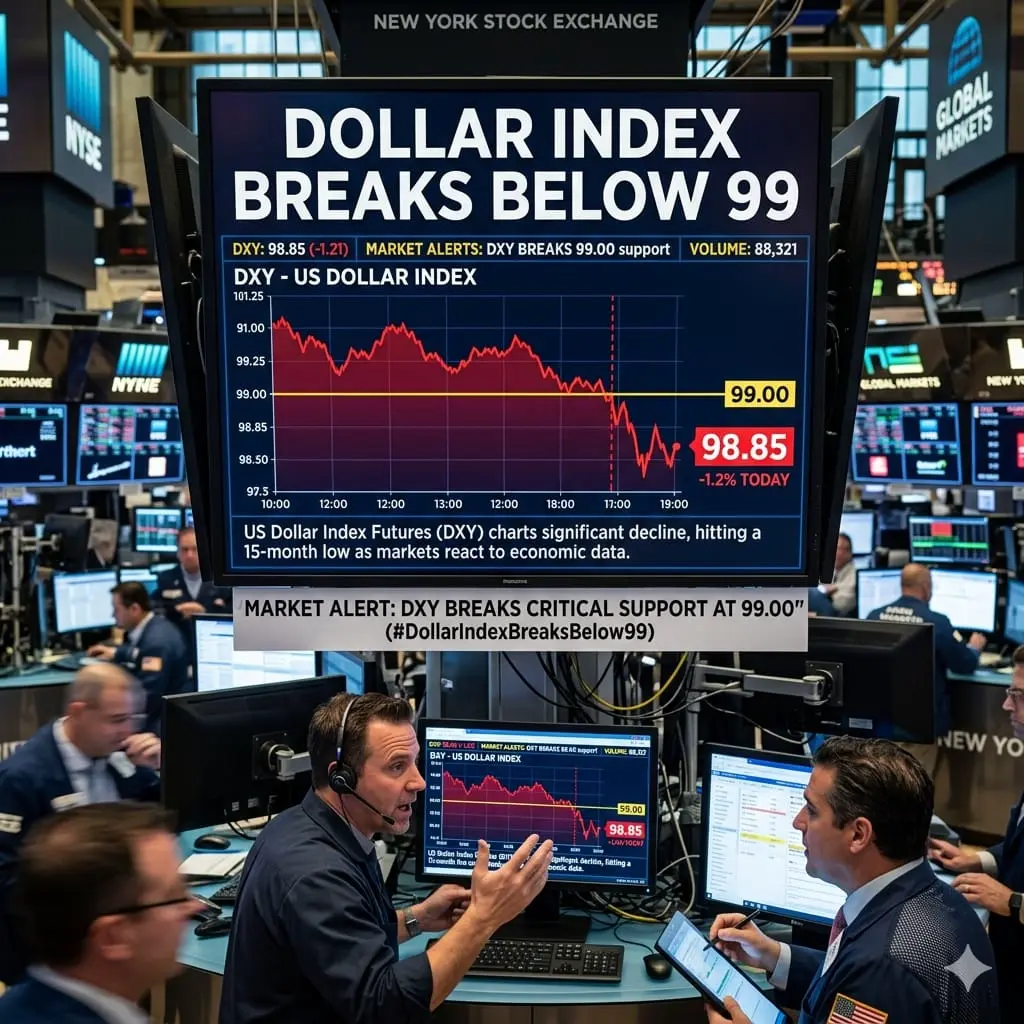
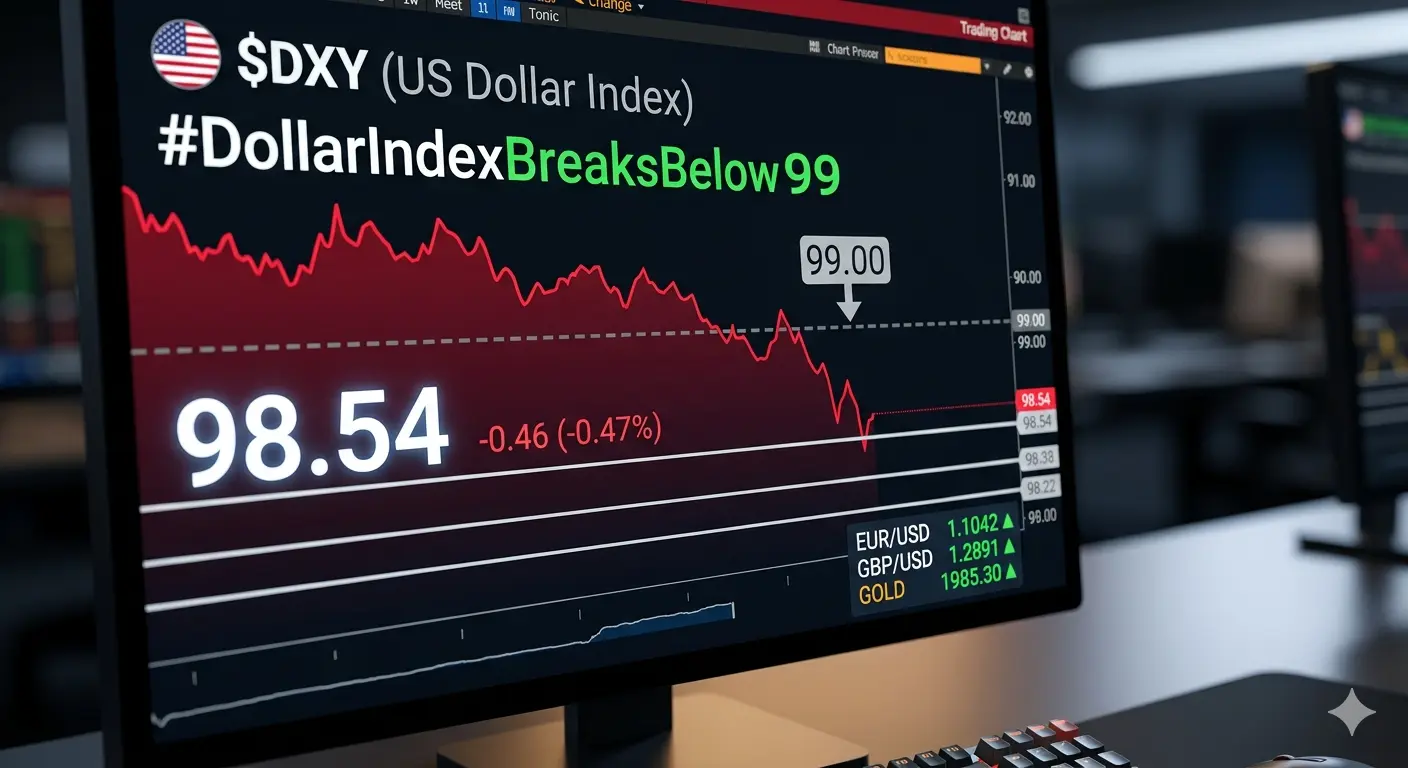
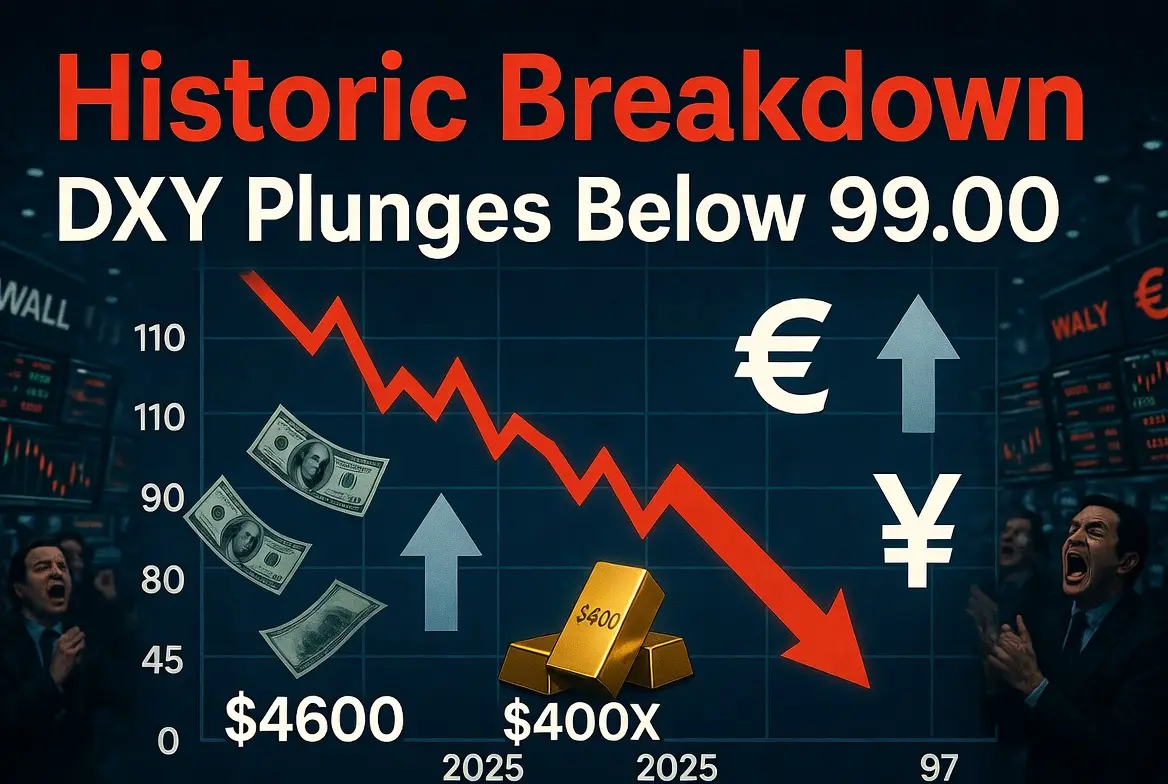
The U.S. Dollar Index breaking below the critical 99 level is becoming one of the most important macroeconomic developments shaping global financial markets in 2026. Currency markets are often overlooked by retail investors compared to stocks, crypto, or commodities, but in reality the dollar remains the central liquidity engine of the global financial system. When the Dollar Index, commonly known as DXY, experiences a major structural breakdown, the impact spreads across nearly every major asset class including Bitcoin, gold, equities, emerging markets, commodities, and global capital flows.
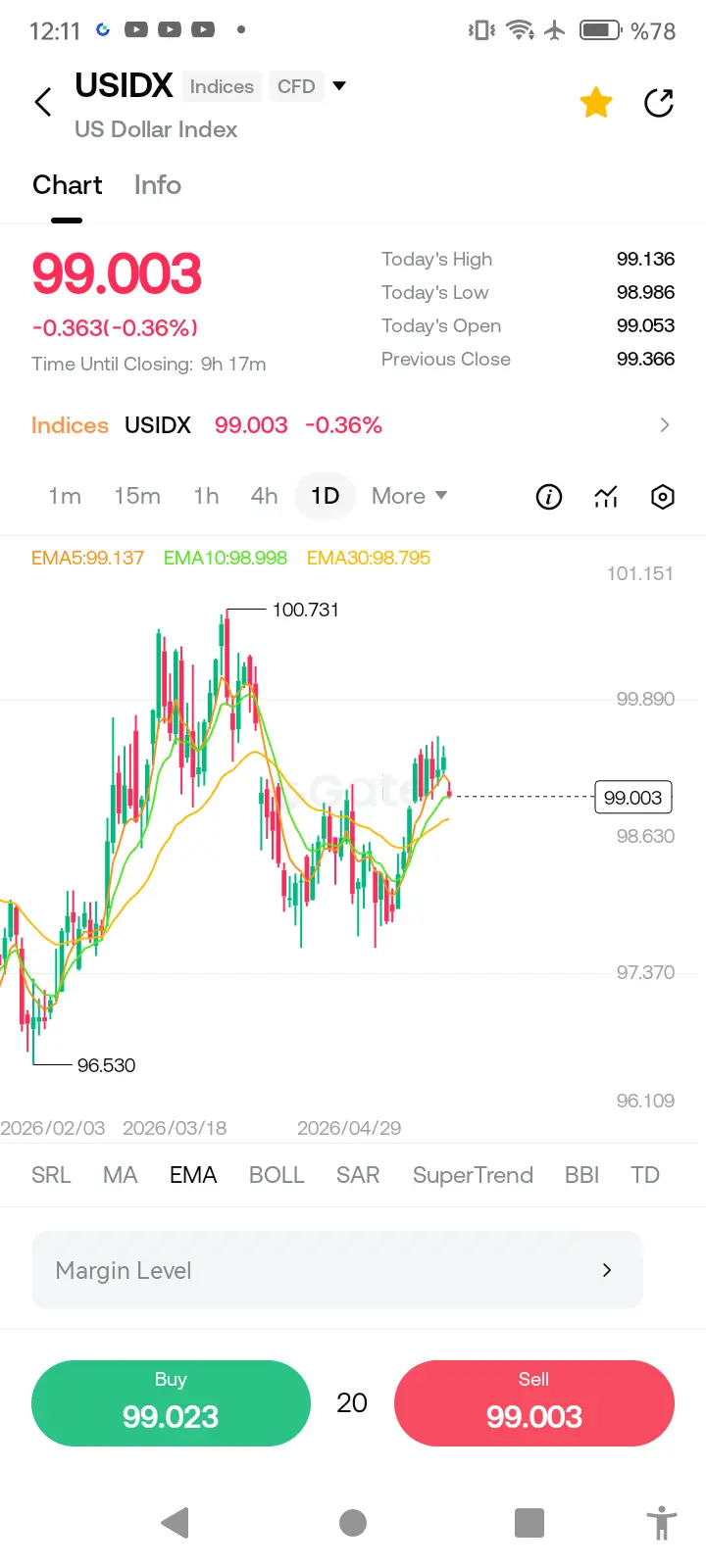
The move below 99 is not simply a technical milestone. It represents a significant psychological and macroeconomic shift in how investors are pricing U.S. growth expectations, inflation dynamics, Federal Reserve policy trajectories, and international liquidity conditions. Markets are increasingly interpreting dollar weakness as a signal that the aggressive monetary tightening era may be transitioning toward a more accommodative phase later in the cycle.
Historically, the dollar performs strongest during periods of economic uncertainty, elevated Treasury yields, global stress, and restrictive Federal Reserve policy. Investors typically rotate toward dollar-denominated assets because of liquidity depth, perceived safety, and higher yield advantages. Over the last several years, rising interest rates and inflation fears pushed the DXY to elevated levels as global capital flowed aggressively into U.S. fixed-income markets.
However, macro conditions are beginning to evolve rapidly. Inflation pressures are cooling gradually in several major economies, energy market volatility has stabilized compared to earlier geopolitical shock phases, and investors increasingly expect central banks to eventually pivot toward more supportive liquidity conditions. As these expectations strengthen, the dollar’s momentum has started weakening significantly.
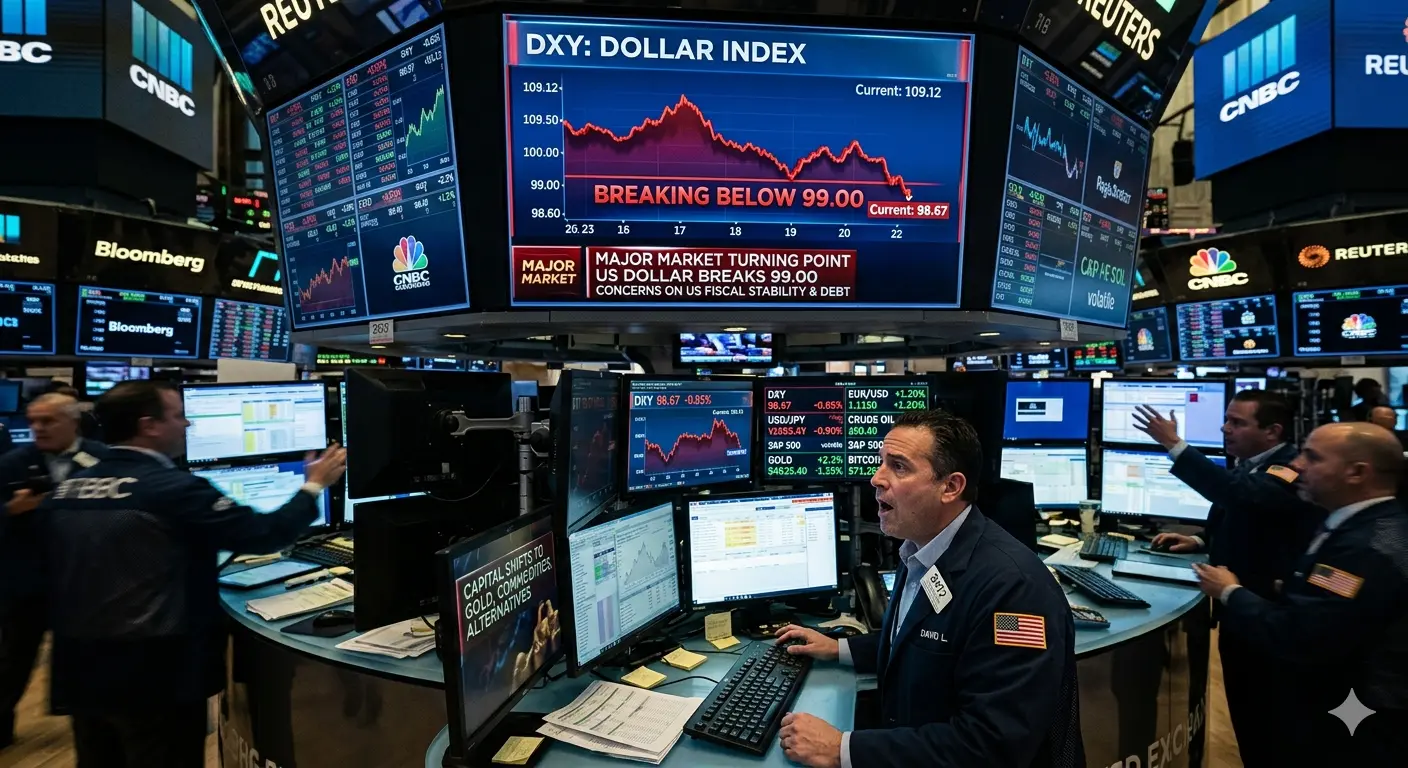
Breaking below 99 carries enormous symbolic importance because major psychological levels often influence institutional positioning behavior. Hedge funds, macro traders, sovereign wealth funds, and algorithmic systems closely monitor these structural price zones. Once major support breaks, capital allocation models frequently adjust aggressively, accelerating momentum across currency and risk-asset markets.
One of the biggest beneficiaries of dollar weakness is the cryptocurrency market, particularly Bitcoin. Crypto assets historically perform strongest during periods when global liquidity expectations improve and the dollar weakens. This relationship exists because a softer dollar generally loosens global financial conditions, encourages risk-taking behavior, and increases speculative participation across growth-oriented markets.
Bitcoin is increasingly behaving like a macro liquidity asset rather than a purely isolated digital experiment. When the dollar weakens and Treasury yields stabilize or decline, institutional appetite for alternative assets often increases. Capital begins rotating toward sectors offering higher growth potential, including technology equities, AI infrastructure, emerging markets, and cryptocurrencies.
This is one reason why Bitcoin frequently rallies during major DXY downtrends. Investors begin searching for assets capable of outperforming fiat currency debasement and monetary expansion cycles. Crypto markets, especially Bitcoin and Ethereum, tend to attract significant liquidity under these conditions.
Gold is another major beneficiary of dollar weakness. Precious metals historically maintain an inverse relationship with the dollar because gold becomes cheaper for international buyers when the dollar declines. Additionally, weakening confidence in fiat purchasing power often increases demand for hard assets viewed as long-term stores of value.
The simultaneous strength often seen in both gold and Bitcoin during dollar weakness periods is extremely important. It reflects growing investor concern regarding sovereign debt expansion, long-term currency dilution, and structural monetary instability across global financial systems.
Emerging markets also benefit significantly from a declining dollar. Many developing economies carry large amounts of dollar-denominated debt. When the dollar weakens, debt servicing pressure decreases, improving financial stability and capital inflow conditions for emerging markets. This dynamic can support equities, commodities, and local currencies across multiple regions simultaneously.
Another critical factor behind the DXY decline involves changing Federal Reserve expectations. Markets are increasingly debating whether the Fed will eventually move toward rate cuts later in 2026 as inflation moderates and growth slows. Even the anticipation of future easing can weaken the dollar because interest rate differentials begin shifting against it.
Bond markets play a central role in this process. Treasury yields heavily influence global capital allocation because they determine the relative attractiveness of holding dollar-denominated assets. If yields decline alongside weakening inflation expectations, international demand for dollars can soften substantially.
The interaction between the dollar and Treasury markets is particularly important for crypto traders. Rising yields typically pressure risk assets because safer fixed-income returns become more attractive. Falling yields combined with dollar weakness often create the opposite environment where speculative capital flows back into high-growth sectors.
Artificial intelligence and technology equities are also responding positively to softer dollar conditions. Growth-oriented sectors tend to benefit from improving liquidity expectations because future earnings become more valuable in lower-rate environments. This relationship increasingly influences crypto markets as well because AI narratives and blockchain ecosystems are becoming closely interconnected through infrastructure, compute markets, and decentralized data systems.
Another reason the DXY breakdown matters is global trade competitiveness. A weaker dollar can improve U.S. export competitiveness by making American goods cheaper internationally. At the same time, commodity-exporting nations often benefit because many global commodities including oil, metals, and agricultural products are priced in dollars.
Oil markets themselves react strongly to dollar shifts. Since crude oil is globally denominated in USD, a weaker dollar often supports higher commodity prices over time by increasing purchasing power for non-dollar economies. However, this relationship also depends heavily on geopolitical conditions and supply-demand dynamics.
Institutional positioning data suggests that many macro funds were heavily long the dollar during the tightening cycle. As market narratives shift toward potential monetary easing and softer inflation, some of these positions are now unwinding. Position unwinds can accelerate currency momentum significantly once key technical levels fail.
Another fascinating dimension of the current DXY weakness is the growing debate surrounding de-dollarization. Multiple countries continue exploring alternative settlement systems, bilateral trade agreements, and digital payment infrastructures designed to reduce long-term dependence on the U.S. dollar.
While the dollar remains overwhelmingly dominant globally, the expansion of central bank digital currencies, blockchain settlement systems, stablecoins, and cross-border payment innovation is slowly introducing new competitive dynamics into international finance.
Stablecoins themselves represent an interesting paradox in this environment. Most stablecoins remain dollar-backed, meaning crypto adoption simultaneously expands the global reach of dollar liquidity even while decentralized assets compete conceptually against traditional fiat systems.
The rise of tokenized finance could further transform how dollar liquidity circulates globally. Blockchain-based settlement systems allow capital to move faster and more efficiently across borders, potentially increasing both the influence and volatility transmission speed of dollar-related liquidity cycles.
Market psychology also plays a massive role during currency trend reversals. Once traders begin believing that a multi-year dollar uptrend may be ending, positioning behavior can change dramatically. Investors previously focused on defensive positioning may rotate toward emerging growth sectors, commodities, and international markets more aggressively.
For crypto specifically, DXY weakness often acts as a major sentiment catalyst. Retail participation increases, altcoin speculation expands, venture capital activity improves, and institutional inflows strengthen when liquidity conditions appear supportive.
Ethereum, AI-related tokens, Layer-2 ecosystems, gaming infrastructure, and decentralized finance platforms often outperform significantly during periods of improving macro liquidity. This is because speculative capital becomes more willing to move further out on the risk curve once monetary conditions loosen.
At the same time, traders should remain cautious about assuming straight-line continuation. Currency markets are highly sensitive to economic data, geopolitical developments, and central bank communication. Unexpected inflation rebounds, geopolitical shocks, or stronger-than-expected economic growth could quickly reverse dollar weakness.
Risk management therefore remains essential. Professional traders focus on confirmation signals including bond yields, inflation reports, labor market data, commodity prices, and Federal Reserve guidance before aggressively positioning around long-term macro trends.
The broader significance of #DollarIndexBreaksBelow99 ultimately lies in what it signals about the transition phase currently unfolding across global financial systems. Markets appear to be moving from an era dominated by aggressive tightening, inflation panic, and defensive capital positioning toward a potentially more liquidity-supportive environment.
If this transition continues, risk assets including Bitcoin, Ethereum, AI ecosystems, technology equities, commodities, and emerging markets could benefit substantially from renewed global capital expansion.
The dollar remains the heartbeat of global liquidity. When its trajectory changes meaningfully, the effects ripple through every corner of the financial world. The break below 99 may therefore become remembered as one of the key macro turning points shaping the next phase of the 2026 market cycle.
For traders and investors alike, monitoring the relationship between the Dollar Index, Treasury yields, Federal Reserve policy, and crypto liquidity conditions may remain one of the most important strategic frameworks for navigating the evolving global economy in the months ahead.
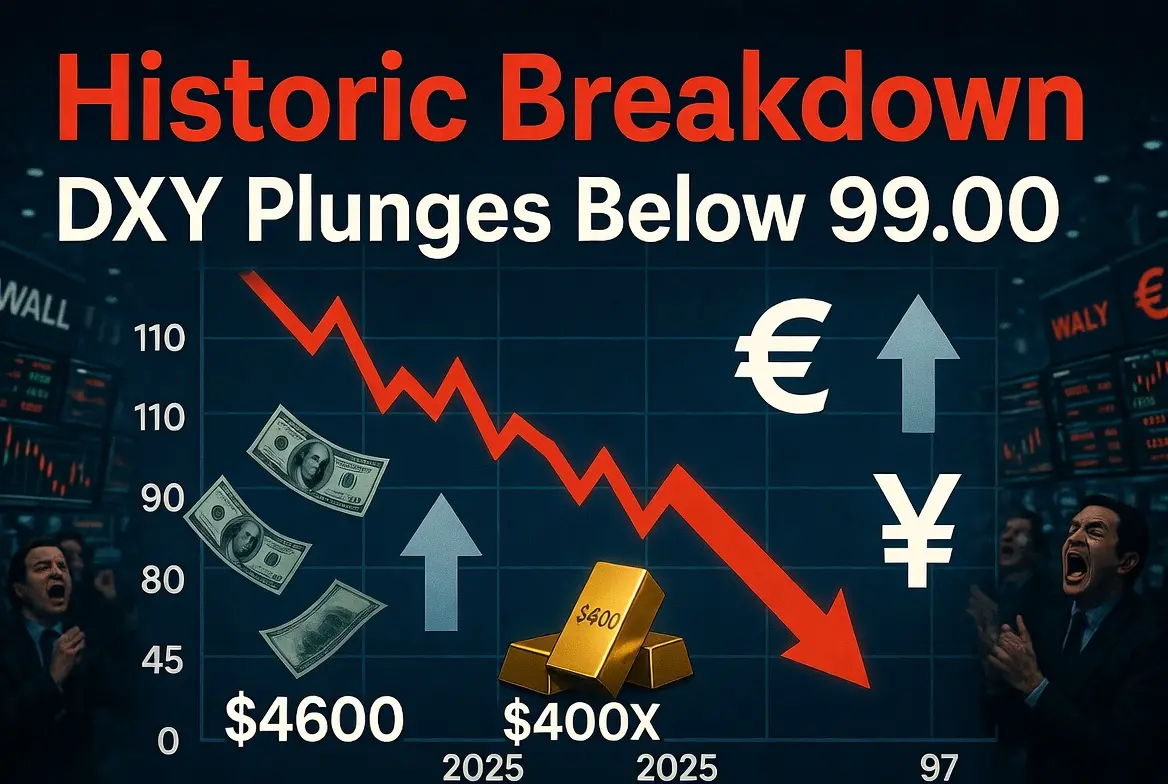
The U.S. Dollar Index breaking below the critical 99 level is becoming one of the most important macroeconomic developments shaping global financial markets in 2026. Currency markets are often overlooked by retail investors compared to stocks, crypto, or commodities, but in reality the dollar remains the central liquidity engine of the global financial system. When the Dollar Index, commonly known as DXY, experiences a major structural breakdown, the impact spreads across nearly every major asset class including Bitcoin, gold, equities, emerging markets, commodities, and global capital flows.
The move below 99 is not simply a technical milestone. It represents a significant psychological and macroeconomic shift in how investors are pricing U.S. growth expectations, inflation dynamics, Federal Reserve policy trajectories, and international liquidity conditions. Markets are increasingly interpreting dollar weakness as a signal that the aggressive monetary tightening era may be transitioning toward a more accommodative phase later in the cycle.
Historically, the dollar performs strongest during periods of economic uncertainty, elevated Treasury yields, global stress, and restrictive Federal Reserve policy. Investors typically rotate toward dollar-denominated assets because of liquidity depth, perceived safety, and higher yield advantages. Over the last several years, rising interest rates and inflation fears pushed the DXY to elevated levels as global capital flowed aggressively into U.S. fixed-income markets.
However, macro conditions are beginning to evolve rapidly. Inflation pressures are cooling gradually in several major economies, energy market volatility has stabilized compared to earlier geopolitical shock phases, and investors increasingly expect central banks to eventually pivot toward more supportive liquidity conditions. As these expectations strengthen, the dollar’s momentum has started weakening significantly.
Breaking below 99 carries enormous symbolic importance because major psychological levels often influence institutional positioning behavior. Hedge funds, macro traders, sovereign wealth funds, and algorithmic systems closely monitor these structural price zones. Once major support breaks, capital allocation models frequently adjust aggressively, accelerating momentum across currency and risk-asset markets.
One of the biggest beneficiaries of dollar weakness is the cryptocurrency market, particularly Bitcoin. Crypto assets historically perform strongest during periods when global liquidity expectations improve and the dollar weakens. This relationship exists because a softer dollar generally loosens global financial conditions, encourages risk-taking behavior, and increases speculative participation across growth-oriented markets.
Bitcoin is increasingly behaving like a macro liquidity asset rather than a purely isolated digital experiment. When the dollar weakens and Treasury yields stabilize or decline, institutional appetite for alternative assets often increases. Capital begins rotating toward sectors offering higher growth potential, including technology equities, AI infrastructure, emerging markets, and cryptocurrencies.
This is one reason why Bitcoin frequently rallies during major DXY downtrends. Investors begin searching for assets capable of outperforming fiat currency debasement and monetary expansion cycles. Crypto markets, especially Bitcoin and Ethereum, tend to attract significant liquidity under these conditions.
Gold is another major beneficiary of dollar weakness. Precious metals historically maintain an inverse relationship with the dollar because gold becomes cheaper for international buyers when the dollar declines. Additionally, weakening confidence in fiat purchasing power often increases demand for hard assets viewed as long-term stores of value.
The simultaneous strength often seen in both gold and Bitcoin during dollar weakness periods is extremely important. It reflects growing investor concern regarding sovereign debt expansion, long-term currency dilution, and structural monetary instability across global financial systems.
Emerging markets also benefit significantly from a declining dollar. Many developing economies carry large amounts of dollar-denominated debt. When the dollar weakens, debt servicing pressure decreases, improving financial stability and capital inflow conditions for emerging markets. This dynamic can support equities, commodities, and local currencies across multiple regions simultaneously.
Another critical factor behind the DXY decline involves changing Federal Reserve expectations. Markets are increasingly debating whether the Fed will eventually move toward rate cuts later in 2026 as inflation moderates and growth slows. Even the anticipation of future easing can weaken the dollar because interest rate differentials begin shifting against it.
Bond markets play a central role in this process. Treasury yields heavily influence global capital allocation because they determine the relative attractiveness of holding dollar-denominated assets. If yields decline alongside weakening inflation expectations, international demand for dollars can soften substantially.
The interaction between the dollar and Treasury markets is particularly important for crypto traders. Rising yields typically pressure risk assets because safer fixed-income returns become more attractive. Falling yields combined with dollar weakness often create the opposite environment where speculative capital flows back into high-growth sectors.
Artificial intelligence and technology equities are also responding positively to softer dollar conditions. Growth-oriented sectors tend to benefit from improving liquidity expectations because future earnings become more valuable in lower-rate environments. This relationship increasingly influences crypto markets as well because AI narratives and blockchain ecosystems are becoming closely interconnected through infrastructure, compute markets, and decentralized data systems.
Another reason the DXY breakdown matters is global trade competitiveness. A weaker dollar can improve U.S. export competitiveness by making American goods cheaper internationally. At the same time, commodity-exporting nations often benefit because many global commodities including oil, metals, and agricultural products are priced in dollars.
Oil markets themselves react strongly to dollar shifts. Since crude oil is globally denominated in USD, a weaker dollar often supports higher commodity prices over time by increasing purchasing power for non-dollar economies. However, this relationship also depends heavily on geopolitical conditions and supply-demand dynamics.
Institutional positioning data suggests that many macro funds were heavily long the dollar during the tightening cycle. As market narratives shift toward potential monetary easing and softer inflation, some of these positions are now unwinding. Position unwinds can accelerate currency momentum significantly once key technical levels fail.
Another fascinating dimension of the current DXY weakness is the growing debate surrounding de-dollarization. Multiple countries continue exploring alternative settlement systems, bilateral trade agreements, and digital payment infrastructures designed to reduce long-term dependence on the U.S. dollar.
While the dollar remains overwhelmingly dominant globally, the expansion of central bank digital currencies, blockchain settlement systems, stablecoins, and cross-border payment innovation is slowly introducing new competitive dynamics into international finance.
Stablecoins themselves represent an interesting paradox in this environment. Most stablecoins remain dollar-backed, meaning crypto adoption simultaneously expands the global reach of dollar liquidity even while decentralized assets compete conceptually against traditional fiat systems.
The rise of tokenized finance could further transform how dollar liquidity circulates globally. Blockchain-based settlement systems allow capital to move faster and more efficiently across borders, potentially increasing both the influence and volatility transmission speed of dollar-related liquidity cycles.
Market psychology also plays a massive role during currency trend reversals. Once traders begin believing that a multi-year dollar uptrend may be ending, positioning behavior can change dramatically. Investors previously focused on defensive positioning may rotate toward emerging growth sectors, commodities, and international markets more aggressively.
For crypto specifically, DXY weakness often acts as a major sentiment catalyst. Retail participation increases, altcoin speculation expands, venture capital activity improves, and institutional inflows strengthen when liquidity conditions appear supportive.
Ethereum, AI-related tokens, Layer-2 ecosystems, gaming infrastructure, and decentralized finance platforms often outperform significantly during periods of improving macro liquidity. This is because speculative capital becomes more willing to move further out on the risk curve once monetary conditions loosen.
At the same time, traders should remain cautious about assuming straight-line continuation. Currency markets are highly sensitive to economic data, geopolitical developments, and central bank communication. Unexpected inflation rebounds, geopolitical shocks, or stronger-than-expected economic growth could quickly reverse dollar weakness.
Risk management therefore remains essential. Professional traders focus on confirmation signals including bond yields, inflation reports, labor market data, commodity prices, and Federal Reserve guidance before aggressively positioning around long-term macro trends.
The broader significance of #DollarIndexBreaksBelow99 ultimately lies in what it signals about the transition phase currently unfolding across global financial systems. Markets appear to be moving from an era dominated by aggressive tightening, inflation panic, and defensive capital positioning toward a potentially more liquidity-supportive environment.
If this transition continues, risk assets including Bitcoin, Ethereum, AI ecosystems, technology equities, commodities, and emerging markets could benefit substantially from renewed global capital expansion.
The dollar remains the heartbeat of global liquidity. When its trajectory changes meaningfully, the effects ripple through every corner of the financial world. The break below 99 may therefore become remembered as one of the key macro turning points shaping the next phase of the 2026 market cycle.
For traders and investors alike, monitoring the relationship between the Dollar Index, Treasury yields, Federal Reserve policy, and crypto liquidity conditions may remain one of the most important strategic frameworks for navigating the evolving global economy in the months ahead.