

#HYPEOutperformsAgain
HYPE Outperforms Again — Institutional Flow, Liquidity Expansion, and Market Structure Shift
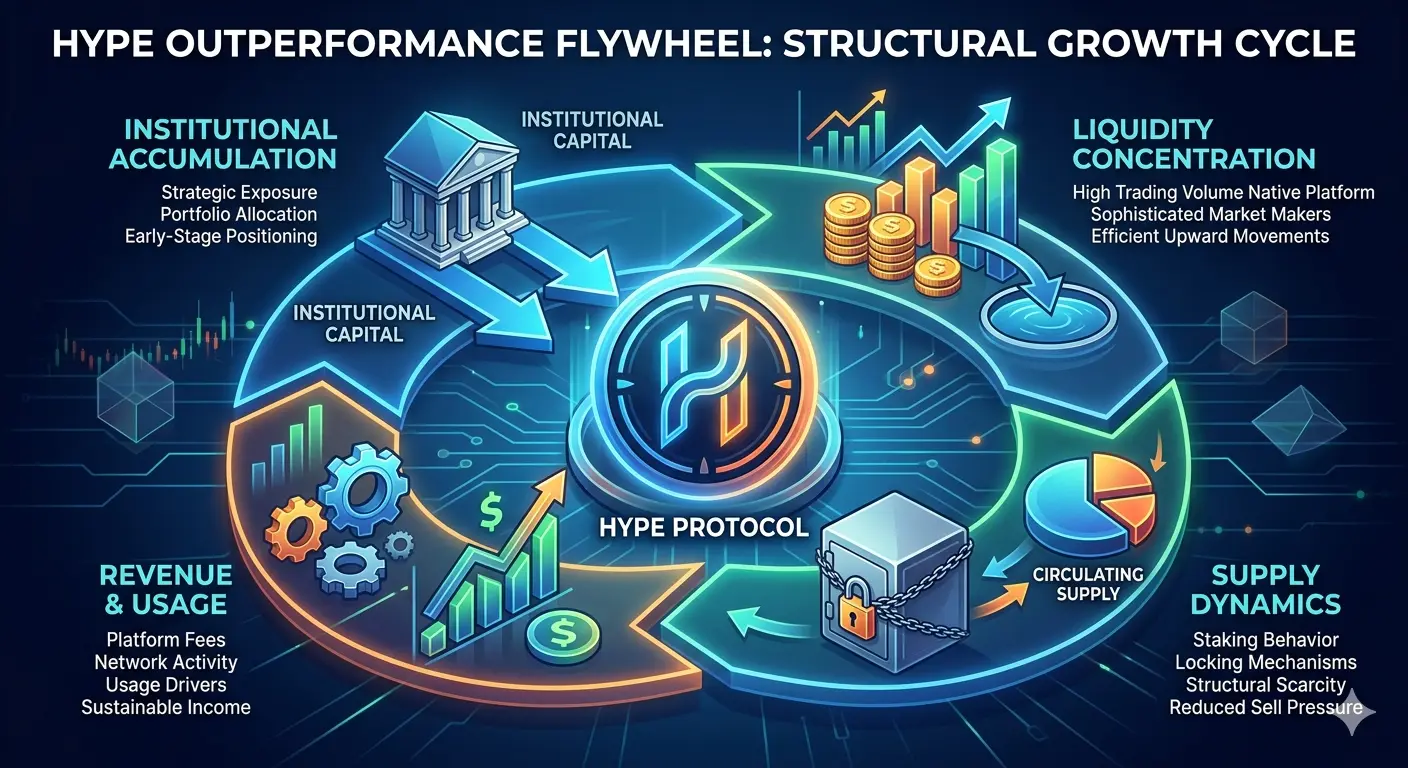
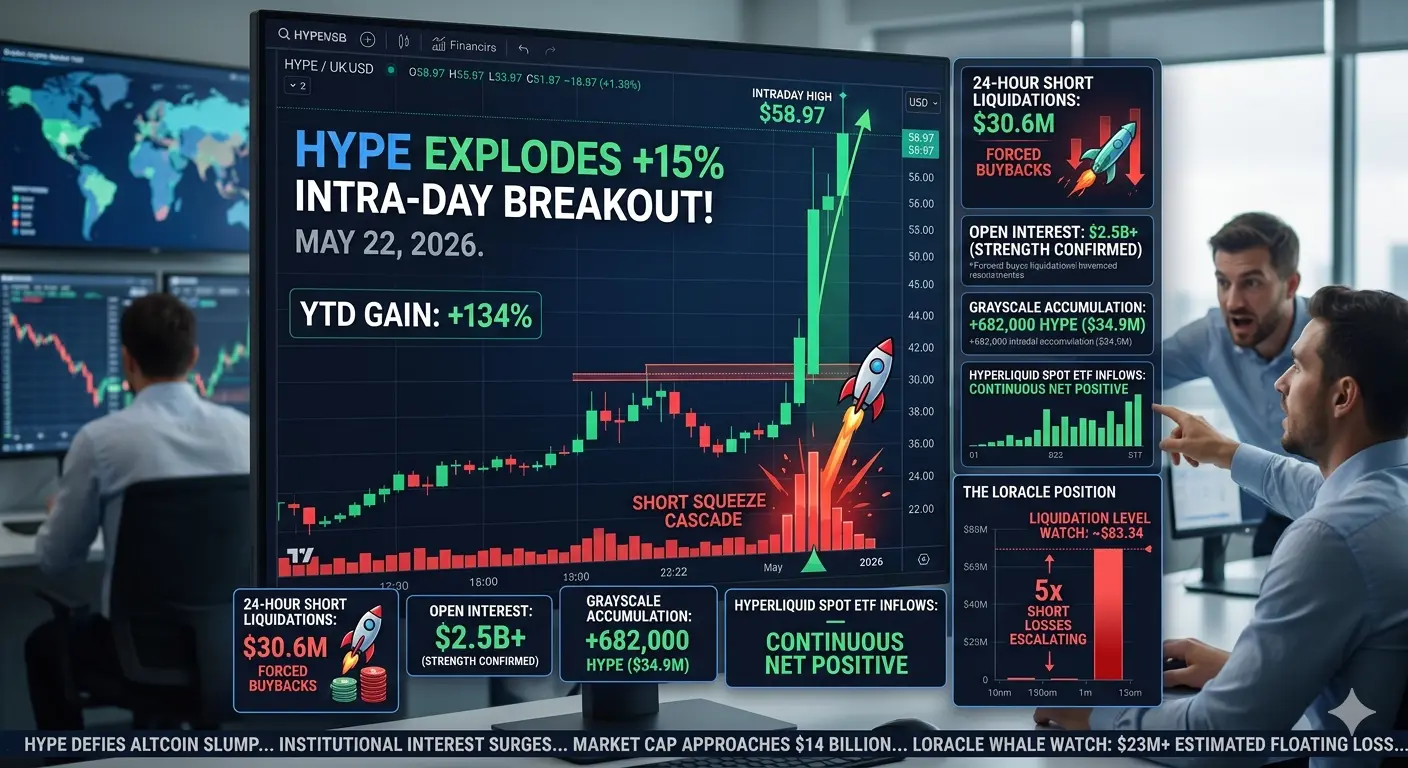
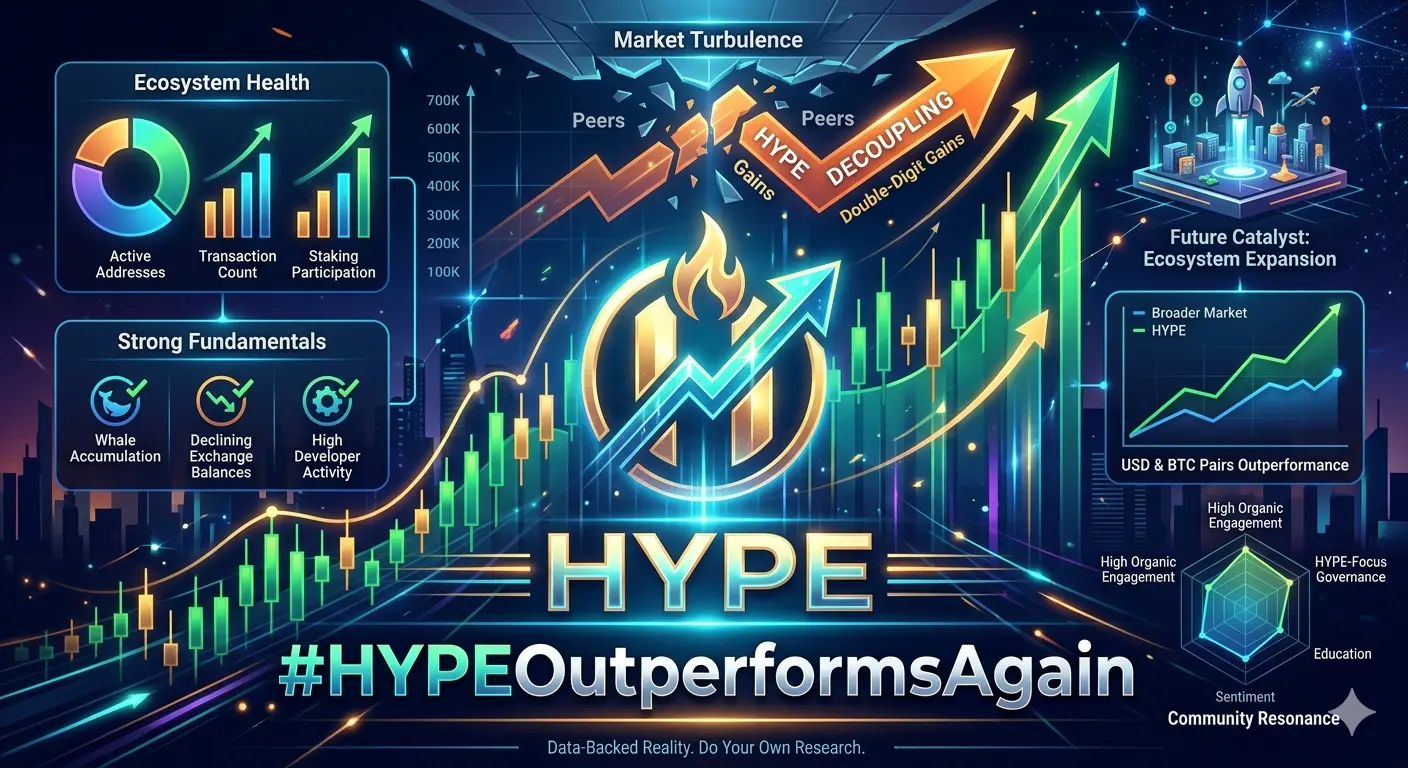
The continued outperformance of HYPE is not simply a short-term momentum event. It reflects a deeper structural narrative unfolding across the digital asset market, where institutional participation, liquidity concentration, and platform-level fundamentals are increasingly dictating price behavior. In this environment, assets like HYPE are beginning to behave less like speculative tokens and more like high-beta financial infrastructure plays tied to real usage, revenue generation, and capital inflow dynamics.
What makes this move important is not just the price performance itself, but the nature of the participants driving it. When outperforming assets are supported by institutional accumulation, staking behavior, ETF-linked exposure, and consistent liquidity inflows, the market begins to transition from narrative-driven speculation to structurally supported growth cycles.
---
Structural Drivers Behind HYPE Strength
The outperformance trend is being shaped by a combination of liquidity mechanics and institutional positioning. Unlike typical altcoin rallies driven purely by retail momentum, HYPE’s movement is increasingly aligned with deeper capital allocation strategies.
Key structural drivers include:
Continuous institutional accumulation across multiple entities
Staking behavior reducing circulating supply
Buyback and fee-driven demand mechanisms
Expanding derivatives and on-chain trading volume
Increasing integration into broader financial narratives
This combination creates a self-reinforcing loop where usage drives revenue, revenue supports demand, and demand tightens supply.
---
Liquidity Concentration and Market Impact
One of the most critical factors behind HYPE’s relative strength is liquidity concentration. In fragmented markets, capital tends to rotate into assets with stronger structural liquidity and clearer value capture mechanisms.
HYPE benefits from:
High trading volume concentration on its native platform
Strong participation from sophisticated market makers
Consistent flow of leveraged and spot demand
Reduced sell pressure due to staking mechanisms
This creates a liquidity environment where upward movements are more efficiently sustained compared to lower-utility assets.
---
Institutional Behavior and Capital Positioning
Institutional participants do not chase price — they follow structure. The ongoing outperformance suggests that larger capital allocators are increasingly treating HYPE as a strategic exposure rather than a speculative trade.
This behavior typically reflects:
Confidence in long-term protocol revenue generation
Preference for assets with embedded yield mechanisms
Strategic positioning ahead of broader market recognition cycles
Early-stage accumulation during relative undervaluation phases
When institutions position early, price action often follows a delayed but stronger expansion phase.
---
Supply Dynamics and Structural Scarcity
A key underlying factor supporting outperformance is supply-side compression. When circulating supply is continuously reduced through staking, locking mechanisms, and long-term holding behavior, even moderate demand increases can produce amplified price effects.
In this structure:
Available liquidity becomes more sensitive to inflows
Sell-side pressure weakens over time
Price discovery shifts upward faster during demand spikes
Volatility compresses before expansion phases
This is a classic setup seen in assets transitioning from retail-driven cycles to structurally supported markets.
---
Market Psychology: Momentum Reinforcement Cycle
Outperformance is also driven by behavioral feedback loops. As market participants observe consistent relative strength, capital rotation accelerates into the outperforming asset.
This creates:
FOMO-driven inflows from short-term traders
Trend-following participation from systematic strategies
Narrative reinforcement across social and trading channels
Increasing attention from macro-oriented participants
Once established, this cycle tends to sustain until macro liquidity conditions shift materially.
---
Relative Strength vs Broader Market Conditions
What makes HYPE’s performance notable is its behavior relative to broader crypto market conditions. In environments where most assets move in correlation with Bitcoin or macro liquidity, consistent outperformance indicates internal structural strength rather than passive beta exposure.
This divergence suggests:
Stronger internal demand than market average
Independent liquidity drivers
Higher resilience during volatility phases
Potential for continued relative outperformance if conditions persist
---
Risk Layer: Sustainability of Momentum
Despite strong structural signals, no outperformance cycle is linear. Key risks that could impact continuation include:
Broader crypto market liquidity contraction
Profit-taking after extended institutional accumulation phases
Derivative-driven volatility spikes
Macro tightening conditions impacting risk assets globally
Sustained performance will depend on whether underlying liquidity and usage metrics continue to expand at a consistent pace.
---
Final Perspective
HYPE’s continued outperformance is best understood as a reflection of evolving market structure rather than isolated price movement. The convergence of institutional participation, supply compression, and liquidity concentration is transforming its behavior into something closer to a high-performance financial asset within the digital ecosystem.
In such environments, price is no longer purely speculative — it becomes a reflection of structural capital flows and network-level demand dynamics.
The key takeaway is simple:
Outperformance in modern crypto markets is no longer random. It is increasingly engineered by liquidity, adoption, and institutional positioning — and HYPE is currently positioned within that framework.
HYPE Outperforms Again — Institutional Flow, Liquidity Expansion, and Market Structure Shift
The continued outperformance of HYPE is not simply a short-term momentum event. It reflects a deeper structural narrative unfolding across the digital asset market, where institutional participation, liquidity concentration, and platform-level fundamentals are increasingly dictating price behavior. In this environment, assets like HYPE are beginning to behave less like speculative tokens and more like high-beta financial infrastructure plays tied to real usage, revenue generation, and capital inflow dynamics.
What makes this move important is not just the price performance itself, but the nature of the participants driving it. When outperforming assets are supported by institutional accumulation, staking behavior, ETF-linked exposure, and consistent liquidity inflows, the market begins to transition from narrative-driven speculation to structurally supported growth cycles.
---
Structural Drivers Behind HYPE Strength
The outperformance trend is being shaped by a combination of liquidity mechanics and institutional positioning. Unlike typical altcoin rallies driven purely by retail momentum, HYPE’s movement is increasingly aligned with deeper capital allocation strategies.
Key structural drivers include:
Continuous institutional accumulation across multiple entities
Staking behavior reducing circulating supply
Buyback and fee-driven demand mechanisms
Expanding derivatives and on-chain trading volume
Increasing integration into broader financial narratives
This combination creates a self-reinforcing loop where usage drives revenue, revenue supports demand, and demand tightens supply.
---
Liquidity Concentration and Market Impact
One of the most critical factors behind HYPE’s relative strength is liquidity concentration. In fragmented markets, capital tends to rotate into assets with stronger structural liquidity and clearer value capture mechanisms.
HYPE benefits from:
High trading volume concentration on its native platform
Strong participation from sophisticated market makers
Consistent flow of leveraged and spot demand
Reduced sell pressure due to staking mechanisms
This creates a liquidity environment where upward movements are more efficiently sustained compared to lower-utility assets.
---
Institutional Behavior and Capital Positioning
Institutional participants do not chase price — they follow structure. The ongoing outperformance suggests that larger capital allocators are increasingly treating HYPE as a strategic exposure rather than a speculative trade.
This behavior typically reflects:
Confidence in long-term protocol revenue generation
Preference for assets with embedded yield mechanisms
Strategic positioning ahead of broader market recognition cycles
Early-stage accumulation during relative undervaluation phases
When institutions position early, price action often follows a delayed but stronger expansion phase.
---
Supply Dynamics and Structural Scarcity
A key underlying factor supporting outperformance is supply-side compression. When circulating supply is continuously reduced through staking, locking mechanisms, and long-term holding behavior, even moderate demand increases can produce amplified price effects.
In this structure:
Available liquidity becomes more sensitive to inflows
Sell-side pressure weakens over time
Price discovery shifts upward faster during demand spikes
Volatility compresses before expansion phases
This is a classic setup seen in assets transitioning from retail-driven cycles to structurally supported markets.
---
Market Psychology: Momentum Reinforcement Cycle
Outperformance is also driven by behavioral feedback loops. As market participants observe consistent relative strength, capital rotation accelerates into the outperforming asset.
This creates:
FOMO-driven inflows from short-term traders
Trend-following participation from systematic strategies
Narrative reinforcement across social and trading channels
Increasing attention from macro-oriented participants
Once established, this cycle tends to sustain until macro liquidity conditions shift materially.
---
Relative Strength vs Broader Market Conditions
What makes HYPE’s performance notable is its behavior relative to broader crypto market conditions. In environments where most assets move in correlation with Bitcoin or macro liquidity, consistent outperformance indicates internal structural strength rather than passive beta exposure.
This divergence suggests:
Stronger internal demand than market average
Independent liquidity drivers
Higher resilience during volatility phases
Potential for continued relative outperformance if conditions persist
---
Risk Layer: Sustainability of Momentum
Despite strong structural signals, no outperformance cycle is linear. Key risks that could impact continuation include:
Broader crypto market liquidity contraction
Profit-taking after extended institutional accumulation phases
Derivative-driven volatility spikes
Macro tightening conditions impacting risk assets globally
Sustained performance will depend on whether underlying liquidity and usage metrics continue to expand at a consistent pace.
---
Final Perspective
HYPE’s continued outperformance is best understood as a reflection of evolving market structure rather than isolated price movement. The convergence of institutional participation, supply compression, and liquidity concentration is transforming its behavior into something closer to a high-performance financial asset within the digital ecosystem.
In such environments, price is no longer purely speculative — it becomes a reflection of structural capital flows and network-level demand dynamics.
The key takeaway is simple:
Outperformance in modern crypto markets is no longer random. It is increasingly engineered by liquidity, adoption, and institutional positioning — and HYPE is currently positioned within that framework.