
#30YearTreasuryYieldBreaks5%
The Break Above 5% Is Changing Everything — Why Global Markets Are Entering a New Macro Regime
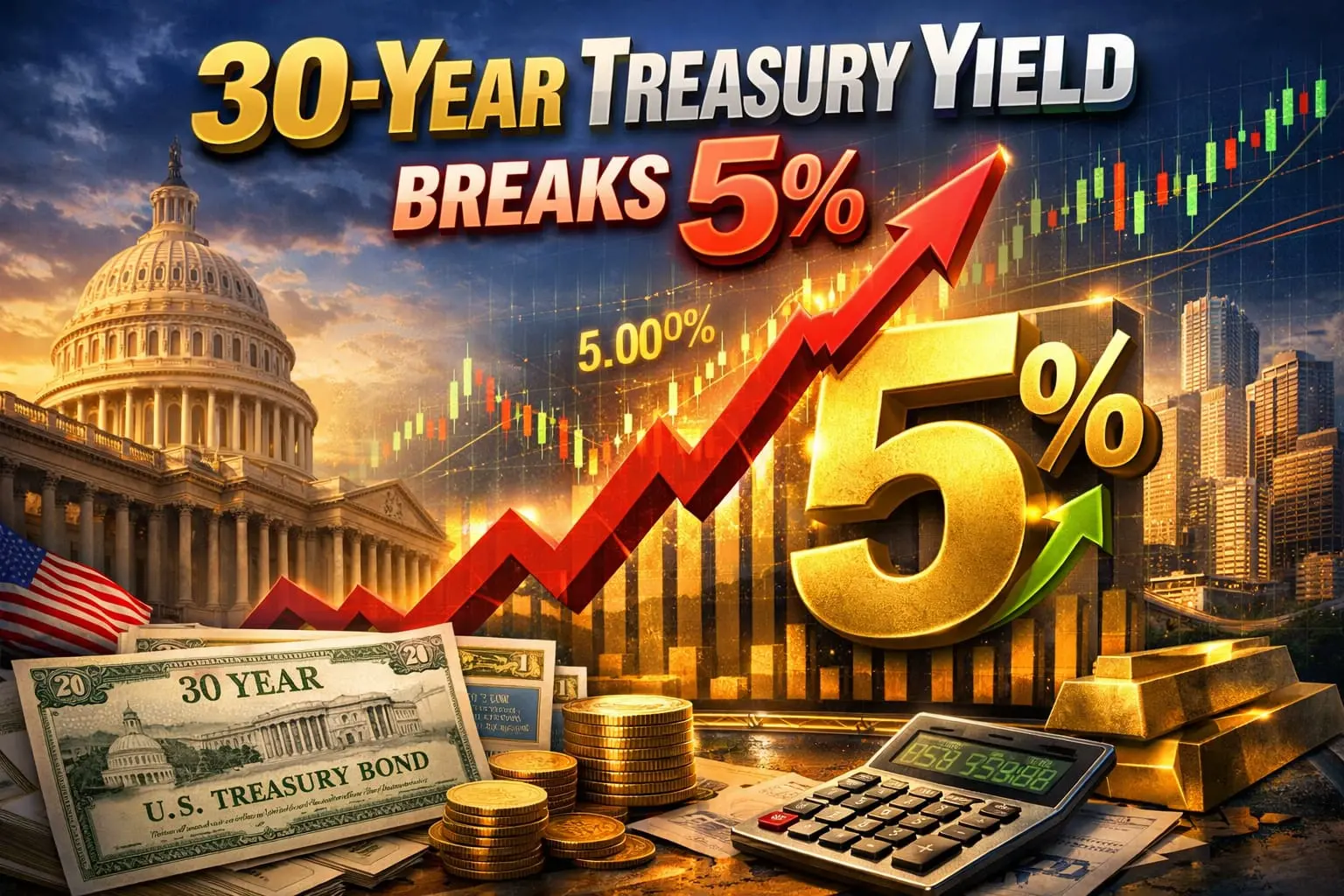
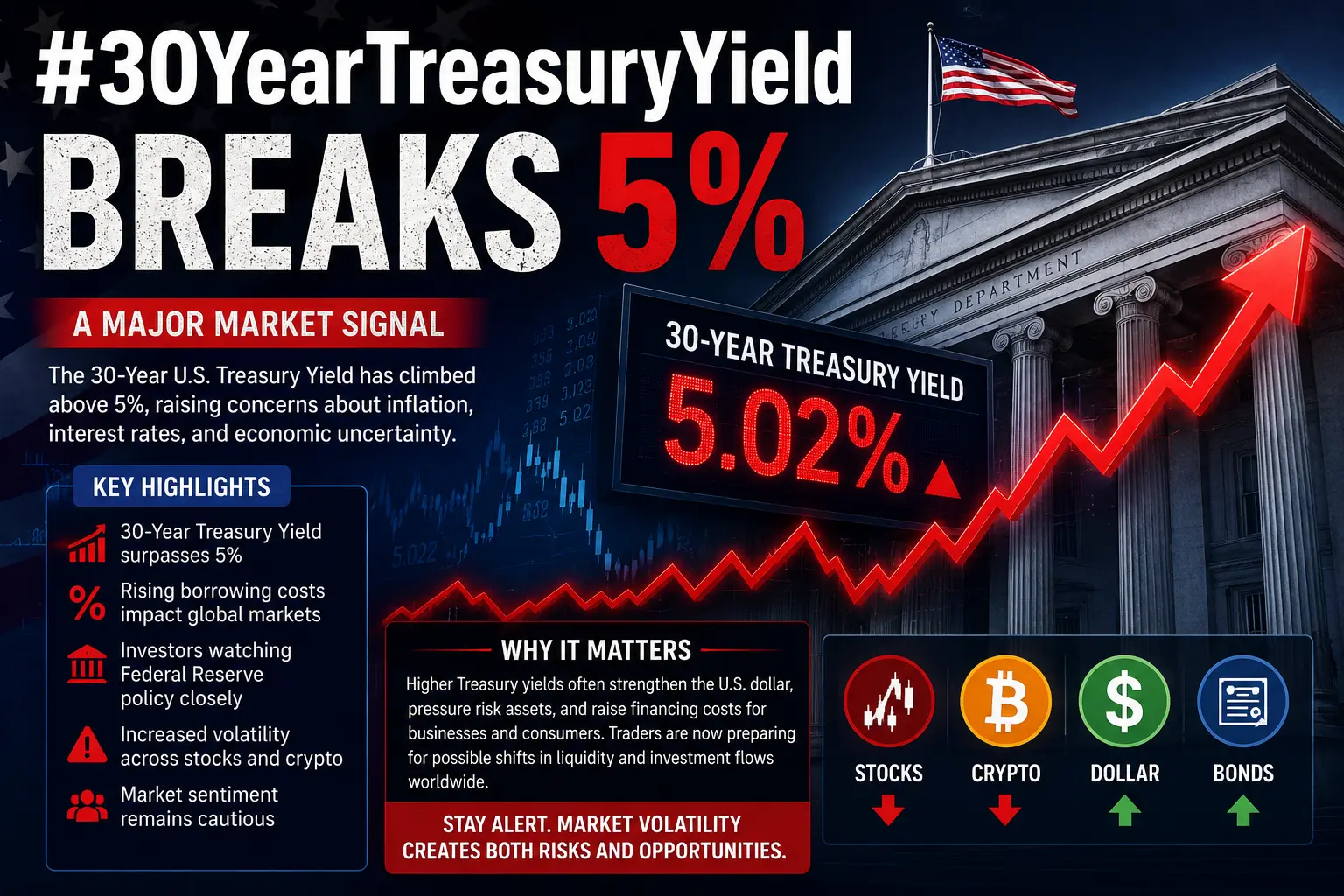
The surge in the U.S. 30-Year Treasury Yield above 5% is no longer being treated as temporary volatility. Markets are now recognizing it as a structural shift in the global financial system — one that could reshape equities, real estate, bonds, and cryptocurrencies for years ahead.
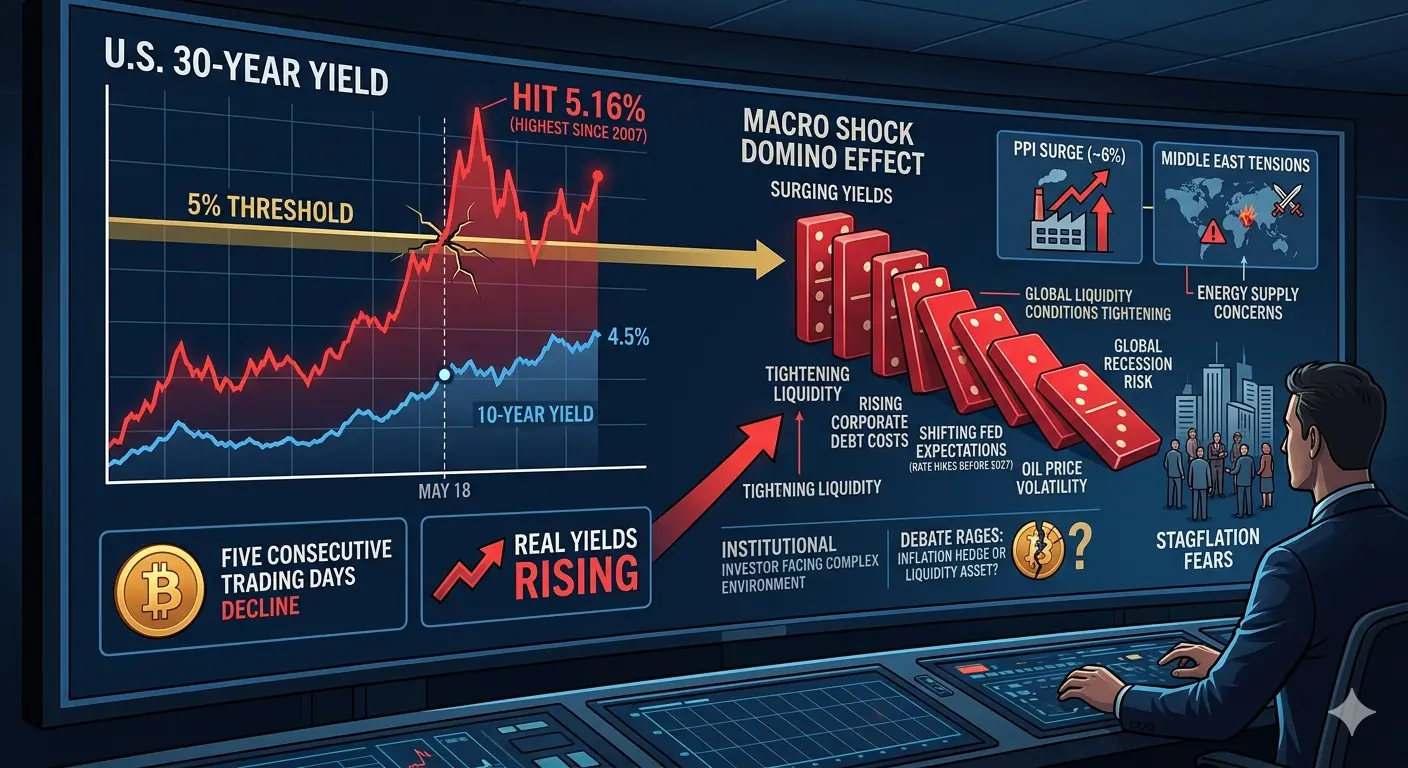
For the first time since the pre-2008 era, long-term U.S. borrowing costs have decisively crossed one of the most psychologically important levels in global finance. Recent spikes toward 5.2% are sending a powerful message across markets: inflation risks remain alive, debt concerns are rising, and investors are demanding significantly higher compensation to lock capital away for decades.
This matters because the 30-year Treasury yield is not just another number on a screen. It represents the foundation of global asset pricing. Mortgage rates, corporate debt costs, stock valuations, and international liquidity conditions are all heavily influenced by long-duration Treasury yields.
When yields remain low around 2%–3%, markets operate in an environment of cheap money, easy borrowing, and abundant liquidity. But once yields move above 5%, the system begins to reprice risk aggressively.
The reasons behind this move are becoming increasingly clear.
Persistent inflation fears have returned due to rising energy prices, geopolitical tensions, and ongoing supply-chain instability. Oil shocks are once again feeding broader inflation expectations, forcing markets to reconsider whether inflation was ever truly defeated.
At the same time, investors are becoming more concerned about long-term U.S. fiscal sustainability. Massive government debt issuance combined with rapidly rising interest expenses is creating fears that debt servicing itself could become a structural economic burden over time.
Another major factor is the collapse of the “aggressive Fed cuts” narrative. Earlier expectations that the Federal Reserve would sharply reduce rates in 2026 are fading. Markets are now adjusting to a “higher for longer” environment where interest rates may stay elevated far beyond previous assumptions.
The consequences are already spreading across every major asset class.
Housing markets are facing pressure as mortgage rates remain elevated, reducing affordability and slowing demand. Equities, especially high-growth technology stocks, are experiencing valuation stress because higher yields reduce the present value of future earnings.
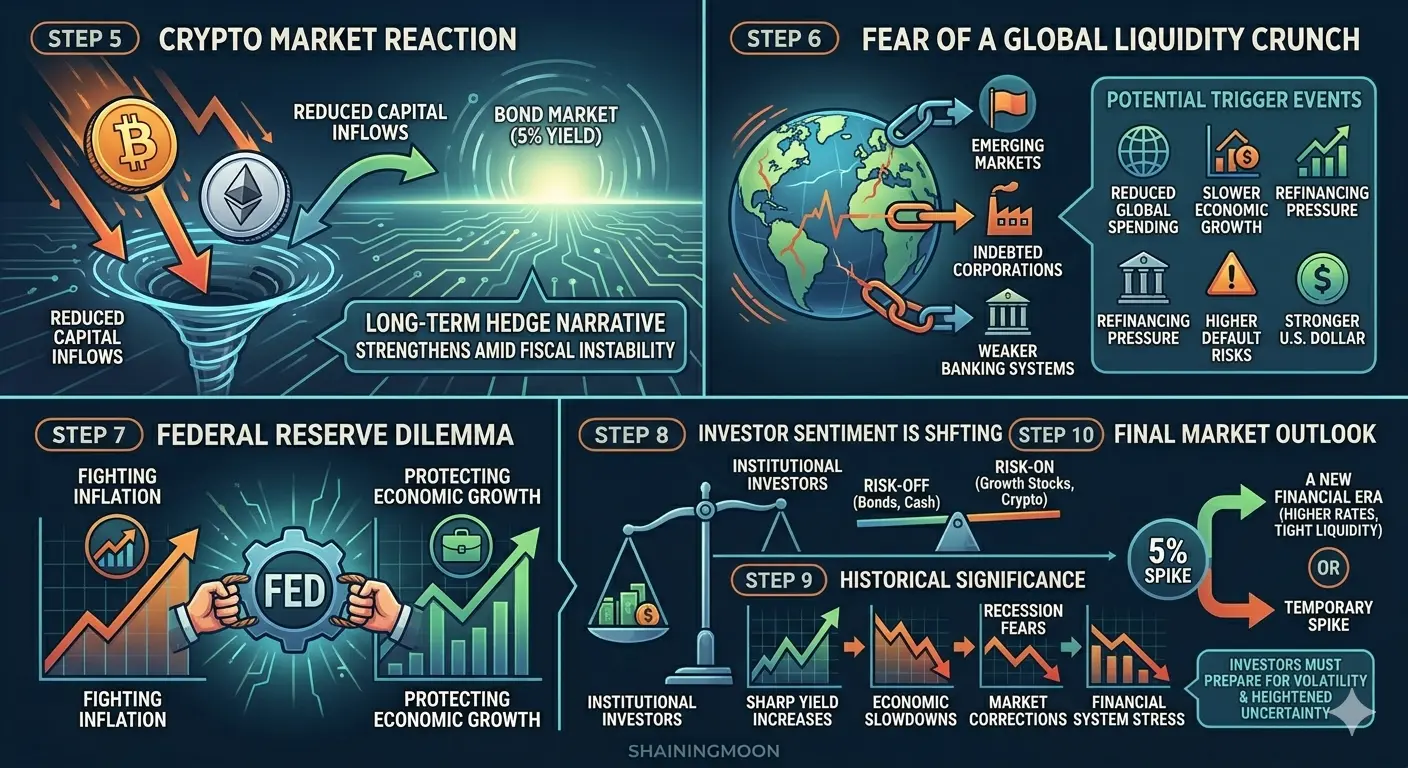
Meanwhile, the stronger U.S. dollar is draining liquidity from global markets. Higher Treasury yields attract international capital into dollar-denominated assets, pulling liquidity away from emerging markets and speculative sectors.
Crypto markets are feeling this pressure directly.
Bitcoin and digital assets now trade within a macro-driven environment where liquidity conditions matter more than hype cycles. When investors can earn over 5% from “risk-free” government debt, the opportunity cost of holding highly volatile assets rises significantly.
This is why leverage is shrinking across crypto markets. Expensive borrowing costs reduce speculation, weaken risk appetite, and tighten liquidity conditions throughout the digital asset ecosystem.
Bitcoin continues to show relative strength compared to altcoins, with dominance remaining elevated as capital rotates toward larger, more established assets during periods of uncertainty. But macro pressure remains intense while yields continue climbing.
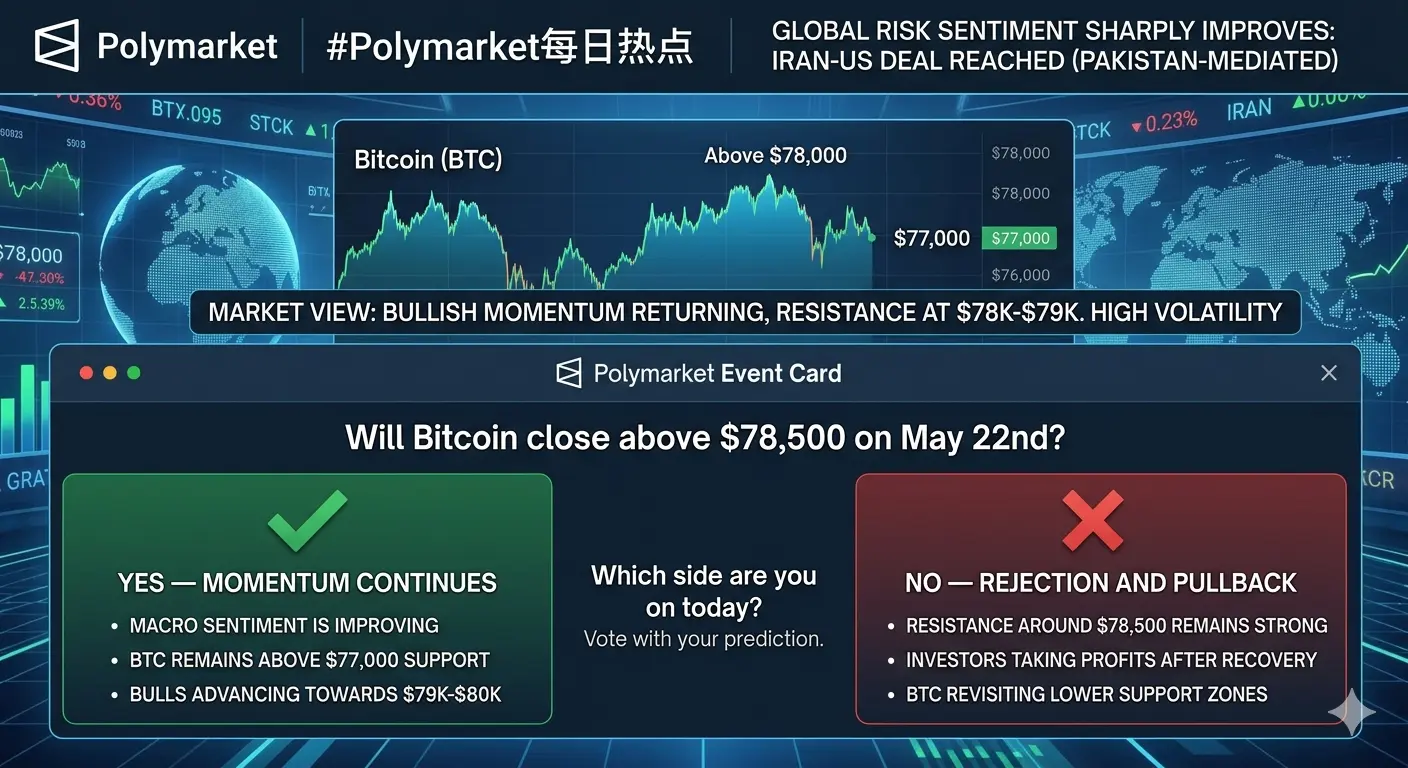
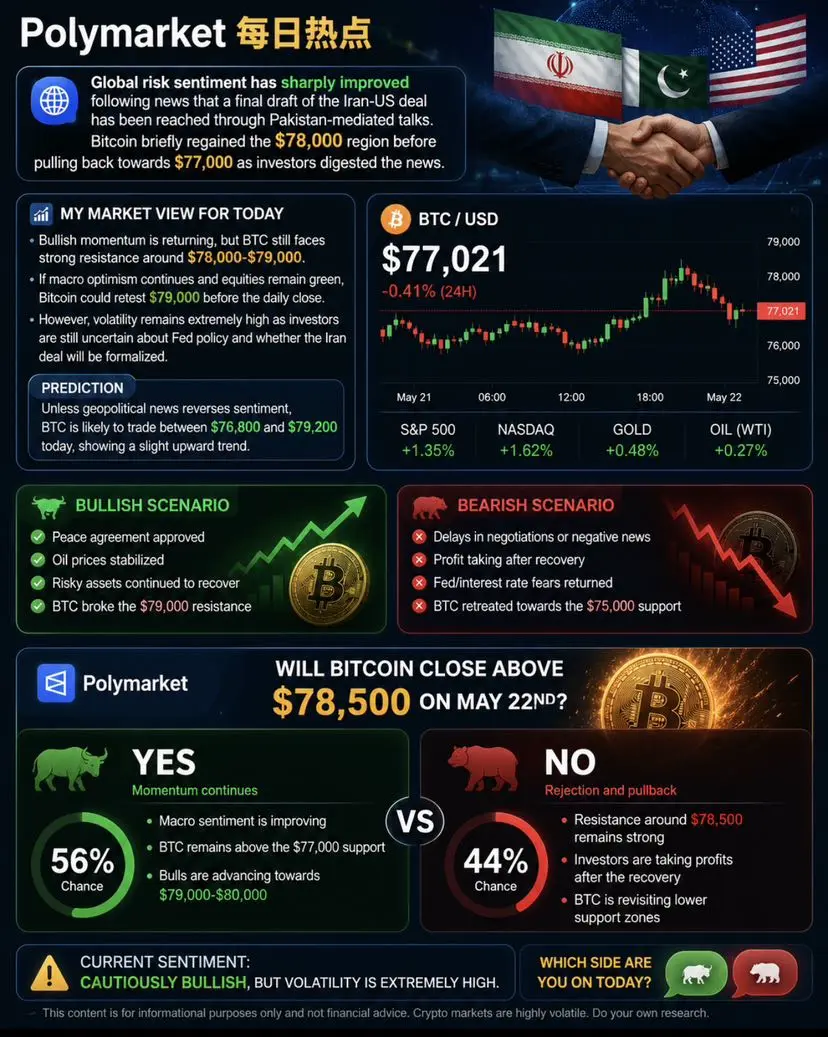
Key levels remain critical. Resistance near $80,000 continues to define bullish momentum, while support around $75,000 represents an important liquidity zone. A sustained rise in Treasury yields beyond current levels could increase downside pressure across risk markets globally.
Still, the long-term Bitcoin thesis is not necessarily broken.
If rising yields ultimately expose structural debt instability, inflation concerns, and weakening confidence in fiat purchasing power, Bitcoin’s scarcity narrative may strengthen over time. Institutional adoption, ETF demand, and the integration of crypto into traditional finance continue building long-term foundations despite short-term volatility.
What markets are witnessing now is larger than a normal correction.
A new financial regime is emerging — one defined by expensive capital, tighter liquidity, elevated debt stress, and stronger macro influence over every major market.
In 2026, macro is no longer background noise.
Macro is the market.
#GateSquare
The Break Above 5% Is Changing Everything — Why Global Markets Are Entering a New Macro Regime
The surge in the U.S. 30-Year Treasury Yield above 5% is no longer being treated as temporary volatility. Markets are now recognizing it as a structural shift in the global financial system — one that could reshape equities, real estate, bonds, and cryptocurrencies for years ahead.
For the first time since the pre-2008 era, long-term U.S. borrowing costs have decisively crossed one of the most psychologically important levels in global finance. Recent spikes toward 5.2% are sending a powerful message across markets: inflation risks remain alive, debt concerns are rising, and investors are demanding significantly higher compensation to lock capital away for decades.
This matters because the 30-year Treasury yield is not just another number on a screen. It represents the foundation of global asset pricing. Mortgage rates, corporate debt costs, stock valuations, and international liquidity conditions are all heavily influenced by long-duration Treasury yields.
When yields remain low around 2%–3%, markets operate in an environment of cheap money, easy borrowing, and abundant liquidity. But once yields move above 5%, the system begins to reprice risk aggressively.
The reasons behind this move are becoming increasingly clear.
Persistent inflation fears have returned due to rising energy prices, geopolitical tensions, and ongoing supply-chain instability. Oil shocks are once again feeding broader inflation expectations, forcing markets to reconsider whether inflation was ever truly defeated.
At the same time, investors are becoming more concerned about long-term U.S. fiscal sustainability. Massive government debt issuance combined with rapidly rising interest expenses is creating fears that debt servicing itself could become a structural economic burden over time.
Another major factor is the collapse of the “aggressive Fed cuts” narrative. Earlier expectations that the Federal Reserve would sharply reduce rates in 2026 are fading. Markets are now adjusting to a “higher for longer” environment where interest rates may stay elevated far beyond previous assumptions.
The consequences are already spreading across every major asset class.
Housing markets are facing pressure as mortgage rates remain elevated, reducing affordability and slowing demand. Equities, especially high-growth technology stocks, are experiencing valuation stress because higher yields reduce the present value of future earnings.
Meanwhile, the stronger U.S. dollar is draining liquidity from global markets. Higher Treasury yields attract international capital into dollar-denominated assets, pulling liquidity away from emerging markets and speculative sectors.
Crypto markets are feeling this pressure directly.
Bitcoin and digital assets now trade within a macro-driven environment where liquidity conditions matter more than hype cycles. When investors can earn over 5% from “risk-free” government debt, the opportunity cost of holding highly volatile assets rises significantly.
This is why leverage is shrinking across crypto markets. Expensive borrowing costs reduce speculation, weaken risk appetite, and tighten liquidity conditions throughout the digital asset ecosystem.
Bitcoin continues to show relative strength compared to altcoins, with dominance remaining elevated as capital rotates toward larger, more established assets during periods of uncertainty. But macro pressure remains intense while yields continue climbing.
Key levels remain critical. Resistance near $80,000 continues to define bullish momentum, while support around $75,000 represents an important liquidity zone. A sustained rise in Treasury yields beyond current levels could increase downside pressure across risk markets globally.
Still, the long-term Bitcoin thesis is not necessarily broken.
If rising yields ultimately expose structural debt instability, inflation concerns, and weakening confidence in fiat purchasing power, Bitcoin’s scarcity narrative may strengthen over time. Institutional adoption, ETF demand, and the integration of crypto into traditional finance continue building long-term foundations despite short-term volatility.
What markets are witnessing now is larger than a normal correction.
A new financial regime is emerging — one defined by expensive capital, tighter liquidity, elevated debt stress, and stronger macro influence over every major market.
In 2026, macro is no longer background noise.
Macro is the market.
#GateSquare