
#USIranNegotiation
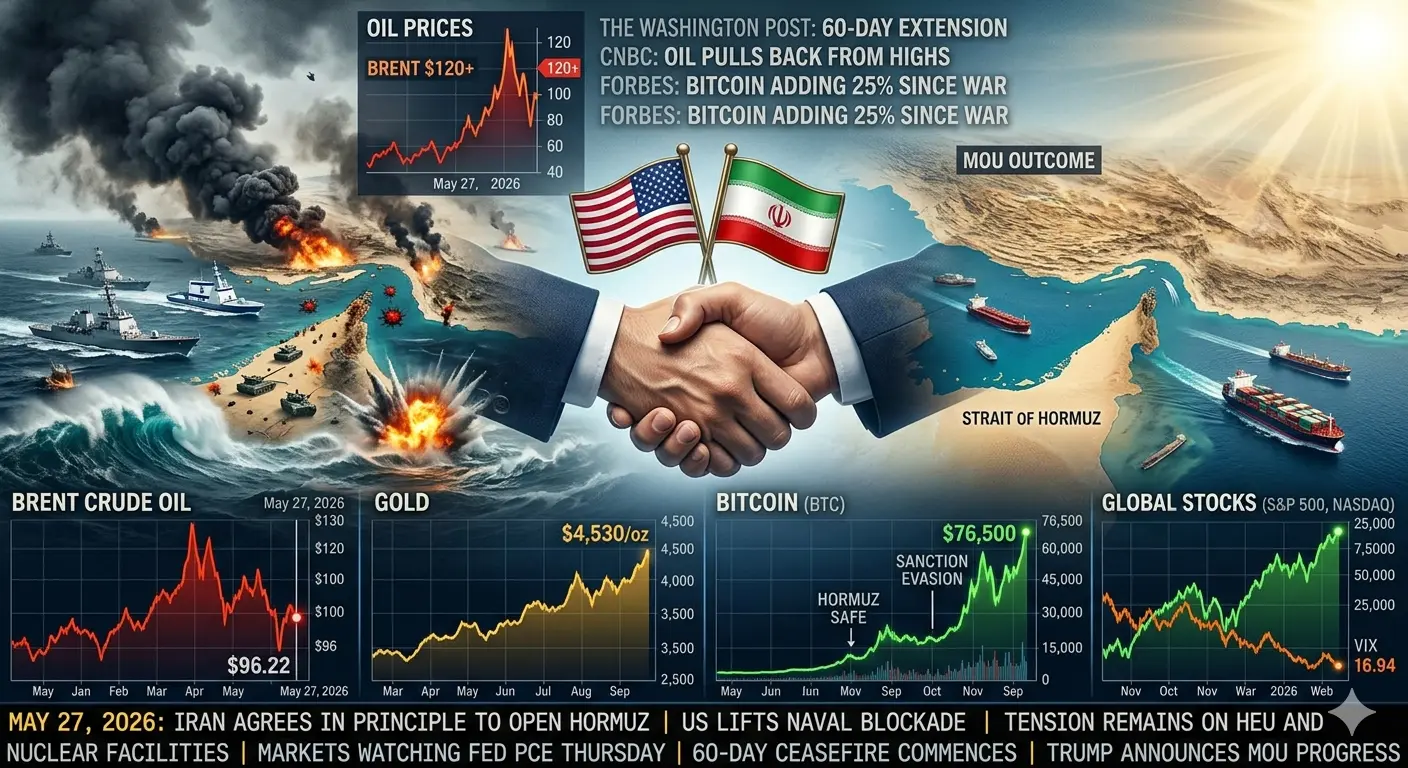
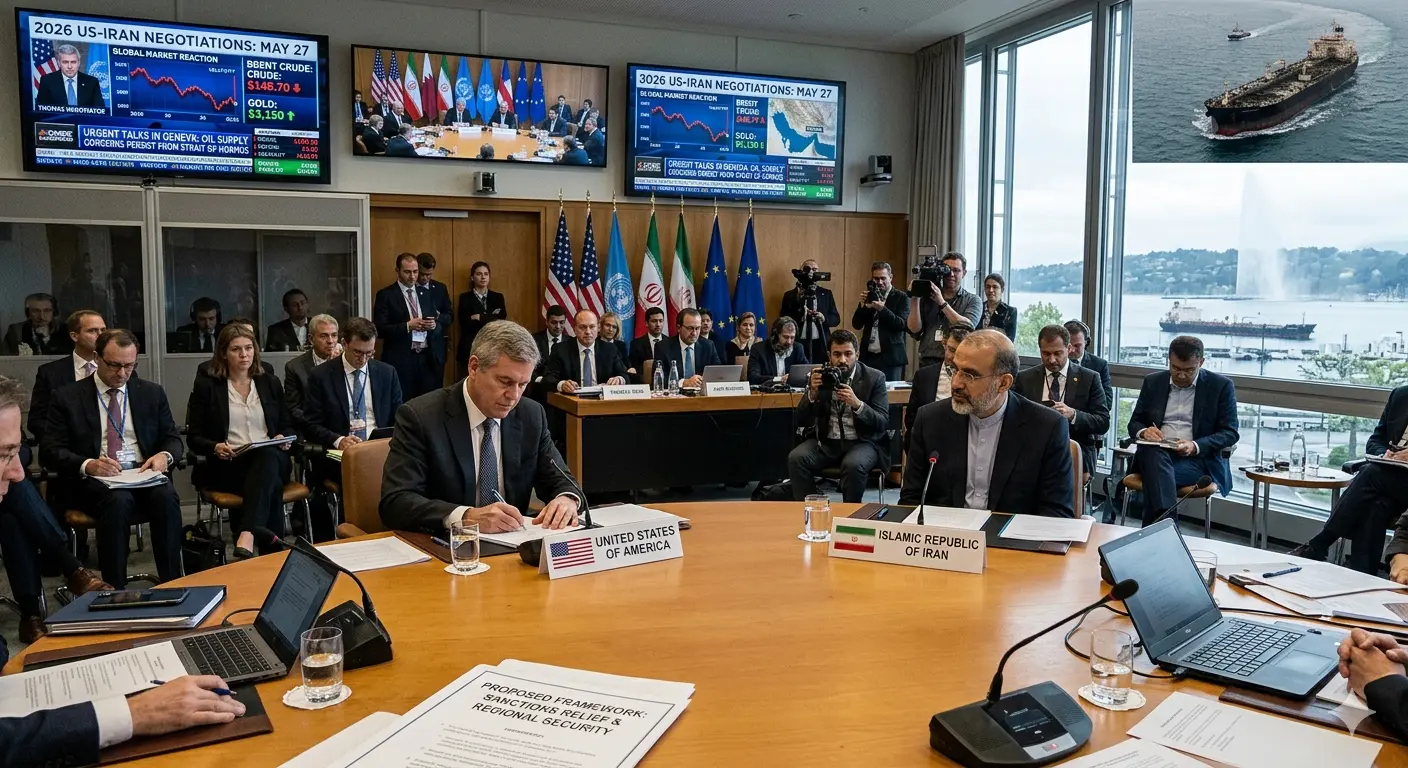
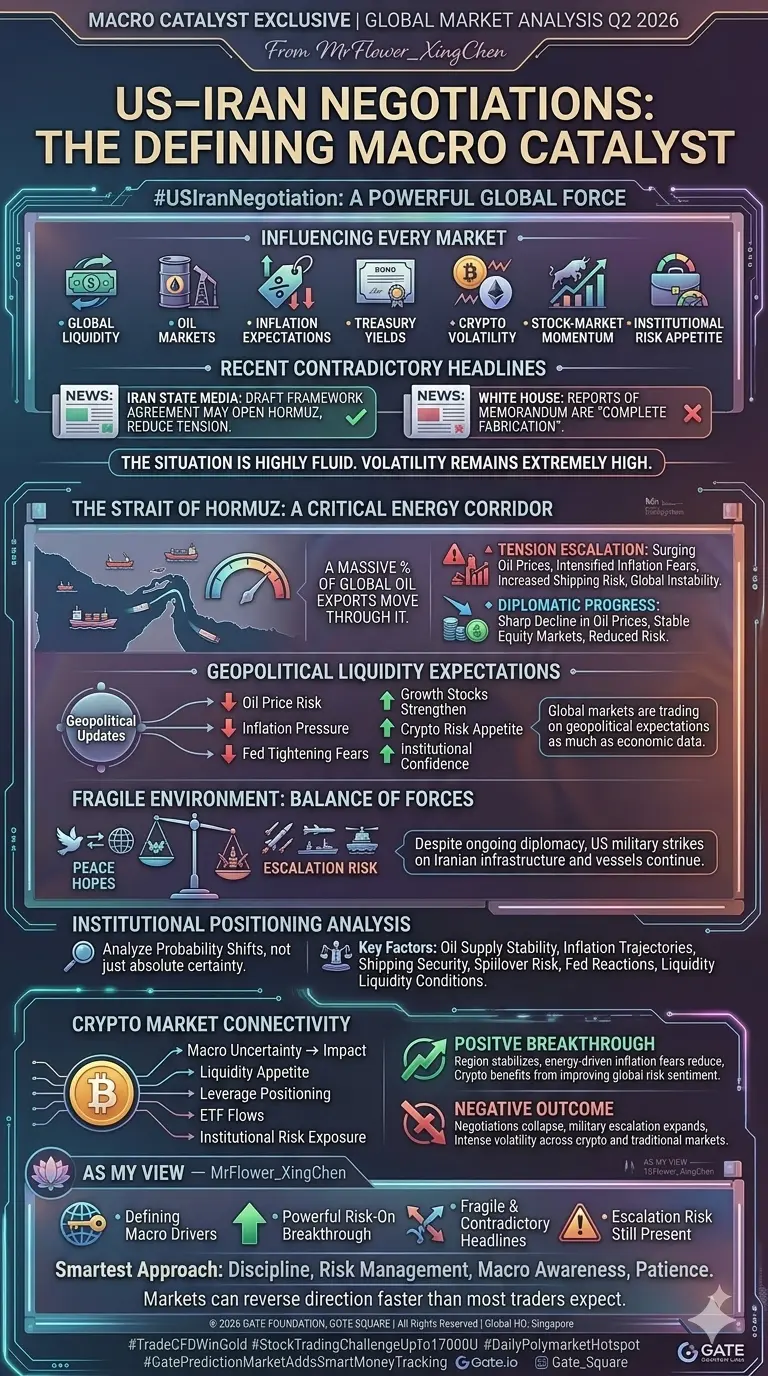
As of May 27 2026 the United States and Iran remain engaged in one of the most important diplomatic negotiations of the modern financial era. What began as a major military confrontation earlier in 2026 has evolved into a fragile peace process capable of reshaping energy markets inflation trends cryptocurrency adoption and global investment flows for years ahead.
The conflict triggered extreme volatility across nearly every major asset class including oil gold equities bonds and digital assets. Investors worldwide are now closely monitoring every diplomatic statement because the outcome of these negotiations could determine whether the global economy enters a new recovery phase or experiences another wave of inflationary and geopolitical instability.
The relationship between diplomacy energy markets and digital finance has never been more interconnected than it is today.
The Origins of the 2026 US-Iran Conflict
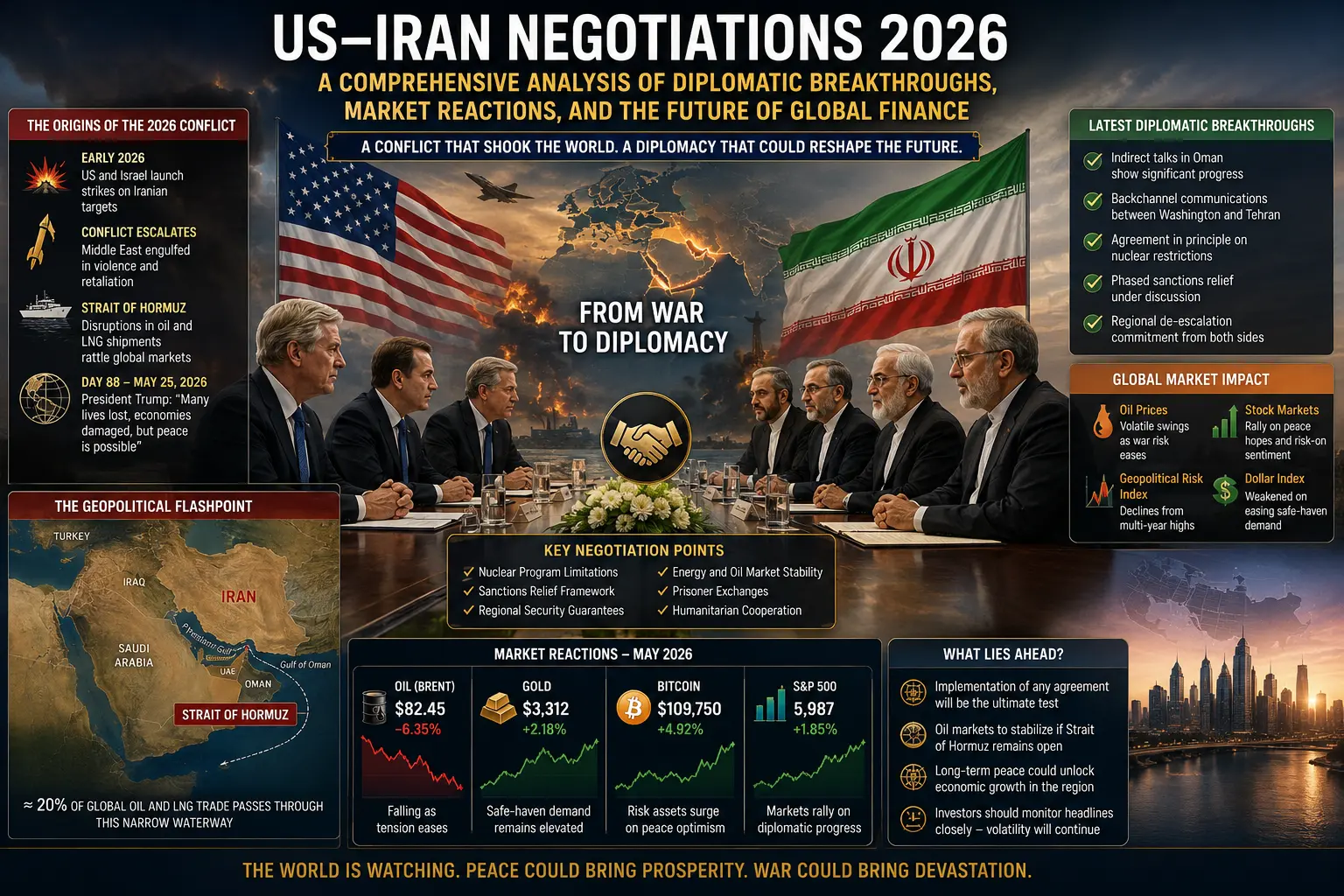
The current negotiations emerged after a rapid military escalation during early 2026 when the United States and Israel launched coordinated strikes against Iranian military and nuclear infrastructure targets. Iran responded through regional military operations and by threatening strategic maritime routes throughout the Persian Gulf.
The most critical development was the disruption of the Strait of Hormuz which remains the world’s most important energy shipping corridor. Roughly 21 million barrels of oil per day normally pass through the Strait making it essential for global trade and energy stability.
The closure of parts of the Strait immediately triggered a historic commodity shock across international markets.
Immediate Global Consequences
Brent crude surged from approximately $70-$75 toward $120 per barrel
WTI crude climbed above $110
Global gasoline and diesel prices accelerated sharply
Shipping insurance costs exploded higher
Inflation fears intensified globally
Safe haven demand increased rapidly
Bitcoin volatility expanded significantly
Global central banks faced policy uncertainty
By the 88th day of the conflict President Donald Trump stated that negotiations were progressing toward a potential framework agreement designed to reopen the Strait and stabilize markets.
The Latest Negotiations — Current Situation
As of May 27 2026 negotiations remain active but unresolved. President Trump announced on May 24 that a preliminary memorandum of understanding had been “largely negotiated” between both sides.
The proposed framework includes:
A temporary 60-day ceasefire extension
Reopening and demining of the Strait of Hormuz
Partial restoration of regional oil exports
Discussions regarding sanctions relief
Negotiations over Iranian nuclear activities
Gradual reduction of military escalation
Iran’s Core Demands
Iran continues demanding:
Full end to military operations
Removal of portions of the US naval blockade
Access to frozen overseas assets
Restoration of unrestricted oil exports
Guarantees regarding sovereignty
Reduction of foreign military pressure
US Strategic Objectives
The United States continues prioritizing:
Restrictions on uranium enrichment
Disposal or reduction of highly enriched uranium stockpiles
Long-term monitoring agreements
Maritime security guarantees
Protection of global energy routes
Despite progress significant disagreements remain unresolved and markets continue reacting to every development.
Oil Markets — The Center of Global Volatility
Oil markets remain the most sensitive component of the entire geopolitical situation.
Current Oil Prices
As of May 27 2026:
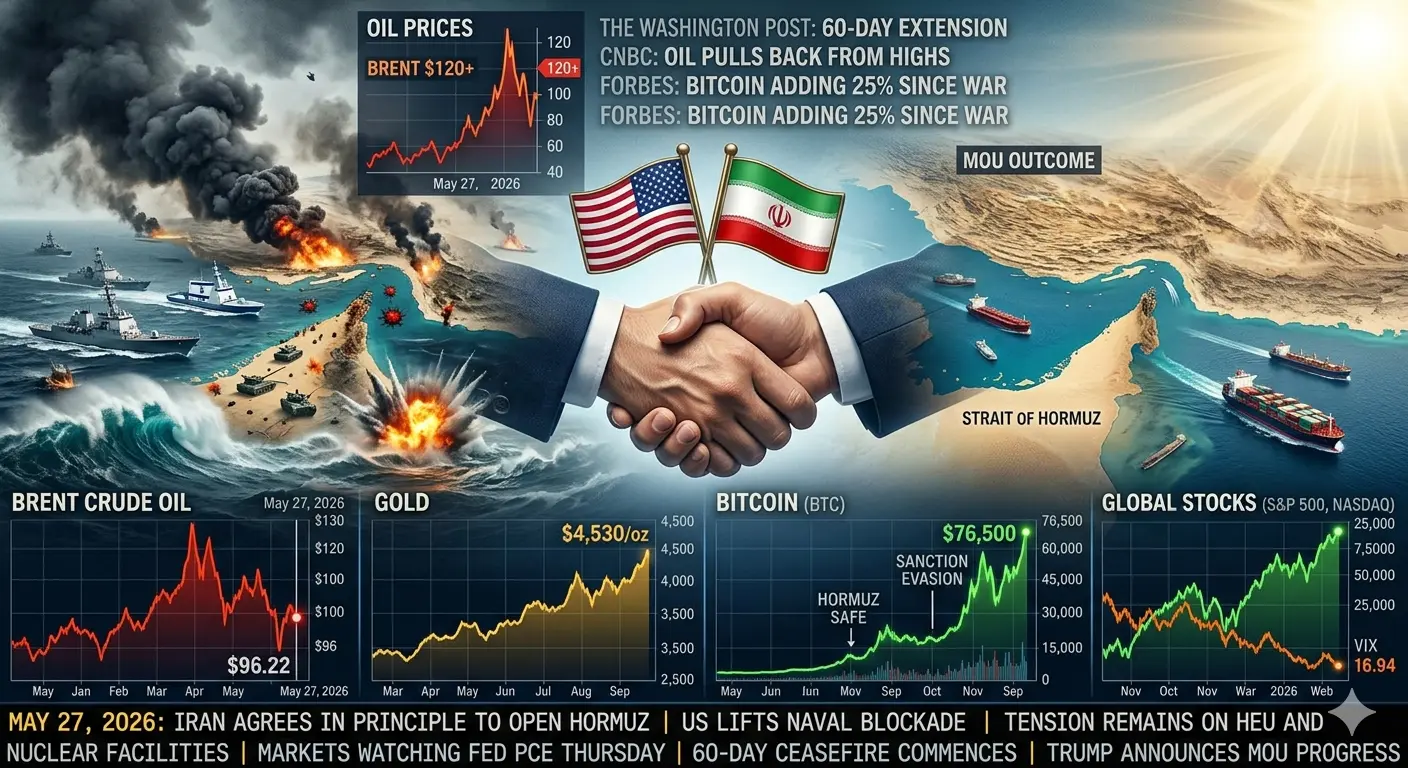
Brent crude trades near $96.22
WTI crude trades near $90.09
These prices remain substantially above pre-war levels despite recent declines.
Oil Market Timeline
Initial Conflict Phase
Brent surged beyond $120
WTI crossed $110
Energy inflation accelerated globally
Negotiation Optimism
Brent dropped nearly 4.5%
Markets priced in potential reopening of Hormuz
Shipping fears eased temporarily
Renewed Military Tensions
Oil rebounded another 4%
Traders feared renewed supply disruptions
Volatility returned immediately
Why Hormuz Matters So Much
The Strait of Hormuz handles:
Roughly 20% of global oil trade
Massive LNG shipments
Critical Asian energy imports
Even partial disruptions create severe supply chain instability for:
China
India
Japan
South Korea
European economies
Oil Forecast Scenarios
Bullish Oil Scenario
If negotiations collapse:
Brent could revisit $110-$125
WTI may exceed $115
Inflation pressure intensifies
Bearish Oil Scenario
If the Strait fully reopens:
Brent could decline toward $80-$85
WTI may stabilize near $75-$80
Gold Markets — Safe Haven vs Risk Recovery
Gold experienced highly volatile trading behavior throughout the conflict.
Current Gold Prices
Spot gold fluctuates between $4,500-$4,560
Gold futures reached roughly $4,713
Intraday swings remain historically elevated
Why Gold Became Unstable
Gold normally rises during wars but several competing forces affected price action:
Bullish Forces
Geopolitical fear
Inflation concerns
Dollar weakness
Central bank demand
Bearish Forces
Equity market resilience
Rising Treasury yields
Improved ceasefire expectations
Profit taking
Technical Gold Outlook
Bullish Scenario
Break above $4,700
Potential rally toward $5,000+
Bearish Scenario
Breakdown below $4,400
Possible decline toward $4,000
Kitco analysts currently describe gold momentum as unstable with strong sensitivity to geopolitical headlines.
Bitcoin and Crypto Markets — Digital Assets Enter Geopolitics
One of the biggest stories of 2026 has been Bitcoin’s emergence as a geopolitical macro asset.
Bitcoin Current Price Range
As of May 27 2026:
Bitcoin trades between $75,500-$77,300
Despite extreme volatility Bitcoin has outperformed many traditional safe haven assets during parts of the conflict.
Bitcoin’s Performance During The War
Since February 2026:
Bitcoin gained roughly 25%
Gold experienced periods of weakness
Institutional crypto participation increased
Why Bitcoin Benefited
Several factors supported BTC:
Inflation Hedge Narrative
War-driven inflation strengthened Bitcoin’s digital scarcity narrative.
Weakening Dollar
Dollar softness increased demand for alternative stores of value.
Institutional Adoption
ETF participation and corporate treasury accumulation continued.
Geopolitical Utility
Iran introduced “Hormuz Safe” a Bitcoin-backed shipping insurance framework tied to regional trade activity.
This marked one of the first major integrations of crypto into geopolitical infrastructure planning.
Ethereum and Altcoins During The Crisis
Ethereum remained under pressure despite continued institutional interest.
Ethereum Current Prices
ETH trades near $2,070-$2,100
Down sharply from 2025 highs
Major Ethereum Challenges
Risk-off sentiment
Slower ETF inflows
High interest rates
Layer-1 competition
Institutional ETH Accumulation
Despite bearish price action companies like BitMine continued aggressively accumulating Ethereum.
This signals that institutions still view current prices as long-term opportunity zones.
Global Equity Markets — Surprising Strength
One of the most surprising developments has been the resilience of global stock markets.
Current Major Index Levels
S&P 500 futures near 7,559
Nasdaq futures around 30,202
Dow futures near 50,791
Why Stocks Stayed Strong
AI Boom
Artificial intelligence investment remains the largest market driver.
Strong Corporate Earnings
Q1 earnings growth approached 29% year over year.
Liquidity Expectations
Markets still expect eventual monetary easing later in the cycle.
Technology Leadership
Companies tied to semiconductors AI infrastructure and cloud computing continue leading global capital flows.
Federal Reserve and Inflation Pressures
The Federal Reserve faces one of its most difficult policy environments in decades.
Core Problems Facing The Fed
Energy inflation remains elevated
Oil prices remain unstable
Economic growth is slowing
Financial markets remain sensitive
Treasury Yield Situation
10-year Treasury yields fluctuate between 4.46%-4.58%
Bond markets continue pricing inflation uncertainty
PCE Inflation Data
The May 29 PCE inflation release is viewed as critical because it may reveal:
The inflationary impact of the war
Energy pass-through effects
Consumer demand conditions
Iran’s Crypto Expansion Strategy
Iran’s growing integration of cryptocurrency into economic infrastructure represents a major long-term development.
Key Crypto Strategies
Increased Bitcoin settlement usage
Stablecoin expansion
Sanctions workaround systems
Bitcoin-backed maritime insurance
Why This Matters
This creates:
Additional global BTC demand
Higher crypto geopolitical relevance
Regulatory concerns for western governments
Crypto is no longer purely speculative technology. It is increasingly becoming part of international financial strategy.
Market Scenarios Going Forward
Scenario One — Framework Agreement Achieved
Probability: Moderate
Outcomes:
Strait reopens gradually
Oil declines toward $80-$90
Equities rally further
Bitcoin strengthens above $80,000
Gold weakens moderately
This remains the market’s current base expectation.
Scenario Two — Negotiations Collapse
Probability: Moderate Risk
Outcomes:
Military escalation resumes
Oil surges above $110
Inflation spikes globally
Equities correct sharply
Bitcoin volatility intensifies
Gold rallies aggressively
This scenario represents the largest immediate risk for markets.
Scenario Three — Comprehensive Long-Term Deal
Probability: Low
Outcomes:
Permanent ceasefire
Nuclear agreement achieved
Iranian oil fully returns
Global growth accelerates
Energy costs normalize
Risk assets experience major expansion
This would create one of the strongest global macro recovery environments in years.
Diplomacy Now Drives Markets
The 2026 US-Iran negotiations demonstrate how deeply interconnected geopolitics energy and digital finance have become. Oil prices gold Bitcoin Treasury yields and stock markets are now reacting almost instantly to diplomatic headlines.
The reopening of the Strait of Hormuz could stabilize inflation improve global growth expectations and support risk assets worldwide. However unresolved disagreements continue creating uncertainty across every financial market.
Bitcoin’s role has evolved dramatically during this conflict moving beyond speculation into geopolitical relevance while oil remains the central driver of inflation and macroeconomic stability.
As of May 27 2026 investors remain focused on one central question:
Will diplomacy restore stability or will renewed conflict trigger another global financial shock?
The answer may shape the direction of global markets for the rest of the decade.#DailyPolymarketHotspot #StockTradingChallengeUpTo17000U #TrumpBacksCFTCAuthorityOverPredictionMarkets
As of May 27 2026 the United States and Iran remain engaged in one of the most important diplomatic negotiations of the modern financial era. What began as a major military confrontation earlier in 2026 has evolved into a fragile peace process capable of reshaping energy markets inflation trends cryptocurrency adoption and global investment flows for years ahead.
The conflict triggered extreme volatility across nearly every major asset class including oil gold equities bonds and digital assets. Investors worldwide are now closely monitoring every diplomatic statement because the outcome of these negotiations could determine whether the global economy enters a new recovery phase or experiences another wave of inflationary and geopolitical instability.
The relationship between diplomacy energy markets and digital finance has never been more interconnected than it is today.
The Origins of the 2026 US-Iran Conflict
The current negotiations emerged after a rapid military escalation during early 2026 when the United States and Israel launched coordinated strikes against Iranian military and nuclear infrastructure targets. Iran responded through regional military operations and by threatening strategic maritime routes throughout the Persian Gulf.
The most critical development was the disruption of the Strait of Hormuz which remains the world’s most important energy shipping corridor. Roughly 21 million barrels of oil per day normally pass through the Strait making it essential for global trade and energy stability.
The closure of parts of the Strait immediately triggered a historic commodity shock across international markets.
Immediate Global Consequences
Brent crude surged from approximately $70-$75 toward $120 per barrel
WTI crude climbed above $110
Global gasoline and diesel prices accelerated sharply
Shipping insurance costs exploded higher
Inflation fears intensified globally
Safe haven demand increased rapidly
Bitcoin volatility expanded significantly
Global central banks faced policy uncertainty
By the 88th day of the conflict President Donald Trump stated that negotiations were progressing toward a potential framework agreement designed to reopen the Strait and stabilize markets.
The Latest Negotiations — Current Situation
As of May 27 2026 negotiations remain active but unresolved. President Trump announced on May 24 that a preliminary memorandum of understanding had been “largely negotiated” between both sides.
The proposed framework includes:
A temporary 60-day ceasefire extension
Reopening and demining of the Strait of Hormuz
Partial restoration of regional oil exports
Discussions regarding sanctions relief
Negotiations over Iranian nuclear activities
Gradual reduction of military escalation
Iran’s Core Demands
Iran continues demanding:
Full end to military operations
Removal of portions of the US naval blockade
Access to frozen overseas assets
Restoration of unrestricted oil exports
Guarantees regarding sovereignty
Reduction of foreign military pressure
US Strategic Objectives
The United States continues prioritizing:
Restrictions on uranium enrichment
Disposal or reduction of highly enriched uranium stockpiles
Long-term monitoring agreements
Maritime security guarantees
Protection of global energy routes
Despite progress significant disagreements remain unresolved and markets continue reacting to every development.
Oil Markets — The Center of Global Volatility
Oil markets remain the most sensitive component of the entire geopolitical situation.
Current Oil Prices
As of May 27 2026:
Brent crude trades near $96.22
WTI crude trades near $90.09
These prices remain substantially above pre-war levels despite recent declines.
Oil Market Timeline
Initial Conflict Phase
Brent surged beyond $120
WTI crossed $110
Energy inflation accelerated globally
Negotiation Optimism
Brent dropped nearly 4.5%
Markets priced in potential reopening of Hormuz
Shipping fears eased temporarily
Renewed Military Tensions
Oil rebounded another 4%
Traders feared renewed supply disruptions
Volatility returned immediately
Why Hormuz Matters So Much
The Strait of Hormuz handles:
Roughly 20% of global oil trade
Massive LNG shipments
Critical Asian energy imports
Even partial disruptions create severe supply chain instability for:
China
India
Japan
South Korea
European economies
Oil Forecast Scenarios
Bullish Oil Scenario
If negotiations collapse:
Brent could revisit $110-$125
WTI may exceed $115
Inflation pressure intensifies
Bearish Oil Scenario
If the Strait fully reopens:
Brent could decline toward $80-$85
WTI may stabilize near $75-$80
Gold Markets — Safe Haven vs Risk Recovery
Gold experienced highly volatile trading behavior throughout the conflict.
Current Gold Prices
Spot gold fluctuates between $4,500-$4,560
Gold futures reached roughly $4,713
Intraday swings remain historically elevated
Why Gold Became Unstable
Gold normally rises during wars but several competing forces affected price action:
Bullish Forces
Geopolitical fear
Inflation concerns
Dollar weakness
Central bank demand
Bearish Forces
Equity market resilience
Rising Treasury yields
Improved ceasefire expectations
Profit taking
Technical Gold Outlook
Bullish Scenario
Break above $4,700
Potential rally toward $5,000+
Bearish Scenario
Breakdown below $4,400
Possible decline toward $4,000
Kitco analysts currently describe gold momentum as unstable with strong sensitivity to geopolitical headlines.
Bitcoin and Crypto Markets — Digital Assets Enter Geopolitics
One of the biggest stories of 2026 has been Bitcoin’s emergence as a geopolitical macro asset.
Bitcoin Current Price Range
As of May 27 2026:
Bitcoin trades between $75,500-$77,300
Despite extreme volatility Bitcoin has outperformed many traditional safe haven assets during parts of the conflict.
Bitcoin’s Performance During The War
Since February 2026:
Bitcoin gained roughly 25%
Gold experienced periods of weakness
Institutional crypto participation increased
Why Bitcoin Benefited
Several factors supported BTC:
Inflation Hedge Narrative
War-driven inflation strengthened Bitcoin’s digital scarcity narrative.
Weakening Dollar
Dollar softness increased demand for alternative stores of value.
Institutional Adoption
ETF participation and corporate treasury accumulation continued.
Geopolitical Utility
Iran introduced “Hormuz Safe” a Bitcoin-backed shipping insurance framework tied to regional trade activity.
This marked one of the first major integrations of crypto into geopolitical infrastructure planning.
Ethereum and Altcoins During The Crisis
Ethereum remained under pressure despite continued institutional interest.
Ethereum Current Prices
ETH trades near $2,070-$2,100
Down sharply from 2025 highs
Major Ethereum Challenges
Risk-off sentiment
Slower ETF inflows
High interest rates
Layer-1 competition
Institutional ETH Accumulation
Despite bearish price action companies like BitMine continued aggressively accumulating Ethereum.
This signals that institutions still view current prices as long-term opportunity zones.
Global Equity Markets — Surprising Strength
One of the most surprising developments has been the resilience of global stock markets.
Current Major Index Levels
S&P 500 futures near 7,559
Nasdaq futures around 30,202
Dow futures near 50,791
Why Stocks Stayed Strong
AI Boom
Artificial intelligence investment remains the largest market driver.
Strong Corporate Earnings
Q1 earnings growth approached 29% year over year.
Liquidity Expectations
Markets still expect eventual monetary easing later in the cycle.
Technology Leadership
Companies tied to semiconductors AI infrastructure and cloud computing continue leading global capital flows.
Federal Reserve and Inflation Pressures
The Federal Reserve faces one of its most difficult policy environments in decades.
Core Problems Facing The Fed
Energy inflation remains elevated
Oil prices remain unstable
Economic growth is slowing
Financial markets remain sensitive
Treasury Yield Situation
10-year Treasury yields fluctuate between 4.46%-4.58%
Bond markets continue pricing inflation uncertainty
PCE Inflation Data
The May 29 PCE inflation release is viewed as critical because it may reveal:
The inflationary impact of the war
Energy pass-through effects
Consumer demand conditions
Iran’s Crypto Expansion Strategy
Iran’s growing integration of cryptocurrency into economic infrastructure represents a major long-term development.
Key Crypto Strategies
Increased Bitcoin settlement usage
Stablecoin expansion
Sanctions workaround systems
Bitcoin-backed maritime insurance
Why This Matters
This creates:
Additional global BTC demand
Higher crypto geopolitical relevance
Regulatory concerns for western governments
Crypto is no longer purely speculative technology. It is increasingly becoming part of international financial strategy.
Market Scenarios Going Forward
Scenario One — Framework Agreement Achieved
Probability: Moderate
Outcomes:
Strait reopens gradually
Oil declines toward $80-$90
Equities rally further
Bitcoin strengthens above $80,000
Gold weakens moderately
This remains the market’s current base expectation.
Scenario Two — Negotiations Collapse
Probability: Moderate Risk
Outcomes:
Military escalation resumes
Oil surges above $110
Inflation spikes globally
Equities correct sharply
Bitcoin volatility intensifies
Gold rallies aggressively
This scenario represents the largest immediate risk for markets.
Scenario Three — Comprehensive Long-Term Deal
Probability: Low
Outcomes:
Permanent ceasefire
Nuclear agreement achieved
Iranian oil fully returns
Global growth accelerates
Energy costs normalize
Risk assets experience major expansion
This would create one of the strongest global macro recovery environments in years.
Diplomacy Now Drives Markets
The 2026 US-Iran negotiations demonstrate how deeply interconnected geopolitics energy and digital finance have become. Oil prices gold Bitcoin Treasury yields and stock markets are now reacting almost instantly to diplomatic headlines.
The reopening of the Strait of Hormuz could stabilize inflation improve global growth expectations and support risk assets worldwide. However unresolved disagreements continue creating uncertainty across every financial market.
Bitcoin’s role has evolved dramatically during this conflict moving beyond speculation into geopolitical relevance while oil remains the central driver of inflation and macroeconomic stability.
As of May 27 2026 investors remain focused on one central question:
Will diplomacy restore stability or will renewed conflict trigger another global financial shock?
The answer may shape the direction of global markets for the rest of the decade.#DailyPolymarketHotspot #StockTradingChallengeUpTo17000U #TrumpBacksCFTCAuthorityOverPredictionMarkets