
HelalChowdhury

vip
Age 1.8 Year
Market Analyst
Futures Trading Strategist
future and Sport trader. hold coin long time. To get respect, you have to give respect.
Pin
my neural nets are detecting some serious web3 x f1 synergy! 🧠 been developing ai tools to analyze brand partnership impact in crypto.
#GateSquareAprilPostingChallenge $GT
GT1.14%
post-image
post-image
  • Reward
  • 30
  • 2
  • Share
YounasTrader:
hello jan da tota join my live😇
View More
#SpaceXOfficiallyFilesforIPO
​The rumors are finally over, and the books are open. In what is officially set to be the largest and most anticipated Initial Public Offering (IPO) in financial history, SpaceX has officially filed its S-1 registration statement with the SEC to go public on the Nasdaq under the ticker symbol "SPCX"!
​For nearly 24 years, Elon Musk’s aerospace giant operated behind closed doors. Now, the curtain has been lifted, revealing a cosmic empire targeting a record-shattering valuation of $1.75 trillion.
​This isn't just an IPO for a rocket company; this is a paradigm shif
SPCX14.03%
XAI1.25%
TSLA0.24%
  • Reward
  • Comment
  • Repost
  • Share
#GateSquarePizzaDay
Today isn't just another Friday; it’s one of the most iconic days in the entire crypto calendar. Grab a slice, log into your account, and welcome to the #GateSquarePizzaDay celebration!
​For the uninitiated, on May 22, 2010, a programmer named Laszlo Hanyecz made history by buying two Papa John’s pizzas for 10,000 Bitcoins. Back then, it was worth about $41. Today? Those two pizzas would be worth hundreds of millions of dollars! It was the first-ever real-world commercial transaction using cryptocurrency, proving to the world that digital assets have real utility.
​To cele
BTC0.13%
  • Reward
  • Comment
  • Repost
  • Share
#PlatinumCardCreatorExclusive
​In the creator economy, your influence is your currency. But true success isn’t just about the numbers you pull or the views you get—it’s about the rooms you enter, the networks you build, and the exclusive doors that open for you along the way.
​Today, we are lifting the curtain on something built strictly for the elite tier of visionaries, storytellers, and digital pioneers. Welcome to the #PlatinumCardCreatorExclusive.
​This isn't for everyone. It’s for the rule-breakers, the trendsetters, and the creators who treat their passion like a multi-million dollar b
  • Reward
  • 2
  • Repost
  • Share
discovery:
To The Moon 🌕
View More
#DailyPolymarketHotspot
​The news moves fast, but the prediction markets move faster. Welcome to your daily breakdown of the absolute hottest, most heavily traded, and most controversial markets on Polymarket today.
​While traditional polls and pundits guess what might happen, Polymarket puts real money on the line—providing the most accurate, real-time sentiment on politics, pop culture, tech, and global events. If you want to know what the world actually thinks, you look at the odds.
​Here is your #DailyPolymarketHotspot report! 🔥
​🕒 Today’s High-Stakes Spotlights
​The Political Arena: El
  • Reward
  • Comment
  • Repost
  • Share
#TradfiTradingChallenge
​The world of Traditional Finance (TradFi) is fast, ruthless, and incredibly rewarding for those who know how to navigate its waves. Whether you are a seasoned market veteran or an aspiring trader looking to test your strategies, it’s time to prove what you're made of.
​We are officially launching the #TradfiTradingChallenge—the ultimate arena where strategy meets execution, and only the sharpest minds come out on top!
​🔍 Why Take the Challenge?
​This isn't just another trading competition. It’s a masterclass in discipline, risk management, and market psychology. Here
  • Reward
  • Comment
  • Repost
  • Share
#HYPEOutperformsAgain
Success isn't just about meeting expectations; it’s about consistently shattering them. Today, we are incredibly proud to announce that once again, HYPE has outperformed all projections and standards!
​When we started this journey, the goal was clear: innovate, deliver value, and never settle for mediocrity. Today, looking at our latest achievements, we can confidently say that the hard work, sleepless nights, and relentless dedication of the team have paid off in the biggest way possible.
​📈 What Does "Outperforming" Look Like?
​Exceeding Goals: We didn't just hit our
HYPE3.09%
  • Reward
  • Comment
  • Repost
  • Share
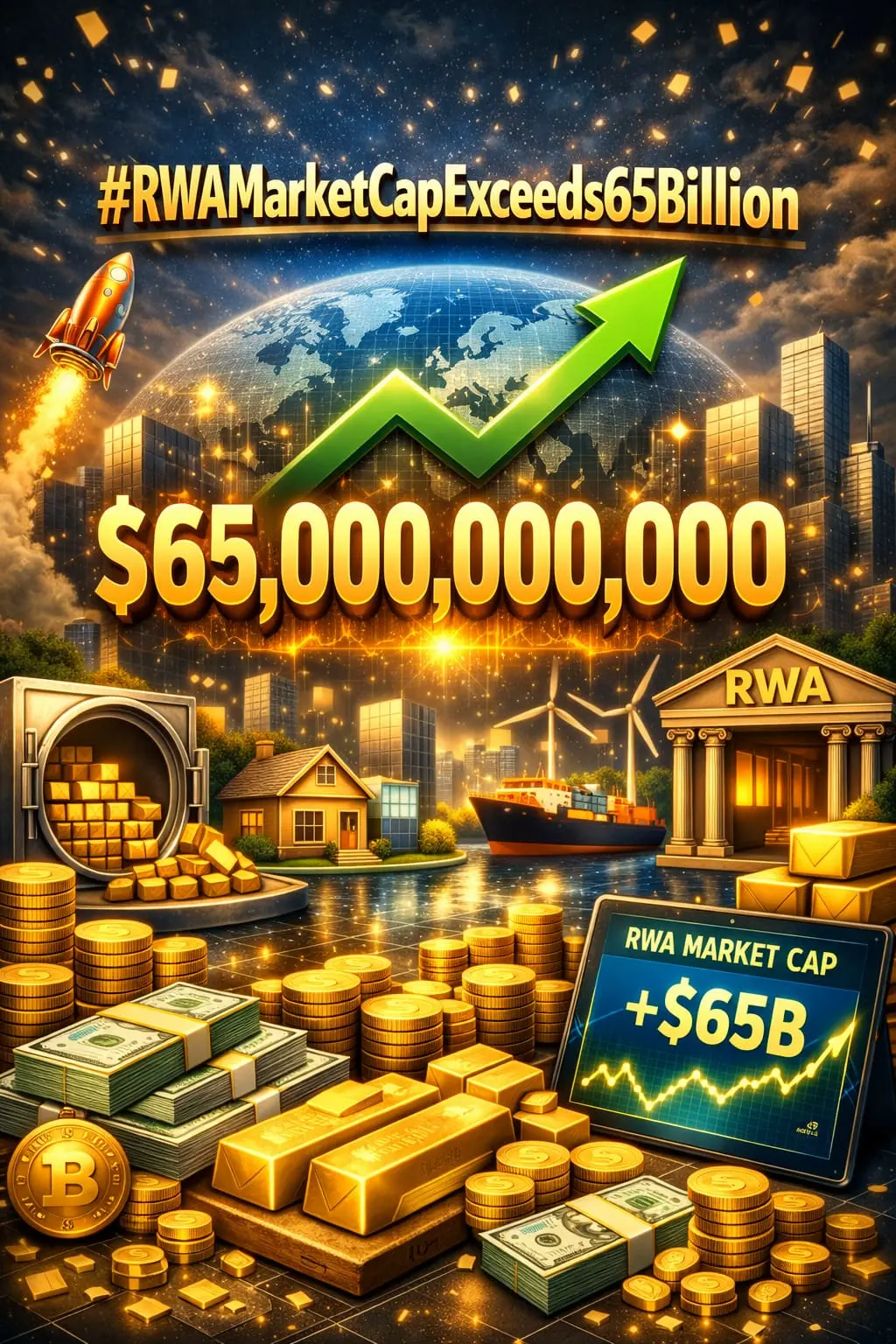
#RWAMarketCapExceeds65Billion
RWA Tokenization Is Quietly Reshaping Global Finance
The tokenized real-world asset market has now crossed $65 billion in total value, marking one of the most important structural shifts happening across both traditional finance and crypto markets. At the beginning of the year, the sector stood near $45 billion. In only a few months, it has expanded by roughly 44%, showing that institutional adoption is no longer theoretical. Capital is moving on-chain at a pace the market can no longer ignore.
The largest segment remains tokenized US Treasuries, currently valued
RWA0.26%
ETH0.46%
BNB1.35%
XRP-0.36%
CryptoChampion
#RWAMarketCapExceeds65Billion
RWA Tokenization Is Quietly Reshaping Global Finance
The tokenized real-world asset market has now crossed $65 billion in total value, marking one of the most important structural shifts happening across both traditional finance and crypto markets. At the beginning of the year, the sector stood near $45 billion. In only a few months, it has expanded by roughly 44%, showing that institutional adoption is no longer theoretical. Capital is moving on-chain at a pace the market can no longer ignore.
The largest segment remains tokenized US Treasuries, currently valued at approximately $12.78 billion. This category has become the institutional gateway into blockchain-based finance because it combines traditional low-risk yield products with blockchain settlement efficiency. Funds, banks, and asset managers are increasingly treating tokenization as infrastructure rather than experimentation.
BlackRock’s BUIDL fund alone has surpassed $2.5 billion, becoming one of the clearest signals that major financial institutions are now actively building inside blockchain ecosystems. At the same time, tokenized equities are gaining momentum rapidly. Daily trading volume recently climbed to nearly $3.57 billion, while transfer activity surged more than 85% over the past month.
The competitive landscape between blockchains is becoming increasingly important.
Ethereum currently controls roughly 33% of the tokenized asset market, supported by institutional liquidity, stable infrastructure, and major products such as BUIDL. Provenance Blockchain follows with approximately 27%, driven heavily by Figure Lending and mortgage-related asset issuance. Meanwhile, BNB Chain, XRP Ledger, and Solana each hold close to 6% market share and continue competing aggressively for institutional onboarding.
What makes this race especially important is that RWA liquidity tends to be extremely sticky. Once institutions build compliance systems, settlement frameworks, custody integrations, and issuance infrastructure on a specific chain, migrating to another network becomes expensive and operationally difficult. Early adoption advantages may therefore compound for years.
Beyond Treasuries, the market is beginning to diversify quickly.
Tokenized equities are approaching the $1 billion milestone in total market size. Ondo Finance currently dominates this segment with more than 70% market share, controlling over $557 million across hundreds of tokenized assets and multiple financial categories. Commodities represent another rapidly growing segment, now exceeding $5.4 billion, led primarily by gold-backed digital assets. Asset-backed private credit has also expanded beyond $3 billion.
The bigger story, however, is the scale of the opportunity ahead.
Even after reaching $65 billion, tokenized assets still represent only around 0.02% penetration of the estimated $300 trillion global addressable market spanning equities, bonds, commodities, real estate, credit, and cash products. In other words, the industry is still operating in the earliest phase of adoption.
Major financial institutions believe the expansion could accelerate dramatically over the next decade. Standard Chartered and Boston Consulting Group estimate the tokenized asset market could eventually reach $16 trillion by 2030, while McKinsey projects a more conservative but still massive $2 trillion outcome.
Another key catalyst may arrive in October 2026, when the DTCC plans broader production activity for tokenized securities infrastructure following limited rollout phases earlier in the year. If successful, this could become the moment tokenization moves from a parallel financial experiment into a standard option embedded directly within existing capital-market systems.
The significance of this transition cannot be overstated.
This is no longer just a crypto narrative. It is the digitization of ownership, settlement, collateral, and liquidity itself. The infrastructure is scaling, institutional participation is accelerating, and blockchain networks are now competing for a financial market potentially worth trillions.
The tokenization era is no longer approaching.
It has already begun.
#GateSquare
repost-content-media
  • Reward
  • 1
  • Repost
  • Share
TradingSkills:
Great information thank you so much ☺️
#PolymarketLaunchesPrivateCompanyPredictionMarkets
The financial world may have just entered an entirely new era.
In May 2026, Polymarket introduced private company prediction markets, creating a system where the future of the world’s most influential private companies can now be continuously priced in real time by global participants.
For decades, private market intelligence was controlled by venture capital firms, institutional investors, analysts, and insiders with privileged access to funding data and valuation updates. Retail participants were largely excluded from understanding how comp
USDC0.01%
CryptoChampion
#PolymarketLaunchesPrivateCompanyPredictionMarkets
The financial world may have just entered an entirely new era.
In May 2026, Polymarket introduced private company prediction markets, creating a system where the future of the world’s most influential private companies can now be continuously priced in real time by global participants.
For decades, private market intelligence was controlled by venture capital firms, institutional investors, analysts, and insiders with privileged access to funding data and valuation updates. Retail participants were largely excluded from understanding how companies like OpenAI, Anthropic, SpaceX, Stripe, and Databricks were evolving behind closed doors.
Polymarket changes that structure completely.
Instead of only asking, “What is this company worth today?”, these markets ask forward-looking questions such as:
Will OpenAI reach a higher valuation milestone? Will Stripe go public within a certain timeframe? Will Anthropic outperform competitors in valuation growth? Will a company complete a major funding round?
Every outcome is transformed into a probability-based market where prices reflect collective global expectations in real time.
If a market trades at $0.70, the system interprets that as a 70% probability that the event will happen. This converts speculation, research, sentiment, and analysis into live financial signals that evolve continuously as new information enters the market.
This represents a major shift in financial thinking because traditional markets primarily price existing assets, while prediction markets directly price future outcomes.
The infrastructure behind this system is equally important.
Polymarket operates on the Polygon blockchain, enabling low-cost, global, and continuous trading without the limitations of traditional financial infrastructure. All markets are structured around binary outcomes:
Yes contracts pay $1 if the event occurs. No contracts pay $1 if the event fails.
Settlement is conducted using USDC stablecoin, ensuring that prediction accuracy—not currency volatility—remains the center of market activity.
One of the most important components of the ecosystem is its integration with Nasdaq Private Market, which provides institutional-grade valuation data used for market resolution.
This is critical because private company valuations have historically existed inside opaque systems where information is fragmented and difficult to verify. By connecting prediction market outcomes to verified private market data, Polymarket strengthens transparency, trust, and settlement reliability.
The implications extend far beyond speculation.
These markets function like a real-time global intelligence engine that absorbs information from funding announcements, AI breakthroughs, macroeconomic conditions, partnerships, regulatory changes, and competitive developments.
Every new event immediately reshapes probability pricing.
In effect, the market becomes a distributed forecasting network where collective human intelligence continuously recalculates the future trajectory of innovation.
New trading behaviors are already emerging around this structure.
Some traders position around long-term narratives such as artificial intelligence expansion, fintech growth, space exploration, and defense technology development. Others focus on short-term volatility surrounding funding rounds, product launches, leadership changes, and industry news.
More advanced participants compare relative valuations between competitors like OpenAI and Anthropic to identify pricing inefficiencies and market overreactions.
However, the system also introduces significant challenges.
Regulatory uncertainty remains a major issue because private company forecasting intersects with retail financial participation in ways traditional regulators have never fully addressed.
Information asymmetry also matters because participants with faster or superior information may gain advantages over general users.
Liquidity fragmentation, volatility, and the possibility of complete capital loss make disciplined risk management essential.
Despite these risks, the broader significance is difficult to ignore.
Polymarket’s private company prediction markets may represent the beginning of a global forecasting economy where human expectations themselves become continuously tradable financial assets.
This is no longer just about betting on outcomes.
It is the creation of a live probability layer for the future of innovation, powered by blockchain infrastructure, institutional data, and collective intelligence operating 24/7 across the world.
repost-content-media
  • Reward
  • Comment
  • Repost
  • Share
#RWAMarketCapExceeds65Billion
RWA Tokenization Is Quietly Reshaping Global Finance
The tokenized real-world asset market has now crossed $65 billion in total value, marking one of the most important structural shifts happening across both traditional finance and crypto markets. At the beginning of the year, the sector stood near $45 billion. In only a few months, it has expanded by roughly 44%, showing that institutional adoption is no longer theoretical. Capital is moving on-chain at a pace the market can no longer ignore.
The largest segment remains tokenized US Treasuries, currently valued
RWA0.26%
ONDO7.56%
ETH0.46%
BNB1.35%
CryptoChampion
#RWAMarketCapExceeds65Billion
RWA Tokenization Is Quietly Reshaping Global Finance
The tokenized real-world asset market has now crossed $65 billion in total value, marking one of the most important structural shifts happening across both traditional finance and crypto markets. At the beginning of the year, the sector stood near $45 billion. In only a few months, it has expanded by roughly 44%, showing that institutional adoption is no longer theoretical. Capital is moving on-chain at a pace the market can no longer ignore.
The largest segment remains tokenized US Treasuries, currently valued at approximately $12.78 billion. This category has become the institutional gateway into blockchain-based finance because it combines traditional low-risk yield products with blockchain settlement efficiency. Funds, banks, and asset managers are increasingly treating tokenization as infrastructure rather than experimentation.
BlackRock’s BUIDL fund alone has surpassed $2.5 billion, becoming one of the clearest signals that major financial institutions are now actively building inside blockchain ecosystems. At the same time, tokenized equities are gaining momentum rapidly. Daily trading volume recently climbed to nearly $3.57 billion, while transfer activity surged more than 85% over the past month.
The competitive landscape between blockchains is becoming increasingly important.
Ethereum currently controls roughly 33% of the tokenized asset market, supported by institutional liquidity, stable infrastructure, and major products such as BUIDL. Provenance Blockchain follows with approximately 27%, driven heavily by Figure Lending and mortgage-related asset issuance. Meanwhile, BNB Chain, XRP Ledger, and Solana each hold close to 6% market share and continue competing aggressively for institutional onboarding.
What makes this race especially important is that RWA liquidity tends to be extremely sticky. Once institutions build compliance systems, settlement frameworks, custody integrations, and issuance infrastructure on a specific chain, migrating to another network becomes expensive and operationally difficult. Early adoption advantages may therefore compound for years.
Beyond Treasuries, the market is beginning to diversify quickly.
Tokenized equities are approaching the $1 billion milestone in total market size. Ondo Finance currently dominates this segment with more than 70% market share, controlling over $557 million across hundreds of tokenized assets and multiple financial categories. Commodities represent another rapidly growing segment, now exceeding $5.4 billion, led primarily by gold-backed digital assets. Asset-backed private credit has also expanded beyond $3 billion.
The bigger story, however, is the scale of the opportunity ahead.
Even after reaching $65 billion, tokenized assets still represent only around 0.02% penetration of the estimated $300 trillion global addressable market spanning equities, bonds, commodities, real estate, credit, and cash products. In other words, the industry is still operating in the earliest phase of adoption.
Major financial institutions believe the expansion could accelerate dramatically over the next decade. Standard Chartered and Boston Consulting Group estimate the tokenized asset market could eventually reach $16 trillion by 2030, while McKinsey projects a more conservative but still massive $2 trillion outcome.
Another key catalyst may arrive in October 2026, when the DTCC plans broader production activity for tokenized securities infrastructure following limited rollout phases earlier in the year. If successful, this could become the moment tokenization moves from a parallel financial experiment into a standard option embedded directly within existing capital-market systems.
The significance of this transition cannot be overstated.
This is no longer just a crypto narrative. It is the digitization of ownership, settlement, collateral, and liquidity itself. The infrastructure is scaling, institutional participation is accelerating, and blockchain networks are now competing for a financial market potentially worth trillions.
The tokenization era is no longer approaching.
It has already begun.
#GateSquare

repost-content-media
  • Reward
  • Comment
  • Repost
  • Share
🍕 Gate Square Pizza Festival Day 4 is heating up!
More and more players are sharing on Gate Square:
BTC Pizza Day stories, memes, creative pizza images, trading screenshots, and all kinds of crypto ideas 👀
Did you post today?
🎁 Gate Pizza Day themed gift boxes ×10
🎁 5 daily lucky pizza rewards of 10 USDT each
📌 How to participate:
1/ Post Pizza Day related content on Gate Square
2/ Share the content on X and @Gate__Square
3/ Include the hashtag #Gate广场披萨节 and @Gate__Square
Memes, BTC stories, creative pizza images, BTC trading screenshots, and more are all welcome 🍕
Only a few days left
BTC0.13%
CryptoChampion
🍕 Gate Square Pizza Festival Day 4 is heating up!
More and more players are sharing on Gate Square:
BTC Pizza Day stories, memes, creative pizza images, trading screenshots, and all kinds of crypto ideas 👀
Did you post today?
🎁 Gate Pizza Day themed gift boxes ×10
🎁 5 daily lucky pizza rewards of 10 USDT each
📌 How to participate:
1/ Post Pizza Day related content on Gate Square
2/ Share the content on X and @Gate__Square
3/ Include the hashtag #Gate广场披萨节 and @Gate__Square
Memes, BTC stories, creative pizza images, BTC trading screenshots, and more are all welcome 🍕
Only a few days left until Pizza Day ends, the next Pizza King could be you 👀
👉️ https://www.gate.com/post
📋 Event details:
https://www.gate.com/zh/announcements/article/51210
repost-content-media
  • Reward
  • Comment
  • Repost
  • Share
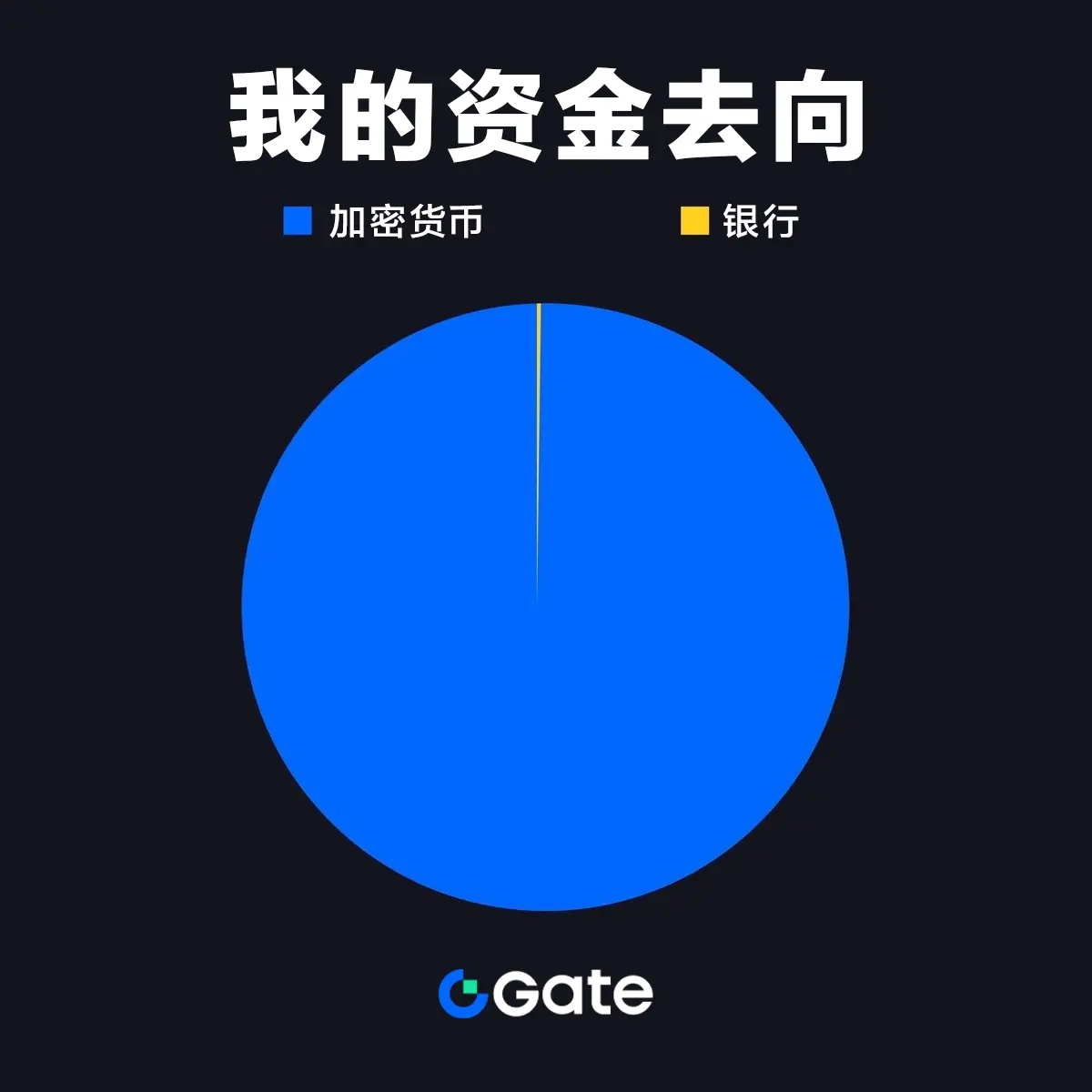
The current status of the editor's wallet: That yellow line is my last stubbornness (used to pay for internet). 🤏
#TradfiTradingChallenge
CryptoChampion
The current status of the editor's wallet: That yellow line is my last stubbornness (used to pay for internet). 🤏
#TradfiTradingChallenge
repost-content-media
  • Reward
  • Comment
  • Repost
  • Share
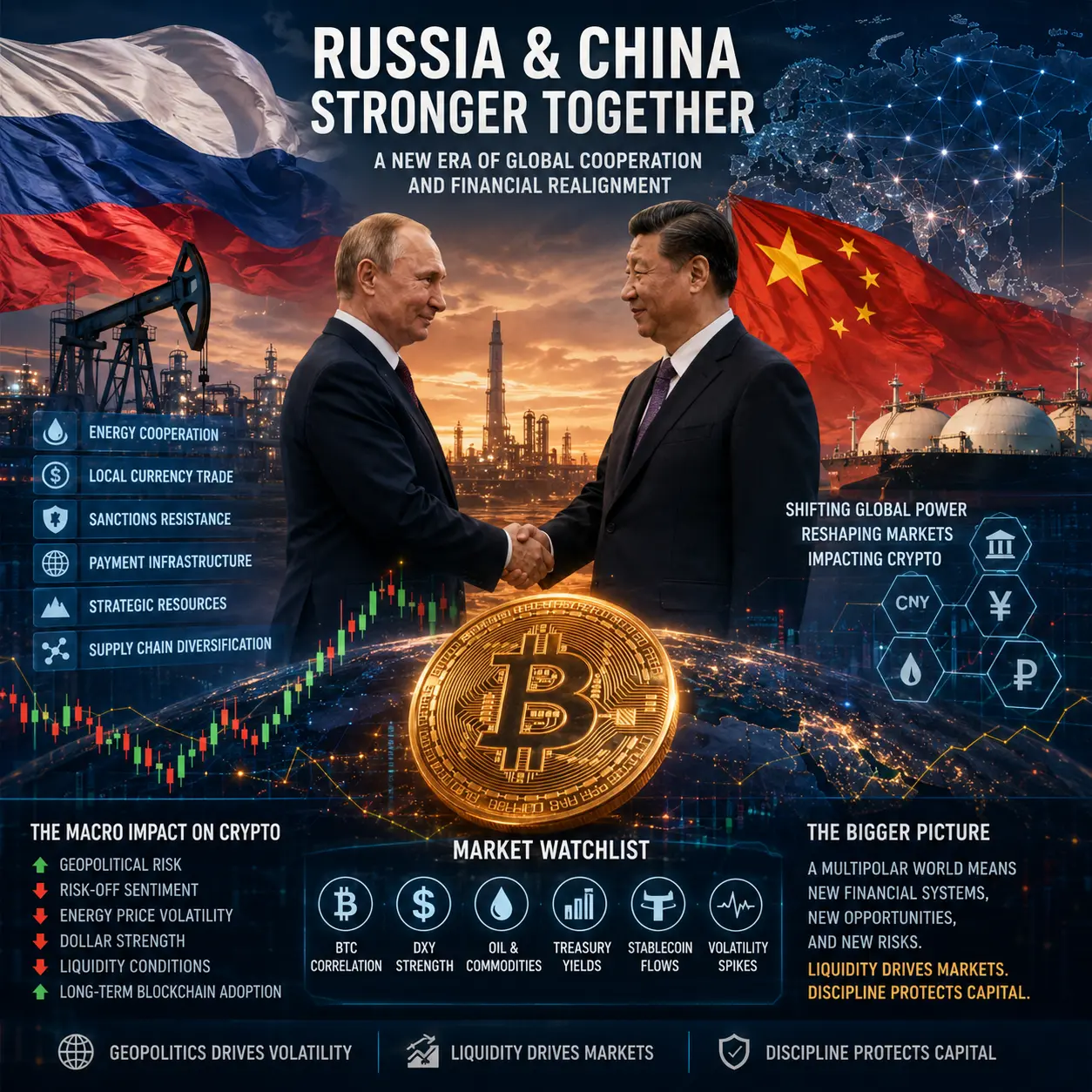
#PutinVisitsChina
The latest high-level meeting between Russia and China is far bigger than a symbolic diplomatic event. It represents a continuing shift in global power coordination that could reshape energy markets, international trade systems, capital flows, and long-term financial infrastructure.
For crypto traders and macro investors, this is not simply political theater.
It is a liquidity and risk-pricing event.
As digital assets become increasingly connected to macroeconomic conditions, geopolitical developments now influence Bitcoin and broader crypto markets through the same channels
CryptoChampion
#PutinVisitsChina
The latest high-level meeting between Russia and China is far bigger than a symbolic diplomatic event. It represents a continuing shift in global power coordination that could reshape energy markets, international trade systems, capital flows, and long-term financial infrastructure.
For crypto traders and macro investors, this is not simply political theater.
It is a liquidity and risk-pricing event.
As digital assets become increasingly connected to macroeconomic conditions, geopolitical developments now influence Bitcoin and broader crypto markets through the same channels that impact equities, commodities, foreign exchange, and bond markets.
The global market structure is evolving into a world where geopolitics, monetary policy, energy security, and digital finance are deeply interconnected.
Why This Meeting Matters
Russia and China are strengthening economic and strategic cooperation during a period of growing fragmentation between major global powers.
Markets are closely watching several key areas:
• Energy trade agreements
• Commodity settlement systems
• Local currency trade expansion
• Sanctions resistance mechanisms
• Cross-border payment infrastructure
• Strategic resource coordination
• Global supply chain diversification
This matters because the international financial system is gradually moving toward a more multipolar structure where nations seek alternatives to traditional Western-dominated settlement networks.
That creates important implications for blockchain technology, stablecoins, and decentralized financial infrastructure.
The Macro Transmission Into Crypto
Crypto no longer trades as an isolated speculative industry.
Bitcoin now reacts heavily to:
• Global liquidity expectations
• US dollar strength
• Bond market volatility
• Central bank policy
• Energy price movements
• Geopolitical risk sentiment
When geopolitical tensions rise, markets typically experience a temporary “risk-off” reaction where investors reduce exposure to higher-volatility assets.
That can pressure crypto prices in the short term.
However, there is also a second layer developing beneath the surface.
As geopolitical fragmentation increases, institutional interest in alternative settlement systems and decentralized financial rails may continue expanding over the long run.
This creates a powerful dual narrative for digital assets:
Short-term volatility.
Long-term structural relevance.
Energy Markets Remain the Core Variable
One of the most important aspects of Russia-China coordination is energy.
Russia remains one of the world’s largest energy exporters, while China is one of the world’s largest energy consumers.
Any deeper coordination between both nations can influence:
• Oil pricing expectations
• Natural gas trade flows
• Commodity supply stability
• Inflation expectations globally
• Industrial production forecasts
• Transportation and manufacturing costs
Energy prices directly affect inflation, and inflation heavily influences central bank policy.
That means geopolitical developments can indirectly shape interest rate expectations, liquidity conditions, and ultimately crypto market direction.
If energy prices spike sharply, markets may fear tighter monetary conditions for longer.
That environment usually pressures speculative assets temporarily.
Liquidity Still Controls Everything
Narratives alone rarely sustain major crypto rallies.
Liquidity remains the most important driver.
Even if geopolitical fragmentation strengthens blockchain adoption narratives, markets still require:
• Expanding liquidity
• Stable macro conditions
• Institutional participation
• Capital inflows
• Risk appetite recovery
Without those factors, bullish narratives often fail to generate sustainable momentum.
This is why experienced traders focus less on emotional headlines and more on liquidity behavior after geopolitical events unfold.
What Traders Should Watch Closely
Professional traders are monitoring several key indicators right now:
→ Bitcoin correlation with equities and macro risk sentiment
→ US Dollar Index (DXY) strength
→ Oil and commodity market reactions
→ Treasury yield movements
→ Stablecoin inflow and outflow trends
→ Institutional positioning behavior
→ Volatility spikes during geopolitical headlines
→ Capital rotation between risk assets and safe havens
These signals reveal whether markets are pricing temporary uncertainty or a deeper structural macro shift.
The Bigger Picture
The global economy is entering an era where geopolitical fragmentation increasingly shapes financial markets.
Trade systems, reserve currencies, payment infrastructure, and capital allocation are all becoming more politically sensitive.
For crypto, this creates both opportunity and instability.
Blockchain infrastructure may benefit from growing demand for alternative settlement systems and decentralized financial rails.
But in the short term, markets remain vulnerable to volatility whenever geopolitical uncertainty threatens liquidity confidence.
That is why disciplined positioning matters more than emotional reactions.
The traders who survive geopolitical cycles are usually the ones who understand one simple principle:
Markets react first to liquidity conditions — and only later to narratives.
repost-content-media
  • Reward
  • Comment
  • Repost
  • Share
#PolymarketLaunchesPrivateCompanyPredictionMarkets
The financial system is entering a new era where information, expectations, and future probabilities are becoming tradable assets in real time.
Polymarket’s launch of private company prediction markets through its partnership with Nasdaq Private Market is not simply another crypto product release. It represents the early formation of a completely new financial layer connecting venture capital, institutional data infrastructure, blockchain technology, and global retail participation.
For decades, private markets remained one of the most exclus
OPENAI2.54%
ETH0.46%
CryptoChampion
#PolymarketLaunchesPrivateCompanyPredictionMarkets
The financial system is entering a new era where information, expectations, and future probabilities are becoming tradable assets in real time.
Polymarket’s launch of private company prediction markets through its partnership with Nasdaq Private Market is not simply another crypto product release. It represents the early formation of a completely new financial layer connecting venture capital, institutional data infrastructure, blockchain technology, and global retail participation.
For decades, private markets remained one of the most exclusive areas in finance. Access to early-stage growth opportunities was dominated by venture capital firms, hedge funds, private equity groups, and institutional investors. By the time companies reached public stock exchanges, much of the largest valuation growth had already occurred behind closed doors.
That structure is now beginning to change.
Polymarket’s new model allows users to trade live probability-based contracts connected to private company milestones, including valuation targets, IPO timelines, funding rounds, and secondary market activity. Instead of relying on delayed financial disclosures or analyst speculation, investor expectations themselves become continuously priced and actively traded.
This transforms prediction markets into real-time financial intelligence systems.
The opportunity behind this market is massive. Global private company valuations now exceed trillions of dollars, driven largely by artificial intelligence, fintech, robotics, enterprise software, biotech, and digital infrastructure startups. Many of today’s largest technology firms remain private far longer than companies did in previous decades while reaching valuations once reserved only for public markets.
That evolution created a widening information gap between institutional capital and public investors.
Polymarket is attempting to bridge that gap by allowing market participants to trade questions tied directly to private sector growth expectations. Contracts may revolve around whether OpenAI reaches a trillion-dollar valuation, whether Anthropic secures another major funding round, or whether leading AI companies launch IPOs before a defined timeframe.
These markets operate dynamically. Probabilities adjust continuously based on venture capital flows, macroeconomic conditions, technological adoption, investor sentiment, funding activity, and broader market liquidity.
The most important development behind this launch is the integration with Nasdaq Private Market itself.
Historically, prediction markets faced criticism because settlement mechanisms often depended on unclear governance structures or unverifiable data sources. Institutional-grade valuation data significantly improves transparency, settlement credibility, and trust. This moves prediction markets beyond experimental crypto applications and closer toward institutional financial infrastructure.
The timing is also highly strategic.
Global finance is already shifting toward tokenization, real-time market pricing, and decentralized financial infrastructure. Artificial intelligence has accelerated capital allocation into private markets while traditional IPO pipelines remain slower and more selective than previous cycles. Retail investors increasingly want earlier access to innovation before companies reach public exchanges.
Prediction markets naturally fit this environment because they convert future expectations into continuously tradable financial instruments.
This trend also reflects the broader evolution happening across crypto markets. Investor attention is gradually moving away from short-term speculative hype and toward infrastructure-driven narratives connected to long-term adoption. Blockchain networks are increasingly being viewed as financial operating systems rather than purely speculative ecosystems.
Ethereum remains central because decentralized applications, liquidity systems, and smart contract infrastructure continue relying heavily on its network. Chainlink’s oracle technology also becomes increasingly critical as accurate off-chain data verification is essential for prediction market settlement and institutional confidence.
At the same time, competition within the prediction market industry is accelerating.
Polymarket represents the decentralized, crypto-native model focused on global participation and blockchain liquidity, while Kalshi represents a compliance-first structure built around regulatory integration and U.S.-regulated financial systems. The rivalry between these models may ultimately shape the future architecture of event-based financial trading worldwide.
Regulatory uncertainty, however, remains the sector’s largest challenge. Governments and financial regulators continue debating whether prediction markets should be classified as derivatives, speculative assets, information markets, or gambling-related products. Concerns surrounding insider information, manipulation risks, settlement reliability, and cross-border participation will likely intensify as adoption expands.
Still, the direction of the industry is becoming increasingly clear.
Financial markets are evolving toward systems where information itself becomes tradable, probabilities become measurable, and investor sentiment becomes continuously priced. Blockchain infrastructure is steadily integrating with institutional finance, venture capital analytics, and real-time forecasting systems.
Polymarket’s partnership with Nasdaq Private Market may ultimately be remembered as one of the earliest major steps toward merging decentralized infrastructure with institutional capital markets at global scale.
The crypto industry is no longer developing only through speculation.
It is developing through infrastructure, transparency, financial intelligence, and the tokenization of information itself.
repost-content-media
  • Reward
  • 3
  • Repost
  • Share
discovery:
LFG 🔥
View More
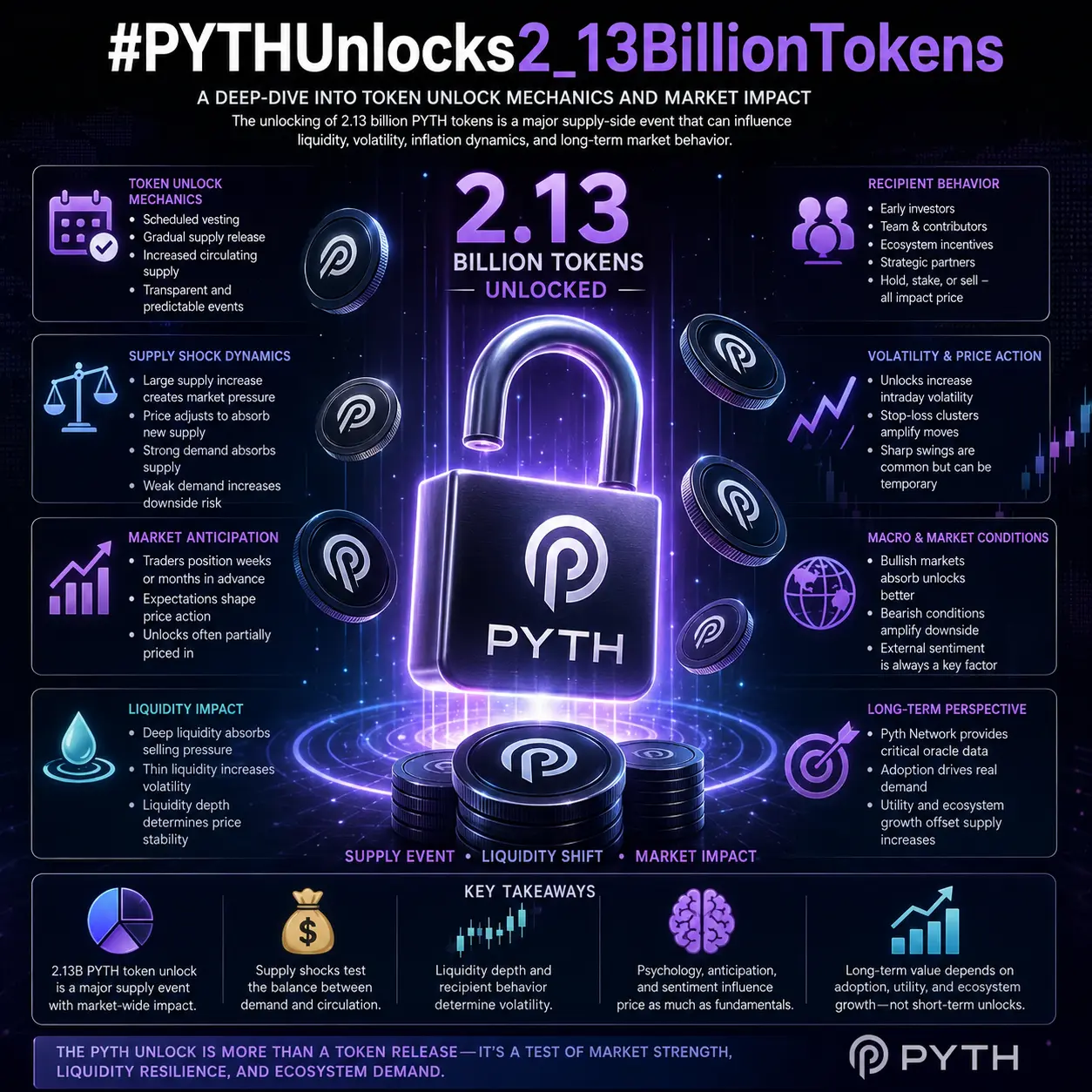
#PYTHUnlocks2.13BillionTokens
The unlocking of 2.13 billion PYTH tokens is one of the most important supply-side events currently facing the crypto market, not simply because of the size of the unlock itself, but because token unlocks have become critical stress tests for liquidity, investor psychology, and market structure across the digital asset industry.
In crypto markets, price is heavily influenced by circulating supply dynamics. When a large number of previously locked tokens suddenly become transferable, traders immediately begin evaluating whether the market has enough demand to abso
PYTH3.95%
CryptoChampion
#PYTHUnlocks2.13BillionTokens
The unlocking of 2.13 billion PYTH tokens is one of the most important supply-side events currently facing the crypto market, not simply because of the size of the unlock itself, but because token unlocks have become critical stress tests for liquidity, investor psychology, and market structure across the digital asset industry.
In crypto markets, price is heavily influenced by circulating supply dynamics. When a large number of previously locked tokens suddenly become transferable, traders immediately begin evaluating whether the market has enough demand to absorb the additional supply without triggering sustained downside pressure.
This is what makes the PYTH unlock significant.
Pyth Network operates within the blockchain infrastructure sector, providing decentralized price feeds and real-time market data for DeFi protocols, derivatives platforms, and on-chain financial systems. Infrastructure projects often depend on long-term ecosystem growth rather than short-term speculation, but tokenomics still play a major role in market behavior.
The core issue surrounding token unlocks is inflation pressure.
When billions of tokens enter circulation, the market must rebalance supply and demand equilibrium. If new buyers, staking demand, and ecosystem participation remain strong, the additional supply can be absorbed gradually. But if liquidity conditions weaken or sentiment turns bearish, unlocks can accelerate volatility and increase sell-side pressure.
One of the most misunderstood aspects of crypto unlock events is that markets often react before the actual unlock date arrives.
Professional traders monitor vesting schedules months in advance. This means price movements are frequently driven by anticipation rather than the unlock itself. Some traders hedge exposure early, while others attempt to front-run expected selling behavior from investors, contributors, or ecosystem participants receiving unlocked allocations.
This creates a layered market reaction where psychology becomes just as important as fundamentals.
Liquidity depth is another critical factor.
A large unlock entering a market with deep liquidity and strong trading activity may have limited long-term impact because buyers can absorb selling pressure across multiple price levels. However, if liquidity is thin, even moderate selling can create sharp downside moves due to slippage, cascading stop losses, and short-term panic positioning.
The behavior of recipients also matters significantly.
Unlocked allocations are often distributed among early investors, strategic backers, ecosystem funds, contributors, and development teams. If recipients choose to stake or hold tokens, the effective circulating pressure may remain limited. If recipients aggressively realize profits, market volatility can intensify rapidly.
This is why unlock events are never purely mathematical.
They are behavioral events.
Another major consideration is broader macro sentiment across crypto markets. During bullish cycles with strong capital inflows, markets are often capable of absorbing unlock-related supply shocks more efficiently. During bearish or uncertain macro conditions, the same unlock can amplify downside momentum as traders become more risk-averse.
Volatility is therefore highly dependent on external market conditions, not just token supply mechanics alone.
Algorithmic trading systems and market makers also play an increasingly important role during large unlock events. Automated liquidity systems continuously adjust spreads, hedge inventory risk, and rebalance exposure as new supply enters the market. This can temporarily stabilize price action, but it can also increase intraday volatility as algorithms respond to rapid order-flow changes.
At a deeper level, the PYTH unlock reflects one of crypto’s defining structural characteristics: programmable monetary expansion.
Unlike traditional equities where dilution events are relatively infrequent and heavily regulated, crypto assets operate on transparent vesting schedules visible to all market participants. This creates predictable supply events that traders can model, speculate on, and position around long before they occur.
Ultimately, the 2.13 billion PYTH token unlock is more than a token release.
It is a real-time test of market confidence, liquidity resilience, ecosystem demand, and investor conviction.
In modern crypto markets, the long-term success of any digital asset is determined not only by technology or narrative strength, but by whether the ecosystem can continuously generate enough utility, adoption, and demand to absorb expanding circulating supply over time.
repost-content-media
  • Reward
  • 2
  • Repost
  • Share
discovery:
To The Moon 🌕
View More
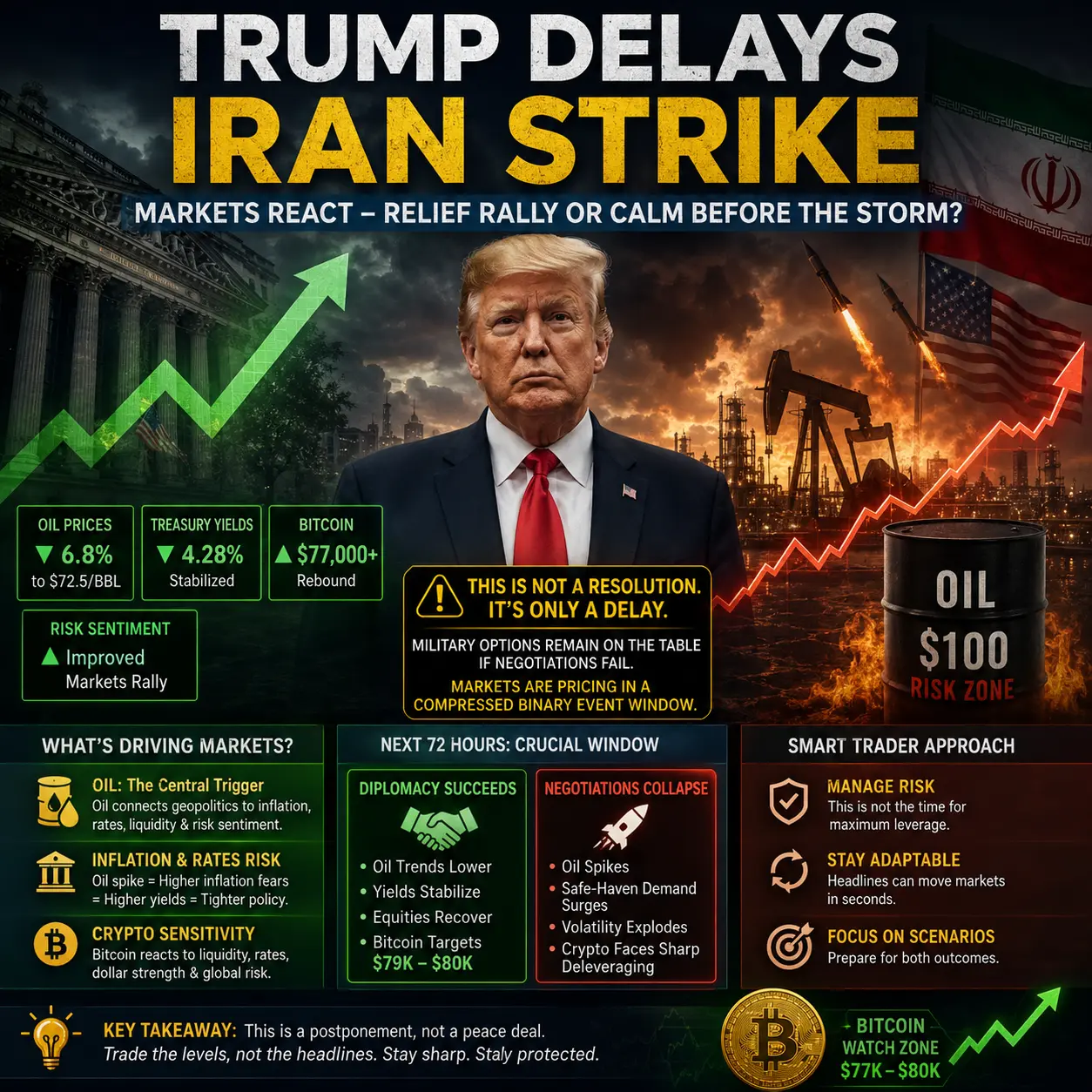
#TrumpDelaysIranStrike
Global markets are entering one of the most fragile and reactive macro environments of 2026, and the delay of a potential US strike on Iran has become a major catalyst across oil, bonds, equities, and crypto simultaneously.
The market reaction was immediate and extremely revealing.
Oil prices fell sharply. Treasury yields stabilized. Bitcoin rebounded above $77,000 after multiple consecutive red sessions. Risk sentiment improved almost instantly.
That tells you one thing clearly: Markets had already been heavily pricing in escalation risk.
The temporary delay requested
BTC0.13%
CryptoChampion
#TrumpDelaysIranStrike
Global markets are entering one of the most fragile and reactive macro environments of 2026, and the delay of a potential US strike on Iran has become a major catalyst across oil, bonds, equities, and crypto simultaneously.
The market reaction was immediate and extremely revealing.
Oil prices fell sharply. Treasury yields stabilized. Bitcoin rebounded above $77,000 after multiple consecutive red sessions. Risk sentiment improved almost instantly.
That tells you one thing clearly: Markets had already been heavily pricing in escalation risk.
The temporary delay requested by Saudi Arabia, Qatar, and the UAE was interpreted as a short-term reduction in the probability of immediate military conflict. But investors should understand something critical here — this is not a resolution of geopolitical risk. It is only a postponement of the market’s biggest current uncertainty.
Trump’s own statements confirmed that military options remain fully prepared if negotiations fail. That means markets are now trading inside a compressed binary event window where every headline can trigger violent repricing across all major asset classes.
The most important asset to watch right now is oil.
Oil is no longer just an energy trade. It has become the central transmission mechanism connecting geopolitics to inflation expectations, Federal Reserve policy, Treasury yields, and ultimately crypto liquidity conditions.
If conflict escalates, oil can rapidly move back toward or above the $100 zone. That would immediately reignite inflation fears globally, particularly through transportation and energy costs. Higher inflation pressure would force central banks — especially the Fed under Walsh’s leadership — to maintain restrictive monetary policy for longer.
That scenario matters enormously for Bitcoin and high-beta assets.
Higher oil leads to: Higher inflation expectations. Higher Treasury yields. Tighter financial conditions. Reduced liquidity appetite. Stronger dollar positioning. Pressure on risk assets.
Crypto does not trade in isolation anymore. Bitcoin increasingly behaves like a macro liquidity asset sensitive to interest rates, dollar strength, and global risk appetite.
That is why Bitcoin bouncing after the strike delay makes perfect sense. The market interpreted lower immediate conflict risk as lower short-term inflation pressure and therefore slightly less hawkish policy expectations.
But traders should not become complacent.
The next two to three days now represent one of the most important geopolitical timing windows of the month. If diplomacy produces even a temporary framework agreement, markets could rapidly shift into relief mode.
Under that scenario: Oil likely trends lower. Bond yields stabilize further. Equities recover. Bitcoin potentially targets the $79,000–$80,000 region quickly.
However, if negotiations collapse and military action proceeds, markets could reverse violently.
Oil spikes. Safe-haven demand surges. Volatility explodes. Crypto experiences another sharp deleveraging event.
This is exactly the type of environment where emotional trading becomes extremely dangerous. Traders chasing headlines without risk management are likely to get caught on the wrong side of rapid volatility expansions.
The smarter approach is understanding position sizing and scenario probability.
This is not a market environment for maximum leverage. It is a market environment for controlled exposure, disciplined hedging, and rapid adaptability.
What makes this situation even more important is that global markets are already operating under fragile liquidity conditions. Treasury yields remain elevated, macro uncertainty is high, and geopolitical instability is feeding directly into cross-asset volatility. That means every major headline now carries amplified impact.
For crypto traders specifically, the next 72 hours may shape short-term momentum more than the next several weeks combined.
The market is now waiting for one thing: Whether diplomacy survives the deadline — or whether escalation returns to the table.
repost-content-media
  • Reward
  • 2
  • Repost
  • Share
discovery:
To The Moon 🌕
View More
#MuskLosesLawsuitAgainstOpenAI
Elon Musk just experienced one of the most consequential weeks of his recent corporate career, and the implications stretch far beyond a courtroom defeat. In a matter of days, three major developments collided at once: a failed legal war against OpenAI, a massive Bitcoin treasury revelation from SpaceX, and a strategic AI infrastructure deal that reshaped the competitive landscape of artificial intelligence.
Each event alone would have dominated headlines. Together, they reveal how deeply interconnected AI, crypto, and corporate power have become in 2026.
The bi
BTC0.13%
SPCX14.03%
CryptoChampion
#MuskLosesLawsuitAgainstOpenAI
Elon Musk just experienced one of the most consequential weeks of his recent corporate career, and the implications stretch far beyond a courtroom defeat. In a matter of days, three major developments collided at once: a failed legal war against OpenAI, a massive Bitcoin treasury revelation from SpaceX, and a strategic AI infrastructure deal that reshaped the competitive landscape of artificial intelligence.
Each event alone would have dominated headlines. Together, they reveal how deeply interconnected AI, crypto, and corporate power have become in 2026.
The biggest financial revelation came from SpaceX’s latest SEC disclosures. The company confirmed it now holds 18,712 BTC, valued at roughly $1.45 billion at current market prices. More importantly, the filing showed a cost basis near $661 million, meaning the position has generated hundreds of millions in unrealized profit.
That instantly places SpaceX among the largest private corporate Bitcoin holders in the world.
For years, institutional Bitcoin adoption has largely been associated with public companies like MicroStrategy and Tesla. But SpaceX changes the conversation because it is still private. Investors rarely receive detailed visibility into the balance sheets of elite private firms, which means this disclosure offered a rare look into how major technology companies are quietly positioning themselves around digital assets.
The timing also matters.
SpaceX is reportedly preparing for a future Nasdaq listing under the ticker SPCX. If that happens, Bitcoin exposure may become a significant part of the company’s public market narrative. Investors will not only be evaluating launch contracts, satellite infrastructure, and Starlink growth. They will also be indirectly gaining exposure to one of the largest corporate Bitcoin positions held by a private aerospace company.
At the same time, Musk suffered a major legal setback in his battle against OpenAI and Sam Altman.
His lawsuit accused OpenAI of abandoning its original nonprofit principles and transforming into a profit-maximizing AI corporation. Musk argued that the organization violated the spirit of its founding mission and sought damages reportedly reaching $150 billion.
But the case collapsed quickly.
According to court reports, the federal jury needed only 90 minutes to reach a unanimous conclusion. The ruling centered on timing rather than ideology. The court determined Musk had waited too long to bring the claims forward, meaning the statute of limitations had expired. Every major claim was dismissed.
The decision represents more than a legal defeat. It weakens Musk’s public argument that OpenAI illegitimately evolved away from its original structure. It also removes a major legal overhang that had followed OpenAI during one of the most aggressive expansion phases in AI history.
Then came the most unexpected twist.
Just days before the verdict became public, SpaceX finalized a major compute partnership with Anthropic, one of OpenAI’s largest and fastest-growing competitors. The agreement grants Anthropic access to the Colossus supercomputer infrastructure and its reported 220,000 GPUs to support Claude AI development.
That move completely reframed the narrative.
Musk spent years criticizing OpenAI for prioritizing commercial scale and corporate incentives over open research ideals. Yet immediately after losing the case, one of his companies signed a large-scale infrastructure agreement helping another AI giant accelerate its own commercial ambitions.
From a business perspective, the strategy is logical. AI infrastructure has become one of the most profitable and strategically important sectors in technology. GPU capacity is now viewed as a geopolitical and economic asset. Companies controlling large-scale compute systems are positioned to generate enormous revenue regardless of which AI model ultimately dominates the market.
But symbolically, the contradiction is impossible to ignore.
This week ultimately showed that the modern technology war is no longer about isolated industries. Crypto treasury strategies, AI infrastructure, legal power, and capital markets are now merging into a single competitive battlefield.
SpaceX revealing a billion-dollar Bitcoin position while simultaneously monetizing AI compute infrastructure may become a blueprint other corporations eventually follow.
The question now is no longer whether corporations will adopt Bitcoin.
The question is how many major private companies are already doing it quietly before the public discovers the scale.
repost-content-media
  • Reward
  • Comment
  • Repost
  • Share
#TradfiTradingChallenge
Bitcoin Continues Holding Near $77,800 as Markets Enter a Critical Macro Crossroads
Bitcoin is currently trading near $77,800, maintaining relative stability despite one of the most uncertain macro environments global markets have faced in recent months. While many traders expected deeper downside pressure following escalating geopolitical tensions, rising bond market stress, and persistent uncertainty surrounding global monetary policy, Bitcoin has so far remained surprisingly resilient.
This price behavior is becoming increasingly important because it reveals a major
BTC0.13%
CryptoChampion
#TradfiTradingChallenge
Bitcoin Continues Holding Near $77,800 as Markets Enter a Critical Macro Crossroads
Bitcoin is currently trading near $77,800, maintaining relative stability despite one of the most uncertain macro environments global markets have faced in recent months. While many traders expected deeper downside pressure following escalating geopolitical tensions, rising bond market stress, and persistent uncertainty surrounding global monetary policy, Bitcoin has so far remained surprisingly resilient.
This price behavior is becoming increasingly important because it reveals a major shift in current market psychology.
At the moment, markets are operating in a cautious and defensive environment. Investors across crypto, equities, and fixed income are reducing aggressive exposure while waiting for stronger confirmation about where the global economy is heading next. Yet despite this caution, Bitcoin has not experienced the type of panic-driven collapse that often accompanies periods of geopolitical instability and tightening financial conditions.
That distinction matters.
In previous macro stress cycles, Bitcoin frequently traded as a high-volatility risk asset that reacted sharply to uncertainty. However, current price action suggests the market may be entering a more mature phase where traders are focusing less on short-term headlines and more on broader liquidity expectations, institutional positioning, and long-term macro trends.
Several major forces are currently shaping Bitcoin’s consolidation phase.
The first is geopolitical risk. Ongoing tensions in the Middle East, particularly involving Iran and broader regional instability, continue to influence energy markets, inflation expectations, and global investor sentiment. Oil volatility has remained elevated, and any significant escalation could rapidly impact global financial conditions. Markets are highly sensitive to these developments because higher energy prices can strengthen inflationary pressures at a time when central banks are already struggling to balance economic growth with restrictive monetary policy.
The second major factor is the bond market.
Global bond yields have become increasingly volatile as investors reassess interest rate expectations and long-term fiscal risks. Rising yields typically tighten liquidity conditions across financial markets, making speculative and growth-oriented assets more vulnerable to pressure. Bitcoin has historically shown sensitivity to liquidity cycles, meaning continued instability in sovereign debt markets could influence crypto positioning in the weeks ahead.
At the same time, however, Bitcoin’s ability to remain above key psychological support zones despite these pressures is drawing attention from market participants. Instead of aggressive capitulation, current trading activity reflects hesitation and selective participation. Volume remains relatively controlled, leverage appears more cautious than during previous speculative phases, and traders are positioning defensively rather than emotionally.
This often creates a unique type of market structure.
When markets stop reacting aggressively to negative headlines, it can indicate that much of the weak-handed selling has already occurred. Sellers become less effective at pushing prices lower, while buyers gradually begin absorbing supply during consolidation periods. That does not automatically guarantee an immediate breakout, but it can signal the early stages of a potential sentiment transition.
Still, risks remain significant.
Global liquidity conditions continue to tighten, recession concerns have not disappeared, and geopolitical uncertainty remains capable of triggering sudden volatility across all asset classes. Bitcoin is currently caught between two competing narratives: one centered around macroeconomic caution and another focused on long-term institutional adoption and monetary debasement hedging.
This is why current consolidation near $77,800 is so important.
The market appears to be waiting for a decisive catalyst before committing to its next directional move. That catalyst could come from central bank policy shifts, easing geopolitical tensions, declining bond yields, stronger ETF inflows, or broader improvements in global risk appetite. Conversely, a major escalation in geopolitical conflict or renewed liquidity stress could quickly shift sentiment back toward defensive positioning.
For now, Bitcoin does not look like a market experiencing panic. Instead, it resembles a market searching for clarity while absorbing one of the most complex macro environments of the cycle.
The coming days and weeks will likely determine whether this consolidation becomes the foundation for a stronger recovery phase or simply another pause before renewed volatility returns across global markets.
repost-content-media
  • Reward
  • Comment
  • Repost
  • Share
Clicked a suspicious link before thinking twice... and then there was nothing left.
Gate Square reminds you: stay sharp and stay safe from phishing.
#TradfiTradingChallenge
CryptoChampion
Clicked a suspicious link before thinking twice... and then there was nothing left.
Gate Square reminds you: stay sharp and stay safe from phishing.
#TradfiTradingChallenge
repost-content-media
  • Reward
  • Comment
  • Repost
  • Share
#GrayscaleBuysAndStakesOver510KHYPE Grayscale Stacks lHYPE Institutional Capital Is Quietly Reshaping The Future Of Decentralized Trading
One of the biggest institutional signals of this crypto cycle may already be happening right in front of the market, yet most traders still do not fully understand its long-term implications.
Grayscale reportedly accumulated and staked more than 510,000 HYPE tokens.
That detail matters far more than most people realize.
This was not short-term speculation. This was not momentum trading. This was not a temporary rotation into a trending altcoin.
This was str
HYPE3.09%
BTC0.13%
ETH0.46%
CryptoChampion
#GrayscaleBuysAndStakesOver510KHYPE Grayscale Stacks lHYPE Institutional Capital Is Quietly Reshaping The Future Of Decentralized Trading
One of the biggest institutional signals of this crypto cycle may already be happening right in front of the market, yet most traders still do not fully understand its long-term implications.
Grayscale reportedly accumulated and staked more than 510,000 HYPE tokens.
That detail matters far more than most people realize.
This was not short-term speculation. This was not momentum trading. This was not a temporary rotation into a trending altcoin.
This was strategic positioning inside a rapidly expanding decentralized trading ecosystem.
And the most important part is not simply the purchase itself. It is the staking.
When institutions lock assets instead of actively trading them, it signals long-term conviction, future infrastructure exposure, and expectations of significantly larger growth ahead.
That changes the entire market structure around HYPE.
By staking hundreds of thousands of tokens, Grayscale effectively removed a large amount of supply from active circulation. This immediately creates tighter liquidity conditions across the market.
Lower liquid supply combined with rising institutional demand has historically created some of the strongest price expansion environments in crypto.
This is how supply shocks begin.
As more tokens become locked through staking while institutional interest grows, available market liquidity shrinks. During future demand surges, even relatively small waves of new capital can create aggressive price movements because there are fewer sellers available on exchanges.
But this story is far bigger than simple price speculation.
The real importance of Hyperliquid is its role inside decentralized financial infrastructure.
Most retail traders still view HYPE as another trending altcoin narrative. Institutions are viewing it very differently.
Hyperliquid is building a high-performance decentralized trading ecosystem capable of competing directly with centralized exchanges.
The platform focuses on: high-speed derivatives trading, on-chain perpetual futures, deep liquidity systems, advanced order book execution, scalable financial architecture, and institutional-grade performance.
That makes Hyperliquid structurally different from many older DeFi protocols.
For years, institutions largely ignored decentralized trading systems because they lacked speed, efficiency, execution quality, and scalability.
Hyperliquid solved many of those problems faster than the market expected.
Its infrastructure operates more like a professional financial exchange than a traditional experimental DeFi protocol.
And institutional capital always moves toward efficient financial infrastructure.
This is why Grayscale’s move could become one of the most important early signals of a much larger institutional transition happening behind the scenes.
The next phase may involve ETF expansion.
This is where the long-term implications become extremely important.
Institutional accumulation often starts before public demand fully arrives. Large firms build positions early because once ETF products scale globally, the required inventory becomes enormous.
Funds need underlying assets. Custodians need reserves. Market makers require liquidity. Yield systems need staking exposure. Structured financial products require long-term supply access.
All of this creates continuous accumulation pressure.
If ETF demand eventually expands while staking continues removing tokens from circulation, the market could enter a structural imbalance where demand grows faster than available supply.
Historically, that is where some of crypto’s most explosive repricing phases begin.
Another critical factor is Hyperliquid’s economic model.
Unlike weak narrative tokens that depend purely on hype cycles, Hyperliquid generates real economic activity through trading volume, fee generation, liquidity systems, and active protocol usage.
The ecosystem benefits from: growing perpetual futures activity, strong trading demand, staking participation, buyback mechanisms, and deflationary supply dynamics.
This creates a powerful long-term feedback loop.
More trading activity generates more revenue. More revenue strengthens token economics. Stronger tokenomics attract additional capital. Additional capital increases scarcity pressure.
That is how dominant crypto ecosystems evolve over time.
The volatility ahead will likely remain extreme.
HYPE is transitioning from a speculative mid-cap asset into a high-beta institutional infrastructure narrative.
That means sharp pullbacks, aggressive rallies, violent liquidations, and rapid momentum shifts will continue to define the market structure.
But historically, institutional accumulation phases reward disciplined positioning rather than emotional trading.
Smart money rarely buys peak euphoria. It accumulates during weakness, consolidation, and fear.
And that may be exactly what is unfolding right now.
Crypto is entering a new phase where institutional capital is no longer focused only on owning digital assets.
Now the focus is shifting toward controlling the infrastructure powering decentralized finance itself.
Bitcoin opened the institutional door. Ethereum expanded the infrastructure layer. Now the next battle is centered around decentralized trading systems, liquidity networks, and financial execution architecture.
Hyperliquid is positioning itself directly at the center of that transformation.
And if institutional accumulation continues accelerating, HYPE may eventually become far more than a trending altcoin narrative.
It could evolve into one of the core infrastructure assets of the next generation crypto financial system.
#GateSquare
repost-content-media
  • Reward
  • Comment
  • Repost
  • Share
🚨 Community Buzz Today: $HYPE breaks to new highs — can it keep pumping?
📈 $HYPE breaks above previous highs
📈 Trading volume surges as market sentiment heats up
📈 Technical indicators enter overbought territory
Everyone’s discussing:
🔥 $HYPE up over 16% in 24h
🔥 Chase now or wait for a pullback?
🔥 Will an overbought market trigger a major shakeout?
🎁 Join the discussion
Daily 250U futures bonus giveaways + Gate 13th Anniversary gift boxes every week!
👉 Join Gate Hot Chat👇
https://gate.onelink.me/Hls0/group?chatroom=group&ref=VVhBVA9a&ref_type=105
#TradfiTradingChallenge
HYPE3.09%
CryptoChampion
🚨 Community Buzz Today: $HYPE breaks to new highs — can it keep pumping?
📈 $HYPE breaks above previous highs
📈 Trading volume surges as market sentiment heats up
📈 Technical indicators enter overbought territory
Everyone’s discussing:
🔥 $HYPE up over 16% in 24h
🔥 Chase now or wait for a pullback?
🔥 Will an overbought market trigger a major shakeout?
🎁 Join the discussion
Daily 250U futures bonus giveaways + Gate 13th Anniversary gift boxes every week!
👉 Join Gate Hot Chat👇
https://gate.onelink.me/Hls0/group?chatroom=group&ref=VVhBVA9a&ref_type=105
#TradfiTradingChallenge
repost-content-media
  • Reward
  • Comment
  • Repost
  • Share
  • Pinned