

 :
:#GENIUSImplementationRulesDraftReleased
📌 1. What These Draft Rules Actually Are
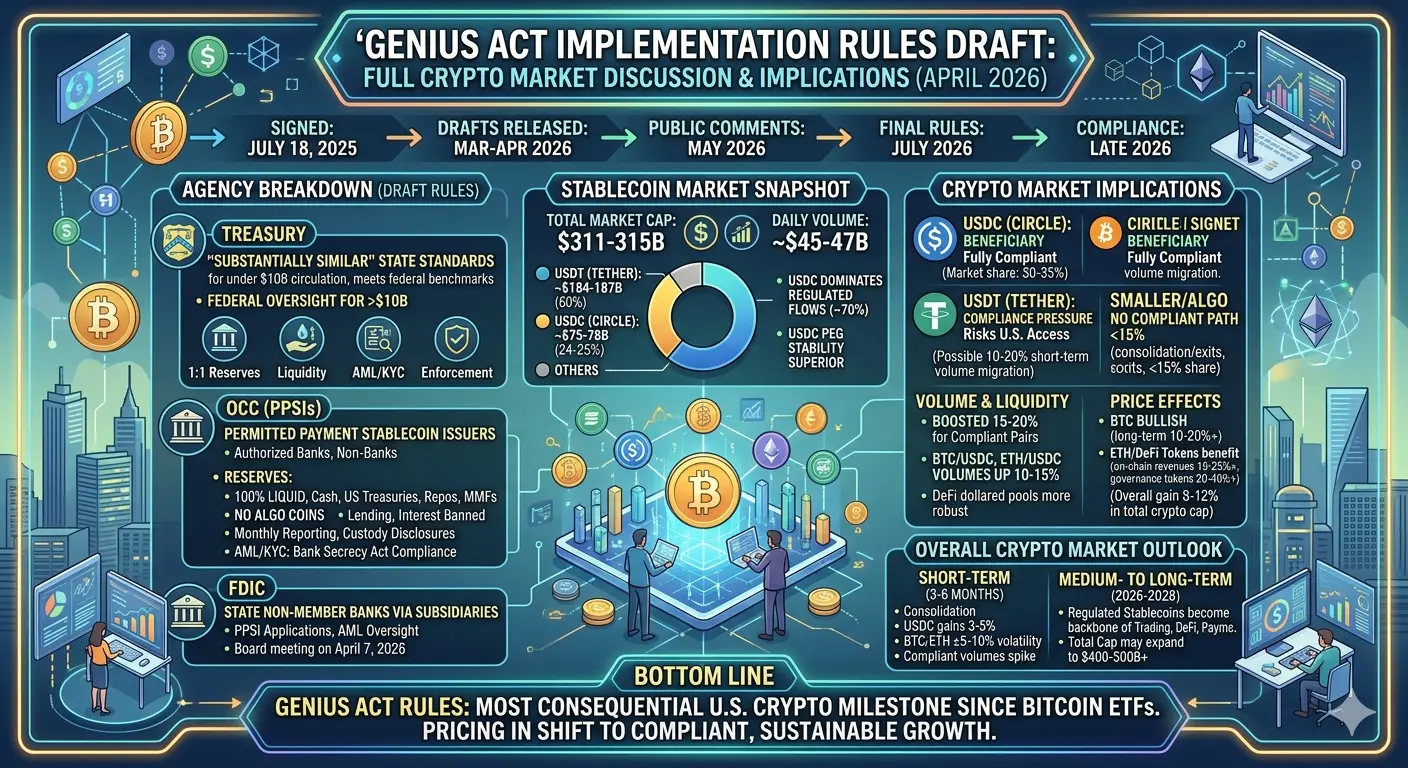
The U.S. Department of the Treasury has released the first draft implementation rules under the Guiding and Establishing National Innovation for U.S. Stablecoins Act (GENIUS Act) — in the form of a Notice of Proposed Rulemaking (NPRM). This is a pre‑final regulation, not yet legally binding. The public—including industry participants, regulators, and legal experts—can comment on it for the next 60 days before final rules are made.
⚖️ 2. Regulatory Framework the Draft Seeks to Shape
🪙 Stablecoin Oversight Framework
Under the GENIUS Act, stablecoins designed as payment instruments must be regulated — and these draft rules begin defining exactly how that regulation will work in practice.
There is a dual system of oversight:
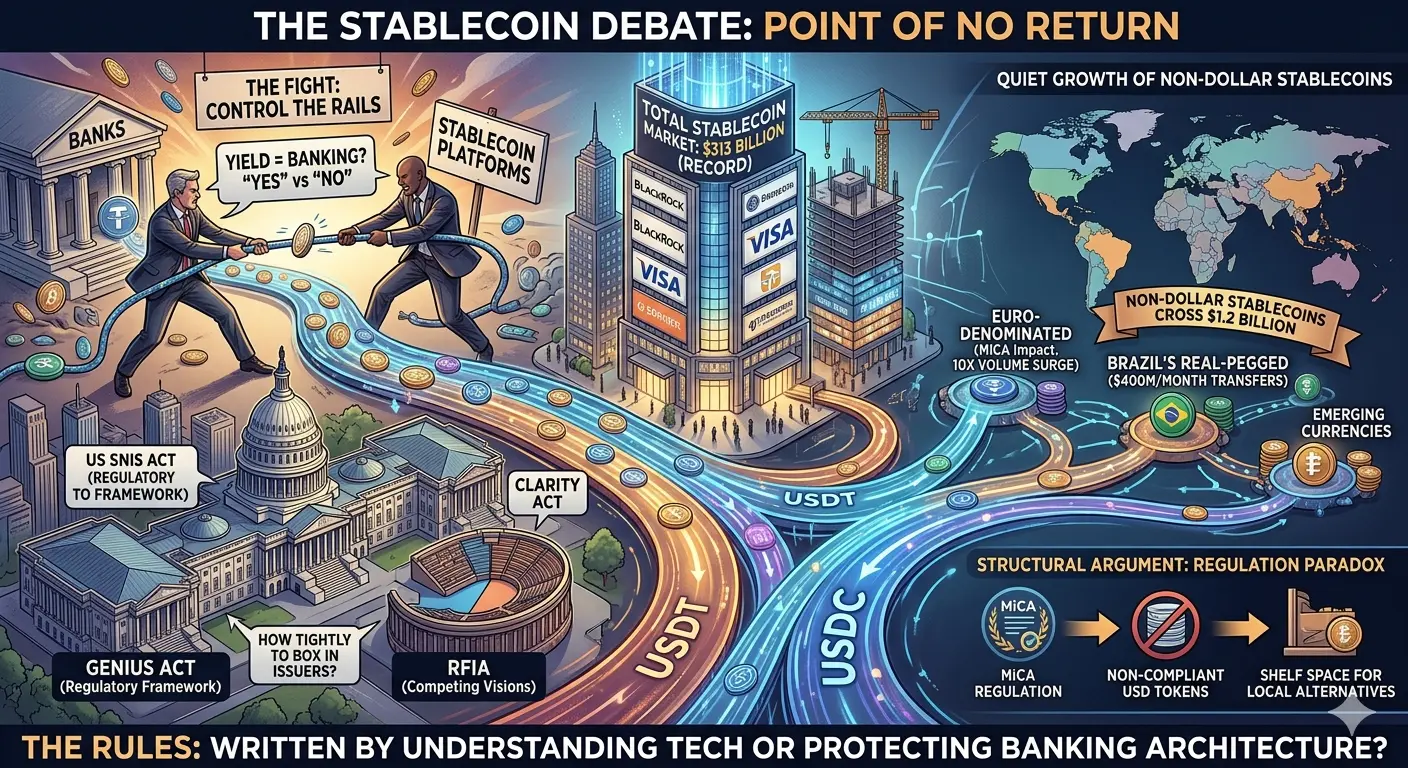
Smaller issuers (under $10 billion) can potentially be regulated at the state level, if the state’s rules are deemed “substantially similar” to the federal framework.
Larger issuers (over $10 billion) or those not meeting the similarity test must be regulated federally.
The draft specifically focuses on how to decide whether state regulatory regimes are “substantially similar” to federal standards, a major unresolved question before this proposal.
📊 3. Key Proposed Principles in the Draft
Although the Treasury’s draft is procedural (about how to judge similarity), discussions around it make clear some likely regulatory expectations, including:
🔹 Reserve & Liquidity Standards
State regimes seeking equivalence must match strict expectations for reserves — generally full 1:1 backing with high‑quality liquid assets like U.S. dollars or short‑term Treasuries.
🔹 Reporting & Transparency
Stablecoin issuers may need monthly third‑party attestations of reserves and possibly even daily public breakdowns, moving the market toward bank‑like transparency.
🔹 AML/Compliance Expectations
Complying with federal anti‑money‑laundering (AML), sanctions, and enforcement frameworks will be essential for any qualifying state regime.
These kinds of standards aren’t fully finalized yet — but the draft outlines the principles that will guide final rules.
🏛️ 4. Why This Matters for the U.S. and Stablecoin Markets
🧩 Regulatory Clarity
This draft marks the first meaningful step in converting the GENIUS Act (passed into law in 2025) into enforceable rules. Until now, the law existed in principle but lacked finalized regulatory text.
This matters because stablecoin issuers have faced uncertainty about whether and how they must comply, especially when operating across state and federal lines.
💼 Impact on Issuers & Investors
For Issuers
Smaller entities may be able to choose state paths if their local regulators conform to federal standards.
Larger issuers will likely operate under direct federal supervision, possibly increasing compliance costs.
For Investors & Users
Clearer rules could reduce depeg risk and improve confidence in regulated stablecoins.
Stablecoins could see broader institutional integration as compliance becomes clearer.
🪪 Market Structure Effects
The final regulatory framework will likely influence:
Which stablecoins are listed on major exchanges
Liquidity and backing standards
How stablecoins interact with traditional finance
Bank participation and custody products
By building a federal baseline, the U.S. aims to standardize oversight and avoid a fragmented patchwork.
🧠 5. Timeline and Next Steps
📌 60‑day public comment period — stakeholders submit feedback.
📌 Analysis & revision phase — regulators review and adjust the draft.
📌 Final rules — could take many months before becoming binding.
📌 Additional regulators (like the Office of the Comptroller of the Currency) are issuing related rules under the same law, showing a multi‑agency regulatory rollout.
📉 6. Broader Regulatory Context
This is part of a wider shift toward formalizing crypto and stablecoin oversight in the U.S.:
The GENIUS Act itself was the first major federal stablecoin law.
Other regulators like the OCC are issuing parallel rulemakings.
Legislative debates (e.g., around yield‑bearing stablecoins in other bills) are still ongoing.
📊 Bottom Line
✨ The release of the draft implementation rules is a major step in turning the GENIUS Act from law into actionable regulation.
✨ It signals that stablecoin regulations are no longer theoretical — they are being defined in detail, with public scrutiny.
✨ The long‑term outcome will shape how stablecoin issuers operate, influence U.S. digital finance infrastructure, and could set precedents for global crypto regulation.
📌 1. What These Draft Rules Actually Are
The U.S. Department of the Treasury has released the first draft implementation rules under the Guiding and Establishing National Innovation for U.S. Stablecoins Act (GENIUS Act) — in the form of a Notice of Proposed Rulemaking (NPRM). This is a pre‑final regulation, not yet legally binding. The public—including industry participants, regulators, and legal experts—can comment on it for the next 60 days before final rules are made.
⚖️ 2. Regulatory Framework the Draft Seeks to Shape
🪙 Stablecoin Oversight Framework
Under the GENIUS Act, stablecoins designed as payment instruments must be regulated — and these draft rules begin defining exactly how that regulation will work in practice.
There is a dual system of oversight:
Smaller issuers (under $10 billion) can potentially be regulated at the state level, if the state’s rules are deemed “substantially similar” to the federal framework.
Larger issuers (over $10 billion) or those not meeting the similarity test must be regulated federally.
The draft specifically focuses on how to decide whether state regulatory regimes are “substantially similar” to federal standards, a major unresolved question before this proposal.
📊 3. Key Proposed Principles in the Draft
Although the Treasury’s draft is procedural (about how to judge similarity), discussions around it make clear some likely regulatory expectations, including:
🔹 Reserve & Liquidity Standards
State regimes seeking equivalence must match strict expectations for reserves — generally full 1:1 backing with high‑quality liquid assets like U.S. dollars or short‑term Treasuries.
🔹 Reporting & Transparency
Stablecoin issuers may need monthly third‑party attestations of reserves and possibly even daily public breakdowns, moving the market toward bank‑like transparency.
🔹 AML/Compliance Expectations
Complying with federal anti‑money‑laundering (AML), sanctions, and enforcement frameworks will be essential for any qualifying state regime.
These kinds of standards aren’t fully finalized yet — but the draft outlines the principles that will guide final rules.
🏛️ 4. Why This Matters for the U.S. and Stablecoin Markets
🧩 Regulatory Clarity
This draft marks the first meaningful step in converting the GENIUS Act (passed into law in 2025) into enforceable rules. Until now, the law existed in principle but lacked finalized regulatory text.
This matters because stablecoin issuers have faced uncertainty about whether and how they must comply, especially when operating across state and federal lines.
💼 Impact on Issuers & Investors
For Issuers
Smaller entities may be able to choose state paths if their local regulators conform to federal standards.
Larger issuers will likely operate under direct federal supervision, possibly increasing compliance costs.
For Investors & Users
Clearer rules could reduce depeg risk and improve confidence in regulated stablecoins.
Stablecoins could see broader institutional integration as compliance becomes clearer.
🪪 Market Structure Effects
The final regulatory framework will likely influence:
Which stablecoins are listed on major exchanges
Liquidity and backing standards
How stablecoins interact with traditional finance
Bank participation and custody products
By building a federal baseline, the U.S. aims to standardize oversight and avoid a fragmented patchwork.
🧠 5. Timeline and Next Steps
📌 60‑day public comment period — stakeholders submit feedback.
📌 Analysis & revision phase — regulators review and adjust the draft.
📌 Final rules — could take many months before becoming binding.
📌 Additional regulators (like the Office of the Comptroller of the Currency) are issuing related rules under the same law, showing a multi‑agency regulatory rollout.
📉 6. Broader Regulatory Context
This is part of a wider shift toward formalizing crypto and stablecoin oversight in the U.S.:
The GENIUS Act itself was the first major federal stablecoin law.
Other regulators like the OCC are issuing parallel rulemakings.
Legislative debates (e.g., around yield‑bearing stablecoins in other bills) are still ongoing.
📊 Bottom Line
✨ The release of the draft implementation rules is a major step in turning the GENIUS Act from law into actionable regulation.
✨ It signals that stablecoin regulations are no longer theoretical — they are being defined in detail, with public scrutiny.
✨ The long‑term outcome will shape how stablecoin issuers operate, influence U.S. digital finance infrastructure, and could set precedents for global crypto regulation.





 :
: