#IntelandTexasInstrumentsSurge
#SemiconductorToCryptoConvergence The Silent Macro Engine Behind Tech Equities, AI Expansion, and the Next Phase of Digital Capital Rotation
What the market is currently mispricing is not a company, not a sector, and not even a narrative.
It is the synchronization of three systems that were never supposed to move together this tightly:
Semiconductor production cycles
AI infrastructure expansion
Crypto liquidity formation
And the uncomfortable truth is this:
Most participants are still reading a 2017 or 2021 mental model in a 2026 structural environment.
---
Semiconductor Strength Is Not a Rally — It Is a Capacity Expansion Signal
The rise in names like Intel and Texas Instruments is being dangerously oversimplified as “earnings recovery” or “cyclical rebound.”
That interpretation is outdated.
What is actually happening is far more structural:
Semiconductors are not reacting to demand anymore—
they are pre-building the physical ceiling of the next decade’s digital economy.
Every percentage increase in chip production capacity translates into:
Higher AI model scalability
Faster cloud deployment cycles
Lower marginal compute costs
Expanded data infrastructure density
This is not equity movement.
This is global computational infrastructure expansion pricing itself in real time.
And when that happens, markets do not behave like sectors.
They behave like systems under reconfiguration.
---
The Hidden Mechanism: Capital Is Rotating, Not Expanding
Most retail investors assume liquidity is “flowing into everything.”
That is incorrect.
Liquidity is rotating in a strict hierarchy:
1. Physical compute (semiconductors)
2. Infrastructure intelligence (AI systems)
3. Application layer monetization (tech platforms)
4. Speculative abstraction layer (crypto assets)
This is not random allocation.
This is risk cascading through complexity layers.
Semiconductors act as the first signal of institutional confidence in future digital output.
Crypto acts as the final expression of that confidence.
---
Crypto Is No Longer an Isolated Market — It Is a Beta Layer of Tech Liquidity
The outdated belief that crypto operates independently is one of the most expensive misconceptions still circulating.
In reality:
Crypto is now behaving as a leveraged reflection of macro tech sentiment.
When semiconductor equities expand, it signals:
Higher forward earnings expectations across tech
Increased institutional risk appetite
Stronger global liquidity conditions
Confidence in long-duration innovation cycles
These exact conditions historically precede:
Altcoin expansion phases
DeFi liquidity inflows
Infrastructure token repricing
Narrative-driven speculative cycles
Crypto is not disconnected.
It is downstream liquidity sensitivity disguised as an independent asset class.
---
DePIN Is Where Physical and Digital Economies Collapse Into One Layer
Decentralized Physical Infrastructure Networks are not a narrative trend.
They are a structural redefinition of resource coordination.
For the first time, compute power, storage, and bandwidth are:
Tokenized
Distributed
Incentivized
Market-coordinated
This creates a direct feedback loop with semiconductors:
More chips → more compute availability
More compute → more decentralized coordination demand
More coordination demand → higher utility for decentralized infrastructure systems
This is where the old boundary between:
“hardware companies” and “crypto protocols” disappears completely.
---
The Market’s Real Fragility: Geopolitical Compression of Supply Chains
While narratives are bullish, structure is not stable.
Semiconductors exist inside a geopolitically concentrated bottleneck system.
That means:
Small disruptions create global ripple effects
Supply concentration amplifies volatility
Policy shifts can instantly reprice entire sectors
So the current rally is not “safe growth.”
It is controlled expansion inside a structurally fragile system.
That is why volatility will not disappear—it will intensify.
---
Crypto Platforms Are Becoming Financial Operating Systems
The exchange era is over.
What is replacing it is far more aggressive:
Crypto platforms are evolving into full-stack financial ecosystems.
They now combine:
Trading infrastructure
Yield systems
Launch ecosystems
Asset issuance layers
User incentive engines
This creates a closed-loop environment where:
users are not participants—they are internal liquidity nodes.
---
Token Utility Is Quietly Becoming Institutional Infrastructure
Most tokens are still misunderstood as “assets.”
That framing is obsolete.
Modern ecosystem tokens function as:
Access keys
Fee-layer modifiers
Governance stabilizers
Liquidity retention mechanisms
And most importantly:
They create self-reinforcing demand cycles inside platforms.
More usage → more token demand
More token demand → deeper liquidity
Deeper liquidity → stronger ecosystem resilience
This is not speculation mechanics.
This is internal economic gravity formation.
---
The Real Driver of Volatility: Behavioral Liquidity
The new market does not move purely on fundamentals.
It moves on engineered participation dynamics.
Including:
Campaign-based trading surges
Incentive-driven liquidity spikes
Narrative rotation acceleration
Gamified capital deployment
This is why cycles are now:
Faster
Sharper
Less predictable
More emotionally amplified
Markets are no longer passive systems.
They are interaction-driven liquidity environments.
---
Trust Has Become the Only Non-Replaceable Asset
In a system dominated by speed, incentives, and volatility, one factor has become structurally dominant:
Trust.
Not branding. Not marketing. Not hype.
Trust in:
Reserve transparency
Asset custody security
Operational consistency
Long-term reliability
Without trust, liquidity is temporary.
With trust, liquidity becomes structural capital retention.
---
2026 Macro Reality: Everything Is Becoming One System
The separation between:
Tech equities
AI infrastructure
Semiconductor cycles
Crypto ecosystems
Digital platforms
Is collapsing.
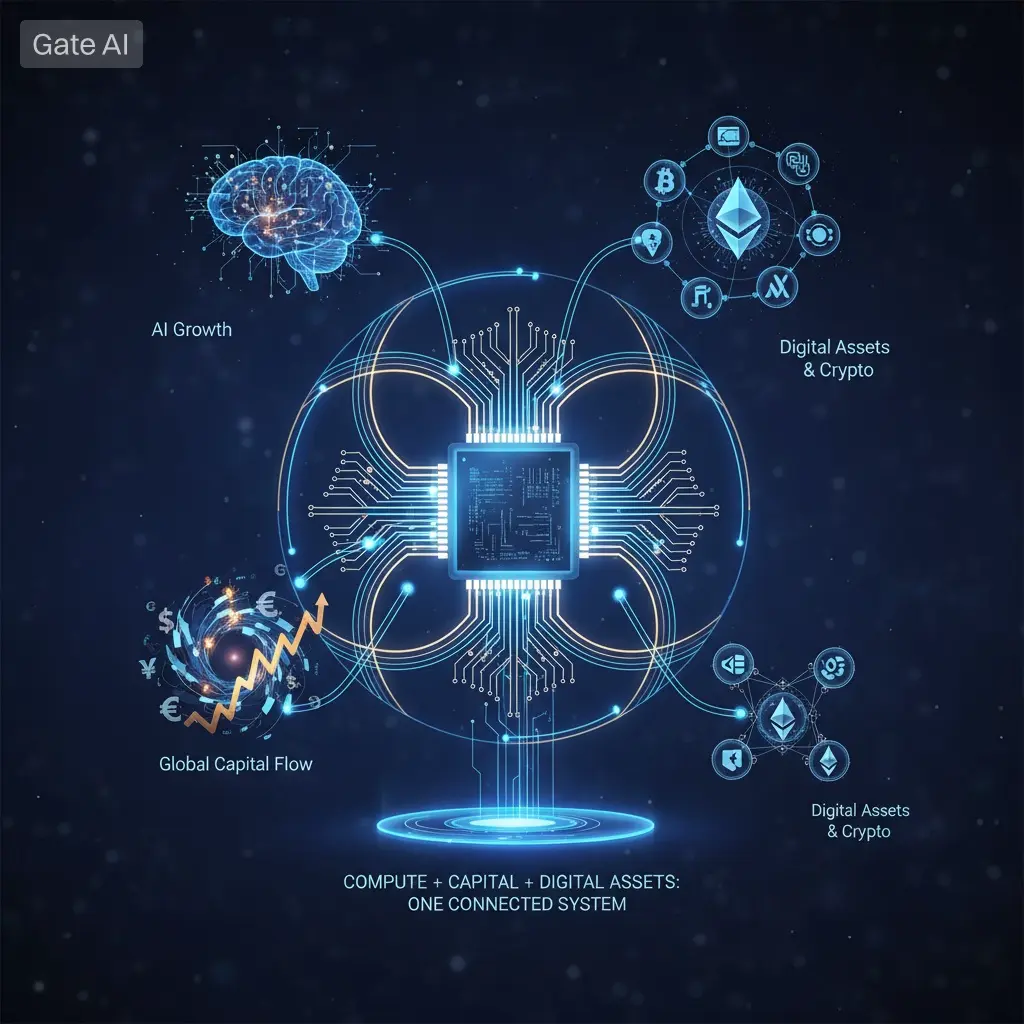
What is forming instead is a single interconnected capital network:
Semiconductors expand compute
Compute expands AI capability
AI attracts institutional capital
Capital flows into digital assets
Digital assets reinforce infrastructure demand
This is not correlation.
This is system convergence.
---
Final Reality Check
If you still view:
Chips as “stocks”
AI as “growth sector”
Crypto as “speculation”
You are not early.
You are using an outdated map for a new financial architecture.
The market is no longer moving in cycles.
It is moving in stacked infrastructure layers of exponential dependency.
And in that structure:
Those who understand flow will survive.
Those who misunderstand layers will get compressed.
---
#GateSquare
#ContentMining
#CreatorCarnival
#SemiconductorToCryptoConvergence The Silent Macro Engine Behind Tech Equities, AI Expansion, and the Next Phase of Digital Capital Rotation
What the market is currently mispricing is not a company, not a sector, and not even a narrative.
It is the synchronization of three systems that were never supposed to move together this tightly:
Semiconductor production cycles
AI infrastructure expansion
Crypto liquidity formation
And the uncomfortable truth is this:
Most participants are still reading a 2017 or 2021 mental model in a 2026 structural environment.
---
Semiconductor Strength Is Not a Rally — It Is a Capacity Expansion Signal
The rise in names like Intel and Texas Instruments is being dangerously oversimplified as “earnings recovery” or “cyclical rebound.”
That interpretation is outdated.
What is actually happening is far more structural:
Semiconductors are not reacting to demand anymore—
they are pre-building the physical ceiling of the next decade’s digital economy.
Every percentage increase in chip production capacity translates into:
Higher AI model scalability
Faster cloud deployment cycles
Lower marginal compute costs
Expanded data infrastructure density
This is not equity movement.
This is global computational infrastructure expansion pricing itself in real time.
And when that happens, markets do not behave like sectors.
They behave like systems under reconfiguration.
---
The Hidden Mechanism: Capital Is Rotating, Not Expanding
Most retail investors assume liquidity is “flowing into everything.”
That is incorrect.
Liquidity is rotating in a strict hierarchy:
1. Physical compute (semiconductors)
2. Infrastructure intelligence (AI systems)
3. Application layer monetization (tech platforms)
4. Speculative abstraction layer (crypto assets)
This is not random allocation.
This is risk cascading through complexity layers.
Semiconductors act as the first signal of institutional confidence in future digital output.
Crypto acts as the final expression of that confidence.
---
Crypto Is No Longer an Isolated Market — It Is a Beta Layer of Tech Liquidity
The outdated belief that crypto operates independently is one of the most expensive misconceptions still circulating.
In reality:
Crypto is now behaving as a leveraged reflection of macro tech sentiment.
When semiconductor equities expand, it signals:
Higher forward earnings expectations across tech
Increased institutional risk appetite
Stronger global liquidity conditions
Confidence in long-duration innovation cycles
These exact conditions historically precede:
Altcoin expansion phases
DeFi liquidity inflows
Infrastructure token repricing
Narrative-driven speculative cycles
Crypto is not disconnected.
It is downstream liquidity sensitivity disguised as an independent asset class.
---
DePIN Is Where Physical and Digital Economies Collapse Into One Layer
Decentralized Physical Infrastructure Networks are not a narrative trend.
They are a structural redefinition of resource coordination.
For the first time, compute power, storage, and bandwidth are:
Tokenized
Distributed
Incentivized
Market-coordinated
This creates a direct feedback loop with semiconductors:
More chips → more compute availability
More compute → more decentralized coordination demand
More coordination demand → higher utility for decentralized infrastructure systems
This is where the old boundary between:
“hardware companies” and “crypto protocols” disappears completely.
---
The Market’s Real Fragility: Geopolitical Compression of Supply Chains
While narratives are bullish, structure is not stable.
Semiconductors exist inside a geopolitically concentrated bottleneck system.
That means:
Small disruptions create global ripple effects
Supply concentration amplifies volatility
Policy shifts can instantly reprice entire sectors
So the current rally is not “safe growth.”
It is controlled expansion inside a structurally fragile system.
That is why volatility will not disappear—it will intensify.
---
Crypto Platforms Are Becoming Financial Operating Systems
The exchange era is over.
What is replacing it is far more aggressive:
Crypto platforms are evolving into full-stack financial ecosystems.
They now combine:
Trading infrastructure
Yield systems
Launch ecosystems
Asset issuance layers
User incentive engines
This creates a closed-loop environment where:
users are not participants—they are internal liquidity nodes.
---
Token Utility Is Quietly Becoming Institutional Infrastructure
Most tokens are still misunderstood as “assets.”
That framing is obsolete.
Modern ecosystem tokens function as:
Access keys
Fee-layer modifiers
Governance stabilizers
Liquidity retention mechanisms
And most importantly:
They create self-reinforcing demand cycles inside platforms.
More usage → more token demand
More token demand → deeper liquidity
Deeper liquidity → stronger ecosystem resilience
This is not speculation mechanics.
This is internal economic gravity formation.
---
The Real Driver of Volatility: Behavioral Liquidity
The new market does not move purely on fundamentals.
It moves on engineered participation dynamics.
Including:
Campaign-based trading surges
Incentive-driven liquidity spikes
Narrative rotation acceleration
Gamified capital deployment
This is why cycles are now:
Faster
Sharper
Less predictable
More emotionally amplified
Markets are no longer passive systems.
They are interaction-driven liquidity environments.
---
Trust Has Become the Only Non-Replaceable Asset
In a system dominated by speed, incentives, and volatility, one factor has become structurally dominant:
Trust.
Not branding. Not marketing. Not hype.
Trust in:
Reserve transparency
Asset custody security
Operational consistency
Long-term reliability
Without trust, liquidity is temporary.
With trust, liquidity becomes structural capital retention.
---
2026 Macro Reality: Everything Is Becoming One System
The separation between:
Tech equities
AI infrastructure
Semiconductor cycles
Crypto ecosystems
Digital platforms
Is collapsing.
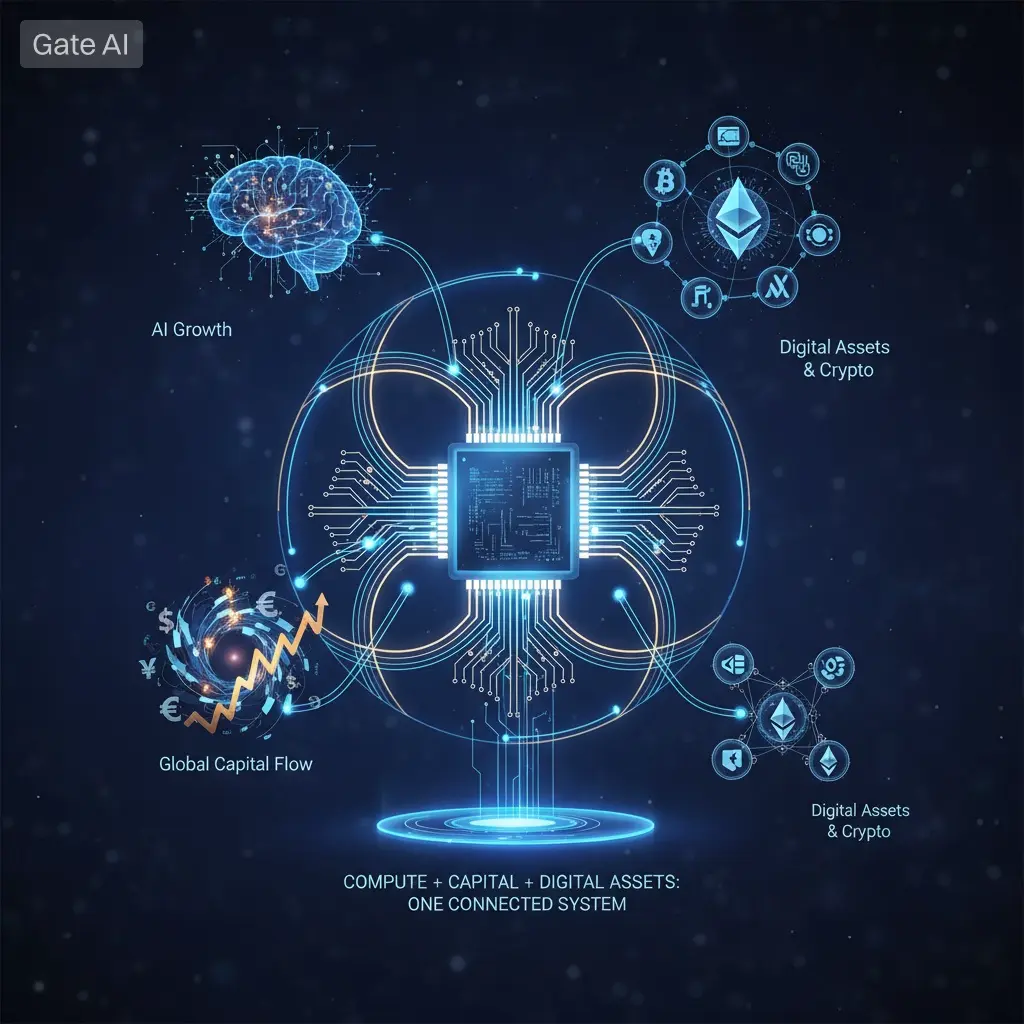
What is forming instead is a single interconnected capital network:
Semiconductors expand compute
Compute expands AI capability
AI attracts institutional capital
Capital flows into digital assets
Digital assets reinforce infrastructure demand
This is not correlation.
This is system convergence.
---
Final Reality Check
If you still view:
Chips as “stocks”
AI as “growth sector”
Crypto as “speculation”
You are not early.
You are using an outdated map for a new financial architecture.
The market is no longer moving in cycles.
It is moving in stacked infrastructure layers of exponential dependency.
And in that structure:
Those who understand flow will survive.
Those who misunderstand layers will get compressed.
---
#GateSquare
#ContentMining
#CreatorCarnival