#30YearTreasuryYieldBreaks5%
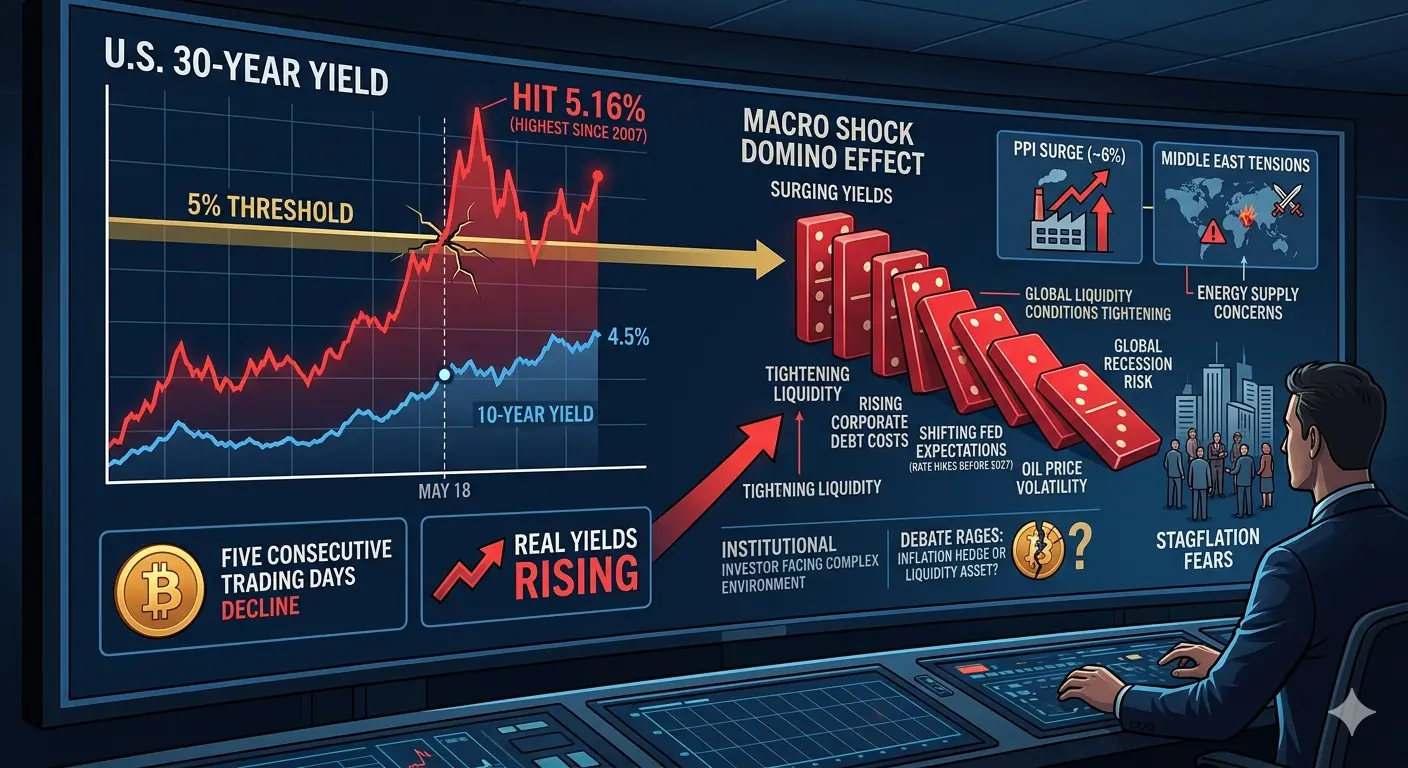
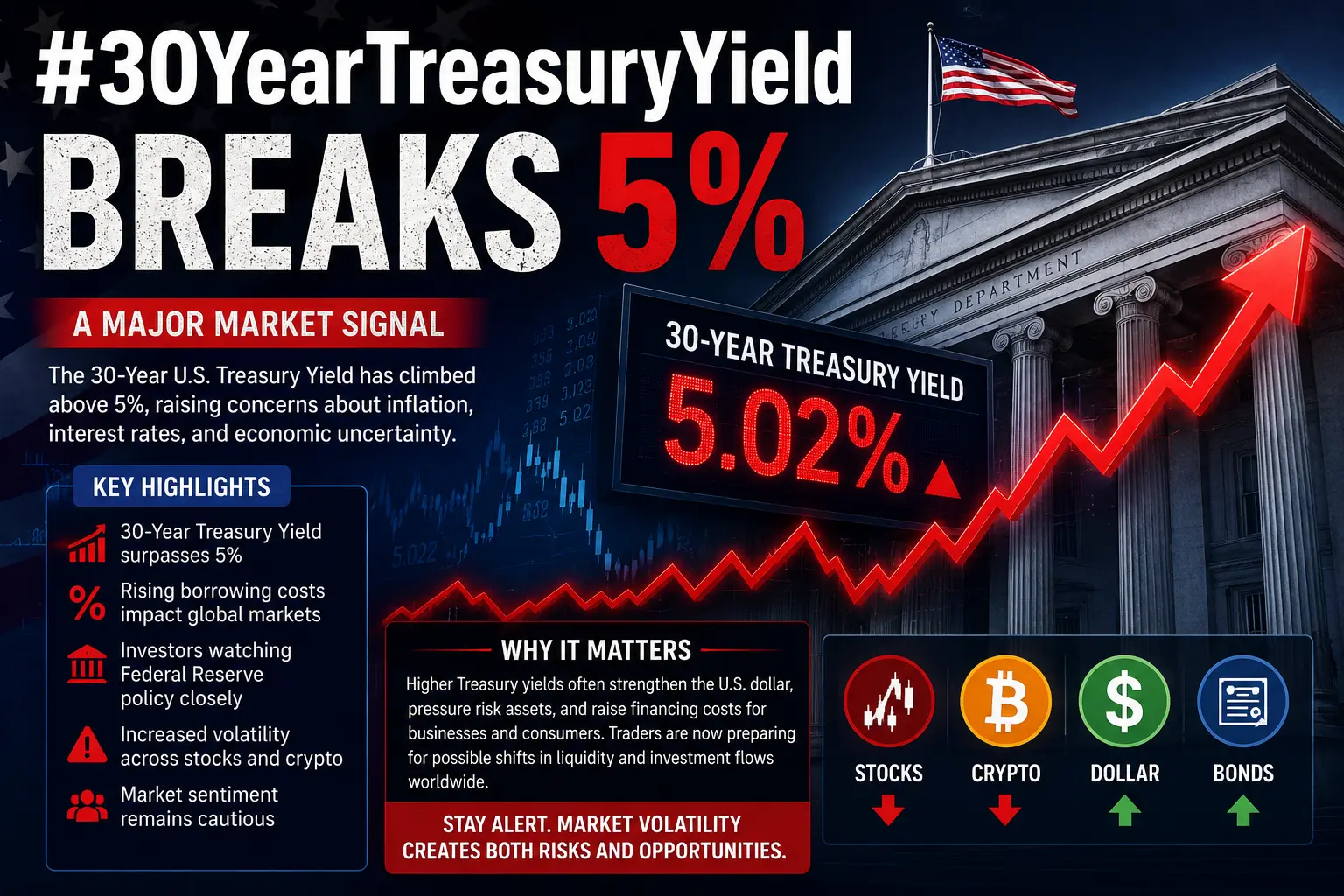
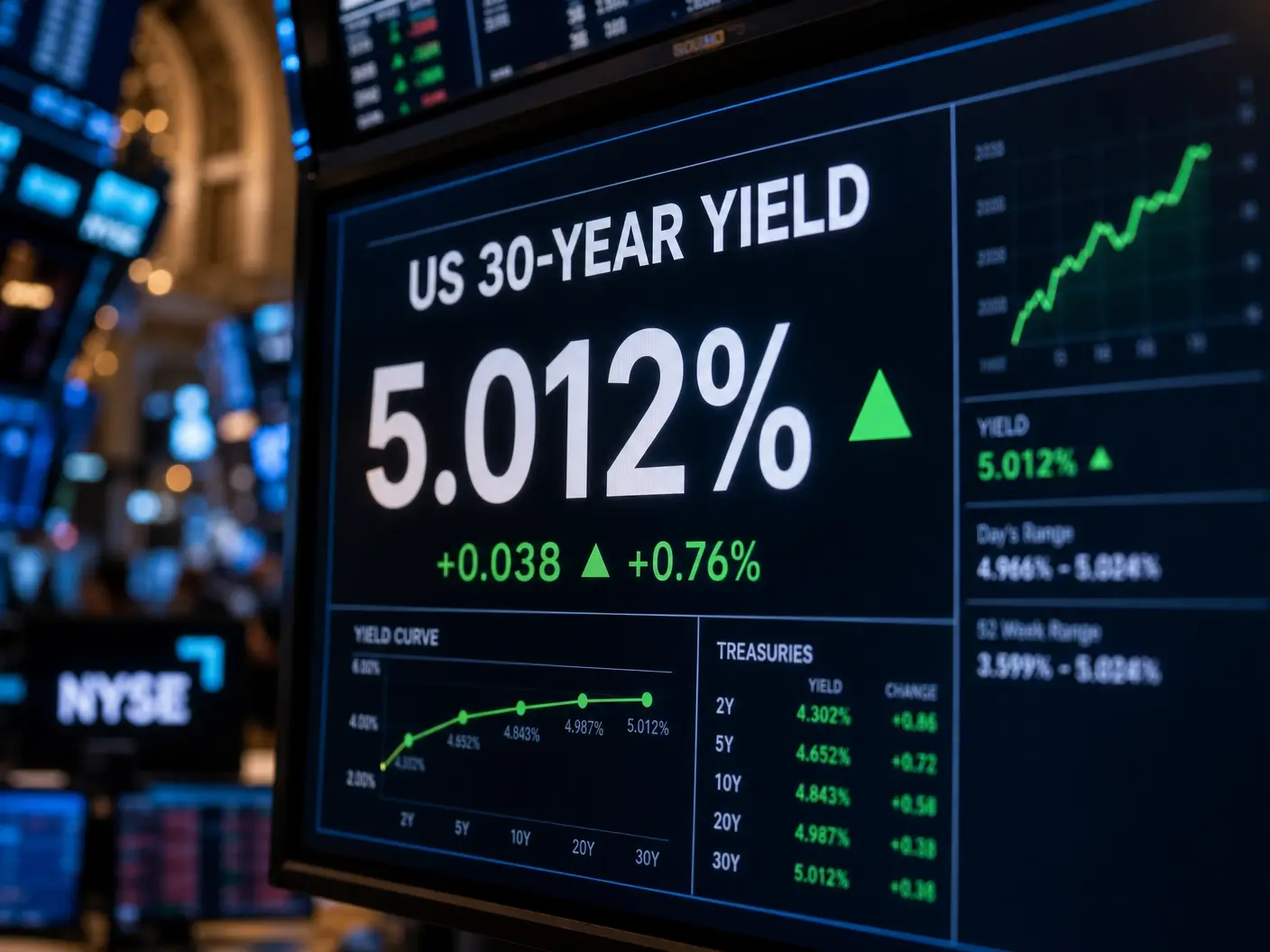
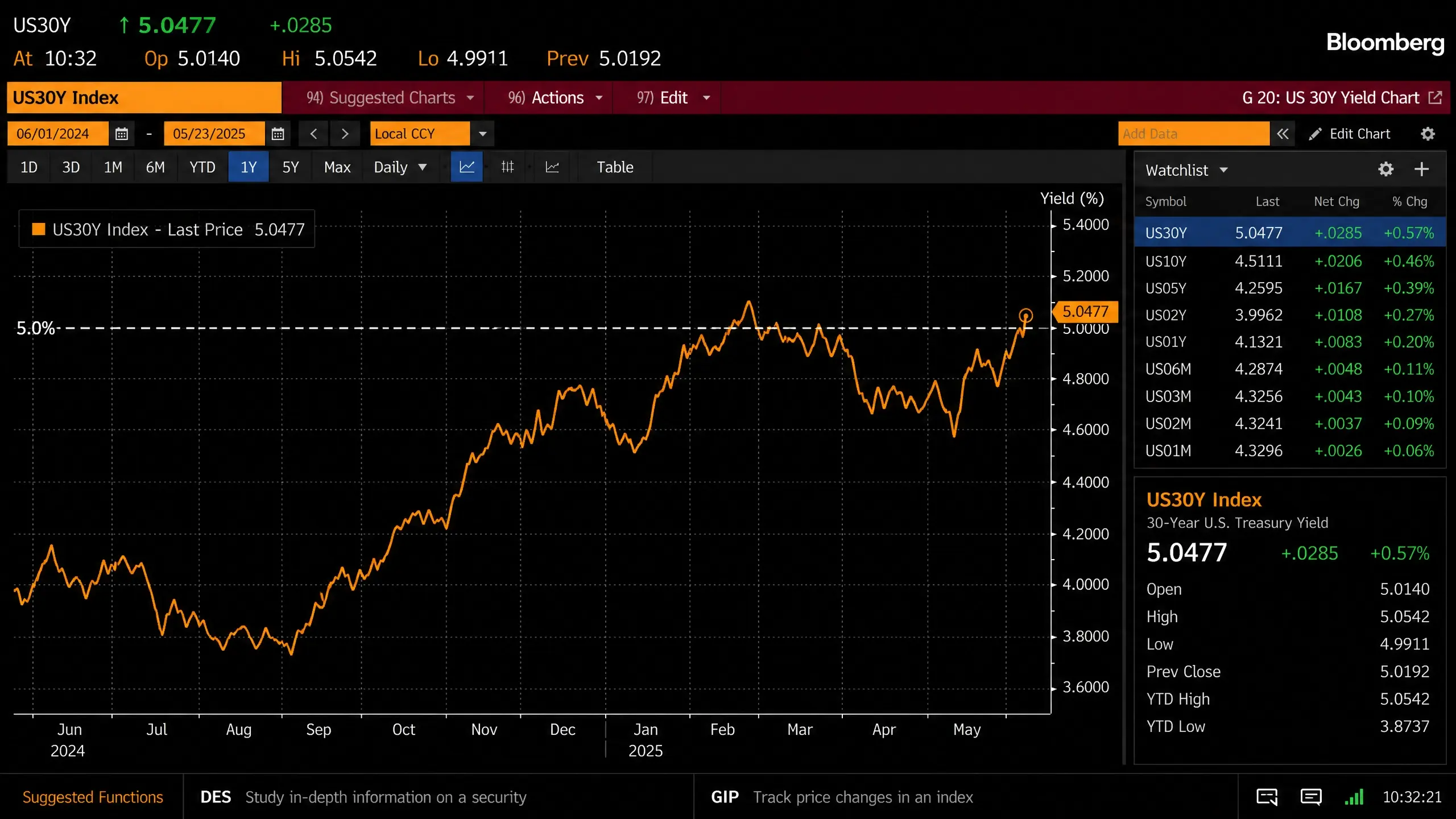
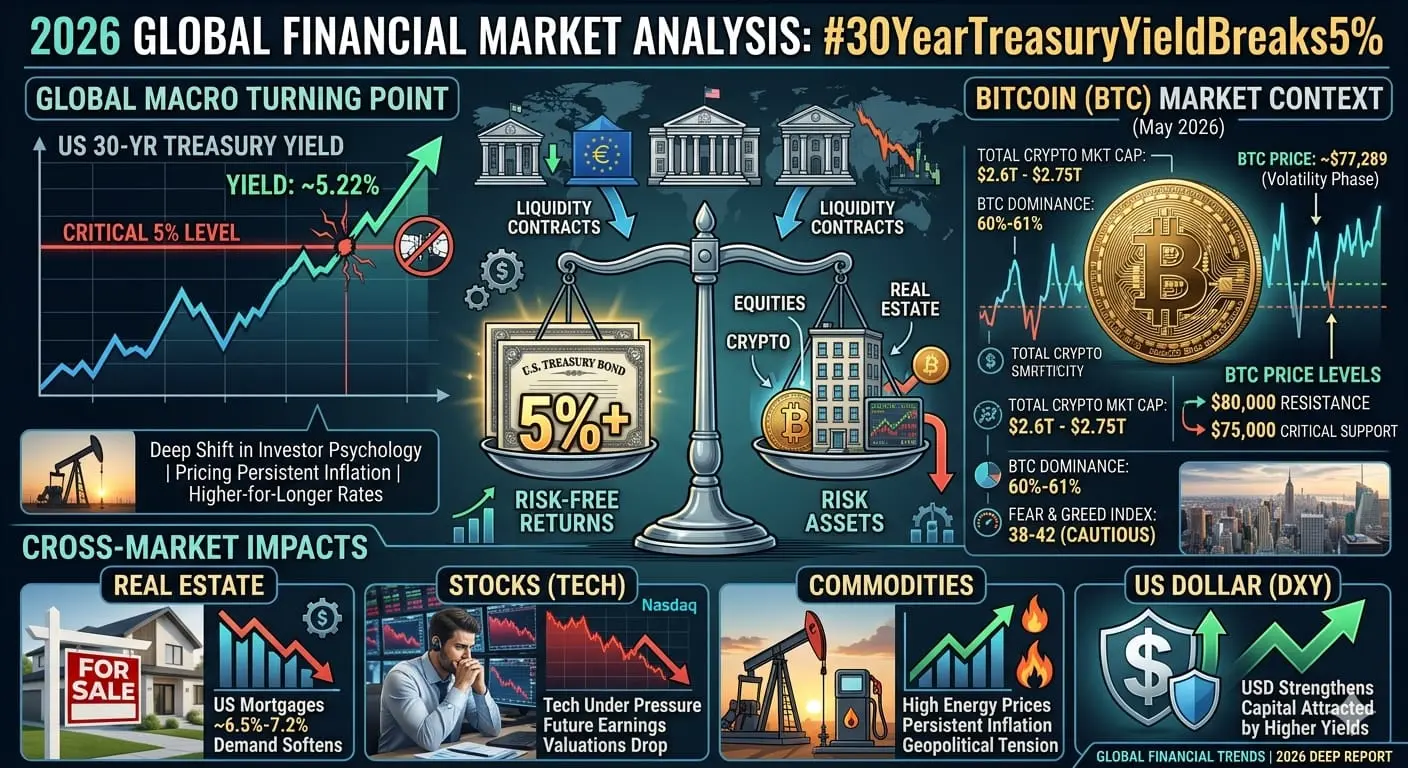
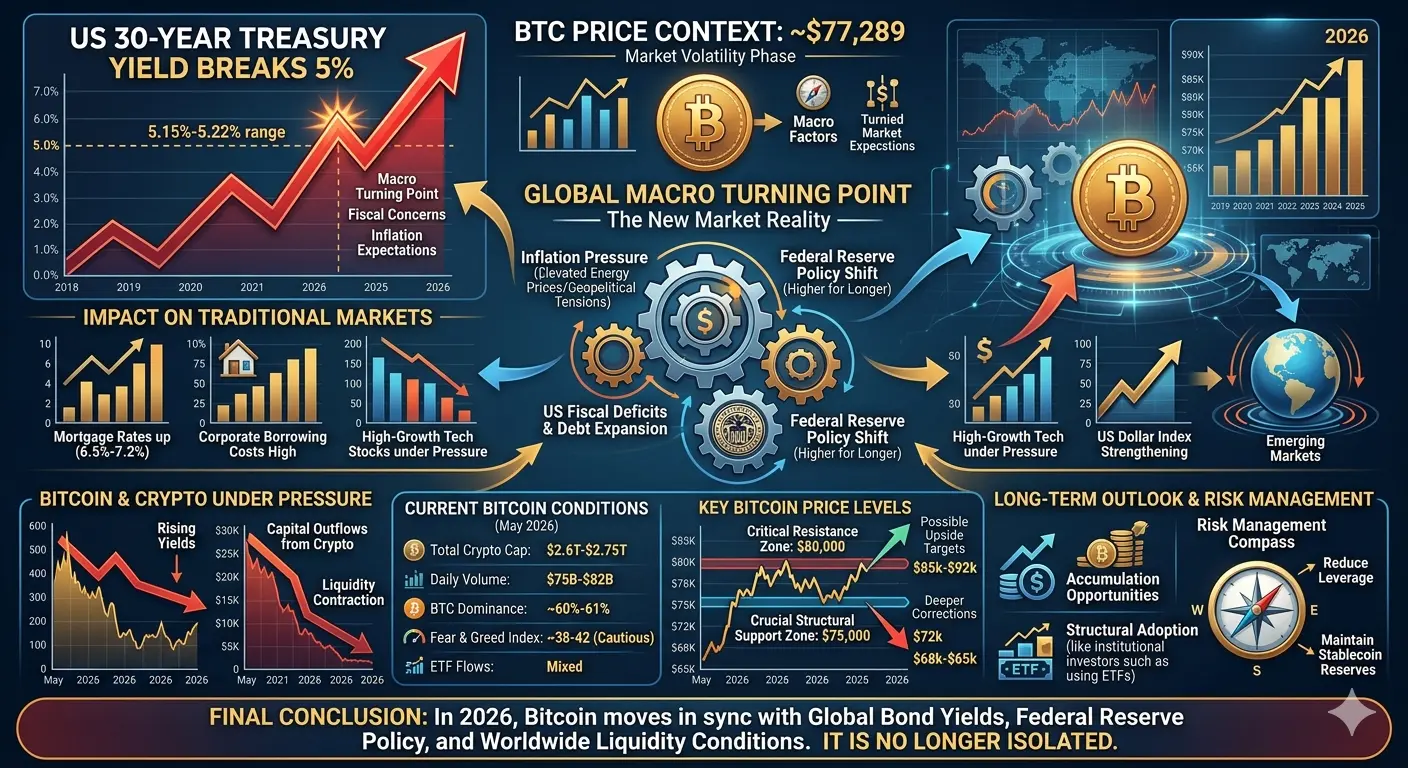
Global financial markets are entering one of the most important macroeconomic transitions of recent years as the U.S. 30-Year Treasury Yield rises above the critical 5% level, recently trading around 5.15%–5.22%, creating major pressure across stocks, bonds, real estate, commodities, and cryptocurrencies.
This move is not being viewed as a normal fluctuation because long-term Treasury yields are considered one of the strongest indicators of inflation expectations, future liquidity conditions, economic confidence, and investor risk perception. When long-duration yields rise aggressively, it signals that investors are demanding significantly higher compensation to lock capital away for decades due to concerns surrounding inflation, government debt, and long-term economic uncertainty.
The 30-Year Treasury Yield represents the annual return investors receive after purchasing long-term U.S. government bonds, which are traditionally considered among the safest financial assets globally because they are backed by the United States government itself.
When yields remain around 2%–3%, markets usually interpret conditions as stable with manageable inflation and strong monetary confidence. However, once yields move above 5%, investor psychology changes dramatically because it reflects fears that inflation may stay elevated for longer while borrowing costs and fiscal risks continue rising.
A simple way to understand this situation is that investors are no longer comfortable lending money to governments for 30 years unless they receive much higher returns to compensate for future uncertainty and declining purchasing power.
One of the biggest reasons Treasury yields are rising sharply in 2026 is the return of inflation pressure across global markets. Oil prices have remained elevated due to geopolitical tensions in the Middle East, creating fears regarding transportation costs, manufacturing expenses, and food inflation across the global economy.
At the same time, investors are increasingly worried about the rapidly growing U.S. fiscal deficit and long-term debt burden because the government continues issuing enormous amounts of Treasury bonds to finance spending while interest payments themselves are becoming larger and more expensive.
Federal Reserve expectations have also shifted significantly because markets previously expected multiple interest-rate cuts during 2026, but stronger inflation data and resilient economic conditions are forcing traders to reconsider that outlook. Instead of aggressive easing, markets are now pricing in a “higher for longer” rate environment where interest rates may remain elevated much longer than originally expected.
Higher Treasury yields directly affect nearly every sector of the financial system because they increase borrowing costs across the economy.
Mortgage rates in the United States have climbed toward roughly 6.5%–7%, reducing housing affordability and slowing real-estate activity. Corporate borrowing costs have also increased sharply, forcing businesses to reconsider expansion plans, refinancing strategies, and long-term investments.
Technology and growth stocks are facing strong pressure because rising interest rates reduce the present value of future earnings, encouraging investors to shift capital away from risk-heavy sectors toward safer fixed-income investments that now offer attractive guaranteed returns.
The U.S. Dollar Index has strengthened significantly as global investors move capital into dollar-denominated assets to benefit from higher Treasury yields, creating additional pressure on international markets and emerging economies.
₿ Cryptocurrency markets are especially sensitive to liquidity conditions, interest rates, and macroeconomic uncertainty because Bitcoin, Ethereum, and altcoins generally perform best when liquidity is abundant and borrowing costs remain low.
When Treasury yields rise above 5%, investors suddenly gain access to relatively attractive “risk-free” returns through government bonds, reducing the relative attractiveness of high-volatility assets such as cryptocurrencies.
Bitcoin itself does not generate interest or dividends, which means higher Treasury yields increase the opportunity cost of holding BTC, especially for institutional investors managing large portfolios where stable fixed-income returns become more attractive during uncertain macroeconomic conditions.
Another major issue for crypto markets is liquidity tightening because higher rates reduce access to leverage and speculative capital flows that normally fuel aggressive rallies across Bitcoin and altcoins. As financial conditions tighten, volatility often increases sharply due to liquidations and weaker buying momentum.
As of May 2026, Bitcoin is trading around $76,500–$78,500 while facing strong macro-driven volatility caused by Treasury-yield pressure and inflation concerns.
Total crypto market capitalization remains near approximately $2.6 trillion–$2.75 trillion, while daily trading volume fluctuates around $75 billion–$82 billion as traders react to inflation data, Federal Reserve expectations, and geopolitical developments.
Bitcoin dominance remains relatively strong near 60%–61%, showing that investors currently prefer larger and more established digital assets over smaller speculative altcoins during uncertain macroeconomic conditions.
The Fear & Greed Index remains near the 38–42 range, reflecting cautious sentiment as traders hesitate to take aggressive risk exposure while Treasury yields continue rising.
The $80,000 region remains the most important resistance zone for Bitcoin because a sustained breakout above that level could potentially open momentum toward $85,000–$92,000 if liquidity conditions stabilize.
On the downside, the $75,000 area remains critical support because losing that level could expose Bitcoin to deeper corrections toward $72,000 and potentially even $68,000–$65,000 if Treasury yields continue climbing higher.
Markets are also closely watching Treasury yields themselves because sustained movement above 5.2%–5.3% could intensify pressure across both stock markets and cryptocurrencies simultaneously.
Historically, the last major period when 30-Year Treasury Yields traded consistently above 5% occurred around 2007–2008 before the global financial crisis, making current conditions psychologically significant for investors.
During the 2022 tightening cycle, aggressive Federal Reserve rate hikes pushed yields sharply higher and contributed to Bitcoin collapsing from nearly $69,000 toward approximately $15,500 while many altcoins lost between 80%–95% of their value due to severe liquidity contraction and panic selling.
Although current market conditions are different because spot Bitcoin ETFs and institutional participation provide stronger long-term support, macroeconomic forces still dominate short-term market direction.
Despite near-term pressure, some analysts remain optimistic regarding Bitcoin’s long-term outlook because concerns surrounding inflation, government debt expansion, and traditional financial-system instability may strengthen Bitcoin’s “digital gold” narrative over time.
Long-term investors continue arguing that periods of macro fear and liquidity tightening often create major accumulation opportunities for assets with strong scarcity models and expanding institutional adoption.
In this environment, disciplined risk management becomes extremely important because market volatility can increase rapidly whenever inflation reports, Federal Reserve communication, or geopolitical developments surprise investors.
Reducing leverage exposure, maintaining stablecoin reserves, using stop-loss strategies, and monitoring macroeconomic indicators such as bond yields, oil prices, and inflation data are becoming just as important as technical analysis for crypto traders in 2026.
The breakout of the U.S. 30-Year Treasury Yield above 5% represents one of the most important macroeconomic developments of 2026 because it reflects tighter financial conditions, persistent inflation concerns, stronger demand for safe returns, and growing uncertainty surrounding the global economy.
For Bitcoin and the broader crypto market, this environment creates significant short-term pressure through liquidity tightening and higher opportunity costs, while still supporting long-term narratives around digital scarcity and institutional adoption.
One reality is now clear:
Bitcoin and crypto markets are no longer isolated from traditional finance because Treasury yields, inflation expectations, Federal Reserve policy, government debt, and global liquidity conditions have become central forces driving digital-asset markets in 2026.
Global financial markets are entering one of the most important macroeconomic transitions of recent years as the U.S. 30-Year Treasury Yield rises above the critical 5% level, recently trading around 5.15%–5.22%, creating major pressure across stocks, bonds, real estate, commodities, and cryptocurrencies.
This move is not being viewed as a normal fluctuation because long-term Treasury yields are considered one of the strongest indicators of inflation expectations, future liquidity conditions, economic confidence, and investor risk perception. When long-duration yields rise aggressively, it signals that investors are demanding significantly higher compensation to lock capital away for decades due to concerns surrounding inflation, government debt, and long-term economic uncertainty.
The 30-Year Treasury Yield represents the annual return investors receive after purchasing long-term U.S. government bonds, which are traditionally considered among the safest financial assets globally because they are backed by the United States government itself.
When yields remain around 2%–3%, markets usually interpret conditions as stable with manageable inflation and strong monetary confidence. However, once yields move above 5%, investor psychology changes dramatically because it reflects fears that inflation may stay elevated for longer while borrowing costs and fiscal risks continue rising.
A simple way to understand this situation is that investors are no longer comfortable lending money to governments for 30 years unless they receive much higher returns to compensate for future uncertainty and declining purchasing power.
One of the biggest reasons Treasury yields are rising sharply in 2026 is the return of inflation pressure across global markets. Oil prices have remained elevated due to geopolitical tensions in the Middle East, creating fears regarding transportation costs, manufacturing expenses, and food inflation across the global economy.
At the same time, investors are increasingly worried about the rapidly growing U.S. fiscal deficit and long-term debt burden because the government continues issuing enormous amounts of Treasury bonds to finance spending while interest payments themselves are becoming larger and more expensive.
Federal Reserve expectations have also shifted significantly because markets previously expected multiple interest-rate cuts during 2026, but stronger inflation data and resilient economic conditions are forcing traders to reconsider that outlook. Instead of aggressive easing, markets are now pricing in a “higher for longer” rate environment where interest rates may remain elevated much longer than originally expected.
Higher Treasury yields directly affect nearly every sector of the financial system because they increase borrowing costs across the economy.
Mortgage rates in the United States have climbed toward roughly 6.5%–7%, reducing housing affordability and slowing real-estate activity. Corporate borrowing costs have also increased sharply, forcing businesses to reconsider expansion plans, refinancing strategies, and long-term investments.
Technology and growth stocks are facing strong pressure because rising interest rates reduce the present value of future earnings, encouraging investors to shift capital away from risk-heavy sectors toward safer fixed-income investments that now offer attractive guaranteed returns.
The U.S. Dollar Index has strengthened significantly as global investors move capital into dollar-denominated assets to benefit from higher Treasury yields, creating additional pressure on international markets and emerging economies.
₿ Cryptocurrency markets are especially sensitive to liquidity conditions, interest rates, and macroeconomic uncertainty because Bitcoin, Ethereum, and altcoins generally perform best when liquidity is abundant and borrowing costs remain low.
When Treasury yields rise above 5%, investors suddenly gain access to relatively attractive “risk-free” returns through government bonds, reducing the relative attractiveness of high-volatility assets such as cryptocurrencies.
Bitcoin itself does not generate interest or dividends, which means higher Treasury yields increase the opportunity cost of holding BTC, especially for institutional investors managing large portfolios where stable fixed-income returns become more attractive during uncertain macroeconomic conditions.
Another major issue for crypto markets is liquidity tightening because higher rates reduce access to leverage and speculative capital flows that normally fuel aggressive rallies across Bitcoin and altcoins. As financial conditions tighten, volatility often increases sharply due to liquidations and weaker buying momentum.
As of May 2026, Bitcoin is trading around $76,500–$78,500 while facing strong macro-driven volatility caused by Treasury-yield pressure and inflation concerns.
Total crypto market capitalization remains near approximately $2.6 trillion–$2.75 trillion, while daily trading volume fluctuates around $75 billion–$82 billion as traders react to inflation data, Federal Reserve expectations, and geopolitical developments.
Bitcoin dominance remains relatively strong near 60%–61%, showing that investors currently prefer larger and more established digital assets over smaller speculative altcoins during uncertain macroeconomic conditions.
The Fear & Greed Index remains near the 38–42 range, reflecting cautious sentiment as traders hesitate to take aggressive risk exposure while Treasury yields continue rising.
The $80,000 region remains the most important resistance zone for Bitcoin because a sustained breakout above that level could potentially open momentum toward $85,000–$92,000 if liquidity conditions stabilize.
On the downside, the $75,000 area remains critical support because losing that level could expose Bitcoin to deeper corrections toward $72,000 and potentially even $68,000–$65,000 if Treasury yields continue climbing higher.
Markets are also closely watching Treasury yields themselves because sustained movement above 5.2%–5.3% could intensify pressure across both stock markets and cryptocurrencies simultaneously.
Historically, the last major period when 30-Year Treasury Yields traded consistently above 5% occurred around 2007–2008 before the global financial crisis, making current conditions psychologically significant for investors.
During the 2022 tightening cycle, aggressive Federal Reserve rate hikes pushed yields sharply higher and contributed to Bitcoin collapsing from nearly $69,000 toward approximately $15,500 while many altcoins lost between 80%–95% of their value due to severe liquidity contraction and panic selling.
Although current market conditions are different because spot Bitcoin ETFs and institutional participation provide stronger long-term support, macroeconomic forces still dominate short-term market direction.
Despite near-term pressure, some analysts remain optimistic regarding Bitcoin’s long-term outlook because concerns surrounding inflation, government debt expansion, and traditional financial-system instability may strengthen Bitcoin’s “digital gold” narrative over time.
Long-term investors continue arguing that periods of macro fear and liquidity tightening often create major accumulation opportunities for assets with strong scarcity models and expanding institutional adoption.
In this environment, disciplined risk management becomes extremely important because market volatility can increase rapidly whenever inflation reports, Federal Reserve communication, or geopolitical developments surprise investors.
Reducing leverage exposure, maintaining stablecoin reserves, using stop-loss strategies, and monitoring macroeconomic indicators such as bond yields, oil prices, and inflation data are becoming just as important as technical analysis for crypto traders in 2026.
The breakout of the U.S. 30-Year Treasury Yield above 5% represents one of the most important macroeconomic developments of 2026 because it reflects tighter financial conditions, persistent inflation concerns, stronger demand for safe returns, and growing uncertainty surrounding the global economy.
For Bitcoin and the broader crypto market, this environment creates significant short-term pressure through liquidity tightening and higher opportunity costs, while still supporting long-term narratives around digital scarcity and institutional adoption.
One reality is now clear:
Bitcoin and crypto markets are no longer isolated from traditional finance because Treasury yields, inflation expectations, Federal Reserve policy, government debt, and global liquidity conditions have become central forces driving digital-asset markets in 2026.